What Jesus teaches in this Sunday’s Gospel is one of those parables that rock our world and challenge our worldly way of thinking. Frankly, that is one of its purposes. We are tempted to side with the laborers who worked the longest, thinking that their being paid the same amount as those who worked only for an hour is unfair.
Think very carefully before asking God to be “fair.” What we really should ask of God is that He be merciful, for if He were fair, we’d all be in Hell right now. We have no innate capacity to stand before God in pure justice; we simply cannot measure up. It is only grace and mercy that will win the day for us. So be very careful about challenging God’s fairness. In fact, when we see Him being merciful to someone else, we ought to rejoice, for it means that we might stand a chance.
There are other aspects of this Gospel that are important to learn from, in particular, the various dispositions of discipleship. As the parable unfolds, we can see five teachings. Let’s consider each in turn.
I. The AVAILABILITY of Discipleship – The text says, A landowner went at dawn to hire laborers to work in his field … He went later and found others standing idle … “Why do you stand here all day idle?”
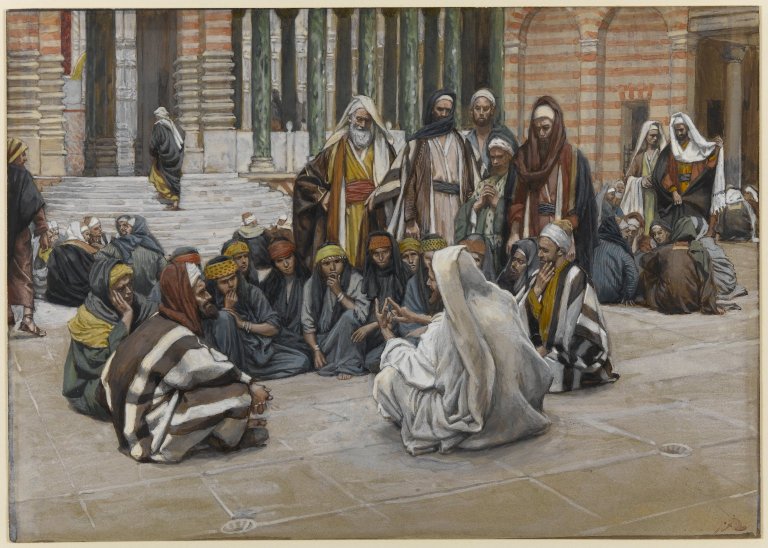
What are described here are “day workers” or “day laborers.” These were men who stood in public places hoping to be hired for the day. It was and still is a tough life. If you worked, you ate; if you didn’t, you might have little or nothing to eat. They were hired on a day-to-day basis, only when needed. This is a particularly burdensome form of poverty for its uncertainty and instability. Men like these were and are the poorest of the poor.
Notice, however, that their poverty, their hunger, makes them available. Each morning they show up and are ready, available to be hired. Their poverty also motivates them to seek out the landowner and indicate that they are ready and willing to work. The well-fed and the otherwise employed do not show up; they are not available. There’s something about poverty that makes these men available. Because their cup is empty, it is able to be filled.
We are these men. We are the poor who depend upon God for everything. Sometimes we don’t want to admit it, but we are. Every now and then it is made plain to us how poor, vulnerable, and needy we really are; this tends to make us seek God. In our emptiness, poverty, and powerlessness, suddenly there is room for God. Suddenly our glass, too often filled with the world, is empty enough for God to find room. In our pain we stand ready for God to usher us into the vineyard of His Kingdom. An old gospel song says, “Lord, I’m available to you; my storage is empty and I’m available to you.” It is our troubles that make us get up and go out with the poor to seek the Lord and be available to Him. When things are going too well, heaven knows where we are to be found! Another gospel song says, “Lord don’t move my mountain but give me the strength to climb it. Don’t take away my stumbling blocks but lead me all around, ’cause Lord when my life gets a little too easy, you know I tend to stray from thee.
Yes, we might wish for a trouble-free life, but then where would we be? Would we seek the Lord? Would we make ourselves available to God? Would we ever call on Him?
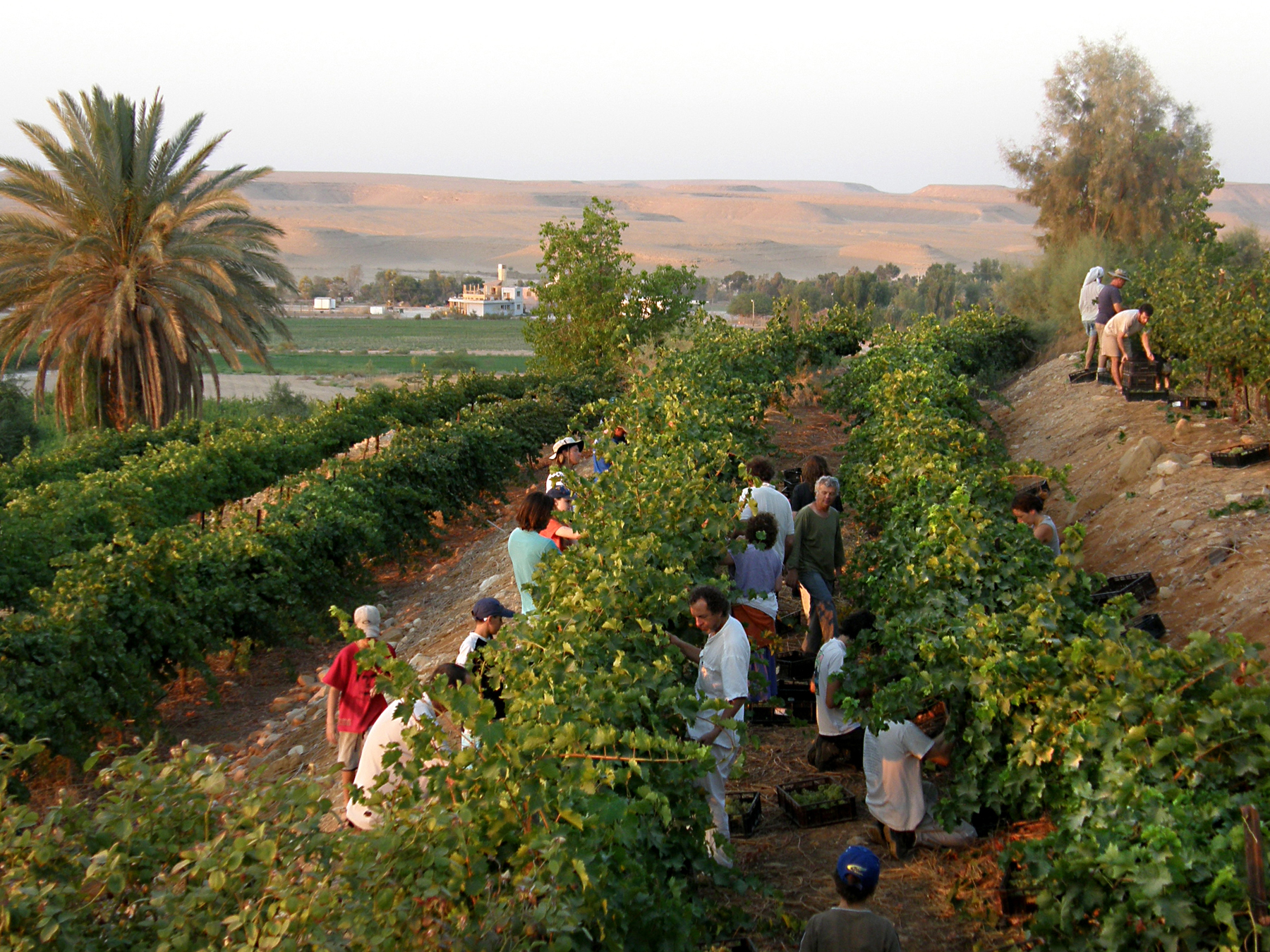
II. The AUTHORITY of Discipleship – The text says, The LandOWNER said, “Go into my vineyard” … HE sent them into HIS vineyard.
Notice that it is the landowner who calls the shots. Too many who call themselves the Lord’s disciples rush into His vineyard with great ideas and grand projects that they have never really asked God about. This passage teaches us that entrance into the vineyard requires the owner’s permission. If we expect to see fruits (payment for the work) at the end of the day, we have to be on the list of “approved workers.”
Fruitful discipleship is based on a call from the Lord. Scripture says, Unless the Lord builds the House, they that labor to build it labor in vain (Ps 127:1). Too many people run off and get married, take new jobs, accept promotions, start projects, and so forth without ever asking God.
True discipleship requires the Lord’s to call us first: “Go into my vineyard.” Got a bright idea? Ask God first. Discern His call with the Church and a good spiritual director, guide, or pastor.
III. The ALLOTMENT of Discipleship – The text says, The vineyard owner came at dawn, 9:00 AM, Noon, 3:00 PM, and 5:00 PM.
We may wonder why God calls some early and others late; it’s none of our business. He does call at different times. Even those whom He calls early are not always asked to do everything right now. There is a timing to discipleship.
Moses thought he was ready at age 40, and in his haste murdered a man. God said, “Not now!” and made him wait until he was 80.
Sometimes we’ve got something we want to do but the Lord says, “Not yet.” We think, “But Lord, this is a great project and many will benefit!” But the Lord says, “Not yet.” We say, “But Lord, I’m ready to do it now!” And the Lord says, “Not yet.”
Sometimes we think we’re ready, but we’re really not. An old gospel song says, “God is preparing me. He’s preparing me for something I cannot handle right now. He’s making me ready, just because he cares. He’s providing me with what I’ll need to carry out the next matter in my life. God is preparing me. Just because he cares for me. He’s maturing me, arranging me, realigning my attitude. He’s training me, teaching me, tuning me, purging me, pruning me. He’s preparing me.”
IV. The ABIDING of Discipleship – The text says, When it was evening the owner of the vineyard said to the foreman, “… summon the laborers and give them their pay, beginning with the last and ending with the first.”
Notice that the wages are paid in the evening and in the order determined by the landowner. The lesson is simple: we’ve got to stay in the vineyard. Some people start things but do not finish them. If you’re not there at the end of the day, there’s no pay.
Scripture says that we must persevere. Here are three passages carrying this message: But he who perseveres to the end will be saved (Mat 24:13). To those who by persistence in doing good seek glory, honor, and immortality, he will give eternal life (Rom 2:7). You need to persevere so that when you have done the will of God, you will receive what he has promised (Heb 10:36).
Yes, we must work until evening comes. Saying that we had faith and received all our sacraments when we were young will not suffice. We have to work until evening. An old spiritual says, “Some go to Church for to sing and shout, before six months they’s all turned out.” How about you?
V. The ASSESSMENT of Discipleship – The text says, Those hired first grumbled … “We bore the heat of the day and burdens thereof.”
The workers hired early think of their entrance into the vineyard and its labors as a “burden.” The vineyard, of course, is really the Kingdom of God. Many lukewarm “cradle Catholics” consider the faith to be a burden; they think that sinners “have all the fun.” Never mind that such thinking is completely perverse; it is held by many anyway, whether consciously or unconsciously.
Consider the laborers hired last. Were they having a picnic? Not exactly. Most were resigning themselves to the fact that they and their families would have little or nothing to eat that night. Similarly, most sinners are not “living the life of Riley.” Repeated, lifelong sin brings much grief: disease, dissipation of wealth, regret, loss of family, and addiction. No matter what they tell you, sinners do not have all the fun.
Further, being a Christian is not a burden. If we accept it, we receive a whole new life from Christ: a life of freedom, purity, simplicity, victory over sin, joy, serenity, vision, and destiny.
How do you view the Christian life? Is it a gift, a treasure beyond compare no matter its difficulties? Or is it a burden, a bearing of labor in the heat of the day? Scripture says, For by grace you have been saved through faith; and this is not your own doing, it is the gift of God. The passage goes on to describe our “works” not as burdens but as something God enables us to do: For we are his workmanship, created in Christ Jesus for good works, which God prepared beforehand, that we should walk in them (Eph 2:8-10).
So these are five dispositions of discipleship, as taught by the Lord in this parable.
Note well what the Lord teaches, for too often we want to decide what it means to be a disciple. Beware, for the worst kind of disciple is the one who gets out ahead of the Lord and tries to define his or her own role. Jesus is Lord; let Him lead. Here are some final questions for you: Are you a disciple who is glad at being called, the earlier the better? Or are you like the disciples who grumbled at having to do all the work in the heat of the day? Is discipleship delightful or dreary for you?
The song in the video below says, “I’m available to you.” It reminds us that the owner still seeks souls to enter His vineyard. He wants to use your voice to say to someone, “You, too, go into my vineyard!”