Some of you know that I write the Question and Answer Column for Our Sunday Visitor Newsweekly. I like doing that as it imposes a kind of disciplined writing on me, where I must answer questions very briefly, in about 400 words or less.
A question recently came in about a topic that I have not written much about here on the Blog. I’d like to reproduce the question and answer here in order to include the concept in my blog compendium and also to encourage you, if you do not read my column in the Sunday Visitor to know about it and read it.
Thus here is the question and answer which will appear in the paper in an even more abbreviated form:
Q: I have heard that women cannot be priests because Jesus chose only twelve men to be apostles. I understand this. The priest recently said that another reason is because of the “nuptial meaning” of the body. What does this mean?
A: To speak of the nuptial meaning of the body, means that the very design of our body orients us toward a marital (nuptial) relationship. The man is obviously meant for the woman, and the woman for the man. And in this complementary relationship that we call marriage, there is the fruitfulness of children.
In effect, our body says to us, “You were made for another who will complement and complete you, and make your love fruitful.”
Now this image of marriage, is also an image for the spiritual life wherein God speaks of his relationship to his people in marital, that is “nuptial” imagery. In the Old Testament Israel was frequently described as God’s bride, and his relationship to her is marital. In the New Testament, Jesus is the Groom and his Church, is his bride. The Church, with all her members, is called to relate to the Lord, to be completed by Him and complemented by him; such that relationship of love bears fruit.
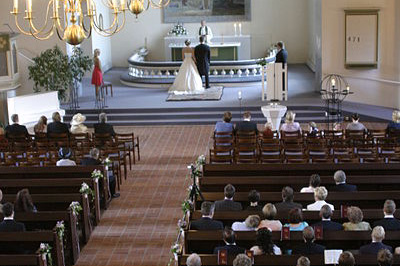
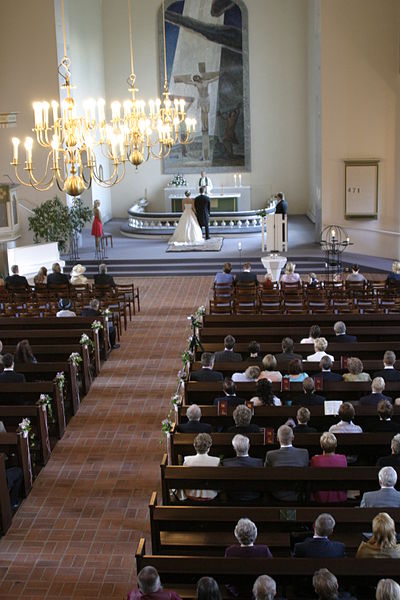
The Sacrament of Holy Matrimony, therefore, is also a sacrament and sign of God’s relationship to His people; He the Groom, we the bride.
Even celibate men and women, priests and religious, manifest by their lives the nuptial meaning of the human person in relation to God. As a priest, I am not a bachelor, I am not single. I have a bride, and she is the Church. Religious Sisters also manifest a marital relationship, where Jesus is the groom and they manifest a relationship to him as spouse, as bride.
To speak, therefore, of the “nuptial meaning” of the body, is to insist that our sexual distinctions of male and female are not merely arbitrary physical aspects. Rather, they bespeak deeper, spiritual realities, that we must learn to appreciate, and respect. Men and women are different, and manifest different aspects of God’s relationship to these people. Women, manifest the glory of the Church Bride. Men manifest the glory of Christ as Groom.
In terms of the priesthood, this is important because Christ, in his humanity, is not simply male, he is Groom. And the Sacred Liturgy of the Church is not just a celebration, it is a wedding feast: Christ the Groom, intimately with his Bride the Church.
Thus, your pastor is invoking a rich theological teaching, which helps to explain one reason why Christ chose only men for the priesthood.
We do well to recover this understanding of the nuptial meaning of the body, especially in times like these where the meaning of the body, of sexuality, and marriage are so deeply confused.
Here is the great Wedding Song of Advent:
Here is footage of my parents Nuptial Mass in 1959. They were 46 years married. My mother died in 2005, and my Father died in 2007. My they rest in peace!
The video at the bottom of this post is a fascinating little exploration of the traditional habit of Religious Sisters. The video does not make it clear as to what Order the Habit belonged. There are many things I learned about a habit I never knew. Things like hidden “saddle bag” pockets, opening crucifixes, symbolism in the pleats, and the purpose of the outer veil. I hope you’ll take time an view a fascinating video.
Sadly, the sister who recounts the hidden and beautiful secrets of the habit does not herself wear one any longer. The abandonment of the habit by many orders has always puzzled me. Recent Popes have requested that priests and religious wear their distinctive garb. Further, I think any survey of the people of God would indicate an overwhelming preference that priests and religious wear a distinctive garb or habit. Lastly, from the standpoint of vocations it would seem that any order that has set aside the habit is doomed to eventual extinction. It is clear that the orders that preserve the wearing of the habit along with common life, common prayer, and a focused apostolate are doing better, some quite well, with vocations. Orders that have set aside the habit are largely dying out. It is not the habit alone, I am sure, but the habit (or lack thereof) does signify something important about the health of the religious community.
What is the purpose of a religious habit? Religious life is not hidden, neither is it occasional. To enter the priesthood or religious life is to publicly accept the consecration of one’s whole self to the service of God and neighbor. That is why the most traditional religious garb covers the whole body. It is more than a tee-shirt, a hat or an emblem of some sort. It is a covering of the whole body to indicate the entirety of the consecration.
Further, each habit is distinctive since each religious community has a particular charism or gift by which they collectively serve the Church. Religious and priests do not merely consecrate themselves for their own agenda. Rather they join others with a similar and proven charisms in communities recognized by the Church.
The word “habit” also suggests that religious life and priesthood are not an occasional activity, or even a 9 to 5 job. The are the habitual identity and life of the one who receives the call. That is also why the habit is usually worn at all times.
The widespread disappearance of clerical garb and religious habits back in the 1970s was a disturbing trend. Many religious and priests no longer saw themselves as set apart, as distinctive. Many wanted to blend in and also lost a sense of the charism of their order. Many also preferred anonymity since it made them less busy and they no longer had to live as “public” people. However, many newer orders have emerged which once again wear the habit faithfully. Further, many older orders either never wholly abandoned it or have re-emphasized its importance. This is praiseworthy. If you are a lay person, encourage priests and religious as you see them about bearing witness to the their consecration by the way they dress and reminding others of God and the Kingdom of God.
In my own parish we have 25 sisters in the convent. The order is the Servants of the Lord and the Virgin of Matara. An order founded in Argentina in the 1980s but now worldwide and growing dramatically. They wear a long blue and gray habit with a long veil (see photo, upper right). They make for quite a beautiful vision of the kingdom as they walk through the neighborhood praying the rosary!
This is a clip I posted on Youtube from the 1958 Movie, “The Nun’s Story” starring Audrey Hepburn as a young woman named Gabriel Vandermal who becomes Sr. Luke of a fictional French Women’s Order. The movie, as you shall is stunningly beautiful and the liturgical scenes are carefully done. This movie is available for purchase at Amazon.com and I recommend it to your library.
However the following should be noted. The movie presents a rather negative portrait of Religious Life by emphasizing its hardships and demands to the exclusion of its joys and benefits. It more than suggests that many aspects of Religious Life at that time were unreasonable and unnecessarily harsh. Perhaps they were at times. Some older Sisters I’ve talked with tell me that many aspects of this movie are accurate and things were tough in the old days. An interesting aspect of the portrait presented is that primary source of the hardships was the women toward each other. It is common in some current narratives, especially from older women religious, to speak of the old Church as patriarchal, male dominated, and hence oppressive to women. Yet in this piece from that actual period, the clergy are distant figures, and the main interplay is with the women and how they both support and also oppress one another.
If this movie is a reasonably accurate portrait of religious life in the first half of the 20th century (sounds so long ago now!) then it is clear that reforms were needed. However, as an outside observer who is both male and barely old enough to remember the old Church, I must say I deeply regret that the reforms that may have been necessary got so out of balance for many women’s Religious communities. An over-correction seems to have set it in in many, though surely not all. The abandonment of the Religious Habit, community life, a common apostolate, and deep love for the Church seems to have been lost, in some. Thankfully there are many Religious Communities of women which never succumbed to the radical notions that swept others. Also, there are many new, thriving and exciting new Communities of Women religious as well. In my own convent are the Servants of the Lord and the Virgin of Matara. (they wear a blue and gray habit). They are imbued with deep love for the Lord, our Lady and the Church. They seem quite happy and foster great holiness within their sisters. They seem also to have found a good balance between the following of a clear rule and of doing so in a way that is respectful of the humanity of each each sister. There is nothing of the robotic and unhappy obedience depicted in this movie. The Sisters I know are quite alive and experience their religious life in a deeply human way.
The movie The Nun’s Story surely has a strong point of view that could have been more balanced. I cannot imagine that it was quite as strict or unhuman as this movie depicts. Further, Sr. Luke makes a decision in the movie that is problematic from the point of view of the vows she made. Nevertheless, with these cautions I strongly recommend the movie. It is beautiful, though controversial in some aspects. I post the clip here in the interest of seeing a brief look at Religious life in the wider culture and in the movies. Enjoy this beautiful video.
In case you missed it, Oprah’s show yesterday featured the Dominican Sisters of Mary of Ann Arbor, Michigan. Here is a link where you can see clips from the show:
Sr. Maria Theotokos is a Religious Sister of the Congregation of the Servants of the Lord and the Virgin of Matara. She resides with 25 other sisters in the Convent of my parish (See photo at right). This is a wonderful new order (founded 1988) of Religious Sisters who love the Lord, our Lady and the Church. They are blessed by many young vocations and have a very good formation program. I have encouraged Sister to write from time to time so that we might have the perspective of Women Relgious here. In this post Sister writes a book review and also provides a critique of Feminism.
“An Unusual Little Book”
Sister Maria Theotokos Adams, SSVM
Recently a friend of mine lent me an unusual little book with the pointed comment that she thought I really should read it. As a religious sister, I typically focus first on my spiritual reading: scripture, saints, classic authors of the interior life, patristic commentary on the Scriptures. Then, there is always academic reading, new magisterial documents, and news. So where does this new book fall? And to what does it owe this particular treatment?
Suspicious Title! – Priesthood of the Heart: The Unique Vocation of Women(original publication in French 2003, Eng. 2007) by Jo Croissant has a title which threw me off the first time I heard it. As a young woman religious in my early 30’s I love my vocation as a spouse of Christ and a mother of souls—simply put, I know that don’t want to be a priest. Furthermore, like so many young women my age I passed through a period of academic feminism in high school which gave me a heavy enough dose of feminist writings to leave me thoroughly disenchanted. I remember reading in my teens the classic texts which revealed the “true condition” of women’s lot: Kate Chopin, Sylvia Plath, Simone de Beauvoire, Virginia Woolf. A Room of One’s Own attuned my vision to what would lay ahead if I were to pursue academics and writing in particular.
Problems with Radical Feminism – In all these readings, essential roles of identity—daughter, wife, and mother—were all devalued since they depended on others and therefore left woman in an endless cycle of subordination. When in college, I rebelled against this feminist model, and began to investigate Catholic teachings on women, marriage, and love as “gift of self.” We are relational beings by nature. It is a lie to tell women that only by being autonomous from all others are they free. And, so there ended my “orthodox” feminist perspective and began my searching into JP II’s “Theology of the Body” and the figure of the Virgin Mother of God. During my years at college in the late 1990’s, conversations among friends revealed again and again that many in our generation—raised by baby-boomer mothers deeply shaped by the feminist movement—were sad to have missed out on fathers and mothers who worked together as a family. Whether due to conditions of divorce, actively chosen single motherhood, or professionalism that produced total autonomy between husband and wife, our families had all suffered, we had all suffered something intangible and seemingly inevitable. A month after graduation from college I entered religious life, and so my attention has been more and more focused on the particular virtues and gifts proper to the consecrated woman.
A Genuine Catholic Thinker! Recently then, my first glance at Priesthood of the Heart was mixed with disinterest (“more feminism?”) and suspicion (“more Catholic feminism!?!”). Thirteen pages into the book, the reader will find what is so appealing about Croissant’s work: its strikingly contemporary voice. In a flash both my disinterest and suspicion were vanquished by the humor and intensity of this genuine Catholic thinker. Jo Croissant, the wife of Ephraim, founder of the Community of the Beatitudes, is a French woman who has lived through the hopes and disappointments of the women’s movement and now speaks to the conditions of today. To read a Catholic book about the vocation of women in the light of the feminist movement and of the contemporary crisis of family, society, and the world has offered me a renewed interest in these critical issues. It is not enough to proclaim the “inherent dignity of women” and to sigh for a past time which will never come again—and which may have had its own problems anyway. As young Catholic women of today, whether lay women or religious sisters, we are children of our age. We cannot easily embrace the depth of Catholic teaching without acknowledging what injustices women have suffered in the past, what confusion women have suffered as a result of feminism and what active role we are called to in the world today.
The Identity Crisis afflicting many women – In Priesthood of the Heart, Croissant first unveils the identity crisis and complex sorrow afflicting many women. Through short testimonies, she draws on the experiences of women who have tried to live as “liberated” or “autonomous” women, only be crushed over and over by the conflicts of identity in broken relationships. She then rebuilds a vision of woman through a study of the essential feminine vocation to love: as daughter, wife, and mother. Only as a relational being is woman complete. These relations must begin first in the light of God, so that woman as “daughter of the Father” can find her confidence and first identity outside of herself. When a woman tries to deny or manipulate these elements of her person in an attempt to grasp absolute freedom and independence, she looses herself.
God-Given Feminine Characteristics – Croissant points out that the natural desires to soothe, to nurture, to love through self-sacrifice are not “socially reinforced patterns of repression” but God-given feminine characteristics. By developing these virtues in a life of sacramental grace, women can fulfill the depths of spousal love, harmonize family life, and raise happy healthy children. God has assigned women a key role in building up marriage and family which are the foundations of society and of civilization. Never missing a chance to apply these true feminine gifts in all states of life (single, married, religious), Croissant has drawn out foundational Catholic teachings on the vocation of women with a fresh voice.
The Priesthood of the Baptized is distinct from the Ministerial Priesthood but supports it – In her final chapter on the “priesthood of the heart,” Jo Croissant builds on the common priesthood of the baptized. She develops the spirituality of intercession and sacrifice through which women perform a “priestly” role between God and humanity. Far from being any innovation on her part, Croissant is in line with the scriptural and magisterial teaching, expressed in #87-90 of Pius XII Mediator Dei (1947) and Vatican II’s Lumen Gentium (1964), #10-11. Especially helpful during the Year for Priests, the appropriate and complete understanding of women is for us to hear the call: “like living stones [to] be yourselves built into a spiritual house, to be a holy priesthood to offer spiritual sacrifices acceptable to God through Jesus Christ” (1 Pt 2:4-5). Women can engage fully in this papal initiative of the Year for Priests by turning our prayers and attention to the unique gift of the ministerial priesthood in the Church, and understanding better the subsequent distinction between their role of Alter Christus (“another Christ”) and ours of the “priesthood of the heart.” The natural outcome will be praying for priests, committing to spiritual maternity, and learning how to offer up to God the needs of our families, communities, and our world.
A Gift to the Present – Now I can understand why this unusual little book struck such a chord with my friend, and why she thought it would with me too. We all must face the reality of being “children of our age” even within the walls of a convent and clothed in long flowing habits. There is no “going back” to some other time, but rather Catholic women in all states of life have a gift to bring once more to the world. We must learn again how to love through sacrifice, fruitfulness, and silent strength. Imitation of the Virgin Mother of God is forever timely and forever fresh. We must help to build up our families, our parishes, our places of work, and the children entrusted to us by living fully as the women God made us to be. The needs of the world are urgent, and authentic change begins with the conversion of one child at a time, one family at a time, one woman at a time. For women in all states of life or discernment there is something of interest for you in this unusual little book.
Priesthood of the Heart: the Unique Vocation of Women (2007) Jo Croissant, Alba House, 152 pages, original French title: La Femme Sacerdotale, Ou Le Sacerdoce Du Coeur (2003).
Essential Reading: -Pope John Paul II, Mulieris Dignitatem (1988)
Further Reading: -St. Edith Stein, Essays on Woman (ICS Publications); -Alice Von Hilderbrand, The Privilege of Being a Woman (Sapientia Press); -Maurc Hawrke, Women in the Priesthood? (Ignatius Press)
Saints to Get to Know: -St. Catherine of Siena: consecrated virgin, international ambassador, Doctor of the Church; -St. Teresa of Avila: consecrated virgin, reformer, author, Doctor of the Church -St. Therese of the Child Jesus: Carmelite at 15 years of age, playwright, author, Doctor of the Church -St. Elizabeth Ann Seton, wife, mother, Episcopalian convert, foundress, religious sister, American saint -St. Edith Stein, philosopher, Jewish convert, Carmelite contemplative, martyr -St. Gianna Beretta Molla, physician, wife, mother, martyr for life -Blessed Mother Teresa of Calcutta, religious sister, foundress, Nobel Prize winner, true friend of Jesus in His distressing disguise of “the poorest of the poor”
The Following Video depicts the History of the Religious Family of the Incarnate Word of which The Servants of the Lord are the women’s branch:
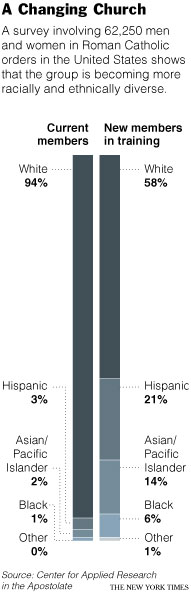
The following article appeared in the New York Times earlier this week. Written by Laurie Goodstein, it reports on a CARA study showing a strong preference for and return to tradition among young adults who enter priesthood and religious life. I have known this anecdotally for years but now we have some hard data to chew on. Here I publish excerpts of the NY Times article and put my own commentary in red. Note: you can click on the graph to the lower left to see a clearer image of the graph.
A new study of Roman Catholic nuns and priests in the United States shows that an aging, predominantly white generation is being succeeded by a smaller group of more racially and ethnically diverse recruits who are attracted to the religious orders that practice traditional prayer rituals and wear habits. [In recent years I have personally experienced a lot of ethnic diversity in vocations gatherings. Through a movement known as the Neocatechumenal Way we have we havemen from all over the world studying for the priesthood here in DC. At my own parish there are over 25 Religious sisters in our Convent from the Servant Sisters of the Lord (see photo above right of Sisters, novices and postulants) and they too include some Americans but when I am with them I feel like I’m at the U.N. The Church really is “catholic” (universal) after all].
The study found that the graying of American nuns and priests was even more pronounced than many Catholics had realized. Ninety-one percent of nuns and 75 percent of priests are 60 or older, and most of the rest are at least 50. They are the generation defined by the Second Vatican Council, of the 1960s, which modernized the church and many of its religious orders. Many nuns gave up their habits, moved out of convents, earned higher educational degrees and went to work in the professions and in community service. [Well, the article simplifies things a bit. Just because you are old and white doesn’t necessarily mean that you are one of the “modernizers.” To be sure that generation collectively did the things described here but not every member of that generation went as far as moving out of convents, gave up habits etc. It’s about more than age and race].
The study confirms what has long been suspected: that these more modernized religious orders are attracting the fewest new members….The new study, being released on Tuesday, was conducted by the Center for Applied Research in the Apostolate at Georgetown University, for the National Religious Vocation Conference, which is looking for ways for the Church to attract and retain new nuns and priests. It was financed by an anonymous donor.
“We’ve heard anecdotally that the youngest people coming to religious life are distinctive, and they really are,” said Sister Mary Bendyna, [I have met with a worked with Sr. Bendyna. She is very thorough and very honest in interpreting data. I have a great deal of respect for her work and her insistence on acknowledging what the data says, distinct from what ideologies might wish the data says.]executive director of the Center for Applied Research in the Apostolate. “They’re more attracted to a traditional style of religious life, where there is community living, common prayer, having Mass together, praying the Liturgy of the Hours together. They are much more likely to say fidelity to the Church is important to them. And they really are looking for communities where members wear habits.” [I have often wondered by many more “modernized” orders that resist accepting this fact continue down the road which does not have many of these features described Sister. They observe the orders with more traditional features getting numerous vocations while their own orders do not. There is a very strange resistance at work here. Ultimately it seems non-existence is in the future of some of the orders that refuse to adapt. But that doesn’t seem to phase them. I remember talking to several Benedictine Sisters at a recent workshop. Their branch of the Benedictines has become very modernized and hasn’t had a vocation in years. When I asked them why they hadn’t consider changing their approach, they gave me a rather surprising answer. They indicated that maybe it was time for Religious Life to largely go away and to hand the Church back to it’s “rightful owners,” the laity. Wow! They seemed to have lost any notion of the Charism of Religious Life. Great to know the laity are more involved today but religious life is surely still and important gift of the Lord to the Church, seems to me!. Now this was just one group of sisters. I haveno idea how representative their answer is of other communities that seem to be unable or unwilling to adapt]. Of the new priests and nuns who recently joined religious orders, two-thirds chose orders that wear a habit all the time or regularly during prayer or ministry, the study found.
The study also showed that whites account for 94 percent of current nuns and priests but only 58 percent of those in the process of joining orders. Asians and Pacific Islanders are disproportionately represented among the newcomers, accounting for 14 percent, far above their 3 percent share of the Catholic population in the United States, Sister Bendyna said. Hispanics are 21 percent of the newcomers, compared with only 3 percent of the current priests and nuns.
Of women who recently entered religious orders, the average age is 32; for men, it is 30. But retaining new recruits is a challenge. About half of those who have entered religious orders since 1990 have not stayed, and almost all who left did so before making their final vows. [This doesn’t really mean that they “left.” It is like a seminarian going off to seminary. One of the purposes of that time is further discernment, “Is this what God is calling me to do?” A seminarian who chooses to leave the seminary is not said to have “left the priesthood.” So also those who leave before final vows are not said to have left religious life]. “People come to religious life because they feel they’re being called,” said Brother Paul Bednarczyk, executive director of the National Religious Vocation Conference, adding that the purpose of the Church’s training process “is to discern that call before a commitment is made.” So “it’s not surprising,” he said, “that you would have people that would leave.”
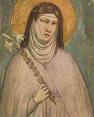
Today, the Church honors Clare of Assisi, who was born in 1193 and as a young adult, inspired by Francis of Assisi, joined him and founded the first convent for women in the Franciscan tradition. Clare was from a wealthy family and had quite a comfortable life ahead of her when she decided that the Gospel and a life of poverty seemed more interesting.
A Charism for love
Clare had a hunger for God. She learned that a life of simplicity would teach her how to let go of any distraction that shifted her focus away from serving God. In the Decree on Religious Life, we learn that religious life fosters a life hidden with Christ in God. Such a life is grounded in love of one’s neighbor and an abiding faith that this love rooted in Christ is a source of salvation for the whole world.
Build it and they will come
It was not long before Clare’s inspiration attracted other women, including her own mother and sister! What seemed like a good idea 800 years ago, continues to seem like a good idea to women today. In our own backyard ,in Brookland, there is a convent of Poor Clares (3900 13th St., NE) whose mission is to pray for the needs of the world and for the building up of the Church. They welcome anyone who knocks at their door to enjoy the silence of their chapel, to join them in prayer, to ask for their prayers or to share a conversation. See www.poorclareswdc.org.
Clare and all the women and men who are called to contemplative life teach us how to seek and love above all things the God who first loved us.
In the article “How to Discern Elements of Your Personal Vocation” by Fr. Peter Ryan, Professor of Moral Theology at Mount St. Mary’s Seminary, he says,
“With respect to future possibilities, we cannot discern whether we should do something, but only whether we should try to do it…The real possibility that we could die before we carry something out or that other things could intervene and make something impossible should warn us not to conclude that we are definitely called to do something in the future, but only that we are called to try to do it. Often enough, all God wants is the effort; and if we make the effort, we produce the results he desires.”
Takes a lot of the pressure off, doesn’t it!
Brian doesn’t have to discern whether he will marry Leslie; he only has to try to date her. Cheryl doesn’t have to discern whether she will be a religious sister; she only has to try to live in the community for a time. Tim doesn’t have to discern whether he will be a priest; he only has to apply to the seminary and see if he is accepted. Where these people end up on the other side of their decision to try is in God’s hands.
Young adults are at a point in their lives where they are discerning many things including personal vocations. Personally, I’m often frustrated with the fact that I can’t see the future, and even more frustrated when what I think will happen doesn’t end up happening. (What can I say, I’m a planner.) But as Fr. Ryan says, our effort to try is often what God desires as it shows faith and hope. God wants us to say to him, “I don’t know where this path will lead, but Yes Lord, I’m going to follow you anyway.” We can act within these uncertainties saying and believing, Thy Will be done.

 Some of you know that I write the Question and Answer Column for Our Sunday Visitor Newsweekly. I like doing that as it imposes a kind of disciplined writing on me, where I must answer questions very briefly, in about 400 words or less.