Posts Tagged ‘Liturgy’

Reverencing Mystery

In the secular world a mystery is something which baffles or eludes understanding, something which lies hidden or undisclosed. Now the usual attitude of the world toward mystery is to resolve it, get to the bottom of or uncover it. Mysteries must be overcome! The riddle or “who-done-it” must be solved.

In the religious world mystery is something a bit different. Here mystery refers to something revealed by God which largely or completely escapes what we can know by our intellect alone and unaided by God through grace and revelation. These are not worldly mysteries but mysteries of the faith.  From the perspective of faith it is also usually that case that a mystery is something partially revealed by God but much more of which lies hidden. So something is seen, but much more is unseen.

For the Christian then, mysteries are not something to solved or overcome so much as to appreciate and reverence. In worldly mystery it is something to approach and with daring, perseverance and smarts to conquer. But the mysteries of faith are something to be considered with humility and reverence realizing we can never exhaust their meaning or capture and conquer their full essence.  A few thought on the mysteries of faith:

  1. Consider the picture at the upper right of the iceberg and allow it to be an image for the mysteries of faith. Above the water line we see something of the iceberg, but beneath the waterline, remains much more, hid from our eyes (except in a picture like this).
  2. Consider the mystery of creation. In the book of Sirach, after a long list of the marvels of creation there comes this magnificent line: Beyond these, many things lie hid; only a few of God’s works have we seen. (Sirach 43:34) This is mystery, what we see is far surpassed by what we do not see!
  3. Consider the mystery of the human person. Think of someone you know rather well, perhaps a spouse, family member or close friend. There is much about them that you see and know, but even more of which lies hid. You can see their body, but only the external parts of it. Much more lies active and intricate beneath the skin. You “see” aspects of who they are in terms of their personality and mannerisms and so forth but much more lies hid from your knowledge such as their inner thoughts, aspects of their history, and deeper drives and motivations that may lie hidden even to them in many ways. As time goes on and relationships deepen the “mystery” of the human person unfolds and more is revealed. Yet the mystery of the human person is never “solved” and it would be irreverent to assume we ever could or should do so. No, this  mystery must be reverenced and approached with humility and if we ever really think we have some one (even our selves) “figured out” we are badly mistaken and transgress the dignity of the person. Scripture says, More tortuous than all else is the human heart, beyond remedy; who can understand it? I, the LORD, alone probe the mind and test the heart (Jer 17:9-10). Surely we are on a journey to understand and the discover as the mystery of our selves and the others as our life unfolds but the mystery must always be respected and reverenced, not solved in order to be controlled and manipulated.
  4. Herein lies a problem with modern American culture that should be critiqued and that is the tendency to lack modesty. One definition of modesty is “reverence for mystery.”  Part of the dignity of the human person is not simply to be on open display in an indiscreet way. In deeper relationships more is revealed in increasingly appropriate ways. Close friends share more and understand more. Spouses, ideally, share even more to include the deep intimacy of the body. The disclosing of the mystery of the human person in appropriate ways based on the depth of relationship is at the heart of modesty. But today too many things of a private nature  are too easily sought and disclosed. A nosey media is partially to blame along with an increasingly odd tendency for many today to want to disclose matters that should remain private. Talk shows come to mind wherein a person or celebrity “tells all.” In today’s physcotherapeutic culture there is also the tendency to request and also to provide too much information about personal things. Surely close friends and family may be an appropriate audience for such disclosures but immodesty causes many to reveal indiscreetly  what should remain private. Clearly too, physical immodesty is epidemic and we have discussed it here before. And this also fails to reverence the mystery due the human person by putting on display that would should only be revealed in the most intimate and appropriate settings. Mystery is at the heart of the dignity of the human person. Modesty is reverence for that mystery, immodesty is a lack of reverence  (cf 1 Cor 12:22ff).
  5. Consider the mystery of the Liturgy and the Sacraments- We see much in the Liturgy and the celebration of the Sacraments but far more remains hidden from our eyes as these mysteries are celebrated. (You may well know that the Eastern Churches and especially the Orthodox Churches refer to the sacraments as the “Mysteries”). Consider a baby being baptized. We see the water poured and hear the words. Perhaps there is a cry. But what remains unseen is even greater: The child dies, is buried with Christ and rises to new life with him in an instant (Rom 6:1-4). Sin is washed away, an inheritance is received, true membership into the Body of Christ is conferred, the office of Priest Prophet and King are received, divine sonship is conferred and on and on. Far more is actually happening that we see or even know. This is mystery, something seen, yet far, far more unseen.  Consider the Liturgy, the altar is there,  a priest, the faithful gathered, words and gestures perceived. But far more is unseen: Christ the high priest is the true minister, the physical church building gives way to the truth that we are mysteriously caught up into heaven and the heavenly liturgy surrounded by countless saints and angels worshipping the Father and we as members of the Body of Christ render the Father perfect praise and thanks through, with and in Jesus our head.
  6. Herein lies a problem with the Liturgy in modern times- In recent decades there has been a laudable attempt to make the Liturgy more intelligible to people. However there is a trade off to be careful of. The mystery of the Liturgy and the sacraments must be reverenced. In our attempt to make everything intelligible and accessible we risk offending the dignity of the liturgy and sacraments which are ultimately NOT fully intelligible or explainable. They are  mysterious (in the way we are using the word) and ineffable (not reducible fully to words). In the ancient Church the Liturgy was surrounded by the disciplina arcanis (discipline of the secret) wherein only fully initiated Catholic Christians were permitted to witness it. Sacramental catechesis was carried on largely AFTER the celebration of the Sacraments (Mysteries) in a process called mystagogia (a Greek word meaning “Education in the mysteries”).  I do not argue here for a complete return to those days but one of the characteristics of the modern age and the manner in which liturgy is often celebrated is the lack in a sense of mystery. It often seems that everything has to be “seen” and “understood” to be authentic or relevant, or so the thinking goes with some. But this is wrong on two levels. First, everything CANNOT be seen. Most of the liturgy in fact lies hid from our earthly eyes. Secondly most of the liturgy cannot be understood. It is mystery to be reverenced and appreciated as such. It is “other” and beyond what this world can ever fully appreciate. We can grow in our appreciation of it as the years go by but never solve or understand it fully here on this side of the veil. Somehow this appreciation of the mystery of the Liturgy and Sacraments must be balanced with the attempt to render our worship “intelligible.” I put intelligible in quotes for we can only use that term in a relative manner.
  7. Finally it remains true that our longing to enter fully the mystery of God and our very selves will one day be fulfilled. St. Paul speaks of this when he writes: Now we see but a poor reflection as in a mirror; then we shall see face to face. Now I know in part; then I shall know fully, even as I am fully known ( 1 Cor 13:12). You may be aware that the Greek word (title) for the last book of the Bible is  Ἀποκάλυψις (Apocalupsis) which means “unveiling.”  One day, the great mystery of this world, of ourselves, and God’s plan will be fully unveiled. For now, we reverence these mysteries of our self, others, the liturgy, the sacraments, creation itself and God’s plan. One day they shall be revealed. A caution here. I do not think we will ever exhaust the mystery of God (and perhaps not even ourselves). I do not think all eternity will ever be enough to exhaust the full mystery of God who is infinite and can never be fully comprehended in essence  by his finite creatures.

Reverence mystery, relish mystery, respect mystery. Magnum mysterium, admirabile sacramentum!

Lost Liturgies File: The Churching of Women

Today as I write this it is the Feast of the Presentation (February 2). Some determine this feast to be the definitive end to the Christmas cycle and it is perhaps appropriate that yet another snowfall is descending on Washington. Biblically this feast commemorates the Jewish practice of a woman presenting herself at the temple forty days after the birth of a male child in order to be “purified” and blessed by the priest. Mary as an observant Jew fulfilled this obligation and it is recorded in Luke 2:22-24:

When the time of their purification according to the Law of Moses had been completed, Joseph and Mary took him to Jerusalem to present him to the Lord (as it is written in the Law of the Lord, “Every firstborn male is to be consecrated to the Lord”and to offer a sacrifice in keeping with what is said in the Law of the Lord: “a pair of doves or two young pigeons.”

The Jewish practice of “purifying” a woman after childbirth was set forth in the Book of Leviticus 12:1-8:

The LORD said to Moses, “Say to the Israelites: ‘A woman who becomes pregnant and gives birth to a son will be ceremonially unclean for seven days, just as she is unclean during her monthly period. On the eighth day the boy is to be circumcised. Then the woman must wait thirty-three days to be purified from her bleeding. She must not touch anything sacred or go to the sanctuary until the days of her purification are over.  If she gives birth to a daughter, for two weeks the woman will be unclean, as during her period. Then she must wait sixty-six days to be purified from her bleeding. ” ‘When the days of her purification for a son or daughter are over, she is to bring to the priest at the entrance to the Tent of Meeting a year-old lamb for a burnt offering and a young pigeon or a dove for a sin offering. He shall offer them before the LORD to make atonement for her, and then she will be ceremonially clean from her flow of blood.” ‘These are the regulations for the woman who gives birth to a boy or a girl. If she cannot afford a lamb, she is to bring two doves or two young pigeons, one for a burnt offering and the other for a sin offering. In this way the priest will make atonement for her, and she will be clean.’ “

As you can see, there is a fairly negative concept at work here. A woman becomes ritually unclean by giving birth. This was due to the flow of blood and/or other fluids at birth. Even more distressing to modern notions is that a woman who gave birth to a daughter was considered ritually unclean for even longer! Alas, it is well that the power of the Church to bind and loose has freed us from this thinking. Keep in mind that this was ceremonial law, not moral law and, hence, the Church is not setting aside immutable moral law in abrogating such notions of ritual impurity.

Nevertheless the custom and instinct of blessing women after childbirth was retained in the Church with an altered understanding from Jewish teaching. That rite came down through the centuries and was intact until very recent times and was referred to in many places as the “Churching of Women.” (The official Latin title of the Rite was actually benedictio mulieris post partum – (the blessing of women after giving birth))The rite was largely discontinued in the 1960s in the wake of the Second Vatican Council. The Book of Blessings published in 1984 does contain a “Blessing of a Woman after Childbirth” but it is seldom used and is significantly altered from the old rite in use until about 1965.

The reasons for the discontinuance are many. I remember my mother and other  women of my mother’s generation saying they had been taught the Jewish history of this rite and thus rejected it for that reason. But the Catholic Church was clear to distinguish its practice from the Jewish roots. Pope Gregory as early as the 6th Century protested any notion that defilment was incurred by childbirth. Further, the prayers of the old “Churching of Women” Rite never mentioned a need for purification and spoke only of blessing and thanksgiving. So those who taught women of my Mother’s generation against this practice were probably engaged more in polemics than true Church history. Another reason for the discontinuance was probably and simply that so many things were dropped during the changes in the wake of the Council.

On this Feast of the Presentation I would like to recommend this beautiful ritual to your attention. In an extended sense it fulfills What Mary did today, forty days after the birth of Christ. Surely we do not understand it in an Old Testament way, but we rescue and fulfill the tradition with the beauty of Christian faith and the dignity of women who are mothers.  

I have attached a PDF version of it here:  The Churching of Women.  Though it has never been required by the Church it is a beautiful way to welcome back and bless a woman who has perhaps been away for a few weeks  giving birth. She has labored well for her family, her child and the Church and this ritual can serve simultaneously as a blessing and thanksgiving extended by the Church to the noble women who are our mothers. The blessing can be given after a baptism, after mass, collectively to recent mothers, or individually. It is true that the current baptismal rite contains a blessing for the mother but this older rite is a more single and special blessing. The Pope’s recent Motu Proprio permitting the older forms of the sacraments to be used has made these older rituals also more available. Here is the concluding prayer of the rite:

Almighty, everlasting God, through the delivery of the blessed Virgin Mary, Thou hast turned into joy the pains of the faithful in childbirth; look mercifully upon this Thy handmaid, coming in gladness to Thy temple to offer up her thanks: and grant that after this life, by the merits and intercession of the same blessed Mary, she may merit to arrive, together with her offspring, at the joys of everlasting happiness. Through Christ our Lord.

I looked for a video depicting the Churching of Women but found none. Instead enjoy this video by Shirley Ceasar which celebrates the love of a mother as an image of God’s love:  The full cost of my love is “no-charge”


The Seating Plan at the Last Supper

Most of us who live now think of the Last Supper in terms that are familiar to us. In our imagination Jesus and his apostles sit around a square table on chairs. Jesus is a the center and his apostles arrayed around him. The famous painting of Leonardo Da Vinci (See right)  is uppermost in most modern minds when thinking of the Last Supper.

But the real Last Supper was different in many significant ways. Some of the following I am about it present is still a matter of debate other aspects of it are undisputed.

  1. Jesus and the Apostles did not sit on chairs at a table. Rather they reclined on ground or on mats and pillows, leaning on their left elbow (either forward of back) and eating with their right hand. Their legs were stretched out behind them. (See picture at left, click to get a bigger size) This was the typical fashion for eating in the ancient world. That they reclined to eat is made plain in the Gospel of Mark: While they were reclining at the table eating, he said, “I tell you the truth, one of you will betray me–one who is eating with me(Mk 14:18).  It also explains some things that seem strange to us moderns. First of all why did John lean back on Jesus’ chest to ask him a question? (Jn 13:25;  21:20) This would be strange and physically awkward in a modern upright table setting. But reclining on one’s side on a mat meant you had to lean back to talk to the person next to you. There is also another strange scene where Jesus is reclining to eat in the home of a Pharisee and and a woman begins to anoint his feet (Luke 7:38).  In a modern upright table setting this would mean she’s have to be under the table. Strange indeed! But in the ancient setting the posture was such that one’s feet were behind and thus the woman could approach Jesus from behind and begin to anoint his feet without his prior knowledge.
  2. The Place of honor in modern western settings  at a typical long rectangular table is either at the center or at one end. Everyone is seated upright and facing in to the center and can generally see all the others well. However, in the ancient meal setting the table was  “U” shaped either as a half circle or with 90 degree arms. Instead of sitting at the center of the table (as in DaVinci’s painting above) the host or honored guest sat at the far left corner. Further, everyone sat on one side on the outside of the table allowing the inside of the table to open for servers.  The picture to the right is from a very early mosaic in Ravenna, probably made well before the 5th Century. At this early time the artists still had access to the memory of the actual practices at the time of Jesus and thus depicts the Last Supper as it was more likely arranged. Notice that Jesus is at the head of the left corner and his disciples are arrayed in a sloping ark behind and sloping to his left. This was the usual setting for the ancient meal and especially something as formal as a passover meal.
  3. It would seem that the place of second honor was at the other end of the U shaped table on the right corner. This would help explain why Peter is not at Jesus’ immediate right or left and has to motion to John across the room to lean back and ask Jesus a question (Jn:13:24-25). Since Peter would like have had the other place of honor it makes sense that he would be across the room and unable to ask Jesus himself.

Thus the whole setting of the Last Supper was rather a different setting that most modern people imagine. Leaning on elbows and eating with one hand would all be very awkward to us. But I suppose they’d think what we do strange as well. The question of the arrangement also factors into modern discussions of liturgical orientation and Mass facing the the people vs. Mass facing away from the congregation toward God. I’m sure that this will emerge in the discussion but it is clear from the Ravenna Mosaic that Mass facing east toward God and not toward the people did not offend ancient notions of the Mass as the “Lord’s Supper.” To the ancients formal meals featured the honored guest at one end angled away a bit  from most of the other guests.

I am sure that this final observation may generate some discussion in the comments but it is also meant to explain some of the theology and history that Pope Benedict has asked us to consider in the discussion of orientation in the Liturgy.

The following clip is a humorous scene from the Passion of the Christ. Mary is puzzled over Jesus making a tall table to eat at. She cannot imagine that anyone would want to eat sitting up. She says, “This will never catch on!”

The Mass in Slow Motion: The (Remarkable) Preface Dialogue

A short dialogue happens in the Mass just after the prayer over the gifts and the before the singing of the Sanctus. It is called the “preface dialogue” and it is really quite remarkable in its sweeping vision and heavenly call. Part of the reason we miss it’s significance is that the translation of the Latin is difficult to accomplish in English. Allow me to give the current translation so you’ll recognize it and then render a more literal version of the Latin.

  • The Lord Be with you
  • And Also with you
  •  
  • Lift up your hearts
  • We lift them up to the Lord
  •  
  • Let us give thanks to Lord our God
  • It is right to give him thanks and praise

A fairly familiar dialogue to be sure. But to some extent it fails to take wing because of the rather earthbound notion most moderns have of the Mass. Very few attending mass today think much of the heavenly liturgy. Rather they are focused on their parish Church, the priest in front of them and the people around them. But this is NOT an adequate vision for the Mass. In the end there is only one liturgy, the one in heaven. There is only one altar, the one in heaven. There is only one High Priest, Jesus in heaven. In the Mass we are swept up into the heavenly liturgy. There with myriads of angels and saints beyond number we worship the Father through Jesus, with Jesus and in Jesus.  In the Mass we are swept into heaven!

With this in mind consider a more literal rendering of the preface dialogue. Pay attention especially to the middle dialogue:

  • Dominus Vobiscum (The Lord be with you)
  • et cum spiritu tuo (And with your Spirit)
  •  
  • Sursum corda (Hearts aloft!)
  • habemus ad Dominum (We have, to the Lord!)
  •  
  • Gratias agamus, Dominio Deo nostro (Let us give thanks to the Lord our God)
  • Dignum et justum est (It is right and just).

What is the celebrant really inviting us to do? After greeting us in the Lord he invites us to go to heaven! But remember the priest is in persona Christi. Hence when he speaks it is really the Lord Jesus who speaks making use of the voice of the priest. And what does the Lord really say to us in the magnificent dialogue and preface that follows?  Allow me to elaborate on the fuller meaning of this text:

Let your hearts be taken up! Come and go with me to the altar that is in heaven where I,  Jesus the great High Priest, with all the members of my body render perfect thanks to God the Father! You are no longer on earth, your hearts have been swept aloft into the great liturgy of heaven! Come up higher. By the power of my words you are able to come up higher! Since you have been raised to new life in Christ, seek the things that are above where I am at my Father’s right hand. Come up now and enter the heavenly liturgy. Hearts aloft!”

The congregation’s response is meant to be a joyful acknowledgment and acceptance of the Lord’s action in summoning us to the heavenly liturgy. Here too allow me to elaborate:

“We have our hearts lifted to the Lord. We have entered the Heavenly Liturgy by the power of your grace, for you our head have taken us, the members of your body there. We are in the heavenly realms with you, worshipping the Father and giving him perfect thanks and praise. It is right and just that we should do this through you, with you and in you!

Then the celebrant sings or says the preface wherein some  specific things for which we are thankful are enumerated. The text of the preface changes based on the season or the saint or feast of the day. But it always ends in this or a similar manner: and so with angels and archangels and the whole company of heaven we sing the unending hymn of your praise: Holy, Holy, Holy….  And thus we are reminded that our worship is caught up into the heavenly liturgy where our voices join innumerable angels and saints in the glorious act of praise. We are in heaven! Our hearts (our very selves) are aloft!

Hence the Mass is never just the “10:00 am Mass at St. Joe’s”  It is the heavenly liturgy. Until recently Churches were designed to remind us that we were entering heaven. As we walk into older churches we are surrounded by windows and paintings that depict the angels and saints. Christ is at the center in the tabernacle. And all the elements that scripture speaks of as in the heavenly liturgy are on display not only in the building but in the celebration of the liturgy: Candles, incense, an altar, the hymns that are sung, the Holy Holy Holy, the scroll is brought forward in the Book of Gospels, the lamb on the throne-like altar, , the prostrations and kneelings of the saints before the Lord. All these things are described in the Book of Revelation descriptions of the heavenly liturgy. None of these things are in our churches or the liturgy for arbitrary reasons. We are in the heavenly realms and the heavenly liturgy and so we see and experience heavenly things. Hearts aloft!

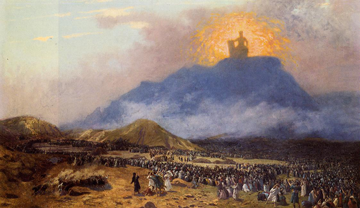
This video I made some time ago shows forth traditional Church Architecture as a glimpse of heaven. The Latin text of the Music by Bruckner describes how the form of the Liturgy and even Church architecture is set forth by God who first gave it in elaborate instructions to Moses on Sinai. Here is the text with my translation:

Locus iste a Deo factus est  (this place was made by God)
inaestimabile sacramentum; (a priceless mystery)
irreprehensibilis est. (It is beyond reproach)

Which Was the Son Of

The_Adoration_of_the_Magi_by_Fra_Angelico_and_Filippo_Lippi-763314

On Christmas Eve, in the Office of the Liturgy of the Hours, the genealogy of Jesus is read from Luke 5. This passage which is difficult enough to read aloud was set to music by the contemporary Estonian composer Arvo Part, whose inspiration for many of his classical pieces comes from Gregorian chant.

It is a beautiful song that for me brings alive the unfolding of the story of salvation as seen in the mind of God. The song is called ”Which was the son of.” It is a perfect reflection for the eve of Christmas.

Open Luke 5 to verse 23 and read along as the choir sings

May you have a happy and holy Christmas.

****


****

Reaching Young Adults – Some Recent and Fascinating Findings

theology-on-tap-1It is usually thought by most Catholics that the Evangelical “mega Churches” have lots of young adults and that many of our Catholic young adults have gone there. There is, no doubt, a great absence of young adults in most Catholic Parishes. There seems to be a quite literal and physical generation gap, the “gap” being the empty spaces in the Church that young adults would occupy. However, Eric Sammons at his blog The Divine Life  (excellent Blog – Check it out!) has called attention to a very interesting article that reveals that absent young adults is a very common problem in Evangelical Churches too. The article appears in the Broken Arrow Ledger entitled “Where have the Young People Gone?” The article also reveals some Churches where young adults are increasing in number and you may be surprised where. Here are some excerpts along with my comments in RED

 Two-thirds of young adults who have grown up in evangelical churches are leaving, according to Ham and Beemer. [Authors of a forthcoming book “Already Gone,” by Ken Ham and Britt Beemer, with Todd Hillard]…Information in the book is based on data collected from 20,000 phone calls and detailed surveys of 1,000 20-to-29-year-olds who used to attend evangelical churches on a regular basis but have since left them behind…..This is no small survey. Most major surveys feature much smaller sampling groups

“They (young people) have written church off as a moralistic bad guy that wants to keep them from enjoying their life…. I had this attitude when I was young too. My “lack of belief” was not a “studied atheism” but rather a more angry agnosticism. I didn’t like being told what to do. And I allowed what I wanted to do to be the basis of what I would accept. I don’t suppose that every yound adult goes through this phase but many do. In the Archdiocese we have certain forums like Theology on Tap where we try to engage young adults on important moral issues and demonstrate the credibility and sensibility of Catholic teaching. But, it is a long discussion to be had over many years. But if only we can keep them in the discussion, we may win some of them back.  

Young people no longer believe in Genesis, which is the basis for Christianity, Garland said. They question everything from creation to the divinity of Christ, and for that he credits laws that require the evolution theory be taught in public school classrooms and ban instruction on Biblical creation. As I pointed out yesterday in my Blog Post I don’t think it is necessarily that they don’t believe but rather that we have failedto set the Biblical narrative forth in a compelling way because, in many cases we have stripped the plot of it’s central conflict which is the terrible reality of sin and the consequent need to be saved. I don’t think it is difficult to demonstrate to young adults that sin is a very serious matter. They have seen friends die from drug overdoes and drunk driving accidents. They know of the reality of STDs and the shallowness of most modern “substitutes” for marriage. They have experienced hurts and betrayals.  They are aware of violence, poverty and injustice. I think we just have to get in the game and show them how the Scriptures and the doctrine of Original Sin go a long way toward explaining the broken down nature of the this fallen world. Our teaching is sensible if we focus in on the main problem of sin and disorder, the “problem of evil.”  Without this Genesis and the whole Biblical narrative seems but a quaint and fanciful story that does not connect. And with no concept of the problem of sin and the great drama of their lives, young adults see no relevance to salvation, the necessity of prayer and sacraments. They just disconnect.

There is an exception, however. Traditional churches that are liturgical churches and smaller evangelical churches seem to be retaining their twenty-something members in greater numbers than larger and mega-churches…..Now you’d think the Catholic Church would fall into this category. But to some extent we are not reaping this harvest because most of our liturgies lack the flavor of tradition. More on this in a moment. [Rev John] Wilke said the only church he knows of that is experiencing growth in the 20-to-29-year old age group is the Greek Orthodox Church.“The Greek Orthodox Church is a liturgical church. Kids want to return to something different from what they get from the world. If we want to reach these kids again, we are going to have to return to what the early church was doing. We need to raise the bar,” he said…..There is sort of a strange rebound in some of the ancient liturgies, such as Catholic, Greek Orthodox and Episcopalian. What we would call the emerging church is something that is very appealing to that age group. Places that have a sense of order, mystery and transcendence are very appealing….I have experienced a lot of this in my discussion with some young adults who do not find the current liturgical experience of most Catholic Parishes satisfying. Many of them are turning up at the Traditional Latin Mass at I St Mary’s and other locations. I say Mass the Traditional Latin Mass once a month at St. Mary’s and find a growing and  vigorous group of young adults there. For the last several years, more than half my weddings come from the Latin Mass group. Most of these young adults were dissatisfied with liturgies in their local parish which they found trendy and ephemeral. Remember, the 1960s folk music is a long time ago to them! Folk singing seems dated to many (not all) young adults. Many are discovering the riches of traditional worship that were dropped in the 1970s. Now I want to say that I do not think that the majority of young adults are asking for the Latin Mass. But what IS observable is that one area of the Church that is attracting and retaining young adults is the Traditional Latin Mass. Also, at a neighboring Parish, St. Peters on Capitol Hill,  there are many young adults that turn out for Eucharistic adoration. My data is anecdotal only, but there seems to be a consistent message that many young adults are looking for more traditional forms, they are increasingly attracted by a presentation of the faith that is substantial and serious. This is also evident in the recent trend in vocations to the priesthood and religious life wherein most of the young adults who answer the call are far more traditional than they were 20 to 30 years ago. They prefer traditional forms and insist on orthodoxy. [W]here entertainment is the approach to worship. It doesn’t really satisfy. I think there is a richness in the ancient traditions that speaks at levels where contemporary music fails….[Rev. Shelby Scott agrees]: traditional liturgies and such things as incense and mystery – has become something of a strength and intrigue for the younger generation,” he said.

The Rev. John Wilke, senior pastor of Immanuel Lutheran Church,…cited one of Luther’s writings as something for church leaders to consider: “A faith that costs nothing and demands nothing is worth nothing.” “I think that is where the church is today. I get too many things in the mail from churches that say, ‘Come just the way you are, you don’t have to change,’” Wilke said. “While God loves you where you are, he expects you to change. We don’t put the fear of God in our churches, we don’t have that respect. We’ve made Jesus our homeboy. He’s not our homeboy, he’s our Saviour.”…Rev Scott agrees….that Christian worship is going through a significant change. He believes young people are looking for a doctrine that requires more of them than just showing up at church. Here too my own experience bears this out. While it is true that many young adults may still be in the “I don’t want to be told what to do” mode. I think it is also true that many young adults also move to a stage when that begins to abate and they are looking for meaning and answers. Further, I am convinced that most of the rebellious,  deep down inside,  are glad that some one is challenging them. Somewhere under all the layers they want to know the truth even if they are not ready to fully embrace it. When I was a teenager I was well aware when I was being patronized and I usually respected adults less who humored me and tried to “relate” to me. Frankly they looked silly try to be like a teenager. Young adults too, I suspect, know when we are watering things down in an attempt to be popular. A faith that is integral and properly demanding command more resepct in the end. We will not be taken seriously by young adults unless we ARE serious. Trendy and cheesy gimmicks will backfire in the end unless there is a serious and reasonably demanding faith that is expressed.

******

The following video was an PBS special I taped on the Latin Mass. Among the topics discussed is the appeal that many young adults find with it.


Delight in the Dies Irae!

LastJudgementI am of the mind that we set aside a great treasure and masterpiece when the sequence hymn for funeral Masses, Dies Irae got the boot some forty years ago. I know it was a “heavy” hymn with a sobering message, but it sure was glorious. The gorgeous chant was one of the more beautiful and soaring melodies of Gregorian Chant and manycomposers such as Mozart and Verdi set the text to stirring musical compositions.

Ah the Dies Irae!  It’s syllables hammering away in trochaic dimeter: Dies irae dies illa solvet saeclum in favilla, teste David cum Sybila! (Day of wrath that day when the world dissolves to ashes, David bears witness to it along with the Sibyl!) Many came to think it a theme too dark and sobering for the modern funeral. Perhaps at times it is a bit heavy but at the same time no hymn more beautifully sets forth a basis for God’s mercy. The dark clouds of judgment part and give way to the bright beauty of the final line Pie Jesu Domine, dona eis requiem (Sweet Jesus Lord, give them [the dead] rest).

The hymn was not composed for funerals. Actually it was composed by Thomas of Celano in the 13th century as an Advent Hymn. Yes, that’s right an Advent hymn. Don’t forget that Advent isn’t just about getting ready for Christmas, it is about getting ready for the Second Coming of the Lord. And that is what this hymn is really about. At this time of year, as the the leaves fall and summer turns to winter, we are reminded of the passing of all things. The Gospels we read are those that remind us of death and the judgment to come.

Journey with me into the beauty and solemn majesty of this hymn. I will give you an inspiring English translation by W J Irons, one that preserves the meter and renders the Latin close enough. A few comments from me along the way but enjoy this largely lost masterpiece and mediation on the Last Judgment. (You can see the Latin Text along with English here: Dies Irae)

The hymn opens on the Day of Judgement warning that the day will reveal God’s wrath upon all injustice and unrepented sin. God’s wrath is his passion to set things right. And now it is time to put an end of wickedness and lies:

  •  
    • Day of wrath and doom impending,
    • Heaven and earth in ashes ending:
    • David’s words with Sibyl’s blending

And all are struck with a holy fear! No one  and no thing can treat of this moment lightly: all are summoned to holy fear. The bodies of the dead come forth from their tombs at the sound of the trumpet and will all of creation answer to jesus, the Judge and Lord of all:

  •  
    • Oh what fear man’s bosom rendeth
    • When from heaven the judge descendeth
    • On whose sentence all dependeth!
    •  
    • Wondrous sound the trumpet flingeth,
    • Through earth’s sepulchers it ringeth,
    • All before the throne it bringeth.
    •  
    • Death is struck and nature quaking,
    • All creation is awaking,
    • To its judge an answer making.
    •  
    • Lo the book exactly worded,
    • Wherein all hath been recorded,
    • Thence shall judgement be awarded.
    •  
    • When the Judge his seat attaineth,
    • And each hidden deed arraigneth:
    • Nothing unavenged remaineth.

Judgment shall be according to our deeds, whatever is in the Book  (Rev 20:12; Romans 2:6)! Ah but also in God’s Word is the hope for mercy and so our hymn turns to ponder the need for mercy and appeals to God for that mercy:

  •  
    • What shall I frail man be pleading?
    • Who for me be interceding?
    • When the just are mercy needing?
    •  
    • King of majesty tremendous,
    • Who does free salvation send us,
    • Font of pity then befriend us.
    •  
    • Think kind Jesus, my salvation,
    • Caused thy wondrous incarnation:
    • Leave me not to reprobation.
    •  
    • Faint and weary thou hast sought me:
    • On the cross of suffering bought me:
    • Shall such grace be vainly brought me?
    •  
    • Righteous judge for sin’s pollution,
    • Grant thy gift of absolution,
    • Before the day of retribution.
    •  
    • Guilty now I pour my moaning:
    • All my shame and anguish owning:
    • Spare, O God my suppliant groaning.
    •  
    • Through the sinful Mary shriven,
    • Through the dying thief forgiven,
    • Thou to me a hope has given.

Yes there is a basis for hope! God is rich in mercy and, pondering the Day of Judgment is salutary since for now we can call on that mercy. And, in the end it is only grace and mercy that can see us through that day:

  •  
    • Worthless are my tears and sighing:
    • Yet good Lord in grace complying,
    • Rescue me from fire undying.
    •  
    • With thy sheep a place provide me,
    • From the goats afar divide me,
    • To thy right hand do thou guide me.
    •  
    • When the wicked are confounded,
    • Doomed to flames of woe unbounded:
    • Call me with thy saints surrounded.
    •  
    • Lo I kneel with heart-submission,
    • See like ashes my contrition:
    • Help me in my last condition.

 And now comes the great summation: That Day is surely coming! Grant me O lord your grace to be ready:

  •  
    • Lo, that day of tears and mourning,
    • from the dust of earth returning.
    • Man for judgement must prepare him,
    • Spare O God, in mercy spare him.
    •  
    • Sweet Jesus Lord most  blest,
    • Grant the dead eternal rest.

A masterpiece of beauty and truth if you ask me. Some years ago I memorized most of it. I sing it from time to time over in Church late at night, the hauntingly beautiful chant rings through the echoing arches of our Church. When I die sing it at my funeral!  For I go to the Lord, the judge of all and only grace and mercy will see me through. Perhaps the plaintive calls of the choir below at my funeral will resonate to the very heavens as I am judged. And maybe the Lord will look at me and say,

  •  
    • I think they’re praying for you down there, asking mercy.”
    • “Yes, Lord, mercy.” 
    • “They’re making a pretty good case.”
    • Yes Lord, mercy.
    • Then mercy it shall be 

Amen.

Dies Irae from elena mannocci on Vimeo.

Altering Anthropocentric Attitudes

83396268“Anthropocentric? What’s that?!”  you say. It is a word that means “man is at the center”  and its one of the chief problems we have in our understanding of masses and other liturgies in modern times. It seems that our general preoccupation is with what we human beings are doing and far less on God, the worship of God and what God is doing. I pray you my reader might be an exception to this modern tendency but I suppose we all struggle with it to some extent. Take some of the following examples as illustrations:

  1. I often hear people say they don’t go to Church because they don’t “get anything out of it.” Perhaps they are looking for improved preaching, better choirs, or more fellowship. Now all these are things worth striving for in the Church. Our liturgies should be well planned, joyful, with powerful preaching and fine music. So lets all agree that this should be worked at. But the truth is none of this should be the main or only reason we go to Church. Going to Church on Sunday is not about you, it is not about me. We go to Church because God is worthy. He is worthy of our praise, our time, our tithe, our worship. The worship of God is the central purpose of of the Mass and every liturgy not the entertainment of human beings. Yet we so easily think of ourselves and our comfort more than God. Mass should be “convenient, short and always suited to my taste” as so many think, almost as though it were all about me. And so we have an anthropocentric (man centered) attitude often on display. How about we all agree to work on high quality liturgies but lets also agree that the focus is on God, not on us and only what we want and how great or not so great we are. How about agreeing that the we go to Mass because God is worthy not simply because we get something out of it. An old Gospel hymn says, “Just forget about yourself and concentrate on Him (God) and worship him!”  I have found that when I have taken this view, I have gotten a lot more “out of it.”
  2. Weddings are often another time where God seems quite forgotten. As the wedding party files up the aisle cell phone cameras are flashing away, people step into the aisle trying to get the shot. The bride and her bridesmaids are the focus. Now, I’m all for appreciating feminine beauty, believe me. But once the Bride and Groom are up the aisle and the music stops I find it necessary to refocus the congregation. To remind them that we are here to worship God, pray for the couple and witness a great work of God called the sacrament matrimony. I ask that all the cell phone cameras be put away remind them that a professional photographer has been hired and then call the congregation to silent prayer with heads bowed. Only after 30 seconds of silence do I sing the opening prayer. Further instructions are necessary to encourage the faithful to listen carefully as God speaks a Word to them in the readings. More silent prayer after the homily and then a request that the congregation pray deeply as they witness the vows and glorify God in their hearts. Without these clear instructions the whole thing too easily becomes about the dresses, the various personalities, anything or anyone but God, in a word, anthropocentric. We can surely be joyful for the happy couple but how about a few accolades for God who pulled the whole thing off?
  3. Funerals too can become too anthropocentric. The first purpose of a funeral Mass is to worship God and to give thanks for having given us the gift of the life of the now deceased loved one. We also gather to pray for the repose of the soul of the deceased as they go to judgement. We can trust God’s mercy but we ought to be quite prayerful for we must all appear before the judgement seat of Christ and render an account (Rom 14:10; 2 Cor 5:10). Seems like a good time to pray for the deceased. Now pray is not the same as “praise.” Here too many funeral Masses and funeral tributes focus too much on what a great guy Joe was and how he loved the Redskins and loved to tell jokes etc. Some remarks about Joe’s faith and how God worked in his life may be appropriate but the fundamental purpose of the funeral Mass is to worship God and beseech his mercy for Joe and for all of us who will one day die too and have to render an account. No amount of joke telling, and being a great guy is enough to purchase salvation. No human achievement can ever the pay the price. It’s only Jesus who gives any hope at the funeral that Joe or any of us even stand a chance. We ought to worship God and thank him for his mercy and grace at every funeral and recommit ourselves to Jesus.

Well, hopefully I’ve made my point. Like most things liturgical I’ll bet you have a few points of your own and I hope you’ll share them. I hope you don’t think I was being too harsh, I actually mean a lot of this in good humor. There’s something a bit funny about the way we think things revolve around us and how easily forgetful we can be about God. Our culture surely doesn’t help us put God first and so it is easy for us to slip into a kind of anthropocentrism in a culture that almost never mentions God and which constantly tells us that we have a right to have everything our way. Simply being conscious of the tendency can help us name the demon and thus alter our anthropocentric attitudes.

In this video, newly ordained Archishop Augustine DiNoia avoids the usual modern tendency to go on at great length about all the worderful people who made the liturgy and the day possible. Instead, he focuses on praising God. And to the degree that he mentions people it is always in reference to how God has worked through them and prayers that He will continue to do so. The video is is only 3 minutes but if you listen to nothing else, listen to the first line. He is not insensitive but it is clear he will not take the focus off God for any reason.


Liturgy at the End of an Era

image0.6I received my First Holy Communion in 1968 on my knees at the altar rail in our parish church of Our Lady of Perpetual Help  in a suburb North of Chicago called Glenview. I received from a very elderly pastor, Fr. Dussman, whose hands shook from Parkinson’s. It was an awesome and fearsome event. I was more nervous since Father’s hands shook and receiving communion from him could be a challenge, especially for the first time.

I remember well how seriously we took Church in those days. We had special Church clothes (always a coat and tie), special Sunday shoes and approaching the altar rail was something quite wonderful but very formal: hands folded before the chest, fingers straight, right thumb crossed over left. Kneeling and waiting for the priest and altar boy to pass by was a time of anticipation, a kind of distracted prayer, alert and ready, don’t make the priest wait! Suddenly a altar boy slid a Paten under your chin. Head back, tongue out (not too far!) just over the lower lip! The priest spoke in an ancient language (Latin). Only years later did I learn exactly what he said. I am sure the Sisters taught me but I couldn’t remember(I was only 7 going on 8): Corpus Domini Nostri Jesu Christi custodiat animam tuam in vitam aeternam (May the Body of our Lord Jesus Christ guard your soul unto life eternal). And suddenly there he was, Jesus in Holy Communion. Pretty awesome, very special, beyond my comprehension but no doubt this was holy, this was serious and sacred.

But little did I know I was at the end of an era. Within a year strange things began to occur that I did not understand, things that did not comport with my training. I remember my mother telling me that we were going to a special youth mass. I had heard of a school mass, but not a youth Mass. We got there early and I noticed something that confused me. “Mom!” I whispered, (you always whispered in Church in those days), “What are those drums doing there? Right in front of the Mary Altar, behind the rail too, were electric guitars, a drum set and chairs. Then out came these guys I had never seen before, a couple of them were wearing jeans too (a major no-no in the old days). After Church my mother asked me if I liked it. I said no and she was surprised. “But Mom, I don’t know those songs and they were so loud.” I was confused. The sisters said we should dress well, be very quiet in Church so others could pray and only talk or sing when it was time to do that. It all seemed “a violation of my training.” But an era had ended. Something was taking its place. Little by little the familiar gave way to the new. The transition was at times startling, at times exciting.

I do not write this post to “bash” the liturgical changes. Just to document an experience. I have become quite accustomed to the “new” Mass. I am also privileged to say the Traditional Latin Mass. I guess I am blessed to enjoy the best of both worlds. I am proud of the glory of the new Mass as it is celebrated in my parish. We have a wonderful gospel choir which also does classical very well. There is great joy at every Mass. I am also  so happy to be able to celebrate ancient Latin Mass that reminds me of the joy of my youth (qui laetificat juventutem meam).  I merely document here, I leave the judgements to you my faithful readers.  

The following video depicts a Mass in the year 1969. It is from an Elvis movie entitled “Change of Habit.”  What an amazing little video for me! It’s just as I remember it as the changes set it. Notice the still strong presence of traditions: people all dressed up for Church, nuns in traditional habits, the priest at the high altar facing east. But notice too the guitars and “informality”  of the musicians. The music is up front not back in the choir loft. And many struggle to understand the new lay of the land. It was 1969. It was the end of an era.

Comings and Goings

Wed-Episcopal-nunsThere’s a lot of talk these days about Catholics who leave the Church. And yet it also remains true that there is a steady stream of very high caliber Anglicans, Protestants and Evangelicals who are entering the Catholic Church. They bring with them a tradition of good preaching, love for God’s word and liturgical traditions as well that enrich us.

The latest example of this is a group of ten Religious Sisters from the Anglican Church who have decided to come into the Church as a group and a community. Here are some excerpts from the Catholic Newspaper of the Archdiocese of Baltimore The Catholic Review, George P. Matysek is the author:

After seven years of prayer and discernment, a community of Episcopal nuns and their chaplain will be received into the Roman Catholic Church during a Sept. 3 Mass celebrated by Archbishop Edwin F. O’Brien. The Archbishop will welcome 10 sisters from the Society of All Saints’ Sisters of the Poor when he administers the sacrament of confirmation and the sisters renew their vows of poverty, chastity and obedience in the chapel of their Catonsville convent.  Episcopal Father Warren Tanghe will also be received into the church and is discerning the possibility of becoming a Catholic priest.

Mother Christina Christie, superior of the religious community, said the sisters are “very excited” about joining the Catholic Church and have been closely studying the Church’s teachings for years. Two Episcopal nuns who have decided not to become Catholic will continue to live and minister alongside their soon-to-be Catholic sisters. Members of the community range in age from 59 to 94. …Wearing full habits with black veils and white wimples that cover their heads, the sisters have been a visible beacon of hope in Catonsville for decades. The American branch of a society founded in England, the All Saints’ Sisters of the Poor came to Baltimore in 1872 and have been at their current location since 1917. In addition to devoting their lives to a rigorous daily prayer regimen, the sisters offer religious retreats, visit people in hospice care and maintain a Scriptorium where they design religious cards to inspire others in the faith. Throughout their history, the sisters worked with the poor of Baltimore as part of their charism of hospitality. Some of that work has included reaching out to children with special needs and ministering to AIDS patients….Orthodoxy and unity were key reasons the sisters were attracted to the Catholic faith. Many of them were troubled by the Episcopal Church’s approval of women’s ordination, the ordination of a gay bishop and what they regarded as lax stances on moral issues. …“People who did not know us looked at us as if we were in agreement with what had been going on (in the Episcopal Church),” she said. “By staying put and not doing anything, we were sending a message which was not correct.” ….The sisters acknowledged it hasn’t been easy leaving the Episcopal Church, for which they expressed great affection. Some of their friends have been hurt by their pending departure, they said. “Some feel we are abandoning the fight to maintain orthodoxy,” said Sister Emily Ann Lindsey. “We’re not. We’re doing it in another realm right now.” In addition to worshipping in the Latin rite, the sisters are expected to receive permission to attend Mass celebrated in the Anglican-use rite – a liturgy that adapts many of the prayers from the Episcopal tradition. Mother Christina said 10 archdiocesan priests, including Auxiliary Bishop Denis J. Madden, have stepped forward to learn how to celebrate the Anglican-use Mass.

So there you have it. We do have many leaving the Church today but the Lord is still blessing us with wonderful additions who appreciate the beauty of truth and of Catholic unity and order. They add to our diversity our depth and appreciate our distictiveness. God be praised.

The following video shows what an Anglican-use Mass looks like. There is a two minute introduction and then some video footage of the Anglican Use Mass. It looks a lot like the Old Latin Mass except that everything is in impeccable English.