Posts Tagged ‘Judgment’

Learning the Lessons of Lazarus and the Rich Man

The well known story of the Lazarus and the Rich Man was read at Mass yesterday morning. At one level the story seems plain enough: to neglect the poor is a damnable sin. But there are other important teachings contained in this Gospel, teachings about death, judgment, heaven and hell.  They are hidden in the details and are somewhat subtle. But that is the beauty of this story, its subtlety. Let’s take a look at some of the teachings beginning with the obvious one.

  1. Neglect of the Poor is a damnable sinThere was a rich man who dressed in purple garments and fine linen and dined sumptuously each day. And lying at his door was a poor man named Lazarus, covered with sores, who would gladly have eaten his fill of the scraps that fell from the rich man’s table. Dogs even used to come and lick his sores. The vision of Lazarus’ poverty is dramatic indeed. The unnamed rich man (dubbed Dives by some but this name simply means in Latin rich) does not so much act in an evil way toward Lazarus. His sin is a sin of neglect and omission. He seems undisturbed and remote from Lazarus’ suffering. This neglect, this omission, this insensitivity lands him in Hell as the text plainly says, The rich man died and was buried, and from the netherworld, where he was in torment, he raised his eyes. Care  for the poor will be a central theme of our judgment as is clear from Matt 25:31ff  where Jesus separates sheep from goats, the just from the unrighteous,  based on whether they cared for the least of his brethren. To those who fail in this regard the Lord Jesus says, Depart from me, you who are cursed, into the eternal fire prepared for the devil and his angels (Matt 25:41). How best to care for the poor is a matter of some dispute, But that we MUST care for them in some explicit way is not in dispute. Hence we find the Rich Man who sinfully neglected Lazarus now in Hell. Here is a call to sobriety about the reality of judgment and for us to review if our care for the poor is what it should be.
  2. Though in torment the Rich Man has not changed -  The Rich Man in torment, raised his eyes and saw Abraham far off  and Lazarus at his side. And he cried out, ‘Father Abraham, have pity on me. Send Lazarus to dip the tip of his finger in water and cool my tongue,  for I am suffering torment in these flames.’  Notice that the Rich Man still fails to see Lazarus’ dignity. In effect he still sees Lazarus as an errand boy who should step and fetch him water. Though he has to look up to see him, he still looks down on him. He does not ask Abraham to send Lazarus to him so that he may apologize for his sinful neglect and seek his forgiveness. Rather he merely wants Lazarus to serve him. The Rich Man, though in torment is unrepentant. He doesn’t like where he is but he remains unreconciled with Lazarus and seems to have no idea that he should even seek to be reconciled. He is hardened in his sin. While Lazarus lived he never saw his dignity. He is still blind to that dignity. Over time sin hardens our heart. The more we remain in sin the harder our hearts become and the less likely it is that we will ever change. Why is Hell eternal? Look at the the Rich Man. He will not change. He cannot change. His decision, his character and demeanor are forever fixed. There is an old litany that goes like this: sow a thought reap a deed; sow a deed reap a habit; sow a habit reap a character; sow a character, reap a destiny. The mystery of the world to come is that our character is forever fixed. The Fathers of the Church spoke of this mystery like clay on a potter’s wheel. As long as the clay is moist and on the wheel, the potter can shape and reshape it. But there comes a time when the clay form is placed in the kiln and when it is fired and its shape is forever fixed. It is this way for us when we come before God who judges us by fire (cf 1 Cor 3:12-15). Fire will forever fix who we are in terms of character and this judgment through fire will either purify us or bring us condemnation.  The fixed quality of the human person is illustrated in the Rich Man’s attitude.
  3. The Rich Man does not ask to come to heaven- It is a very strange fact that the Rich Man does not ask that he might come to heaven but asks that Lazarus be sent to Hell. One of the saddest facts about the souls in Hell must be that they would not be happy in heaven anyway. After all, heaven is about being with God, it is about justice, love of the poor, chastity, the heavenly liturgy, the celebration of the truth, the praise of God, and God (rather than me) being at the center. And the fact is, many show by the way they live that they do not want many of the things on this list. But heaven is about these things. It is surely unlikely that someone who has disliked, even hated these things will suddenly start liking such things at the moment of death. Someone who ignores or disdains God and considers his faithful to be hypocrites etc. would hardly be happy in heaven. The rich man demonstrates this by the fact that he does not ask to come to heaven. He surely does not like where he is, but shows no repentant desire for heaven either. The teaching, though subtle, seems clear enough, the souls in Hell have little real interest in heaven despite their dislike of Hell. Here too their desires and aversions are forever fixed. Abraham further affirms the fixed and insurmountable gulf between heaven and hell when he says Moreover, between us and you a great chasm is established to prevent anyone from crossing who might wish to go from our side to yours or from your side to ours.’ While it is not absolutely clear from the text,  there seems implied that while someone might possibly wish to cross from heaven to hell (presumably to help the poor souls) yet the word wish  is not repeated when the possibility is denied of someone crossing from Hell to Heaven. We are not unsafe in concluding that the text teaches there is no wish to do so on that side of the chasm.
  4. The Great Reversal – Abraham further indicates to the Rich Man and to us the “great reversal”: My child, remember that you received what was good during your lifetime while Lazarus likewise received what was bad; but now he is comforted here, whereas you are tormented. We spend a lot of time trying to be on top in this world. We want comfort, wealth, position, power, and so forth. But the Lord warns here that we ought to beware of the great reversal that is coming. Lazarus who was poor is now rich. The Rich Man is now poor. Jesus teaches this elsewhere:  But many who are first will be last, and the last first (Mk 10:31). Mary too remarked, he has scattered those who are proud in their inmost thoughts. He has brought down rulers from their thrones  but has lifted up the humble. He has filled the hungry with good things  but has sent the rich away empty. (Lk 1:51-53)  This is the great reversal. We so want to be rich and comfortable in this world and we run from any suffering or setback. But the Lord warns of riches: How hard it is for the rich to enter the kingdom of God! (Mk 10:23). Yet still we want to be rich. He also says Anyone who does not carry his cross and follow me cannot be my disciple (Luke 14:27) Yet still we run from the cross and suffering. The great reversal means that many who are first in this world will be last in the world to come. It is true we cannot assert a one-to-one correlation between success here and loss in the world to come. But neither should we simply ignore the teaching that striving to make it  in the world and be somebody is a dangerous path. And IF we have amounted to something we’d better humble ourselves by generosity to the poor and associating with the humble. Worldly success as a goal to be principally pursued is a dangerous plan for the great reversal is coming. Better to be found among the humble and poor or at least well associated with them than to be mighty and high. Beware the great reversal!
  5. To refuse the truth of Revelation is a damnable sin – The Rich Man does not repent to God, neither does he seek to be reconciled  with Lazarus. But he does have some concerns for his brothers, for his family. We need not assume that the souls in Hell have no affections whatsoever. It simply remains true that their affections are not for God and what God esteems. And so the Rich Man, still seeing Lazarus only as an errand boy for his own needs, asks Abraham to dispatch Lazarus to his family with warning. Perhaps a vision from the grave will convince them! But Abraham indicates quite clearly that they have the clear witness of God in the witness of the Moses and the Prophets. In other words they have the Scriptures, the very Word of God, to warn them. But the Rich Man insists: Oh no, father Abraham, but if someone from the dead goes to them, they will repent.’ Then Abraham said, ‘If they will not listen to Moses and the prophets, neither will they be persuaded  if someone should rise from the dead.  The last point is dripping with irony considering the fact that Jesus would rise from the dead. But the fact remains, and Abraham says it clearly, there are many sinners who are hardened in their sin and no matter what the Scriptures say or what the Church solemnly teaches, they will never be convinced. This is so very true today as many remain hardened in their sins. No amount of Scripture or Church teaching will convince them that they are wrong. This is what happens to us if we remain in unrepented sin. Our hearts are hardened, our minds are closed and our necks are stiffened. In the end, this story teaches that such hardness is damnable.

Five basic teachings from a well known parable. We do well to heed these lessons!

This song says, “Rock a My Soul in the Bosom is Abraham” and it amounts to a wish that we will find our way to glory. Heeding the lessons of this parable are surely one way to find our rest in God.

Talking (Tough) Truth at Funerals

47b7d937b3127cce985490c4412200000047100AbuW7Rs2ZsWJgI celebrate just over 50 funerals a year;  about one a week. (People are dying to come to church here). And most of these funerals feature  large numbers of fallen away Catholics and unchurched individuals. Most of these people I see ONLY at funerals and sometimes weddings. For this reason, in recent years, I have altered my approach at funerals and direct almost half of the sermon to the unchurched and call them to repent and return home. Surely in the first part I speak of the deceased, offer thanks to God for their life, entrust them to God and ask the congregation to pray for the repose of the deceased soul. I never fail to menton judgment and purgatory as reasons for this prayer. That is too often not mentioned at Catholic funerals, a terrible oversight if you ask me. But the bottom line is that I spend the first half of the sermon commending the deceased person to God’s benevolent mercy and care.

But given the terribly high loss in the practice of faith and the consequent grave condition of many of the souls at any given funeral I cannot allow (any longer) an omission to be made of summoning them to Christ. How can it be that God has led them to my parish and I would say nothing to them to dissuade them from their path away from God and his sacraments? So many souls today are not only unchurched and backslidden (fallen away), but they are often locked in serious, mortal sin. I cannot know this about any particular individual but it is clear that many are lost like sheep without a shepherd. While conscious of my own sin, I cannot remain silent (any longer) and fail to call the unchurched and fallen away back. And trust me, even at the funeral of strong Catholic families there are MANY who are fallen away. Add to that the fact that many funerals I celebrate are for people who themselves were not always fervent in the practice of the faith. Families of such as these have even more members in need of a sobering  wake up call.

In the video below is an excerpt from a funeral I preached some time ago for a man named Henry who practiced his own faith quite well but whose children and grandchildren largely did not. No more details about this funeral are necessary or appropriate. But with approval of a family member and since the passage of time is significant and the venue undisclosed I do not think any of you readers would have any idea who this individual is or his family. I will not even indicate the city in which this funeral took place. But in it is a good example of what I do at most every funeral in recent years in terms of the second half of the funeral wherein I turn my attention to the unchurched and fallen away.

I will admit that some of the things I say are tough. But remember, I only have them once and I have to come right to the point. No one will follow an uncertain trumpet. A very few have criticized my approach by insisting that funerals are sensitive times and we ought just to console the grieving family and say pleasant and encouraging things. Others, especially the older ones come to me and say, “Thanks Father, there are people in my family that needed to hear it!”  But in the end I cannot preach either to please or displease man. Rather, I have a conviction that this is what God would have me do. I cannot waste an opportunity to clearly warn, as Jesus often did, that judgment day is coming, and maybe sooner than you or I expect. We have to be ready for, at an hour that we do not expect the Son of Man will come (eg Mat 24:44). For those who do not have the time to listen to the video the fundamental points are these:

  1. I hope you will not forget to pray also for yourself today because you are going to die.
  2. What are you doing to get ready to meet God?
  3. There are too many people today who are not serious about their spiritual life. They are goofing off, playing around and laughing their way through life as if it were all some big joke. They do not pray, go to Church or read Scripture. They are committing serious sin and not repenting of it.
  4. If this is you, you are not going to be ready to meet God.
  5. I exhort you to get ready now, delay not your conversion. Be serious about your walk with God by praying every day; reading scripture every day, Church every Sunday.
  6. If you are in serious and unrepented sin, get on your knees today and beg God’s mercy and help. You may not even know how to stop, but tell God you’re sorry and need his help to stop. But do not go on calling good what God has called sinful.
  7. Be serious about it.
  8. Hold to God’s unchanging hand!

I think that without some exhortation of this sort the funeral service can be worse than a missed opportunity, it can be downright harmful. Why do I say this? Because our silence speaks volumes. To many who are locked in serious sin, or fallen away, never to hear a work of exhortation becomes a kind of affirmation, a tacit approval that every thing is fine when it is not. This is harmful silence. To those who say funerals are not good times to speak in strong language, then I say,  ”When?”  When will I get a similar opportunity to speak to so many unchurched? When will they hear the “come to Jesus” talk if not then? When?

Here’s the sermon excerpt. I’ve included pictures related to funerals this is really just an audio recording of my sermon with a slide show attached. Remember it is only the second half of a sermon. The first half was largely a commending of Henry to God’s mercy and acknowledgment of his strong faith and love of God; a joyful acknowledgment of his being a gift to us from God. I also reminded the congregation to pray for him since he goes to judgment wherein God may need to purge him of any remaining sorrows, sins or pains brought from this world. And then comes this second half:

Five Advent Reflections

Advent2The Following are “Five Advent Reflections”  I have prepared. If these interest you I have prepared them also in PDF format which you can get by clicking here: The Season of Advent

1. Advent is Witnessed by Creation  – Autumn and early winter are times of great seasonal change. The leaves turn brilliant colors then fade and fall. The shadows lengthen as the days grow shorter and colder. The warmth of summer and vacations seem distant memories and we are reminded once again that the things of this world last but a moment and pass away. Even so, we look forward as well. Christmas can be a wonderful time of year. Likewise, the winter ahead has delights. Few can deny the mesmerizing beauty of falling snow and the child-like excitement a winter storm can cause. Advent draws us spiritually into this season of change, of longing and of expectation. As the days grow shorter and the darkness increases we light candles on our Advent wreathes and remember that Jesus is the true light of the world, the light that shines in the darkness. These lit candles also symbolize our on-going commitment to come out of darkness into God’s own marvelous light. (cf 1 Peter 2:9). A Gospel Song says:  Walk in the light, beautiful light, come where the dew-drops of mercy shine bright.

2. Longing for Salvation  – Advent also draws us back to our Old Testament roots. Israel was taught by God through the prophets to expect a Messiah from God who would set them free from sin and injustice. Across many centuries there arose a longing and a yearning for this messiah. Sin and injustice had taken a terrible toll and so the cry from Israel went up:  

O that thou wouldst rend the heavens and come down, that the mountains might quake at thy presence–as when fire kindles brushwood and the fire causes water to boil…We have all become like one who is unclean, and all our righteous deeds are like a polluted garment. We all fade like a leaf, and our iniquities, like the wind, take us away. There is no one that calls upon thy name, that bestirs himself to take hold of thee; for thou hast hid thy face from us, and hast delivered us into the hand of our iniquities. Yet, O LORD, thou art our Father; we are the clay, and thou art our potter; we are all the work of thy hand. Be not exceedingly angry, O LORD, and remember not iniquity for ever. Behold, consider, we are all thy people. (Is 64:1-7)

In Advent we recall these cries of ancient Israel and make them our own. Surely Christ has already come yet we know that sin and injustice still have their terrible effects in our lives and in our communities. We very much need Jesus to be our Savior and to daily set us free. Advent is a time to acknowledge our need for the saving work of God and to long for the glorious freedom of the children of God. We know that God has already begun this saving work in us, now we long for him to bring it to completion. We also await the full manifestation of his glory and this brings us to the second important meaning of Advent. .

3. Waiting  for His Second Coming  – Advent is also a time to prepare for the second coming of the Lord. We say in the Creed, He will come again in glory to judge the living and the dead. This truth flows directly from Scripture which teaches clearly two things on which we must reflect. First, He will come again in glory. Second we cannot know the day or the hour that he will return. In fact, though some signs will precede his coming, the emphasis of Scripture falls upon the suddenness of the event:

  1. He will appear like lightning (Mt 24:27),
  2. with the suddenness of the pangs of child birth (1 Th. 5:3)
  3. in the twinkling of an eye and the sound of a trumpet (1 Cor 15:52).
  4. It will take place when we least expect (Mt 24:44),
  5. Just when everyone is saying, “There is peace and security!” (1 Th. 5:3).

Since this is to be the case we must live lives of readiness for that day. Advent is a time when we especially reflect of the necessity of our readiness. Here too an Old Gospel Song sasy, Ready!? Are you ready? For the coming of the Lord? Likewise, a spiritual counsels, Keep your lamps trimmed and burning. The time is drawing nigh!

4. The Fire Next Time! - Some of the images of the last day, images of judgement and destruction, can seem very frightening indeed. Consider for example this passage from the Second Letter of Peter:

But the day of the Lord will come like a thief, and then the heavens will pass away with a loud noise, and the elements will be dissolved with fire, and the earth and the works that are upon it will be burned up. Since all these things are thus to be dissolved, what sort of persons ought you to be in lives of holiness and godliness, waiting for and hastening the coming of the day of God, because of which the heavens will be kindled and dissolved, and the elements will melt with fire! But according to his promise we wait for new heavens and a new earth in which righteousness dwells. Therefore, beloved, since you wait for these, be zealous to be found by him without spot or blemish, and at peace (2 Pt. 3:10-14).

Some of the imagery used here reminds us of the even more fearsome images of the Book of Revelation! But notice the complete message of this passage and others like it. The heavens and the earth as we know it will pass away but we who are ready look forward with joy to a “new heavens and a new earth” where the justice of God will reside in all its fullness. An African-American Spiritual summarized the teachings of the Second Letter of Peter by these classic lines, God gave Noah the rainbow sign, No more water, the fire next time. Here too, our first reaction to such phrases might be fear. But in the tradition of the spirituals, this fire was a fire of justice and truth that destroyed the power of injustice and oppression. Another spiritual expresses this, God’s gonna set this world on fire, one of these days Alleluia! [and] I’m gonna sit at the welcome table one of these days Alleluia! For the slaves, the Day of God’s visitation could only be a day of jubilee, a day of vindication and deliverance. And so it will be for us if we are ready. But what does it mean to be ready? To be ready is be living faithfully, holding to God’s unchanging hand in the obedience of faith and trust. To be ready is to be living a holy life and a life of repentance. If we do this we have not only have nothing to fear about the Last Day, we eagerly anticipate it and cry out, “Amen, Come Lord Jesus!” (Rev 22:20).

5. Remember, Repent, Rehearse – All these reflections help to place Advent in proper perspective for us. We are called to remember, repent and rehearse. We remember that Christ has already come and that he has called us to the obedience of faith and promised he will return in glory. We repent of whatever hinders our readiness for that day. And we rehearse for his second coming in glory by anticipating its demands and celebrating the glory that comes to those whom he finds watchful and ready. In a sense every Mass is a dress rehearsal for the glory of the kingdom. At every mass the following prayer is said, Deliver us Lord from every evil and grant us peace in our day. In your mercy, keep us free from sin and protect us from all anxiety, as we wait in joyful hope for the coming of our savior, Jesus Christ. This beautiful prayer recalls that it is entirely God’s work that we be ready for his glorious return. Only he can deliver us, free us from our sin and remove anxiety about that day. Only he can give us joy and make us holy. We have but to yield to his saving work.

And this brings us back to where we started, longing and yearning for our savior. To yearn for him is to know how much we need him. To long for him is to constantly seek his face and call upon his name.  Therefore cry out with the Church, “Come Lord Jesus!” For it is written, The Spirit and the Bride say, “Come.” And let him who hears say, “Come.” And let him who is thirsty come, let him who desires take the water of life without price… He who testifies to these things says, “Surely I am coming soon.” Amen. Come, Lord Jesus! (Rev 22:17, 20)

Delight in the Dies Irae!

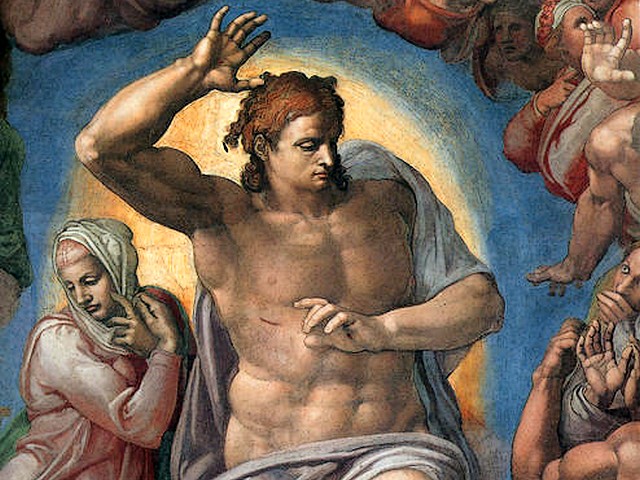
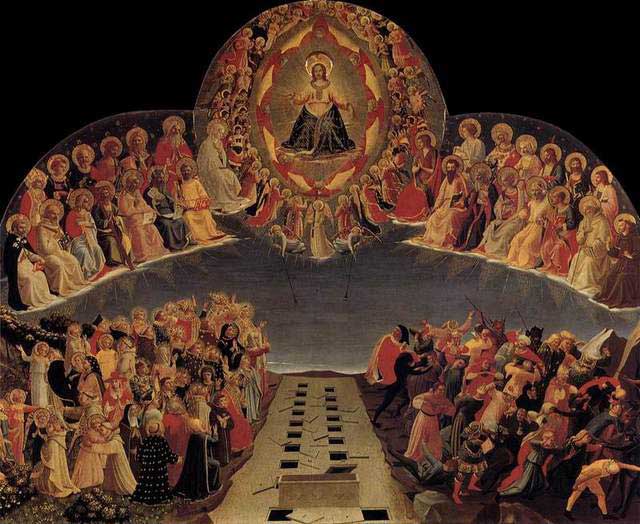
LastJudgementI am of the mind that we set aside a great treasure and masterpiece when the sequence hymn for funeral Masses, Dies Irae got the boot some forty years ago. I know it was a “heavy” hymn with a sobering message, but it sure was glorious. The gorgeous chant was one of the more beautiful and soaring melodies of Gregorian Chant and manycomposers such as Mozart and Verdi set the text to stirring musical compositions.

Ah the Dies Irae!  It’s syllables hammering away in trochaic dimeter: Dies irae dies illa solvet saeclum in favilla, teste David cum Sybila! (Day of wrath that day when the world dissolves to ashes, David bears witness to it along with the Sibyl!) Many came to think it a theme too dark and sobering for the modern funeral. Perhaps at times it is a bit heavy but at the same time no hymn more beautifully sets forth a basis for God’s mercy. The dark clouds of judgment part and give way to the bright beauty of the final line Pie Jesu Domine, dona eis requiem (Sweet Jesus Lord, give them [the dead] rest).

The hymn was not composed for funerals. Actually it was composed by Thomas of Celano in the 13th century as an Advent Hymn. Yes, that’s right an Advent hymn. Don’t forget that Advent isn’t just about getting ready for Christmas, it is about getting ready for the Second Coming of the Lord. And that is what this hymn is really about. At this time of year, as the the leaves fall and summer turns to winter, we are reminded of the passing of all things. The Gospels we read are those that remind us of death and the judgment to come.

Journey with me into the beauty and solemn majesty of this hymn. I will give you an inspiring English translation by W J Irons, one that preserves the meter and renders the Latin close enough. A few comments from me along the way but enjoy this largely lost masterpiece and mediation on the Last Judgment. (You can see the Latin Text along with English here: Dies Irae)

The hymn opens on the Day of Judgement warning that the day will reveal God’s wrath upon all injustice and unrepented sin. God’s wrath is his passion to set things right. And now it is time to put an end of wickedness and lies:

  •  
    • Day of wrath and doom impending,
    • Heaven and earth in ashes ending:
    • David’s words with Sibyl’s blending

And all are struck with a holy fear! No one  and no thing can treat of this moment lightly: all are summoned to holy fear. The bodies of the dead come forth from their tombs at the sound of the trumpet and will all of creation answer to jesus, the Judge and Lord of all:

  •  
    • Oh what fear man’s bosom rendeth
    • When from heaven the judge descendeth
    • On whose sentence all dependeth!
    •  
    • Wondrous sound the trumpet flingeth,
    • Through earth’s sepulchers it ringeth,
    • All before the throne it bringeth.
    •  
    • Death is struck and nature quaking,
    • All creation is awaking,
    • To its judge an answer making.
    •  
    • Lo the book exactly worded,
    • Wherein all hath been recorded,
    • Thence shall judgement be awarded.
    •  
    • When the Judge his seat attaineth,
    • And each hidden deed arraigneth:
    • Nothing unavenged remaineth.

Judgment shall be according to our deeds, whatever is in the Book  (Rev 20:12; Romans 2:6)! Ah but also in God’s Word is the hope for mercy and so our hymn turns to ponder the need for mercy and appeals to God for that mercy:

  •  
    • What shall I frail man be pleading?
    • Who for me be interceding?
    • When the just are mercy needing?
    •  
    • King of majesty tremendous,
    • Who does free salvation send us,
    • Font of pity then befriend us.
    •  
    • Think kind Jesus, my salvation,
    • Caused thy wondrous incarnation:
    • Leave me not to reprobation.
    •  
    • Faint and weary thou hast sought me:
    • On the cross of suffering bought me:
    • Shall such grace be vainly brought me?
    •  
    • Righteous judge for sin’s pollution,
    • Grant thy gift of absolution,
    • Before the day of retribution.
    •  
    • Guilty now I pour my moaning:
    • All my shame and anguish owning:
    • Spare, O God my suppliant groaning.
    •  
    • Through the sinful Mary shriven,
    • Through the dying thief forgiven,
    • Thou to me a hope has given.

Yes there is a basis for hope! God is rich in mercy and, pondering the Day of Judgment is salutary since for now we can call on that mercy. And, in the end it is only grace and mercy that can see us through that day:

  •  
    • Worthless are my tears and sighing:
    • Yet good Lord in grace complying,
    • Rescue me from fire undying.
    •  
    • With thy sheep a place provide me,
    • From the goats afar divide me,
    • To thy right hand do thou guide me.
    •  
    • When the wicked are confounded,
    • Doomed to flames of woe unbounded:
    • Call me with thy saints surrounded.
    •  
    • Lo I kneel with heart-submission,
    • See like ashes my contrition:
    • Help me in my last condition.

 And now comes the great summation: That Day is surely coming! Grant me O lord your grace to be ready:

  •  
    • Lo, that day of tears and mourning,
    • from the dust of earth returning.
    • Man for judgement must prepare him,
    • Spare O God, in mercy spare him.
    •  
    • Sweet Jesus Lord most  blest,
    • Grant the dead eternal rest.

A masterpiece of beauty and truth if you ask me. Some years ago I memorized most of it. I sing it from time to time over in Church late at night, the hauntingly beautiful chant rings through the echoing arches of our Church. When I die sing it at my funeral!  For I go to the Lord, the judge of all and only grace and mercy will see me through. Perhaps the plaintive calls of the choir below at my funeral will resonate to the very heavens as I am judged. And maybe the Lord will look at me and say,

  •  
    • I think they’re praying for you down there, asking mercy.”
    • “Yes, Lord, mercy.” 
    • “They’re making a pretty good case.”
    • Yes Lord, mercy.
    • Then mercy it shall be 

Amen.

Dies Irae from elena mannocci on Vimeo.

Hell Has to Be

cross roadsIf God is Love, why is there Hell? And  why is it eternal? In a word there is Hell because of respect. God has made us free and respects that freedom. Our freedom is absolutely necessary if we are to love. Now suppose a young man wanted a young lady to love him. Suppose again he found a magic potion with which to lace her drink. So she drinks and suddenly, presto., she “loves” him! Is it love? No, it’s chemicals. Love, to be love,  has to be free. The yes of love is only meaningful if we were free to say no. God invites us to love him. Love has to be free. There has to be a hell. Ther has to be a real alternative, a real choice. God will not force us to love him or to come to heaven with him.

But wait a minute, doesn’t everyone want to go to heaven? Yes, but it often a heaven as they define it, not the real heaven. Many people’s understanding of heaven is a very egocentric thing where they will be happy on their terms,  where what pleases merely them will be available in abundance. But the real heaven is the Kingdom of God in all its fullness. Truth be told, while everyone wants to go to a heaven as they define it, NOT everyone wants to live in the Kingdom of God in all its fullness. Consider some of the following examples:

  1. The Kingdom of God is about mercy and forgiveness. But not everyone wants to show mercy or forgive. Some prefer revenge. Some prefer severe justice. Some prefer to cling to their anger and nurse resentments or bigotry. Further, not everyone want to receive mercy and forgiveness. They cannot possibly fathom why anyone would need to forgive them since they are rightand the other person or nation is wrong.
  2. The Kingdom of God is about chastity. God is very clear with us that his Kingdom values chastity. For the unmarried this means no gential sexual contact. For the married this means complete fidelity to one another. Further, things like pornography, lewd conduct, immodesty and so forth are excluded from the Kingdom. But many today do not prefer chastity. They would rather be unchaste and immodest. They like pornography and do not want to limit their sexual conduct.
  3. The Kingdom of God is about Liturgy – all the descriptions of heaven emphasize liturgy. There are hymns being sung, there is the praise of God, standing, sitting, prostrating. There is incense, candles, long robes. There is a scroll or book that is opened, read and appreciated. There is the Lamb on a throne-like altar. It’s all very much like the Mass! But many are not interested in things like the Mass. They stay away from Church because it is “boring.” Perhaps they don’t like hymns and all the praise. Perhaps the scroll (the Lectionary) and its contents do not interest them. Having God at the center rather than themselves or their agenda is also unappealing.

Now my point is this: If heaven isn’t just of our own design but things like these are features of the real heaven, the real Kingdom of God, then doesn’t it seem clear that there actually are many who don’t want to go to heaven? You see everyone wants to go to heaven (the heaven of their own design), but NOT everyone wants to live in the Kingdom, which is what heaven really is. Now God will not force any one to live where they do not want to live. He will not force anyone to love Him or what he loves. We are free to choose his kingdom or not.

Perhaps a brief story will illustrate my point. I once knew a woman in one of my parishes who in many way was very devout. She went to daily Mass and prayed the rosary most days. But there was one thing about her that was very troubling, she couldn’t stand African Americans. She often told me, “I can’t stand Black People! They’re moving into this neighborhood and ruining everything! I wish they’d go away.” I remember scolding her a number of times for this sort of talk. But one day I thought I’d make it plain. I said, “You know you don’t really want to go to heaven.” She said, “Of course I do Father.  God and the Blessed Mother are there. I want to go.” “No you won’t be happy there,” I said. “Why? Want are you talking about Father?” “Well you see there are Black people in heaven and you’ve said you can’t stand to be around them. So I’m afraid you wouldn’t be happy there. And God won’t make you live some place where you are not happy. So I don’t think you want to go to heaven.” I think she go the message because I noticed she started to improve.

But that’s just it, isn’t it? God will not force us to live in the Kingdom if we really don’t want or like what that kingdom is. We can’t just invent our own heaven. Heaven is a real place and has contours and realities of its own that we can’t just brush aside. Either we accept heaven as it is or we ipso facto choose to live apart from it and God. So Hell has to be. It is not a pleasant place but I suppose the saddest thing about the souls in that are there is that they wouldn’t be happy in heaven anyway. A pretty sad and tragic plight, not to be happy anywhere. But understand this too. God has not utterly rejected even the souls in Hell. Somehow he still provides for their basic needs. They continue to exist and thus God continues to sustain them with what ever is required to provide for that existence. He does not anihilate them or snuff them out. He respects their wishes to live apart from the kingdom and its values. He loves them but respects their choice.

But why is Hell eternal? Here I think we encounter a mystery about ourselves. God seems to be teaching us that there comes a day when our decisions are fixed forever. For now we always have the possibility of changing our mind so the idea of a permanent decision seems strange to us. But I think that those of us who are a bit older can testify that as we get older we get a little more set in our ways and it’s harder to change. Perhaps this is a little foretaste of a time when our decisions will be forever fixed and we will never change. The Fathers of the Church used an image of pottery to teach on this. Think of wet clay on a potters wheel. As long as the clay is moist and still on the wheel it can be shaped and reshaped. But once it is put in the kiln, in the fire, its shape is fixed forever. And so it is with us that when we appear before God who is a Holy Fire, our fundamental shape will be forever fixed, our decisions final. For now this is mysterious to us and we only sense it vaguely but since heaven and hell are eternal, it seems this forever fixed state is in our future.

So here is the best I can do on a difficult topic. But Hell has to be. It’s about God’s respect for us. It’s about our freedom and summons to love. It’s about the real heaven. It’s about what we really want in the end. The following video is Fr. Robert Barron’s take on the matter.

I Wonder If We Forgot Something Important

ted-kennedyI was busy Saturday….A wedding and later another Mass….So I didn’t get to see wall to wall coverage of the funeral for Senator Edward Kennedy. So… I may have missed something and you will correct me if I’m wrong. But here is my question: Did we pray for the happy reposeof his soul? As I went back and forth preparing this and that I saw parts of the funeral on TV. Surely I heard lots of praise for Mr. Kennedy. But did we pray or merely praise? Particularly alarming were the intercessory prayers of the congregation where the congregation prays for the deceased. They were directed not to Mr. Kennedy’s reposeor to the dead in general but rather to praise of his vision and the prayers for various causes. Not wrong per se but out of place at a funeral Mass at the very time we should be praying for the happy repose of of the deceased. Did we pray?  

When I die please promise me that you’ll pray for me. You see, I’ll  have a journey to make. I have an appointment to keep. The scriptures all say it but we like to ignore it:

  1. Therefore, we aspire to please him, whether we are at home or away. For we must all appear before the judgment seat of Christ, so that each one may receive recompense, according to what he did in the body, whether good or evil.  (2 Cor 5:10-11)
  2. For we shall all stand before the judgment seat of God; for it is written: “As I live, says the Lord, every knee shall bend before me, and every tongue shall give praise to God.” So then each of us shall give an account of himself to God. (Rom 14:10-11)

So when we die we are judged. We ought to pray a lot for those who have died. It is an awesome thing to go to God and to render and account. We who remain behind ought to offer heartfelt prayers for the faithful departed. And so I must indicate so frustration with many Catholic Funerals I have observed, both televised and not. Too often there are bold proclamations of how the deceased is in heaven now, in a better place, etc. Confidence in God’s mercy is good, but to completely ignore the  judgment that Scripture promises and make no mention of it is poor pastoral practice and robs the dead of the prayers they are due.

Consider this, what if I were to say at a funeral “John Jones is in Hell and there’s no use praying for him.” Now you would be rightfully angry and tell me that I was “judging him.” And you would be right. I would be making a judgement I had no right to make. But don’t you see, if I say “John Jones is in heaven now” and do not ask you to pray, that I am sitting in the very same judgement seat and making a judgment that is NOT mine to make?

“But Father, but Father….What about confidence in God’s mercy and joy?”  These are fine and have their place but they should be balanced with a sober appreciation that the dead can use our prayers. AND I actually HAVE God’s mercy in mind when I say we ought to pray for the dead who go to judgement. Remember, God has made a promise to us that when he was finished with us that we would be perfect as the heavenly father is perfect (Matt 5:48) Now are you there yet? What if you died today? Do you think the Lord will leave his work undone in you? That’s not very merciful. St. Paul wrote to the Philippians, “May God who has begun the good work in you bring it to completion.” (Phil 1:6) God is faithful to the promises he has made and he will not leave anything undone in us. But again let me ask you, if you died today are you perfect yet? You know you’re not. We all fall short of the glory of God (Rom 3:23). All of us are carrying things in us that we cannot bring to heaven. Not just our sins, but also sorrows, regrets, painful memories and hurts. You know you can’t bring this stuff to heaven, it wouldn’t be heaven! So the Lord has to purge these things from us.  Maybe that is what Scripture means when it says of the dead that Jesus will wipe every tear from their eyes (Rev 21:4).

Hence, when we die we are judged by God. But the judgement is not just between heaven and hell but as to whether Jesus’ work is complete in us yet. If it is not he will see that it is brought to completion. Here is the Catholic Dogma of Purgatory. It is purgatory where we let go of things for the last time, where we have tears wiped from our eyes and we have false notions corrected and where we shed the final vestiges of the world. Does it take tiem? How long? I don’t know. What is time even like after we leave this world and if there is the passage of time there, how does it square up with our assage of time? I don’t know. Just pray. Our beloved dead can use our prayers.

So, when I die, will you pray for me? Don’t talk too much at my funeral about what a great guy I was, only God is good. Don’t make silly statements about how I’m up there leading the music in heaven. Just pray because I’m probably, off to purgatory and could use your prayers. If I died today (not planning on it) I know I’d  have some tears to be wiped from my eyes, some rough edges to my personality that need smoothing, some intellectual misunderstandings to be set right, some attachments to be freed of. I cannot judge myself, but applying Catholic doctrine to my situation it’s looks like I’d be bound for purgatory. So pray.

Finally let me ask you again, in the funeral rites yesterday for Senator Kennedy did you pray? Did WE pray? Oh, I know we said the usual prayers in the ritual. But honestly, things seemed more than a little out of balance to me. Celebrate what is good? Sure. But Edward M Kennedy shares the human condition and we all fall short of what God has in store. I am not his judge, but I can pray. If he is like me, purgation may well be necessary. I don’t know what sins or hurts he brought to the grave with him. But he did go to judgement and we ought to pray. And yes, I’ll mention the unmentionable: he was wrong on abortion and several other Catholic Moral teachings. Where we are wrong, the Lord needs to set us right. Mr. Kennedy was right on other moral issues and the Lord can grant reward for that as well.  But just pray. Pray for him and all your beloved dead. Our modern understanding  of death needs to come back to a proper focus: hope and confidence in God’s mercy? Yes! But balanced with a sober appreciation of judgment that awaits us all.

Death, Judgment, Heaven and Hell

st-francis-with-skullTraditional Catholic theology has distinguished the “Four Last Things” : Death, Judgment, Heaven and Hell. We are admonished to meditate upon these things frequently. We WILL die, be judged, and spend eternity either in Hell, or in Heaven (likely after some time in purgatory). All men are appointed to die once, and after that face The judgment (Hebrews 9:27) A remarkable video was just posted  of a song by Johnny Cash on the topic of judgment. Here are some of the words:

You can run on for a long time
Run on for a long time, run on for a long time
Sooner or later God’ll cut you down
Go tell that long tongue liar, go and tell that midnight rider
Tell the rambler, the gambler, the back biter
Tell ‘em that God’s gonna cut ‘em down.

We will all one day die, or as the song puts it, be cut down. We will all appear before the judgment seat of Christ (cf 2 Cor 5:10;  Heb 4:13; 1 Peter 4:5).

The reality of judgment and the possibility of Hell bothers a lot of modern Christians who have had God’s love emphasized to the exclusion of just about everything else about God. For example that He is Truth, and utterly Holy, that nothing unholy can tolerate His presence and so forth.

How to explain the possibility of Hell to a generation with a rather simplified notion of God? Perhaps the word “respect” can help. God want to save us all and have us live with him forever. This is clear in Scripture. But God has made us free and wants us to freely love Him and accept His invitation. This is His respect for our freedom. Now everyone want to go to heaven as they describe it. But NOT EVERYONE wants to go to real heaven which is God’s Kingdom in perfection. You see, in heaven, God’s Kingdom,  there is love for the truth, love for chastity, love for the poor, love for justice, love for one another, mercy and forgiveness are esteemed and God is at the center. But NOT EVERYONE wants these things. Not everyone wants the truth, wants to be chaste, not everyone wants to forgive and love everyone. Not everyone wants God to be at the center, they prefer that spot for themselves or some other idol. So God invites. But not all accept. In the end, God respects our choice and this is why there is Hell, it is for those who do not want what the Kingdom of God is. God still sustains the souls in Hell but he ultimately respects their choice to reject the Kingdom and its values.

So death is on the way, sooner or later we will all be cut down. What is it that you want??

Ponder this video:

Forty Reasons for Coming Home – Reason # 29 – The Winning Team.

mystical-churchReason # 29 – The Winning Team – OK, I’ll admit it. I cheated. I looked at the end of the book and read the end of the story. Guess what I found?  Jesus wins! It’s right there in final pages, in the Book of Revelation:

The Devil who had led them astray was thrown into the pool of fire and sulfur, where the beast and the false prophet were. There they will be tormented day and night forever and ever. Next I saw a large white throne and the one who was sitting on it. The earth and the sky fled from his presence and there was no place for them. I saw the dead, the great and the lowly, standing before the throne, and scrolls were opened. Then another scroll was opened, the book of life.  The dead were judged according to their deeds, by what was written in the scrolls. The sea gave up its dead; then Death and Hades gave up their dead. All the dead were judged according to their deeds. Then Death and Hades were thrown into the pool of fire. (This pool of fire is the second death. Anyone whose name was not found written in the book of life was thrown into the pool of fire. Then I saw a new heaven and a new earth. The former heaven and the former earth had passed away, and the sea was no more. I also saw the holy city, a new Jerusalem,  coming down out of heaven from God, prepared as a bride adorned for her husband. I heard a loud voice from the throne saying, “Behold, God’s dwelling is with the human race. He will dwell with them and they will be his people and God himself will always be with them (as their God). He will wipe every tear from their eyes, and there shall be no more death or mourning, wailing or pain, (for) the old order has passed away.” The one who sat on the throne said, “Behold, I make all things new.”

Do you get the Picture? Jesus wins, the devil and the world and wicked loose. And Jesus unites himself to his Bride (the Church) forever. Now here’s the point, Get on the winning team!. If you could go to the race track today with tomorrow’s newspaper, you’d be  a fool to bet on any other horse that the one announced as the winner in tomorrow’s newspaper. So here we are. We have tomorrow’s newspaper today. It says Jesus wins. Well then, why bet on the World or the Devil? Choose Jesus, unite yourself with his Bride the Church. The Scriptures are clear, Jesus and the Bride are the winning team. But make sure your name is in the book! You can sign up today at any Catholic Parish. Just knock on the door and say, “Sign me up for the Christian Jubilee! Write my name on the roll.” If you had once signed up but your name’s been blotted out, just go to the nearest Catholic Church and ask for the location of the confessional. So here it is, Jesus and his Church, the Bride are the winning team, the Devil and World are big time losers. Who you gonna choose?

Pondering Persecution

pilateIn this week just before Holy Week we are reading from the 8th Chapter of John’s Gospel wherein Jesus enters into increasingly severe conflict with the temple leaders in Jerusalem. The conflict will ultimately end with Jesus death which we celebrate a week from this Friday.

I wonder if most Catholics today are ready for persecution. It probably doesn’t take a prophet to realize that, as the world around us goes increasingly insane and strays from God’s ways, we are more and more likely to experience persecution. The basic path seems to be this:

  1. Biblically Based moral vision is set aside either as old fashioned or as merely “personal opinion.”  
  2. Tolerance is exulted as the only real virtue.
  3. Insist that all behavior (except perceived intolerance) is to be tolerated.
  4. Accuse anyone who questions newly sanctioned behaviors of being intolerant and thus worthy of increasing punishment. Call them names such as intolerant, reactionary, rigid, unkind, mean, hateful, etc. Generally incite personal dislike of those who hold to traditional biblical morality through such labeling.
  5. Begin the process calling all perceived intolerance ”hate crimes”  and start exacting punishment. Start by removing tax exempt status, begin permitting lawsuits for failing to observe all forms of tolerance (Except tolerance of intolerance).  
  6. Exact more punitive measures such as jail time for those guilty of  so-called “hate crime” or intolerance. Declare such people as dangerous since their “intolerance” may cause violence and thus call for their imprisonment.

As the world gets crazier such a process (which is already far along) does not seem so far-fetched. In Canada there are already clergy on trial for the ”hate-crime” of opposing so-called “Gay marriage.” You can read more of that  HERE  and HERE. But there are several things to ponder about persecution:

  1. Persecution is normative for the Christian. Jesus exemplifies this in his own life and also teaches: If the world hates you, realize that it hated me first. If you belonged to the world, the world would love its own; but because you do not belong to the world, and I have chosen you out of the world, the world hates you. Remember the word I spoke to you, ‘No slave is greater than his master.’ If they persecuted me, they will also persecute you. (John 15:19ff)
  2. Hence, the fact that we are persecuted does not mean we have done anything wrong.  – Too many Christians are swayed by the anger of others into thinking that they have done or said something wrong or inappropriate. While not every tactic we might use is always appropriate, our message, even if delivered with appropriate means will often anger the world. Again, this DOES NOT mean we have done anything wrong.
  3. Refuse to accept and internalize the labels. Just because some one calls you intolerant does not mean that you are. Further we should not be required to tolerate everything. Hence it is appropriate to strongly oppose, to refused to tolerate that which we consider wrong.
  4. Courage- Preaching and living the faith in a world gone increasingly mad will require guts and persistence. We must re-examine our intense need to be liked by everyone and approved by all and prefer nothing to God and his truth.

So, as we see Jesus in the Gospels of this week go into the fray for our sakes, we must admire his courage and pray for similar strength and virtue. Things may get difficult in the years ahead. But listen again to Jesus: In the world you will have tribulation, but take courage, I have conquered the world.”  (John 16:33).

I preach on this topic at this morning’s Mass. If you’d like to hear more you can listen here: Pondering Persecution (17 Minutes)

Here too is a video clip of John 8 that depicts the increasing opposition that was mounting against Jesus. It is from the Movie The Gospel of John.

Some Old Gospel Wisdom


personal-prayerEvery now and then some one will come past my door and request parish services of some sort. Maybe it’s to plan a wedding, a baptism or a funeral, maybe its for money! And then I look at them and I say, “Who are you?” since I don’t recognize them. “Oh well Father, you don’t know me but my Grandmother goes here, this is our family Church.”  “Oh, I see, but where do yougo to Church?” I usually ask. ;-) The response is usually something like, “Well you Know how it is Father, I don’t get to Church too often….But my mother goes here.”

Well, I got news for you, your Mama’s faith isn’t going to save you. You gotta have your own faith. You have to know Jesus for yourself. There are just some things you can’t borrow. Don’t get me wrong, you depended on your mother and ultimately the Church to announce the True Faith to you. But at some point you have to be able to claim the True Faith as your own. Your mother can’t go to Church for you and she can’t believe in your place.  

Remember the story of the wise and foolish virgins? (Matt 25:1-13)  They were waiting for the groom (in those days you waited for the groom, now days we wait for the bride) to show up for a wedding. Five were wise and brought extra oil for their lamps, but five were foolish and did not not. But the groom delayed his coming and so the foolish ones said to the wise, give us some of your oil. But the wise ones said to the foolish that they could not do this for there was not enough oil for all ten. You see there are just some things you can’t borrow and some things you can’t loan. You can’t loan your readiness to meet God to someone else. You may know what happened. The foolish bridesmaids went off to buy more oil and missed the groom’s arrival and they were not able to enter the wedding feast. In those days when a wedding feast began the doors were locked and no one could enter. Bottom line: You have got to know Jesus for yourself. You can’t borrow your mother’s relationship or readiness. You have to have your own. No one can go to Church for you. You can’t pay to have someone offer your prayers. You can’t borrow someone else’s holiness.

There is an Old Gospel hymn that says, “Yes I know Jesus for myself.” It’s not enough to quote the pastor, its not enough to say what your Mother said. You have to know him yourself. Do you know Him? I didn’t say, “Do you know abouthim.” This is more than intellectual knowing, this is the deep, biblical, experiential knowing. Do you know the Lord Jesus? Have you experienced that he has ministered to you in the Sacraments? Have you heard his voice resounding from the pulpit and in others you meet? Do you know him? Don’t be satisfied that your mother or grandmother knew him. You are called to know him for your very self.

Here are a couple of renditions of the old Gospel classic I mentioned. The first is from the St. James Mass Choir. But then, lo and behold, the second version is sung by a choir from a Polish Girls School! See the original and then enjoy a very different version as the song leaps the Atlantic Ocean and lands in Eastern Europe. What a wonderful world! Crossing oceans and cultures the message remains the same: Yes I know Jesus for myself.