
Why "Religion" is a good word that we need to defend.

071413It is “chic” and, I would add, a “cliche” to hear many people say today, “I am spiritual but not religious.” There is a kind of self-congratulatory tone that often goes with this self description as well, and certainly a lot of cultural approval in the secular West for such dissociative talk.

There is even some acceptance of this notion among more theologically conservative evangelicals who, on account of their “low ecclesiology” also favor a kind decentralized and highly personal notion of faith, and entertain a kind of cynicism to “organized religion.”

The Washington Post had a column on the “spiritual but not religious” phenomenon this past Saturday by Michelle Boorstein entitled simply Religion. I would like to present a few excerpts and then discuss why I think we should not only retain the words “religion” and “religious,” but also be suitably proud of them.

First, a few excerpts from the article, along with a few very brief comment by me in plain red text. The full article is HERE.

We’re no longer “religious.” We’re “holy.” We’re “faithful.” We’re “spiritual.”….Diana Butler Bass, author of last year’s “Christianity After Religion,” who says the word “religion” is laden with negative, hurtful and political baggage. (Perhaps, but so is everything: Government, schools, medicine, science, etc. It would seem this is not unique to “religion” but is the human condition).

The 20 percent of Americans who now call themselves unaffiliated with any religious group see religion as much too focused on rules….(but rules and accepted practices are part of life. I wonder if these same Americans would be so pleased if their dentist or doctor threw rules, protocol or accepted medical practice to the winds? There is a place for “rules” that enshrine the collective wisdom of the ages!) 

On the other side are people such as super-popular shock pastor and writer Mark Driscoll, an evangelical conservative whose sermons have such titles as “Why I hate religion.” He preaches that the institutional church has wrongly let people feel good about themselves for their actions (such as going to worship services) instead of what they believe (which should be the Bible’s literal truth, in his view)….(Yes, here is the “dark side” of  evangelical Christianity and its “americaninst” designer-church mentality. At the end of the day, its extreme form is little different from any other modern deconstructionist, iconoclastic, existentialist, and nihilistic movement. The thinking is “away with anything I don’t like, away with anything that limits me in any way with “rules” that look to balance my little vision with the bigger picture. Away with anything I don’t like or think limits me from being…me”).

Polling shows that young Americans are considerably less apt to have religious affiliations than earlier generations were at the same age. (OK, but polls reflect what is, not what ought to be, or what is correct). They attend religious services less often, and fewer of them say religion is important in their lives. (OK, we have work to do! But that doesn’t make us wrong). But more than nine in 10 people believe in God, according to a recent Gallup poll, a statistic unchanged for decades….(but at some point we must ask if this means anything at all. It is good that they are not outright atheists, but sometimes indifference is a worse enemy than hatred). People are walking away from institutional expressions of church. They’re trying to renegotiate man’s relationship to God,” said David Kinnaman, president of the Barna Group, a major research firm on religion….Now more and more people look to their conscience, however it’s formed, to decide for themselves.” (more on this attitude below). Although some reject the word “religion,” others simply ignore it.

OK, a tough read. Not surprising, but still disturbing.

I want to argue that the very word “religion” so widely rejected by moderns, is the very word that we need to recapture as an antidote to the self-referential, self-congratulatory modern notions that fuel the “I’m spiritual but not religious” ideology.

Frankly, the attitudes expressed in the article and in our culture are not noble or praiseworthy. The increasingly pervasive attitude is a kind of Nietzsche-like nihilism, and existentialism that says, in effect:

“I will create my own reality (existentialism) and design my own god (idolatry). I will do what I want to do and I will decide if it is right or wrong (the pride of original sin). The world revolves around me and what I think, I am the center! (Anthropocentrism and egocentricism). It is really all about me, and what I think, and what I want, and what I say.”

Now if this seems harsh, I ask you, dear reader to tell me what is inaccurate? What we are really dealing with here is a collection of tired old heresies and apostasies. This is not a tall, intellectual argument at work here. It is not a brave new world at all. It is a rehashed collection of notions already tried and found wanting. It is a set of notions that tie in easily with Americanism, and an excessive notion of liberty, detached from truth or any moorings at all. It cannot sustain, or result in anything but further dilution of a sense of community or common ground, and it leads only to the further fractioning of our communities and nation into ever more isolated cells.

This then sets up as a perfect recipe for the cultural anarchy, and power struggle we already have, and will only cause it to deepen. It is ushers in the the “tyranny of relativism.” For if there is nothing outside of us (or “me”) to which we can all look to and agree, the only way to resolve differences is power struggle. At the end of the day, the one with the most power, money, influence, and access wins. Without truth to which we bind ourselves, there is tyranny.

And sadly it all marches under the banner of a kind of self congratulatory “tolerance.” Many people actually give themselves credit for saying, “It’s all about me, and what I think. Truth is what I say it is.” A steady diet of existentialism and nihilism has actually deluded people to the extent that they do not even perceive how vain and egocentric they sound. The majority just nod and say “Amen.” “Power to the People” etc. But its not really even “power to the people,” its really just “all about me.”

But the chic “respectfulness” that such ego-maniacal talk generates also sets the stage for why the words “religion” and “religious” are so important to recover and insist on.

The word “religion” comes from the Latin religio which means to bind oneself, to constrain,  or to be tied to another. As such, the virtue of religion calls us  to look outside of ourselves, both upward to God, and outward to the great accumulated wisdom of our revealed faith.

One of the foolhardy presumptions of modern thinking is that the accumulated wisdom of some 5,000 years of human history and tradition in the Scriptures have little or nothing to say to us today. This is not only foolhardy, but prideful.

The virtue of religion acknowledges the experience of our ancestors as an important source of wisdom for us. And it is not merely their excellencies to which we look, but also their sins and struggles. The virtue of religion also acknowledges that God was in the conversation with our ancient forbearers and revealed important things to them; truthful things which withstood the test of time, and transcended cultures, nations, and empires. Yes, all those nations, culture and empires came and went but the faith perdured.

The virtue of religion recognizes that this ancient wisdom, both of human experience and divine revelation, is something to which we owe a humble hearing, and having heard it, that we should bind ourselves to it; to be tied to it in humble acceptance, such that we learn its wisdom and why it makes sense. It need not remain a simple blind obedience, but of a growing, thoughtful, careful, and humble acceptance. Religion and being religious accepts that there is a wisdom and knowledge that is bigger simply than what I think. And being open to this truth, to this teaching, and having thoughtfully assessed this wisdom, I bind myself to it, I base my life on it.

So, religion is rooted in the humility that there is something and someone bigger than what I think. It is a humility that says I should not necessarily believe everything I think. Religion is “other-centric” and it is Theocentric. By the virtue of religion we bind ourselves to the ancient, venerable and tested truths of God, in our holy Catholic, Christian and biblical faith.

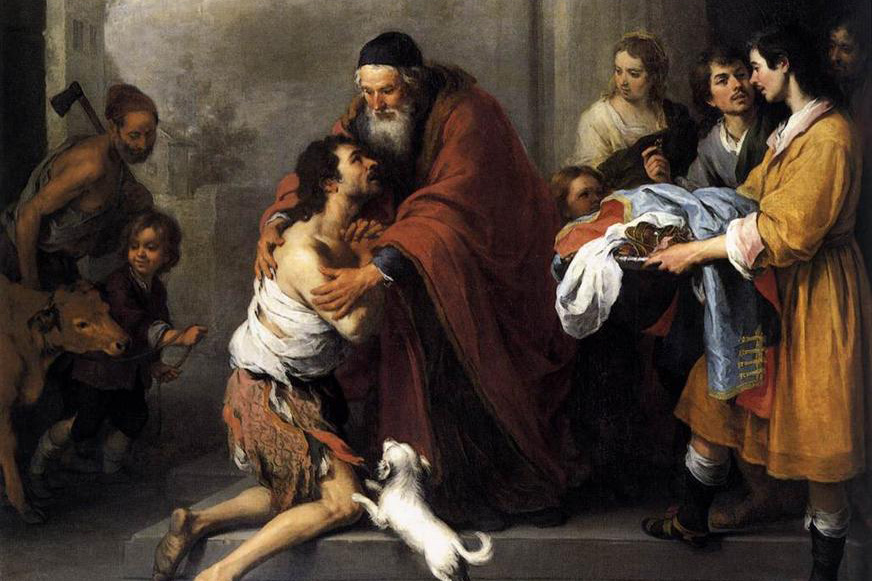
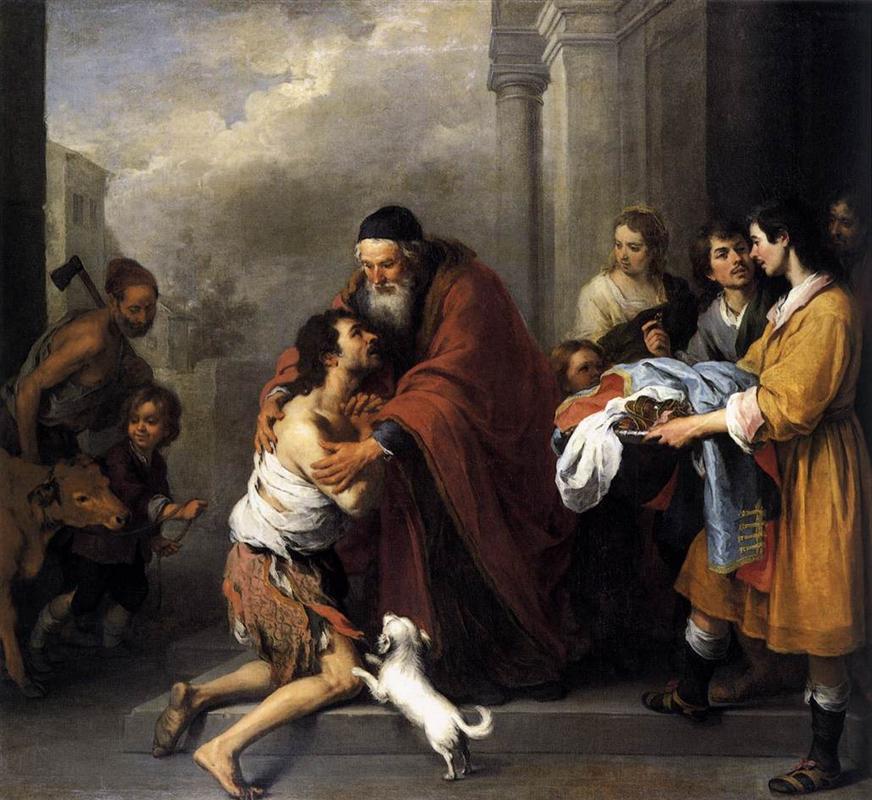
More than ever in this prideful and egocentric modern age we must uphold the dignity and humble insight of the word “religion” and the reality it represents. There is someone wiser, more noble, more holy than I. And that someone we call God. And hearing his voice, we rightly bind ourselves to Him. And He, in a holy embrace binds himself to us.

This is religion. This is the embrace of  the mutual binding of covenant love.

How different, more humble and noble is this, that the prideful attitude of so many in the modern world today who say, God is whatever I say he is, and he says what I say he says. In other words, I am God.

Religion looks to God as he has credibly revealed himself in the ancient and testified sources of the Old and New Testament. And listening at his feet we discover who He is as  He has revealed himself,  not merely as we wish him to be.

Finally, to those who say “Well I’m not really against religion, just organized religion”, this is a false category. There’s no such thing as unorganized religion. True religion is ultimately a communal summons by God for people to walk with Him, not just individuals living in separate stovepipes, but in communion with others. God establishes faith to be the organizing principle of a people, of a culture, even a nation.

We moderns maybe petulantly down on “institutions,” but there are very few entities that are not institutions, it is just which institution we’re down on that we like to dis.  For those who sniff at the “institution” of the Church, still join the “institutions” of political parties, or work for large firms, or government entities,  and get services from medical institutions such as hospitals and medical practicums. So the claim that “I’m spiritual, not religious” just means a person is down on “institutional religion is neither credible nor does it comport with reality. Religion, by its nature is institutional.

Thus, Religion, both the word and its  practice is noble, it must be insisted upon as a magnificent description of what faith really is. Is a clinging to God as he has revealed himself; it is a binding of oneself to the revealed truth of that loving God who embraces us and clings to us in the mutual binding of covenant love. It is a humble submission to one who is greater and wiser, who is indeed the Creator and Sustainer of all things;  it is a wise and reasonable accepting of the fact that there is someone greater than I, to whom I ought to be bound in a and loving and humble submission.

I am spiritual, but I am also religious,  and you can quote me on that.

In this video, Cardinal Dolan reminds, “You can’t have Jesus without his body, the Church.

On the Relationship Between Light, Time and the Mystery of God

"Sun poster" by Kelvinsong - Own work.  Licensed under  CC BY-SA 3.0 via Wikimedia Commons
“Sun poster” by Kelvinsong – Own work. Licensed under CC BY-SA 3.0 via Wikimedia Commons

I was meditating on time today, perhaps because it is my 52nd birthday. But also on account of some new mysteries I have learned about the light of the Sun that reaches this earth.

I have long known that to look up in the night sky is to look far into the past. Looking up at the star Sirius I am looking nine years into the past. Looking over to the star Antares I am seeing 250 years into the past. Looking over at the star Rigel I am looking 600 years into the past. Looking further still at the Andromeda galaxy, I am seeing one million years into the past. That is how long it takes the light of these stars and galaxies to reach us. We are not seeing them as they are now, but as they were then. The past, even the distant past, is very present to us.

Even in the daylight, the light of the sun takes 8.25 minutes to reach us. Thus we see the surface of the sun not as it is now, but as it was 8 minutes ago.

But I learned yesterday that the light of the sun is even older than I ever thought. A little research on my part revealed this astonishing fact. The photons of light that reach the surface of the sun and head out to us in eight minutes were actually generated 100,00 years ago, in the sun’s core.

Emerging from the sun’s core as the result of nuclear fusion, a photon of light enters the radiative zone (see diagram above). The plasma in that radiative zone is quite a maze for the photon to get through, such a maze that it takes the better part of 100,000 years to make the journey to the convective zone and the photosphere where it finally begins a rapid journey out into the vacuum of space.

Why does it take this long? Consider an image of you, at one side of a large room filled with people, and you want to get to the door on the other side. But on the way many, many people want your attention and strike up conversations and thus delay your journey across the room.

The diagram above shows the meandering, zigzag motion of a photon as it makes it way through a maze of plasma that detains the photon for up to 100,000 years!

Thus, the light we currently bask is much more than 8.25 minutes old! It is 100,000 years old! The light we currently enjoy was made in the sun’s core back during the beginning of the last ice age.

There is a great mystery of time on display for us at every moment. The past is present in many ways. And our past is “out there” on display and still present as well. If there is any one on a planet near Rigel and they look back through a telescope to earth, say to France, they do not see us now, they see Joan of Arc and other events of the 14th Century taking place. The light of our “today” will not reach Rigel for 600 years.

What is the present? That is mysterious is the sum total space of the universe and it depends on where you are. God, who is just as present as Rigel as here, has the same access to the images of France in 1450, as he does to 2013. Indeed, being present at Andromeda just as much as here on earth, 1 million years ago is just as present to him as now.

The future is even more mysterious, but that is just as present to God as the past and distant past is.

Do not miss the irony of the fact that the light of the Sun and the reflected light of the moon, by which we set our clocks and calendars to measure the present, to tell time what time it is now, is 100,000 years old.

Does anybody really know what time it is? Only God, only God. Time is very mysterious, and the more we think we know the less we really do.

All the days ordained for me were written in your book before one of them came to be.How precious to me are your thoughts, God How vast is the sum of them!Were I to count them, they would outnumber the grains of sand—when I awake, I am still with you. Psalm 139:16-18

Those who seek to eliminate faith for the sake of freedom, get only tyranny

070313On the Fourth of July, in the United States of America we celebrate freedom. In particular we celebrate freedom from tyranny, and a government that is not representative; freedom from unchecked power and unaccountable sovereigns.

Distorted and faithless notions – Yet, as Christians we cannot overlook that there are ways of understanding freedom today that are distorted, exaggerated and detached from a proper context. Many modern concepts of freedom treat freedom as something that faith limits, not enhances.

Alexis De Tocqueville said Liberty cannot be established without morality, nor morality without faith. In America today we are seeing the erosion of all three in reverse order.

Those who want to eliminate faith remove the ultimate basis of morality. For if God, and what he has set forth in Natural Law, and the Scriptures be not the basis of or law and freedom, then we are and there is no real basis to determine right and wrong, it is all just opinion and power struggle. We are our own absolute rulers, answerable to no one. This is dangerous.

And just as it is a bad idea for the inmates to run the jail, so absolute self-governance turns to tyranny. We tend to turn on each other and engage in deadly power struggles.

Welcome to the secular setting wherein freedom is eroded because power struggles have replaced the recognition of a higher law that binds us all. Welcome to the tyranny of relativism, and the bondage and litigiousness of unbelief.

Among the sources of growing and intrusive law is that some refuse to limit their bad behavior, some refuse to live up to commitments they have made, some abandon self control, some insist on living outside safe and proper norms. Many insist that the solution to protect them from others who abuse their freedom, is more laws. And many are successful in getting increasingly restrictive laws passed.

Yes, without a commonly held morality and a salutary fear that we will answer one day to God, bad behavior multiplies and freedom erodes into lots of tedious laws. In this climate, an increasingly powerful and intrusive State seeks to keep a lid on the immoral behavior resulting from the faithless notion that I will never answer to anyone.

Hence, those who seek to eliminate faith for the sake of “freedom” get only tyranny. Even unbelievers ought to be grateful that most people have a vigorous sense that they must answer one day to God. But without God, those in power, and those who act wickedly, think they will never have to answer to anyone and their sociopathic behavior gets more severe and tyrannical.

Those who claim that the truth of the gospel limits their freedom might also consider that the world outside God’s truth shows itself to be far less than free than it claims:

  • Addictions and compulsions in our society abound.
  • Neuroses, and high levels of stress are major components of modern living.
  • The breakdown of the family and the seeming inability of increasing numbers to establish and keep lasting commitments is quite significant.
  • A kind of obsession with sex is evident and the widespread sadness of STDs, AIDs, teenage pregnancy, single motherhood (absent fathers) and abortion are its results.
  • Addiction to wealth and greed (the insatiable desire for more) enslave many in a kind of financial bondage wherein they cannot really afford the lifestyle their passions demand, and they are unsatisfied and in deep debt.

The so-called “freedom” of the modern world, (apart from the truth of the Gospel), is far from evident. The Catechism says rather plainly:

The more one does what is good, the freer one becomes. There is no true freedom except in the service of what is good and just. The choice to disobey and do evil is an abuse of freedom and leads to “the slavery of sin.” (CCC # 1733)

In the end, the paradox proves itself. Only limited freedom is true freedom. Demands for freedom apart from faith lead only to hindered freedom and outright slavery and tyranny.

Ponder freedom on this 4th of July. Ponder its paradoxes, accept its limits. For freedom is glorious. But because we are limited and contingent beings, so is our freedom. Ponder finally this paradoxical truth: The highest freedom is the capacity to obey God.

Note that in the video this song about Freedom, often sung in reference to various political and social struggles, roots the freedom in Jesus. Some seculars eliminate the 2nd verse today, but they thus undermine the basis for freedom. For if there be no Lord to whom we point as the basis of justice, Those who cry for freedom are simply being arbitrary in their notion. Without God and the justice he puts in our hearts, why should the desires of the oppressed have any more merit than the wishes of the oppressor? It is a mere matter of opinion, for there is no outside source for morality or justice. Unbelievers cannot really point to any basis other than popular opinion or raw power to usher in their view. Their notion of freedom without faith ends only in the tyranny of power struggle.

Enjoy the video, especially the second verse:

Clergy, Catechists, Parents: Have you Proclaimed The Whole Counsel of God?

061713One of the more powerful moments in pastoral ministry as described in Scripture is Paul’s farewell speech to the presbyters (priests) of the early Church. Here is a skilled bishop and pastor, exhorting others who have pastoral roles in the Church.

Lets take a look at this text and apply its wisdom to Bishops and priests as well as to parents and other leaders in the Church.

Paul’s Farewell Sermon – The scene is Miletus, a town in Asia Minor on the coast not far from Ephesus. Paul, who is about to depart for Jerusalem summons the presbyters (priests) of the early Church at Ephesus. Paul has ministered there for three years, and now gathers the priests for this final exhortation.

In the sermon, St. Paul cites his own example of having been a zealous teacher of the faith who did not fail to preach the “whole counsel of God.” He did not merely preach what suited him or made him popular. He preached it all. To these early priests Paul leaves this legacy and would have them follow in his footsteps. Let’s look at excerpts from this final exhortation. First the text them some commentary:

From Miletus Paul had the presbyters of the Church at Ephesus summoned. When they came to him, he addressed them, “You know how I lived among you the whole time from the day I first came to the province of Asia. I served the Lord with all humility and with the tears and trials that came to me…., and I did not at all shrink from telling you what was for your benefit, or from teaching you in public or in your homes. I earnestly bore witness for both Jews and Greeks to repentance before God and to faith in our Lord Jesus…..But now, compelled by the Spirit, I am going to Jerusalem……“But now I know that none of you to whom I preached the kingdom during my travels will ever see my face again. And so I solemnly declare to you this day that I am not responsible for the blood of any of you, for I did not shrink from proclaiming to you the whole counsel of God….. (Acts 20:1-38 selected)

Here then is the prescription for every Bishop, every priest and deacon, every catechist, parent and Catholic: that we should preach the whole counsel (the entire plan of God). It is too easy for us to emphasize only that which pleases us or makes sense to us or fits in our worldview.

There are some who love the Lord’s sermons on love, but cannot abide his teachings on death, judgment, heaven and hell. Some love to discuss liturgy and ceremony, but the care of the poor is far from them. Others point to Jesus’ compassion, but neglect his call to repentance. Some love the way he dispatches the Pharisees and other leaders of the day, but become suddenly deaf when the Lord warns against fornication or insists that we love our neighbor, enemy and spouse. Some love to focus inwardly and debate over doctrine, but the outward focus of true evangelization to which we are commanded (cf Mat 28:19) is neglected.

In the Church today, as a whole, we too easily divide out rather predictably along certain lines and emphases: Life issues here, social justice over there; strong moral preaching over here, compassionate inclusiveness over there. When one side speaks, the other side says, “There they go again!”

And yet somewhere we must be able to say with St. Paul that we did not shrink from proclaiming the whole counsel of God.

While this is especially incumbent on the clergy, it must also be true for parents and all who attain to any leadership in the Church. All of the issues above are important and must have their proper place in the preaching and witness of every Catholic, clergy and lay. While we may have gifts to work in certain areas, we should learn to appreciate the whole counsel and the fact that others in the Church may be needed to balance and complete our work. It is true, we must exclude notions that stray from revealed doctrine, but within doctrine’s protective walls, it is necessary that we not shrink from proclaiming and appreciating the whole counsel of God.

And if we do this we will suffer. Paul speaks above of tears and trials. In preaching the whole counsel of God, (not just your favorite passages and politically correct and “safe” themes), expect to suffer. Expect to not quite fit in with people’s expectations.

Jesus got into trouble with just about everyone. He didn’t just offend the elite and powerful. Even his own disciples puzzled over his teachings on divorce saying If that is the case of man not being able to divorce his wife it is better never to marry! (Matt 19). Regarding the Eucharist, many left him and would no longer walk in his company (John 6). In speaking of his divine origins many took up stones to stone him, but he passed through their midst (Jn 8). In addition he spoke of taking up crosses, forgiving your enemy and preferring nothing to him. He forbade even lustful thoughts, let alone fornication, and insisted we must learn to curb our unrighteous anger. Preaching the whole counsel of God is guaranteed to earn us the wrath of many.

As a priest I have sadly had to bid farewell to congregations, and this farewell speech of Paul is a critical passage whereby I examine my ministry. Did I preach even the difficult stuff? Was I willing to suffer for the truth? Did my people hear from me the whole counsel of God, or just the safe stuff? In my time with these good people, did they hear clearly from me as to the critical moral issues of our day? Do they know what the Church teaches and her scriptures announce? Have I been clear with them not just what is taught, but also why?

How about you? Have you proclaimed the whole counsel of God? If you are clergy when you move on…..if you are a parent when your child leaves for college…..if you are a Catechist when the children are ready to be confirmed or have reached college age…..If you teach in RCIA and the time comes for sacraments……Can you say you preached it all?

God warned Ezekiel that if he failed to warn the sinner, that sinner would surely die for his sins but that Ezekiel himself would be responsible for his death, (Ez 3:17 ff). Paul is able to say he is not responsible for the death (the blood) of any of them for he did not shrink from proclaiming the whole counsel of God. How about us?

The whole counsel of God; not just the safe stuff, the popular stuff, not just the stuff that agrees with my politics and those of my friends. The whole counsel, even the difficult stuff, the ridiculed things. The Whole Counsel of God.

This video contains the warning to the watchmen (us) in Ezekiel 3. Watch it if you dare.

First Person Plural

Multiracial Hands Making a CircleIt is a very brief word that begins the Lord’s prayer, “Our”, as in “Our Father.” Note that it is in the first person plural. Such a little insight, yet such a powerful one.

We live in times that emphasize the first person singular: I, me, mine my rights, my opinion, my choice, my lifestyle, my personal statement, my personal relationship with God, the God of my understanding, etc.

We could probably do with a little more the first person plural. Our Lord, our Father, our family, our children, our Catholic faith, our heritage, our common lot.

Yes, just a little more of the first person plural.

At a funeral yesterday, a priest friend of mine said of the deceased simply, “She lived her life in the first person plural.” And all the assembled nodded their heads as they recalled how she had summoned them to family unity, and lived her life caring for others. Yes, and Ms. Lillie insisted that her children and grandchildren. and great-grandchildren should do the same, living decent, God-fearing lives, living in a way that was respectable, and respected others. And she insisted on justice, caring for those in need in the family, and beyond.

Yes, living our lives in the first person plural, something to think about, something to recover.

It is true, there is a certain glory in the insistence of our modern age on the dignity and the rights of the individual. But too often, we fail to balance it properly with the common good. We do well to remember once again the first person plural. Are we individuals? Yes, but we’re all in this together.

Am I my brother’s keeper? You are indeed. First person plural: “Our Father…”

“I am the One Who fished you out of the mud, Now come over here and listen to me.”A Meditation on the Fear of the Lord.

021713Perhaps it will be of help to develop a theme set forth in the Gospel this past Sunday. The Lord Jesus at one point rebukes the devil and says, Away from me, Satan! For it is written: ‘Worship the Lord your God, and serve him only.'” (Lk 4:8)

Jesus is tapping into the Old Testament vision of the “Fear of the Lord” as Deuteronomy says,

Fear the LORD your God and serve him. Hold fast to him and take your oaths in his name. (Deut 10:20)

or again

Fear the LORD your God, serve him only (Deut 6:13).

I have written extensively on the “Fear of the Lord” HERE and HERE.   But for our purposes here let us reflect on the magnificent gift that it is to fear the Lord. And, if you don’t mind, I’d like to begin with the personal.

I want to say that I am awestruck, utterly astonished, at how good God has been to me. His gifts to me have amazed me. I do NOT deserve them and can only conclude that I received them for the benefit of others AND that God is utterly gratuitous, giving gifts simply because He is good, rather then because we are deserving.

I want to add that even the setbacks in my life have been “gifts in a strange package.” I have come to discover that even the dark passages, wherein I grew lost and angry, have now turned to bless me. My crosses have become the tree of life for me by His grace.

Let me repeat, I am utter astonished, dumfounded, amazed, astounded, bewildered, blown away, boggled, bowled over, overwhelmed, startled, stunned, stupefied, and taken aback by God’s love, grace and mercy.

Why do I say all of this (other this in profound gratitude)? Because, this is most fundamentally what it means to “Fear the Lord.” To fear the Lord is not a cringing fear, which waits for a punishing blow. It is a holy reverence, born in love and deep appreciation, indeed awe at Who God is, and how good and holy He is.

To fear the Lord is to hold Him in awe, It is to be amazed at what he has done for me.

In every Mass Jesus says, “Do this in remembrance of Me.” What does it mean to remember? To remember is to have so present in my mind and heart what the Lord has done for me, that I’m grateful, and I’m different. It is to go to the foot of the cross and finally have it dawn on me that He died for me.

And as that happens, as I begin to realize what He has done, my heart is broken open, and love, appreciation and gratitude begin to flood in. A deep love and holy reverence, an awe begins to fill my heart.

This is the Holy Fear of the Lord.

And out of this Holy Fear, born in love and appreciation, I dread, that is I fear, the thought of ever offending God who has been so good to me.

This is the Holy Fear of the Lord. I invite you to visit the links above to see how this is born out in scripture.

In this fear, this appreciative love, we want to obey God, we are eager to serve and reverence Him, because He is good, not merely because he can punish.

I am mindful of an old rabbinic tale which meditates on why God, over and over again says, when giving the Law in Deuteronomy ends every command with the expression “I am the Lord.” (e.g. Lev. 22) An Old Rabbi, unnamed, says,

Let me tell you what God means when he says this! He is saying, ‘Look! I am the One who fished you out of the mud, Now come over here and Listen to me!

Indeed, yes Lord, You have been good to me! You have done more than fish me out of the mud, you have saved me from Hell, you snatched me from the raging waters and set me on firm rock. Yes Lord, I love you, and whatever you want, I want. Whatever you don’t want, I don’t want it.

This is the Fear of the Lord. Ask for this holy gift. It is the solution to many temptations.

A Recent Look at the Numbers Says it’s Time for Some Unvarnished Truth

021113-pope-2Some recent data available over at the CARA Blog presents a sober picture for the Church in the decade ahead. I have long suspected that the 25% of Catholics who attend Mass today was a number that is going to drop quickly, as the last generation to be widely taught that missing Mass is a mortal sin steps off the scene. It would seem that the stage is happening for that.

Here are some excerpts from the CARA blog written by Mark Gray:

…Despite a decade of turmoil and change, many things among the adult Catholic population have remained quite steady. Mass attendance levels have shown no significant change since CARA began measuring these nationally…. Affiliation has hovered just under a quarter [25%] of the population for decades with a considerable number of reverts coming back to the Church after leaving in their youth. Immigration has also bolstered Catholic ranks—albeit not to the magnitude most assume. But there is also a potentially significant problem looming.

From 1995 to 2004 there was about one Catholic infant baptism for every four births in the United States. This is how Catholicism remains a quarter of the population…..[But]…The U.S. birth cohort for 2011 was 20.1% Catholic. It has never been this low in the post-World War II era.

This leads to two possibilities-one being more likely than the other:

1. Catholics are just as likely to baptize their children now as in the past but they are having significantly fewer children than non-Catholics. Possible but unlikely.
2. Catholics are just as likely as non-Catholics to have children but are less likely to baptize these children than in the past. More probable.

The type of ground being lost by the Church will not be easy to make up. Without many baptisms of tweens and teens the Catholic population percentage will begin to decline later in the next decade as older Catholics…pass on to be replaced in the adult population by these smaller percentage younger cohorts.

But the news may be even worse. Not all those baptized remain Catholic as adults. Many who leave the faith do so before reaching the age of 18….It is true that the Catholic retention rate is among the highest of any of the Christian faiths. But this has also been declining in recent years.

Why is this happening? It’s difficult to say. Jumping to “common sense” conclusions can often lead to embarrassing results once the data are all in. Recall that…many seemed to think that the Catholics who had left the faith must have done so in response to clergy sex abuse of minors…a follow-up study in 2009 found that few who had left cited this as a cause…I’d also be hesitant to say this is simply secularization (another favorite theory of those who report/comment on religion but who seem mostly unaware of the academic research on the topic) as it does not appear some of these parents are personally leaving the faith themselves.

There are other possible explanations:

1. Are some Catholics in interfaith marriages navigating the baptism decision differently than Catholics who marry other Catholics?
2. Are Catholics who have children outside of marriage less likely to baptize them as infants?
3. Are many foreign-born parents taking their infants to their country of origin for baptism?
4. Has there been a shift in culture regarding the appropriate age for baptism?
5. Has a reversal of immigration patterns since the recession led to fewer Catholics of child bearing age in the U.S. population?
6. Are changing conceptions of God, heaven, and hell creeping into baptismal decision making (i.e., “my child doesn’t need baptism right away”)
7. Is this simply a case of Catholicism losing its “periphery” with self-identified Catholics who used to baptize children but rarely go to church no longer even choosing to baptize (…while maintaining their own Catholic identity)?

We may one day call the post-2004 Catholic cohorts the “Baby Buster Generation” if current trends continue. I am often one to caution overreactions to any piece of data. But its hard not to think that there is a pressing need to solve this mystery. Oddly it’s not about what so many others highlight about Catholics personally leaving the faith. Instead it’s about too few infants entering it.

These are excerpts, the Full article by Mark Gray is here: The Growing Mystery of Missing Catholic Infants.

I would choose to highlight # 6 just above since I tend to think in pastoral terms. I also highlight it because, frankly, I find very little sense of urgency among Catholics in anything related to death, judgement, Heaven and Hell.

After a fairly steady diet of the “everyone is basically going to heaven” mentality in the last fifty years, it is pretty hard to rouse Catholics as a group to any sense of urgency, or that their decisions ultimately matter all that much. To most Catholics whether a person goes to Mass or not, prays or does not, is baptized or is not, goes to confession or does not, none of this really seems to matter much. In the end God is just going to take every one in except a few very mean people like Stalin and Hitler.

Never mind that all of this runs directly counter to the consistent Biblical teaching, most of it right from the mouth of Jesus. No one loves us more than Jesus Christ, and yet no one spoke of judgement, and Hell more than Jesus. And frankly he spoke of it in vivid and even shocking terms! The parables of judgement and the utterances of some very vivid and shocking phrases such as

  1. I will tell them plainly, ‘I never knew you. Away from me, you evildoers!’ (Mat 7:23)
  2. Depart from me, you who are cursed, into the eternal fire prepared for the devil and his angels. (Mat 25:41),
  3. Once the owner of the house gets up and closes the door, you will stand outside knocking and pleading, ‘Sir, open the door for us.’ “But he will answer, ‘I don’t know you or where you come from.’ (Lk 13:25)
  4. And throw that worthless servant outside, into the darkness, where there will be weeping and gnashing of teeth.’ (Matt 25:30).
  5. Enter through the narrow gate. For wide is the gate and broad is the road that leads to destruction, and many enter through it. But small is the gate and narrow the road that leads to life, and only a few find it. (Matt 7:13-14)

But never mind all this. The modern Catholic has either forgotten all this, thinks of it merely as an exaggeration, or has collected teachers to tickle his ears and tell him that what the texts plainly say and teach, they don’t actually mean.

So why come to Church, why hasten to receive sacraments? And who really needs to get their baby baptized in the first weeks after birth as Canon Law requires (canon 867; cf also Catechism # 1250).

There is very little urgency among Catholics for anything, very little sense of drama when it comes to the decisions people make.

Are we clergy to blame? Sure. We’re not the only ones, frankly a lot of lay people don’t really want to hear too much of the unvarnished truth either, and some can give the few clergy who dare to utter it a real headache for doing it.

But in the end we clergy have failed to sound an alarm. And, if the trumpet does not sound a clear call, who will get ready for battle? (1 Cor 14:8) Somewhere along the line we stopped talking about sin and its consequences, or of the necessity of grace and the sacraments to even stand a chance of overcoming stubborn, sinful and disordered human drives. The medicine of the sacraments only makes sense if I know that I am sick and that the Sacraments can help.Yes we clergy, at least collectively have failed to sound an alarm. Centuries ago, Pope St. Gregory reproached such silence with these words: Anyone ordained a priest undertakes the task of preaching, so that with a loud cry he may go on ahead of the terrible judge who follows. If, then, a priest does not know how to preach, what kind of cry can such a dumb herald utter? …The Lord reproaches them through the prophet: They are dumb dogs that cannot bark. (Pastoral Guide, (Lib 2, 4: PL 77, 30-31))

Now again, I don’t have all sorts of survey data to back up my hunch about the reason for the drop that seems to be occurring. Take it for what it is, the hunch of a pastor whose been at the helm awhile.

I will say, I have tried to be very frank with my people over the years. I am well known to say, “Go to Mass or go to Hell” (i.e. missing Mass is a mortal sin). I am also always quoting John 6:53 “Unless you eat the flesh of the Son of Man and drink his Blood you have no life in you.” I am also (in)famous for my funeral sermons wherein I usually hit hard with a come to Jesus talk. I was not born yesterday and I know that most people at most funerals are unchurched, so I exhort them at one of the few times I have them as a captive audience.

In the end there are probably a good number of reasons for the drop. But something tells me it is long past time for some unvarnished truth, truth given in love to be sure, but dainty and subtle methods have been tried and found wanting.

Here’s an excerpt from my (in)famous funeral sermon:

Prophets Aren’t Perfect. They’re Prophets. A response to Critics of an American Prophet and a Defense of a Brother Blogger

012113Help me and another brother out here. I am getting concerned again. One of the best Catholic Bloggers, and a great promoter of Catholic presence on the Web, Brandon Vogt, is being lectured to by his “disappointed” his readers since he spoke of Dr. Martin Luther King Jr. as a “hero and prophet.”(His post is here: Martin Luther King – Hero and Prophet)

Wowza, his combox really lit up with lecturers and various levels of excoriators who hastened to remind him of King’s foibles, and of his political leanings that were not comfortable enough to them.

Truth be told, no true prophet really fits in, whether it be Dr. King or Brandon. Yes, we are dealing with stuff that is actually pretty much the norm for prophets. I am particularly mindful of Jeremiah, who was cast into prison for being “unpatriotic” (cf Jer 37-38), for he had prophesied that the Babylonians would conquer, if Israel did not repent.

Prophets just don’t fit in. They break through political distinctions, and tend to offend just about everyone, even as they also affirm across political boundaries.

Jesus was crucified “outside the gate” to symbolize that he fit nowhere in Israel’s little systems and categories. He was hated by all the political parties of his day: The Herodians, the Sadducees, the Pharisees, and the Zealots. They agreed on nothing, except this one thing: “Jesus has to go.” The Book of Hebrews admonishes, Let us, then, go to him outside the camp, bearing the disgrace he bore (Heb 13:13). Here is a true disciple, a true Catholic, a true follower of Jesus, one who does not fit into the little parties of his day but thinks and acts beyond such restrictions.

I am not sure if Dr. King were alive today if he would be Republican or Democrat. I am not even sure if he would be pro-life.  I think he would, and perhaps he could have saved the Democratic Party from signing on to its, pro-death platform. His niece Alfreda seems to think he would have been prolife. I don’t personally know. But you know, it is a sad truth that we did not afford him the possibility to speak for himself.

Yes, we like our ancestors, tend to kill prophets, especially those who do not fit in to our little categories. Jesus had little patience for our categories, parties, factions and other little nicities:

Woe to you, because you build tombs for the prophets, and it was your forefathers who killed them. So you testify that you approve of what your forefathers did; they killed the prophets, and you build their tombs. Because of this, God in his wisdom said, ‘I will send them prophets and apostles, some of whom they will kill and others they will persecute.’ Therefore this generation will be held responsible for the blood of all the prophets that has been shed since the beginning of the world, from the blood of Abel to the blood of Zechariah, who was killed between the altar and the sanctuary. Yes, I tell you, this generation will be held responsible for it all. (Luke 11:48-52).

Yes, we abort our babies and kill the prophets, and while we like to make nice little distinctions, in the end, dead still means dead. And Dr. King is no less dead in his imperfection than our babies are in their innocence.

We kill many who God sends to us. And instead of chirping about whether they belonged to the right party or were 100% virtuous, we ought to repent for what we have done as a nation. God’s martyrs don’t fall so nicely into our little worldly categories.

And as for those who will bring forth the “womanizer/adulterer charges against Dr. King, let us further reflect that prophets are not perfect. Moses was a murderer, so was David, and an adulterer besides. Isaiah went about preaching naked, Jonah was reluctant and an ultra-nationalist, St Paul had a bad temper, Jacob was a shyster, Peter was inconsistent and a denier, the Samaritan woman was adulteress, Mary Madelene had demons, seven of them, St Augustine was a fornicator, Jerome had an anger management issue. etc.

St. Paul, (did I mention that he had conspired to murder Christians, and had a bad temper?) spoke of us as carrying our treasure “in earthen vessels” (2 Cor 4:7).

If you have read this blog for any length of time, you know that I do not make light of sin. But if we are going to start insisting that priests and prophets be sinless and without struggles, then every blog must go dark, every pulpit go silent, every ministry and apostolate go inactive.

I do not know Dr. King’s sins. I have heard the rumors. But that is what they are, rumors. You will tell me you read it on the Internet and that the FBI “has a file.” Great, show me proof in writing, and make sure it is not fabricated. Until then, beware that gossip and the ruination of reputations is a very serious matter, and we need to be certain before to spread rumors.

And to the degree that Dr. King may have sinned and sinned seriously, what of the others listed above. But they repented you say. Yes I pray they did. But are you sure Dr. King did not? Are you certain that as he lay dying he did not call on God’s mercy?

We need to be very careful. For the measure that we measure to others will be measured back to us (Mat 7:2). Only the merciful will obtain mercy (Mat 5:7), and if we have not forgiven others neither will we be forgiven by the Father (James 2:13, Matt 6).

In the end no one can deny that Dr. Martin Luther King helped bring forth greater justice in this land. And he did so in a way that was profoundly in keeping with Jesus’ way, the way of love and non-violence. If God used an imperfect man to do this, that is God’s business not mine.

And as for Brandon Vogt, he is a fine Catholic and superb blogger who deserved better than to be treated as he was by many in his combox. I have noted many times before, (and paid dearly for it) that far too many Catholics are political before they are Catholic or biblical . Catholicism and Biblical Christianity do not fit into anyone nice little worldly category or political philosophy. Good prophets love God’s people and are just as likely to afflict the comfortable as comfort the afflicted. (We are all in both categories). True Catholicism does not fit perfectly into any political party. Catholic needs to trump party at every turn. Sadly it does not always do so.

If Dr. King doesn’t fit into our Catholic world perfectly, that should not wholly exclude him, We cannot, and should not canonize him, to do so would be patronizing. But in the end he did something important for this country and paid dearly for it. The Lord Jesus himself gives us a critical norm to follow in assessing others:

Watch out for false prophets. They come to you in sheep’s clothing, but inwardly they are ferocious wolves. By their fruit you will recognize them. Do people pick grapes from thornbushes, or figs from thistles? Likewise every good tree bears good fruit, but a bad tree bears bad fruit. A good tree cannot bear bad fruit, and a bad tree cannot bear good fruit. Every tree that does not bear good fruit is cut down and thrown into the fire. Thus, by their fruit you will recognize them. (Mat 7:17-20)

Maybe that is the best we can do with Dr. King, honor what God was able to accomplish through him, whatever his personal struggles, or hidden faults. The fruits of what he did were necessary even if “our party” or “our Church” was not the main way God chose to work it. It is horrifying and embarrassing to think that we tolerated as a country “Whites Only” signs, and “Colored” areas.

I pray one day we will be just as horrified that we ever tolerated and called a “right” the killing of the unborn. But killing prophets and narrow-casting Catholicism is no way to get there. Until we can demonstrate that we stand above narrow little political distinctions, our credibility and prophetic bona fides are easily assailed by a cynical world. We are not the Democratic Party at prayer, neither are we the Republican Party at prayer. We are Catholics and the Body of Christ at prayer.

Help me out here. I must once again lament the “death by a thousand cuts that we Catholic so easily visit on one another. Are there not enough secular opponents and critics that we must do this to one another? Come on Church, are you prayin’ with me?

Also here is a recent prayer of a Protestant minister and old friend of mine, Rev. Rob Schenck (His Brother Paul is a Catholic priest). Both are pro-life warriors and speak prophetically, praising what can be praised, and laying out what must be repented of.