Posts Tagged ‘Church’
1968 – A Fateful and Terrible Year Where Many in the Church Drank the Poison of this World
There was something awful about the year 1968.
I was but a lad at the time, merely seven or eight years of age, but almost everything on the T.V. terrified me. Terrible reports from Viet Nam, (where my father was at the time), the Tet Offensive nightly reports of death and casualties (was my daddy one of the ones killed?). Riots and anti-war demonstrations in America’s cities and college campuses. The first stirrings of militant feminism. A second hideous year of hippies with their “summer of love” nonsense, which was just an excuse for selfish, spoiled college kids to get high, fornicate and think they were some how doing a noble thing. There was the murder of Dr. Martin Luther King, later that year also of Robert Kennedy, the riots and burning cities that followed King’s assassination. I remember my mother who was teaching on the South Side of Chicago have to flee for her life and finally be rescued by and escorted out by police. There was the ramp up to the yet more hideous Woodstock festival that would happen the following year. 1968 was a terrible year, a year that I do not think we ever recovered from. It popularized the sexual revolution, drug use and lots of just plain bad behavior. In the Church sweeping changes were underway and this added to the uncertainty of those times. Even if one will argue they were necessary changes they came at a terrible times and fed into the notions of revolution. And then the whole revolt against the magnificent and prophetic Humane Vitae, thus ushering a spirit of open dissent that still devastates the Church.
1968 was a terrible year. When I mention that year and shake my head, I often get puzzled looks. But I stand by my claim, 1968 was a cultural tsunami from which we have not yet recovered.
Thus my interest was peaked when I saw an article by James Cardinal Stafford also singling out that year also for being a year of intense darkness. I’d like to share some excerpts of the Cardinal’s article. He focuses particularly on the devastating effects of angry and open dissent set loose in August of that Year by theologians and priests who rebelled against Humanae Vitae. In that decisive moment the Cardinal sees that the violent revolution raging outside the Church decisively entered within her and that we still real for this today.
English historian Paul Johnson dubs 1968 as the year of “America’s Suicide Attempt.” It included the Tet offensive in Vietnam with its tsunami-like effects in American life and politics, the assassination of Dr. Martin Luther King Jr. in Memphis, Tennessee; the tumult in American cities on Palm Sunday weekend; and the June assassination of Senator Robert F. Kennedy in Southern California. It was also the year in which Pope Paul VI issued his encyclical letter on transmitting human life, Humanae Vitae (HV). He met immediate, premeditated, and unprecedented opposition from some American theologians and pastors. By any measure, 1968 was a bitter cup….
The summer of 1968 is a record of God’s hottest hour. The memories are not forgotten; they are painful. They remain vivid like a tornado in the plains of Colorado. They inhabit the whirlwind where God’s wrath dwells. In 1968, something terrible happened in the Church. Within the ministerial priesthood, ruptures developed everywhere among friends which never healed. And the wounds continue to affect the whole Church. The dissent, together with the leaders’ manipulation of the anger they fomented, became a supreme test. It changed fundamental relationships within the Church. It was a Peirasmòs [i.e. a trial, a test of faith] for many.
During the height of the 1968 Baltimore riots following the assassination of Dr. Martin Luther King Jr., I had made an emergency call to [an] inner-city pastor…He described the view from the rectory while speaking on the phone…his parish was becoming a raging inferno. He said, “From here I see nothing but fire burning everywhere. Everything has been set ablaze. The Church and rectory are untouched thus far.” He did not wish to leave or be evacuated. His voice betrayed disillusionment and fear. Later we learned that the parish buildings survived.
Memories of the physical violence in the city in April 1968 [following the king Assassination] helped me to name what had happened in August 1968 [in the explosion of dissent against Humanae Vitae]. Ecclesial dissent can become a kind of spiritual violence in its form and content.
What do I mean? Look at the results of the two events. After the violent 1968 Palm Sunday weekend, civil dialogue in metropolitan Baltimore broke down and came to a stop. It took a back seat to open anger and recriminations between whites and blacks. The…priests’ August gathering [against Humane Vitae] gave rise to its own ferocious acrimony. Conversations among the clergy…became contaminated with fear. Suspicions among priests were chronic. Fears abounded. And they continue. The Archdiocesan priesthood lost something of the fraternal whole which Baltimore priests had known for generations. 1968 marked the hiatus of the generational communio….Priests’ fraternity had been wounded. Pastoral dissent had attacked the Eucharistic foundation of the Church. Its nuptial significance had been denied. Some priests saw bishops as nothing more than Roman mannequins.
Cardinal Shehan later reported that on Monday morning, August 5, he “was startled to read in the Baltimore Sun that seventy-two priests of the Baltimore area had signed the Statement of Dissent.” What he later called “the years of crisis” began for him during that hot… August evening in 1968….Its unhinging consequences continue. Abusive, coercive dissent has become a reality in the Church and subjects her to violent, debilitating, unproductive, chronic controversies.
The violence of the initial disobedience was only a prelude to further and more pervasive violence. …Contempt for the truth, whether aggressive or passive, has become common in Church life. Dissenting priests, theologians and laypeople have continued their coercive techniques. From the beginning, the press has used them to further its own serpentine agenda. (These are excerpts, Click HERE for the full article).
Yes, a terrible year, 1968. And we have yet to recover. Discussion in the Church has often retained its painful, divisive, and, as the Cardinal notes, “spiritually violent” tendencies. Bishops are excoriated by the right and left in the Church, and even by priests, who promised them obedience and respect. In effect, Bishops are treated more like elected officials, than the anointed leaders and fathers they are. And whatever imperfections the bishops have individually and corporately, this does not excuse our treatment of them as though they were simply elected officials accountable to us. We are neither docile nor loving and supportive of them. And when we have concerns about the course they set, we do not speak to them, or of them, as Fathers, but we lay them out as though they were political enemies. Discourse in the Church which should be marked by charity and a family love is, instead, modeled on angry and protesting political discourse, the acquisition of power and the hermeneutic of suspicion and scorn.
And this is true not only in our treatment of Bishops but also of one another. Catholics who are passionate about the family, the life issues and the sexual issues go to one side of the room, and Catholics passionate about the social teachings of the Church to the other. And from their sides they both hurl blame, venom, scorn, and debate who is a true Catholic and who really cares about what is most important. We do this rather than appreciate the work that each of us does in essential areas and we fail to understand that the Church needs two wings to fly.
The easiest thing in the world is to get Catholics fighting and divided. And we take the bait every time. The media knows it and so does the President. Shame on them for doing it, but shame on us for being such an easy target.
And to a large extent it all goes back to those angry August days back in 1968 when priests and laity took the violence and discord of that awful year and made it the template for Church life; when there emerged a kind of spiritual violence, and discord, when there developed a hermeneutic of suspicion; and when there was an embracing of a distorted ecclesiology of the Church as a political entity rather the Body of Christ.
Perhaps such tendencies were decades in coming, but, as Cardinal Stafford notes, there was something about that hot and fateful August of 1968, something in that awful year slouched into the Church and grew like a cancer. It is still too much with us today and it is has infected us all. Somehow it’s still August, the scorching heat wave lingers, and the hazy air reminds us of the summer of our discontent, that awful and fateful year of 1968. Usquequo Domine…usquequo? (Ps 12:1)
This song says, I need you, you need me. We’re all part of God’s Body. Stand with me, agree with me, you are important to me, I need you to survive.
Woe to the Solitary Man – A Brief Meditation on our Need for the Church
There is a line from the Book of Hebrews that says this: And let us consider how to stir up one another to love and good works, not neglecting to meet together, as is the habit of some, but encouraging one another, and all the more as you see the Day drawing near. (Heb 10:24-25). The teaching is clear, we must come together each week for Mass and learn to live in deep communion with one another. We are not meant to make this journey alone. We need encouragement and exhortation, food for the journey, company and protection.
In the days of Jesus its was almost unthinkable for a person to make a lengthy journey alone. Once a person left the relative safety of the town the journey got dangerous. There were robbers lying in wait along the roads just looking for vulnerable targets. For this reason people almost always made journeys in groups.
This is a good image for the spiritual journey we must all make. Alone we are easy targets. We are vulnerable and without help when spiritual demons attack.
The Bible says: Woe to the solitary man! For if he should fall, he has no one to lift him up. (Ecclesiastes 4:11) Belonging to the Church and faithfully attending and being formed by her in a deep and meaningful way, has a powerful and protective influence.
There are many dangerous influences lying in wait for us on our journey. Frankly, without the teaching of the the Church and her Scriptures I would have made some pretty dumb mistakes and been mightily confused. As it is, I have communion not only with the current members of the Church, but I make the journey mystically with billions who have gone before, with Apostles, saints, and preachers and teachers of old who have handed on a glorious and wise Tradition, the Scriptures, and teaching; the cumulative and God-given wisdom of centuries and millennia. I do not walk alone, I walk with those who have made this journey before me and know the pitfalls as well as the good paths, the true and the good from the false and fraudulent.
The Words of an old hymn speaking of the Church come to mind:
Yet she on earth hath union
with God the Three in One,
and mystic sweet communion
with those whose rest is won.
O happy ones and holy!
Lord, give us grace that we
like them, the meek and lowly,
on high may dwell with thee.
And I also make this walk in deep communion with those here present. Yes, in my twenty-three years as a priest I have taught the people of God the Word of God, but I have learned far more from them than I ever taught them. Yes, I have learned from the people I serve what it means to have faith, to persevere. I have experienced correction when necessary, and encouragement in the struggle. And I will say that it is impossible to fully recount how my membership in the Church has blessed me. I could not begin to count the ways. I know my parishioners have prayed for me and that their prayer and example has put a hedge of protection around me. I pray for them too, and who knows what power my prayers have been for them?
Ah, but what of the sins of the Church? Even here I will say we have learned from our failures and struggles. Yes, in the Church, if we are faithful, we learn not only from good example, but even from the difficulties that inevitably arise in any community. We learn to be more patient and forgiving. We learn from the mistakes others make as well as from their gifts.
Don’t journey alone, it is dangerous. Find a parish, get involved and live in real communion with others who can lift you up if you fall, encourage you when you are faint of heart, instruct you when you wonder, and complete in you what is lacking. Alone, I am lacking, but together and with the Lord, we have all the gifts we need to get to the Promised Land of Heaven: Companionship for the Journey! And what a companionship: those here present, and mystically but very truly, those who have gone on before, all one in Christ Jesus.
On the Indefectibility and Infallibility of the Church – As Seen on T.V.
There are very few certainties in this world about anything. But one thing is for sure: The Church will prevail, the Church will be here to infallibly lead us to the end of days.
“How arrogant!” you might say. And yet, say it I did! Why? Not because of any human guarantee, but based rather on the firm promise of Jesus himself.
The place is Ceasarea Phillipi, and Jesus is speaking to Simon Peter who had just confessed him to be the Christ and the Son of the Living God. Now Jesus speaks and says, You are Peter (Rock), and upon this rock I will build my church,and the gates of hell shall not prevail against it. (Matt 16:18) The Church will surely be hated, attacked and persecuted, but Hell will never prevail, never defeat the Church Jesus founded.
No Human Power – Now I want to emphasize that this power of the Church to endure to the end is no human power. It is not based on brilliant or perfect human leaders. It is based solely on Jesus’ promise. So it is not arrogant to make this claim, it is simply Biblical and a matter of faith in Jesus.
This prevailing power of the Church can be understood in a couple of ways.
First it means that the Church will be here to the end. Count on it since Jesus promised it. This is what is meant by the “indefectibility” of Church.
Second, this promise means that the Church cannot mislead us or teach falsely in a matter of faith and morals. Herein lies the infallibility of the Church. Of this the Catechism teaches:
In order to preserve the Church in the purity of the faith handed on by the Apostles, Christ who is the Truth, willed to confer on her a share in his own infallibility…The mission of the Magisterium is linked to the definitive nature of the covenant established by God with his people in Christ. It is this Magisterium’s task to preserve God’s people from deviations and defections and to guarantee them the objective possibility of professing the true faith without error. Thus, the pastoral duty of the Magisterium is aimed at seeing to it that the People of God abides in the truth that liberates. To fulfill this service, Christ endowed the Church’s shepherds with the charism of infallibility in matters of faith and morals. The exercise of this charism takes several forms: “The Roman Pontiff, head of the college of bishops, enjoys this infallibility in virtue of his office, when, as supreme pastor and teacher of all the faithful – who confirms his brethren in the faith he proclaims by a definitive act a doctrine pertaining to faith or morals. The infallibility promised to the Church is also present in the body of bishops when, together with Peter’s successor, they exercise the supreme Magisterium, above all in an Ecumenical Council. (Catechism of the Catholic Church 889-891)
Therefore note that the teaching is not simplistically applied. There are rather specific conditions set forth for the invocation of infallibility. But the bottom line is that when the Church formally teaches on matters of faith and morals (as described above), the promise of Christ and the guidance of the Holy Spirit save us from doubt and error.
Now some object to claim. But reason with me for a minute. Jesus promised that the gates of Hell could not prevail against the Church. But if the Church could formally teach error about faith and morals, if the Church could mislead people about what was necessary for their eternal salvation, then it would be a fact that the gates of Hell HAD prevailed. But since Jesus promised it could never happen, then, by God’s grace, the Church is protected from formally teaching falsely on matters of faith and morals.
Do you trust Jesus and believe his word? Then the Church is unsinkable and infallible regarding faith and morals.
Here is a video that humorously depicts the indefectibility of the Church. Though sabotaged by this world, cast down, stoned, struck and hit by this world from all sides, though the world unleash all its power against us, the Church remains ever the same, and to every blow replies, “Still I rise!” Death is detained by the “Spirit.”
“Get on Board Children, Children, There’s Room For Many-a-More” A Meditation On the Miracle of the Church
I have often pondered how the Church has survived 2000 years. I have considered how long the Church could have survived without the promise of Christ that gates of Hell would not prevail, and without the Holy Spirit. I have concluded that we would have lasted about twenty minutes, max.
Yet here we are, a kind of miracle, so big, that no one notices. 2,000 years old, (longer if you ponder our Jewish roots). Empires and nations have risen and fallen during that time: The Roman Empire, the Holy Roman Empire, the great and expansive European nations with their widespread colonies: the British empire, the Spanish and French expansions and later contractions. It was once said, “The Sun never sets on the British Empire.” Now it does. And all Europe, as we know it, may be in the late autumn of its existence. Chinese dynasties have risen and fallen, more recently the Nazi and then Soviet regimes have come and gone. In the 7th Century the Muslims came on the scene, expanded, contracted and now, it would seem, are expanding again.
But through all this the Church has withstood. Sometimes stronger, sometimes weaker, but always, miraculously left standing, though all crumble around her. What other nation or organization can, as we do, trace its roots in an unbroken line of successors (Popes and bishops) back to its founder? It is true we have suffered some divisions within, some precarious moments, and it is true some have broken away from us. But the center has held, and the line is unbroken. Ubi Petrus, ibi Ecclesia (where Peter is, there is the Church). The Church stands, while Empires, nations, movements, and fads have come and gone.
And this miracle shines forth despite significant human obstacles within her: often terrible scandals, poor preaching, bad example, abuse of power, poor priorities, disorganization, sweeping heresies, schisms, lack of faith, and just plain stupidity.
It is said that the Napoleon, threatening to destroy the Catholic Church, was scoffed at by the Cardinal Archbishop of Paris in these words, “Priests have been trying to destroy the Church for 1800 years and been unable!” Words sad, but at times true. Corruptio optime pessima (the Corruption of the best, is the worst). Yet here we still are.
An old hymn (though Protestant in origin) is true when applied to the Catholic Church:
Though with a scornful wonder
we see her sore oppressed,
by schisms rent asunder,
by heresies distressed,
yet saints their watch are keeping;
their cry goes up, “How long?”
And soon the night of weeping
shall be the morn of song.
Mid toil and tribulation,
and tumult of her war,
she waits the consummation
of peace forevermore;
till, with the vision glorious,
her longing eyes are blest,
and the great Church victorious
shall be the Church at rest.
Until that time, we shall endure and the gates of Hell shall not prevail against us. Though dismissed by many who predict our demise, it is a promise of Christ (Matt 16:18) and it has proved true despite many previous predictions of our demise.
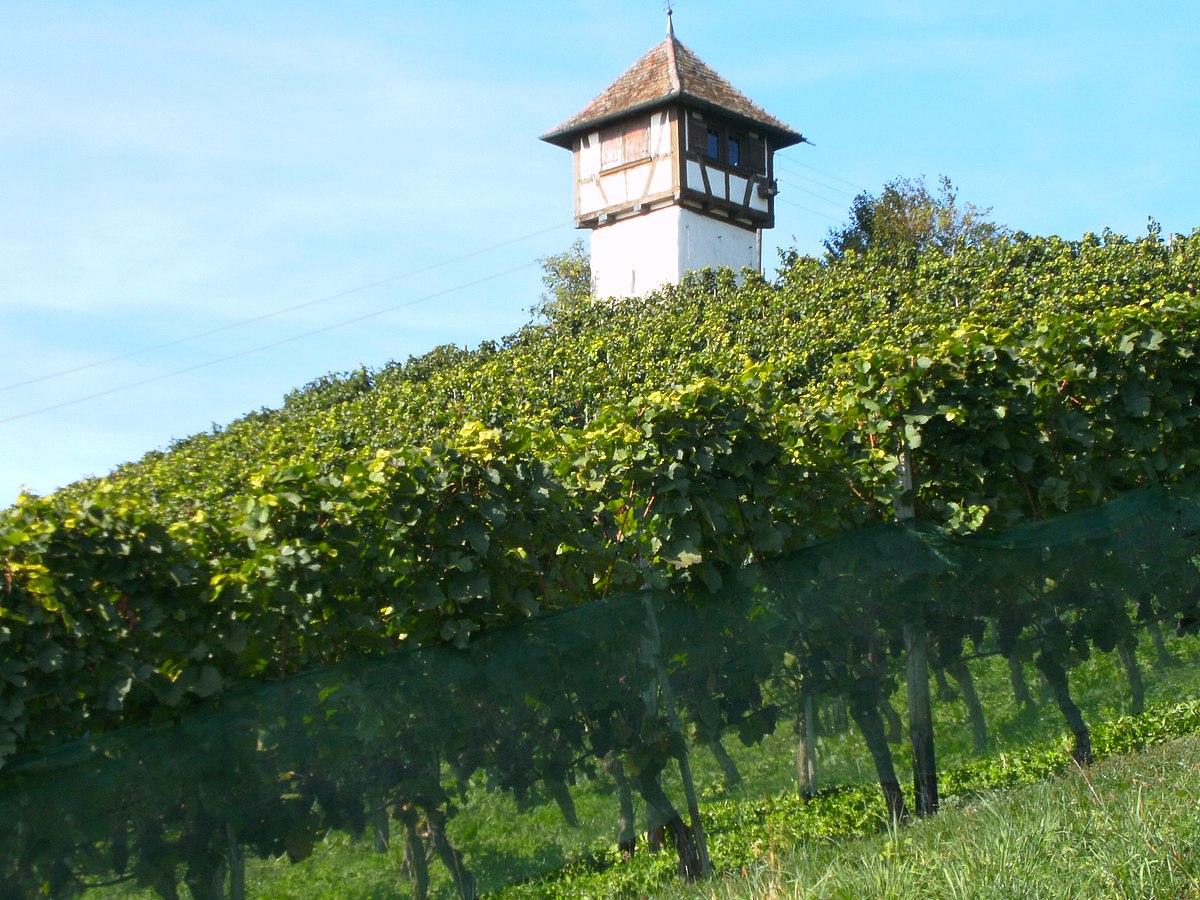
This does not mean that the Church is not in need of purification and pruning. And we have and will continue to experience this. I am convinced that we are still in a time of pruning. The Lord has taken the tall and proud vine of the Church, so luxuriant, it seemed, fifty years and before in this land, and has pruned us, by allowing us to be tested. This is a time of purification. A time not yet complete. But, as I have remarked before, I experience the Church here in America to be in much better condition than the more terrible times of the 1970s and 1980s. The pruning may not yet be fully over, but there are signs of greater purity and intensity already in: fervent and orthodox younger clergy, fine and wonderful new religious, many new and superb lay movements, and many individual lay people powerfully dedicated, sober and clear about their faith and the need to be light, even to accepting a kind of martyrdom in this ever darkening world.
The Church is surely a miracle; one before our very eyes. The world, and even many of the faithful, may think we are on the ropes and ready to go down. But we will endure, by the promise of Christ. An old spiritual says, Get on board children, children, there’s room for many-a-more. Nations, cultures, empires, and ideologies, will come and go. But there’s one ship that’s going to make it through this old storm tossed world, and that is the Church. Get on board children, (and stay on board), there’s room for many-a-more.
Photo Credit: The Cardinal’s Portrait by Rosenthal – A wonderful diptych of sorts. On the canvas painted by the monk, we see an image of the Church as we want her to be. On the left is the all too human reality of the Church. Ah, but the Church endures, by God’s grace.
This video of the Church being (re)built in France inspired me to write this post. Enjoy the video as you see a sign of new life and a visual image of the church being (re)built.
Is You Is, or Is You Ain’t a Saint? A Meditation on the Gospel for the 16th Sunday of the Year
We live in difficult times for the Church, and from many sectors the very legitimate cry for reform goes up frequently. Beyond the sexual abuse scandal, there are also deep concerns regarding the uncertain trumpet of Catholic preaching, lukewarm and nominal Catholics, an overall lack of discipline among Catholics, and a lack of disciplining by the bishops and clergy of Catholics, clergy and lay, who cause scandal. In a way, the list is quite long and has been well discussed on this blog, which is, overall sympathetic to the need for reform, and greater zeal in the Church.
But today’s Gospel issues a caution in becoming over zealous to root out sin and sinners from the Church. It is the memorable Parable of the Wheat and Tares. The Lord’s cautionary rebuke to the zealous farmhands who wanted to tear out the weeds, was that they might harm the wheat as well. Wait, says the Lord, leave it to me. There will come a day of reckoning, but it is not now, wait till harvest.
This does not mean that we are never to take no notice of sin or never rebuke it. There is need for discipline in the Church and other texts call for it (see below). But this text is meant to balance a scouring that is too thorough, or a puritanical clean sweep that overrules God’s patience and seeks to turn the Church from a hospital for sinners to a germ-free (and hence people-free) zone.
We are going to need to depend on a lot of patience and mercy from God if any of us are going to stand a chance. Summoning the wrath of God to come on sinners, as some do, may well destroy them as well. We all have a journey to make from being an ain’t to being a saint.
So let’s allow this Gospel to give us some guidance in finding balance between the summons to reform and the summons to patience. The guidance comes in Four Steps.
I. WAKE UP – The text says, Jesus proposed another parable to the crowds, saying: “The kingdom of heaven may be likened to a man who sowed good seed in his field. While everyone was asleep his enemy came and sowed weeds all through the wheat, and then went off.
Notice in this text that every one was sleeping when the enemy sowed weeds. There is a great mystery as to why God allows Satan to sow the seeds in the first place. But there is far less mystery as to why Satan has been so successful in our times. The weeds are numerous, and are vigorously growing in our times. And part of the reason is that we, in the Church, have been sleeping while Satan has steadily sown his weeds among us.
Now don’t just blame the Church leadership. Though we share plenty of the blame. But the fact is that too many in the whole Church have been in a moral sleep. Too many Catholics will just watch anything, listen to anything, expose themselves to anything. We just go with the flow, and live unreflective sleepy lives. We also allow our children to be exposed to almost anything. Too many parents have little knowledge of what their children are watching, listening to or surfing on the Internet, who their friends are etc. We hardly think of God or his plan for our lives, and, collectively, have priorities that are more worldly than spiritual. We are not awake and sober to sin and sin’s incursions, we are not outraged, we take little action other than to shrug, and seem to be more concerned with fitting in than living as a sign of contradiction.
Church leadership too has been inwardly focused. While the culture was melting down beginning in the late 1960s, we were tuning guitars, moving the furniture in the sanctuaries, having debates about Church authority, gender wars, and seemingly endless internal squabbles about every facet of Church life. I do not deny that there were right and wrong answers in these debates, and that rebellious trends had to be addressed, but while all this was going on, Satan was sowing seeds and we lost the culture.
We are just now emerging from our 50 years in the cocoon to find a world gone mad and we, who lead the Church, clergy and lay, have to admit that this happened on our watch.
It is long past time to wake up and sober up to the reality that Satan has been working while we squabbled and sang songs to ourselves.
And lots of hollering and blaming one side of the Church or the other, this kind of liturgy or that, is not very helpful, because that is still inward in its focus.
It’s time to wake up and go out. There is a work to do in reclaiming the culture for Christ and reproposing the gospel to world that has lost it.
Step one in a finding a balance between the need for reform and patience is to wake up
II. WISE UP – the text says, When the crop grew and bore fruit, the weeds appeared as well. The slaves of the householder came to him and said,’Master, did you not sow good seed in your field? Where have the weeds come from?’ He answered, ‘An enemy has done this.‘
Part of the sobriety we have to regain is to understand that we have an enemy who hates us, Satan. He is responsible for much of the spiritual, moral and even physical ruin we see around us. We have too long been dismissive of his presence, as though he were a fairy tale. While we cannot blame everything on him, for we connive with him, and we also suffer the weakness of the flesh and the bad influence of the world. But Satan is real and he is an enemy and he hates you. He hates also your children, he hates the Church, and he hates anything and anyone that is holy, or even on the way to holiness.
We have to wise up and ask the Lord for an anointing. We need not utterly fear the devil, but we need to understand that he is at work. We need to learn and know his moves, his designs, his tactics, and tools. And we need the grace, having recognized him, to rebuke him at every turn.
Now be careful here. To wise up means to learn and understand Satan’s tactics. But it does not mean to imitate them in retaliation. Upon waking up and wising up, some want to go right to battle, but in worldly types of ways. Yet, the Lord often proposes paradoxical tactics which are rooted in the wisdom of the Cross, not the world. Wising up to Satan and his tactics, does not often mean to engage in a full on frontal assault. Often the Lord counsels humility to battle pride, love (not retaliation) to conquer hate, and accepted weakness to overcome strength.
To wise up means to come to the wisdom of the cross, not the world. As we shall see, the Lord is not nearly as warlike in his response to his enemy as some zealous reformers propose to be. We may be properly zealous for reform, and want to usher in change rapidly, but be very careful what wisdom you are appealing to. Scripture says, Do not deceive yourselves. If any one of you thinks he is wise by the standards of this age, he should become a “fool” so that he may become wise. For the wisdom of this world is foolishness in God’s sight. (1 Cor 3:19-20).
Step two in a finding a balance between the need for reform and patience is to wise up.
III. WAIT UP - The text says, His slaves said to him, ‘Do you want us to go and pull them up?’ He replied, ‘No, if you pull up the weeds you might uproot the wheat along with them. Let them grow together until harvest...
We have already laid the ground work for the Lord’s rebuke to these overly-zealous reformers. Today in the Church we are well aware of the need for reform, so is the Lord. He says, clearly, an enemy has done this. And yet, to those who want to go through the Church rooting out every sinner, every ne’er do well, every bad theologian (and there are many), and call for an increasing and severe clamp-down by the bishops across the board, the Lord gives a balancing notion.
There is need for discipline in the Church, and even punitive measures from time to time. The Lord himself proposes excommunication in certain instances (e.g. Matt 18:17), St Paul too (e.g. 1 Cor 5:5). Yet, texts such as those need to be balanced by texts such as the gospel today. Fraternal correction is an essential work of charity (I have written more on that here: Fraternal Correction) and it must be conducted with patience and love.
But the The Lord is patient and here directs us to also to be prepared to wait and not be over zealous in pulling weeds, lest we harm the wheat. The Lord says, remarkably, let them grow together. Notice, now is the time to grow, the harvest comes later. In certain, rarer instances the harm may be so egregious that the Church has to act to remove or discipline a sinner more severely. But there is also a place to wait and allow the wheat and tares to grow together. After all, sinners may repent and the Lord wants to give people the time they need to repent. Scripture says, God’s patience is directed to our salvation (2 Peter 3:9).
So, while there is sometimes need for strong discipline in the Church, there is also this directive to balance such notions: Leave it be, wait, place this in the hands of God, give time for the sinner to convert, keep working and praying for that, but do not act precipitously.
We have had many discussion here on the blog about whether and how the bishops should discipline certain Catholic politicians who, by their bad example and bad votes, undermine the gospel and even cost lives through abortion and euthanasia.
While I am sympathetic to the need for them to be disciplined, how, when and who, remains a prudential judgement for the Bishop to make. And, as we can see, there are certain Scriptures which balance each other. In the end, we cannot simply make a one-size-fits-all norm. There are prudential aspects to the decision and Lord himself speaks to different situations in different ways.
In today’s Gospel the Lord says, wait. And generally it is good advice to follow. After all, how do YOU know that you won’t or don’t need more time? Before we ask God to lower the boom on sinners, we ought to remember that we are going to need his patience and mercy too. Scripture says, The measure that you measure to others will be measured back to you. (Matt 7:2& Luke 6:38). Be very careful before summoning God’s wrath, for who may endure the Day of his coming (Mal 3:2)?
Step three in a finding a balance between the need for reform and patience is to wait up and balance zeal with patience.
IV. WASH UP – The text says, Then at harvest time I will say to the harvesters, “First collect the weeds and tie them in bundles for burning; but gather the wheat into my barn.
So you see, there is a harvest and those who have sinned or led others to sin and have not repented are going to have to answer to the Lord for it.
The Lord is no pushover and he does not make light of sin. In saying wait, he does not mean that judgment will never come. But his general advice is “Leave it to me.” And to us he says, in effect, “As for you, wash up, get ready, and help others to get ready too. For judgment day is surely coming and every knee will bend to me and every one will render and account.
That’s it, Wash up! You’re either going to be a saint, or an ain’t. For now the wheat and tares grow together. But later the tares and all the weeds will be gathered and cast into the fire.
So here’s the balance, God is patient, but there is a harvest and we have to get ready by God’s grace. For the overly zealous God says wait. But to the complacent and sleepy God says, wake up, wise up and wash up!
Are you ready for the coming of the Lord? To put it in a gloss of an old song: Is you is, or is you ain’t a saint?
Here is a great exposition of this Gospel from Fr. Francis Martin. Don’t Miss it.
It is the Decision of the Holy Spirit and Us….On the Council of Jerusalem and the Catholicity of the Early Church

In the first reading at Today’s Mass we have recounted for us the Council of Jerusalem which scholars generally date to around the Year 50 AD. It was a pivotal moment in the history of the Church since it would set forth an identity for the Church that was independent from the culture of Judaism per se, and it would open wide the door of inculturation to the Gentiles. This surely had significant impact upon evangelization in the early Church.
Catholic Ecclesiology is Evident here: in that we have reflected here a very Catholic model of the Church in terms of how a matter of significant pastoral practice and doctrine is properly dealt with. In effect what we see here is the same model the Catholic Church has continued to use right to our own time. What is evident here, and in all subsequent Ecumenical Councils, is a gathering of the Bishops presided over by the Pope which considers a matter and may even debate it. If necessary, the Pope resolves debates where consensus cannot be reached. Once a decision is reached, a letter is issued to whole Church and the decision is considered binding.
All these elements are seen here, though somewhat in seminal form. Let’s consider this First Council of the Church in Jerusalem of 50 AD, beginning first with the remote preparation -
1. Bring in the Gentiles! – The Lord, just before he ascended gave the Apostles the great commission: Therefore go and make disciples of all nations, baptizing them in the name of the Father and of the Son and of the Holy Spirit (Matt 28:19). Hence, the Gentiles are now to be summoned and included in the ranks of discipleship and of the Church.
2. But it looks like the Church was mighty slow in beginning any outreach to the Gentiles. It is true that on the day of Pentecost people from every nation heard the Sermon of Peter and 3000 converted. By they were all Jews (Acts 2). In fact, it seems the Church did little, at first, to leave Jerusalem and go anywhere, let alone to the nations.
3. Perhaps as a swift quick in the pants the Lord allowed a persecution to break out in Jerusalem after the stoning of Stephen (Acts 7). This caused the gospel to begin a northward trek into Samaria at least. Samaritans however are not usually considered Gentiles, since they were a groups that had intermarried with Jews in the 8th Century BC. There is also the Baptism of an Ethiopian Official but he too was a Jew.
4. Fifteen Years?! The time line of Acts is a bit speculative. However if we study it carefully and compare it to some of what Paul says (esp. in Galatians) it would seem that we are dealing with close to 12 or 15 years before the baptism of the first Gentile! If this is true then it is a disgrace. There were, of course, strong racial animosities between Jew and Gentile that may explain the slow response to Jesus’ commission. It explains, but does not excuse it.
5. Time for another kick in the pants. This time the Lord went to Peter who was praying on a rooftop in Joppa, and, by means of a vision, taught him that he was not to call unclean what God had called clean. The Lord then sent to Peter an entourage from Cornelius, a high Roman military official who was seeking baptism. He, of course was a Gentile. The entourage requests that Peter go with them to meet Cornelius at Cesarea. At first he is reluctant. But then recalling the vision (kick in the pants) that God had given him, he decides to go. In Cesarea he does something unthinkable. He, a Jew, enters the house of a Gentile. Peter has learned his lesson and been guided by God, as the first Pope, to do what is right and just. After a conversation with Cornelius, and the whole household, and signs from the Holy Spirit, Peter has them baptized. Praise the Lord! It was about time. (All of this is detailed in Acts 10)
6. It is a fact that many were not happy with what Peter had done, and they confront him on it. Peter explains his vision, and also the manifestation of the Holy Spirit and insists that this is how it is going to be. While it is a true that these early Christians felt freer to question Peter than we would the Pope today, it is also a fact that what Peter has done is binding even if some of them don’t like it. What Peter has done will stand. Once Peter has definitively answered them, they reluctantly assent and declare somewhat cynically: “God has granted life giving repentance even to the Gentiles!” (Acts 11:19)
7. Trouble Brewing – So, the mission to the Gentiles is finally open. But that does not mean trouble is over. As Paul, Barnabas and others begin to bring in large numbers of Gentile converts, some among the Jewish Christians begin to object that they were not like Jews, and began to insist that they must be circumcised and follow the whole Jewish Law; not just the moral precepts but also the cultural norms, kosher diet, purification rites etc. That is where we picked up the story in yesterday’s Mass.
8. The Council of Jerusalem – Luke is a master of understatement and says “Because there arose no little dissension and debate….” (Acts 15:2) it was decided to ask the Apostles and elders in Jerusalem to gather and consider the matter. So the apostles and some presbyters (priests) with them meet and, of course, Peter is there, as is James who was especially prominent in Jerusalem among the apostles, and would later become bishop there. Once again Luke rather humorously understates the matter by saying, “After much debate, Peter arose” (Acts 15:7).
In effect Peter arises to settle the matter since, (it would seem), that the apostles themselves were divided. Had not Peter received this charge from the Lord? The Lord had prophesied: Simon, Simon, behold, Satan has demanded to sift you all like wheat but I have prayed for you Peter, that your faith may not fail; and you, when once you have turned again, strengthen your brothers (Luke 22:31-32). Now Peter fulfills this text, as he will again, and every Pope after him. Peter clearly dismisses any notion that the Gentiles should be made to take up the whole burden of Jewish customs. Paul and Barnabas rise to support this. Then James (who it seems may have felt otherwise) rises to assent to the decision and asks that a letter be sent forth to all the Churches explaining the decision. He also asks for and obtains a few concessions.
So there it is, the First Council. And that Council, like all the Church-wide Councils that would follow, was a gathering of the bishops, in the presence of Peter who works to unite them. A decision is then made, and a decree, binding on the whole Church, is sent out. Very Catholic actually. We have kept this Biblical model ever since. Our Protestant brethren have departed from it for they have no Pope to settle things when they dispute. They have split endlessly into tens of thousands of denominations and factions. When no one is pope every one is pope.
A final thought. Notice how the decree to the Churches is worded: It is the decision of the Holy Spirit and of us (Acts 15:28). In the end, we trust the Holy Spirit to guide the Church in matters of faith and morals. We trust that decrees and doctrines that issue forth from Councils of the Bishops with the Pope are inspired by and authored by the Holy Spirit Himself. And there it is right in Scripture, the affirmation that when the Church speaks solemnly in this way it is not just some bishops and the Pope as men, it is the Holy Spirit who speaks with them.
The Church – Catholic from the Start!
Square Dancing as an Image for the Church?
Years ago, in High School, I dated Paula, who liked square dancing. So, most Saturday nights we were down at the community center, she in her petticoats and dress, I in my jeans, button down western shirt with a scarf tie and hand towel.
Square dancing has some basic moves that beginners learn. And so it was that Paula and I started with the basics. But in square dancing there are different levels, and so eventually we cleared the floor and watched those who knew the more advanced moves. Sometimes there were several levels of dancers. I remember being amazed at the complicated moves the move senior members had learned and wondered how I would ever master it. But, little by little the moves were learned, and we got to stay on the floor just a little longer as the months and years ticked by.
Image of the Church? I was over at YouTube and came upon the video below of a square dance group that’s pretty advanced. I remember many of the moves they do, but some of it was above what I ever learned. And suddenly it occurred to me that I saw an image of the Church.
Please forgive me. I know you think I must be theological geek at this point. Surely as a young man I never gave a thought to the Church, in terms of square dancing. But now with this great love for God and for the Church, I can’t help it, I see the Church in square dancing. Just a few thoughts:
1. Every Square Dance needs a caller and, if the dancers in the square are the body, he is the head. He calls the moves, and the dancers must listen and respond. He has the authority to set direction and maintain order. If a square falls into disorder he reestablishes order by calling them home. Not only that, it is also the role of the Caller to teach new moves and drill the dancers until they master it. So the caller is the source for unity and direction for the square.
This is also the role of the Pope and the Local Bishop in the Church who also have the authority to set direction, maintain unity and restore order when necessary. It is also their role to teach the faith, along with their priests and catechists until the faithful master the Christian walk (dance).
2. As long as everyone listens carefully, and fulfills their particular role in the particular moves, the dance continues. But when, usually through error, one or more of the dancers veers away from the directed move, the square either stumbles or falls apart. As long as the dancers are open to learn, the square will continue to get better, and become a good, and disciplined group who increasingly enjoy advanced square dancing.
So too with the Church. When all listen carefully and do their part, the Church is strong and well ordered. When the faithful do not listen, or persist in error, the Church stumbles and is less effective. Disunity leads to a poor Christian walk (dance), not only for individuals, but also for groups and parishes. But if the faithful are willing to learn to and grow, the dance of faith becomes deeper and richer, more enjoyable, and just plain fun.
3. Everyone has a role, but not the same. When the caller calls a dance move, what you do in response depends on where you are in the square at that time. You might just stand still while others move, or you might be the one who switches positions. And all this varies from move to move.
And so it is with the Church. We have varied and different roles depending on where we are in the Church. Some of our roles are stable but others change depending on the situation. As a pastor, I am a leader and teacher in my parish. But at a meeting with the bishop I am a learner and a man under authority. In the parish I may take the lead when it comes to teaching the faith, but I may need to learn from my parishioners when it comes to understanding some technical legal matter, or car repair, etc. In such cases many of my parishioners can show me the way. We all have different gifts and talents and they all interact in various ways, depending on the situation. At times we lead, at times we follow, at times we stand still, while others move about us. All at the direction of the caller.
4. There is an etiquette to square dancing. There are bows, and curtseys, there’s a way you hold a lady’s hand, and there is a graciousness expected by all. Especially for those in higher levels, proper attire is also expected. Timeliness is also important since it is necessary to have eight people to form a square and get things underway. Thus everyone needs to be committed and timely. If just one of the eight is late, seven others are left standing. In larger groups, where there are numerous squares, people can mix and match a bit, but one missing member always impacts many other people.
In the Church too, basic kindness and generosity are also expected and necessary. Where there is Charity and truth, God himself is there. Further, people must be true to their commitments and be timely or many others suffer.
5. There is a great intricacy to square dancing where many aspect are interacting at once. It is almost mind-boggling to watch as the dance unfolds.
So too with the Church, there are many layers and great intricacy at work. Some are praying, some are studying, some are raising children, some are preaching, some are evangelizing, some are caring for the poor, some are praying in front of abortion clinics. But all are responding to the great call of the Shepherd Jesus speaking through his Pope and Bishops, through the Scriptures and the Tradition. It is a great dance of wonderful intricacy, and everyone interacts at different levels, all at once.
So there you have it: the Church as a square dance. Enter the dance, learn the moves and have a great time.
Photo Credit Ben Parmeter via Creative Commons
This video shows Square Dancing at a more advanced level. I got close to this, but never this good. Paula’s parents could have danced like this in their sleep.
Here’s how a caller teaches a new move:
My Father’s House Has Become A Markeplace – The Sad Tale of a Once Splendid Church
One of the saddest things to experience is the closing of some of our oldest and most beautiful Catholic Churches. These older churches are some of our most magnificent in terms of architecture, theology and faith coming together. Most of these beautiful structures which are closed have succumbed to the wrecking ball. But some of them live in strange and often painful ways, becoming performing arts centers, condominiums, restaurants, and other various secular purposes.
I recently ran across a couple of “then and now” videos that struck me to the heart with sadness.
The first video below is from 1944, a Solemn High Mass in St. Vibiana’s Church in Los Angeles. The Church is packed to the rafters with people at a Christmas Midnight Mass. The choir sings, the incense rises, and clergy pray in Latin and Greek. The scene closes with people flocking to the altar rail for Holy Communion.
The second video shows St. Vibiana’s today (now called “The Vibiana”). It is now a performing arts center and a marketplace. The video shows the vendors along the interior selling wine and scarves and other such things. The high altar where God was once worshiped, and which was home to the Blessed Sacrament, looms in the background, now a mere backdrop for shoppers, dancers, and actors. The confessionals, where once absolution was granted and mercy celebrated, are now storage closets.
Sigh…..
The story of St. Vibana’s is perhaps more well known than most, for it was once the Cathedral Church of Los Angeles. Built in 1876, it was damaged by an earthquake in 1994. The Archdiocese of Los Angeles had long considered the building (which seated 1200) too small for its needs and had wanted to build a new Cathedral. Hence it was decided to tear the damaged building down. But a coalition of Catholics and preservationists fought to save the building, and the City took possession of it. Meanwhile the Archdiocese went on with plans to build the current, new Cathedral, dedicated in 2002. Eventually “The Vibiana” was sold to a private developer who now rents it for various functions.
This same story is at work in other cities too where beautiful, old Churches, now have secular uses. At some level, one can rejoice that the wreckers ball did not swing. But at another level it is troubling to see once sacred buildings used in this manner, and there is the thought that maybe the total loss would have been more dignified.
I don’t have simple answers. We have discussed before the severe decline in Mass attendance and other demographic shifts. But after all the discussions, what it ultimately what it means is shown in video 2 below. Granted, St Vibiana’s closed for reasons other than low Mass attendance, but in other cities it is low attendance that is the driving force behind the closings.
A tale of two videos: then and now. What do you think? Has St. Vibiana’s survived now that she is just “The Vibiaba?” Or is this a fate worse than death? What uses have you seen of some the surviving, but closed churches in other cities?
Photo Credit: St Vibiana 1885 from City of Los Angeles Landmarks Page
Video 1: St Vibiana’s 1944:
Video 2: “The Vibiana” 2011
Happy Easter – Jesus is on line one
Do you have a cell phone? Does your cell phone tell you who it is that is trying to call you? Do you usually check that caller ID and decide, based on who it is, whether to answer the phone or not?
“Answer”, “Ignore” or “Send to voicemail”?
I do! In all honesty, when someone at my school says to me, “You have a call on line one,” I almost always ask, “Who is it?” Then, I decide if the person is worthy of my time, if I am prepared to talk to that person, if I don’t like that person or if it is conversation I would prefer to have later. I am sure the same thing happens to me when I call others as well. I am not offended , trust me, I am a high school principal. Try calling a parent in the middle of the day.
Caller ID
I love caller ID. When I know who is calling, I know how I am going to react. I am going to pickup the phone if it is my mom or wife because I want to make sure they are OK. I am going to pick up my calendar if it is my Pastor because he probably has something for me to do. I am not going to always pick up the phone if it is my best friend because, we will talk forever and I got to make sure I have time to sit and chat. I am not going to pick up the phone at all if I am driving because that is dangerous and I am not trying to kill anyone. Like many of you, I make these discernments each time my phone rings. And that it OK.
If it is God, pick up and answer!
But, when it comes to Christ, when it comes to God, you can’t hit the “ignore” button but so many times; Can I get an amen? I shouldn’t say to God,” I will call you back later.” You shouldn’t say to God, “Not now I am busy.” We shouldn’t say to God, “I have something more important to do.” You can’t say to God, “This isn’t a good time, go talk to someone else and get back to me later.” You can’t put God into your voicemail but so many times. When God calls, you must pick up the phone and answer. And unlike your mother, pastor, wife or best friend, don’t simply say “Hello.” Answer God’s call by saying, “Here I am Lord, what do you want me to do!”
Are you sure you have the right number?
Brother and sisters, I know at least for me, I have put God on hold many times in my life. I hit the ignore button, turned on my voice mail and took a message. And he kept calling. I tried my best to not be a deacon but God kept calling and I kept saying, “You must have the wrong number.” God said, “Follow me” and I said, but I don’t have the time. I said to myself, “Most Deacon’s are retired, I still have to work” (Which isn’t true by-the-way, but that was my excuse at the time). God said, “I gave you that job that keeps you so busy, want to keep it?” I said “God, I have not studied religion since high school, and I wasn’t all that great at it.” God said, “I am the perfect teacher, I can teach anyone, including you.” I even said “God, I am really not sure I am worthy.” And God said, “I know; That is why the Holy Spirit will be heavily involved in this endeavor.” Like the disciples on the Sea of Galilee, with me, God knew whom he was calling. Sometimes, we think God doesn’t know what he is doing don’t we? God’s doesn’t ask for a resume because he already knows our qualifications. This is important because we often ignore God’s call not out of spite for Our Lord but rather lack of confidence in the graces he has given us. You see, God is not asking us to change who we are, he is asking us to take the talents that he built into us and use them for the Kingdom of God.
I knew you before you were formed in the womb
I often meditate upon the reason why God chose fisherman to be the first disciples, the first Bishops of the flock. Maybe because fishing was a dangerous profession and he needed men who would not be frightened easily. Maybe it was because fisherman had to be patient and building the Kingdom of God requires among many things patience. Perhaps it was because fisherman had to be able to read subtle changes in the weather and water conditions in order to fill their nets and those same skills were needed in leading the early Christian community. Perhaps it was because fisherman rarely worked alone and they had a sense of community that he wanted in his Church on Earth. Maybe it was all of the above and maybe it was a set of qualities that I have yet to understand. But he never said to them, “Stop being fisherman.” Rather, I will take those skills I gave you and make yourselves “Fishers of men.”
Brothers and sisters, when God calls us, he knows what he is doing and he knows whom he is calling. When you answer God’s call, you will never hear God say, “Sorry, I dialed the wrong number!” I heard a priest say once, “God never calls the qualified but qualifies everyone he calls.”
Each of us has a talent or a gift that God wants us to use to build his Kingdom. God is calling us to use that talent. For some of us, you are being called to lector, join the choir, be a minister of holy communion, join the St. Vincent de Paul Society become active in any number of ministries we have in an average parish. Your phone is ringing, answer the call, it’s God! Some of you are called to be priests, deacons, religious sisters or brothers. Don’t send God to your voice mail, answer and say, “Here I am Lord.” Some of you are called to be married and to be parents, maybe even adoptive parents, God is calling, don’t text him back saying, “I am busy.”
Say yes!
Brothers and sisters, God is calling and when we answer yes, he doesn’t promise that our life will be easy. But, he promises that our life will be fulfilled. In your prayer life, God is calling; Through your friends, God is calling; Through the voices of your family, God is calling. Perhaps even through this blog post, God is calling. Answer the phone and say, “Here I am Lord. What do you want me to do?” Happy Easter!
More Data on the Lost Generations and the Urgent Task for the Church
It has been clear for some time now in the Church that Catholics, as a group, are growing more distant from the Church teaching on sexual matters. It seems well demonstrated that most Catholics form their view on these matters more from the culture than the scriptures or the teachings of the Church. The culture shouts promiscuity and normalizes both the heterosexual and homosexual expressions of it. Meanwhile, I’m sad to say, many clergy and catechists remain quite silent and vague about it. This is not true of all, but I know that a common complaint on the part of the faithful is, that what they hear from the pulpit, is filled with vagaries and generalities. Only rarely do they hear straightforward teaching on sexual matters and other important topics as well, such as the need to attend Mass, go to confession, the reality of hell etc.
With the combination of a loud culture and quiet pulpit and classroom, it is no surprise that that recent statistics show that a growing number of Catholics do not hold the Catholic faith when it comes to moral issues, especially the sexual ones. Here are some excerpts from a recent article over at the CARA (Center for Applied Research in the Apostolate) blog written by Mark Gray:
In 2010, 20% of adult Catholics “strongly agreed” that “homosexual couples should have the right to marry one another.” An additional 28% “agreed.” Thus, overall 48% of Catholic respondents indicated some level of agreement with this statement. The margin of error for the 2010 Catholic data is ±5.8 percentage points. Thus, the point estimate for agreement could range as high as 54% or as low as 42%. ….Levels of agreement with the statement have grown [over the years] as disagreement has diminished.
There is another [General Social Survey] GSS question that has a longer history that is related to the results of the marriage question shown above. The GSS asks respondents if “sexual relations between two adults of the same sex” is wrong. In the 2010 GSS, for the first time, the percentage of adult Catholics indicating this is “not wrong at all” outnumbered those who said it was “always wrong” (44% compared to 42%)…(margin of error was ±5.9 percentage points).
As one can see from the trend in the figure [above right], the real point of change occurs somewhere in the early 1990s and has continued to evolve to this day. Responses to this question differ by age with younger Catholics being more likely than older Catholics to say this is “not wrong at all.” However, the sharp change in the population overall in the early 1990s cannot be explained by generational replacement alone.
It is the case that frequency of Mass attendance correlates with responses to these questions….The only complication to this…. is that Mass attendance varies by age and generation ….So is it Mass attendance that makes one more likely to oppose civil unions or marriage for same-sex couples or is it something generational? It is likely both but which matters more? And again the figure above indicates some sort of “period effect” in the early 1990s that is also likely important. Margin of error for sub-groups is the biggest obstacle to understanding and disentangling these effects.
The full article is here: Catholic Attitudes. Please note, Mr. Gray’s purpose in the article is to report the numbers not to advocate for or against what they say.
My own thoughts are that the generational factor is very significant. I understand that Mr Gray above thinks there are other factors too. I accept that but would still highlight the generational factor. There are increasing numbers of young people who have never known a time when the wider culture did not approve of homosexual behavior. Those of us about 45 and older DO remember such a time, but the younger ones have largely had a steady diet of “there’s nothing wrong with homosexual behavior and if anyone thinks so, they’re a bigot.” And as they have heard this, the Church has only vaguely set forth a principled case for the wrongness of promiscuity in general, and homosexual activity in particular.
To paraphrase a well known quote from the last election, The Church’s chickens are coming home to roost. To put it Biblically: For if the trumpet give an uncertain sound, who shall prepare himself to the battle? (1 Cor 14:8).
In the Church I think we have to accept that a generational shift has occurred, both in the Church and in the culture. And it has happened on our watch.
Rear-guard action? With the increasing move to give legal recognition to (so-called) gay marriage, the Church is scrambling to teach the faithful again on the basics of marriage. But, truth be told, it’s something of a rear-guard action. Marriage has been in trouble for a long time in this country, family sizes have decreased, divorce has skyrocketed and cohabitation and single parent families are becoming as common as marriage. Gay “marriage” is just the latest confusion, polygamy is surely next.
Yes, we have returned to the battle late. When the first no-fault divorce laws went into effect in 1969 and the ten years following, I am unaware that there was much of a collective effort by the Church to oppose and turn back that horrible idea.
Inward focused! Of course in 1969 we were rather inwardly focused. We were moving around the furniture in our sanctuaries, tuning up guitars and having endless debates about women’s (lack of) ordination, Church authority and the like. And while we looked inward and debated among ourselves, we lost the culture. We stopped evangelizing and articulating a clear moral vision for our culture in a way that was effective.
I am told the situation is worse in Europe. Both Pope John Paul and Pope Benedict have said we have to start all over again there and completely re-evangelize Europe.
But start we must. And while we do so, we will called all sorts of names by a culture that now finds the Gospel and its moral vision to be obnoxious, even hateful. It will be our task to re-propose the Gospel in creative and thoughtful ways, and to present why it makes sense and is not, in fact hateful.
I think some of the younger clergy, religious and laity have become better prepared to do just this. I am impressed with the dedication, fidelity, creativeness and zeal of many of the younger and emerging leaders in the Church. In a way their presence and numbers is something of a paradox, since, as the numbers above show, there seems to be an overall generational shift away from the Church. It is almost as if these younger and emerging leaders, (clergy, religious and lay), have been snatched by the Lord from a raging torrent and set on solid rock. And now they have zeal to snatch others from the torrent and draw them to the solid rock of the Church and Christ. It is a small but significant army. And the trumpet the Church is sounding is becoming clearer too, more and more are mustering for the great struggle to re-evangelize the culture.
In tomorrow’s blog I’d like to address the Biblical teaching on homosexual activity as well as heterosexual promiscuity. I do this in an attempt to answer those surveyed above who think there is nothing wrong with either. Just my own little way of trying to turn back some of the numbers and not be among those who have been far too silent.
Here is Fr. Barron’s take on how we lost the culture and what we might do to re-evangelize it.
The Rising of the Roses: A Reflection on How the Lord is Restoring His Church
It is often a fact that we have had to discuss difficult subjects on this blog. For, it is also a fact that our culture is in serious trouble. But it is also a notable trend that God is renewing his Church. I am seeing increasing signs of a springtime for the Church, at least here in America.
As I walk past the rose bushes out front of the rectory I see the first red shoots emerging from the pruned stumps. Last October my rose bushes were over seven feet tall. In November they were pruned all the way back to one foot. But, the young red shoots are emerging.
And in this I see an image of the Church. The overall numbers in the Church still seem troubling, especially for those of who remember the days of packed Churches and waiting lists to get into Catholic Schools. In those days, the Church stood tall and proud. But the days of pruning came, as a cultural winter set in, and we have seen closings and very lean years. Yet, the young red shoots of a new season are appearing on this rosebush of the Church, if you ask me.
1. Vocations to the Priesthood in many areas are returning. Here in Washington we are preparing to open a new pre-theologate. Our ordination numbers are up and many superb men are presenting themselves for service of the Church. I am very impressed with our new priests of the last 15 years. They are solid men who love the Church, are obedient to the Magisterium and liturgical norms, and have zeal to proclaim Christ.
2. In my parish the convent became so full the Servant Sisters of the Lord had to seek larger quarters. 25 of them moved. Only four remain in our convent, but I expect the convent to fill again soon. Many Religious orders that have retained their traditions such as the habit, communal life, and a focused apostolate are doing well, if not thriving. The Dominican Sisters in Nashville and those in Michigan are over-flowing with vocations.
3. One of my apostolates is the Traditional Latin Mass and I find an amazing number of young people who are attending. They are also meeting each other and marrying. More than half my weddings these days are from the Latin Mass community. They are solid couples, committed to the Church’s teaching on marriage. A good number of the couples I have wedded have gone on to have nice, large Catholic families.
4. The Catholic blogosphere has lit up with many outstanding, faithful and informative sites. Yes, there are some bad ones out there that feature dissent. But frankly, it is clear that the real energy is at the faithful sites. There is a graying of dissent and a thirst for the truth.
5. EWTN and Catholic Radio have a great presence and authentic voice throughout the world.
6. Great publishing houses like Ignatius Press, OSV, and fine Catholic Publications are available to the faithful in abundance.
7. There are many thriving movements in the Church that both reflect diversity and manifest great devotion for the Lord and the Church.
8. Better sense of the Battle - I think an increasing number of Catholics who remain, (remember only 25% go to Church), have an overall better sense that they are in a battle. They are, increasingly sober and serious about the state of the world and the necessity of being distinct from it. Too many Catholics of the past just wanted to fit in and get along. I think this attitude is beginning to diminish. This is certainly so among the younger clergy and religious and a growing fact among especially the younger faithful.
9. Many younger Catholics are more open to the Church’s teaching. They see the disastrous and often ruined lives of the generation that preceded them and seem more open to admitting the errors of modernist tendencies.
10. There are many new and flourishing Catholic Colleges and Universitiesthat have risen to replace many of the seemingly unreformable ones. Likewise, there are many good movements on College campuses such as Newman Centers, and groups like the Fellowship of Catholic University Students (FOCUS). Groups like these give Catholics a fighting chance on many secular (and even some Catholic) campuses where the moral and academic setting is hostile and poisonous. Other groups such as the Cardinal Newman Society (CNS) keep an eye on Catholic Colleges and both praise the good ones and warn parents of the bad ones and bad trends.
11. Open Dissent and Liturgical Abuses seldom go unanswered now. Many Catholics now zelously step forward to set the record straight and demand on-going reform.
Yes, the red shoots are beginning to appear on the pruned rosebush of the Church. My list is just a quick one, anecdotal and incomplete. I would be grateful if you would add to this list. Where do YOU see signs of growth and spring?
Little by little the Lord is raising up men and women in the Church who, by his grace, are ushering in reform and purification. Who do you know like this and what do you see?
I realize that some of you will also want to differ with my view or add areas where we need further improvement (e.g. greater love for and direct service of the poor). Please do so. My picture is incomplete; the rose shoots are just now appearing.
I want to finish with a Scripture from last Saturday’s Mass that speaks with joy of the work of God to rebuild the ruins:
[L]ight shall rise for you in the darkness, and the gloom shall become for you like midday; Then the LORD will guide you always and give you plenty even on the parched land. He will renew your strength, and you shall be like a watered garden, like a spring whose water never fails. The ancient ruins shall be rebuilt for your sake, and the foundations from ages past you shall raise up; “Repairer of the breach,” they shall call you, “Restorer of ruined homesteads.” (Is 58:9-14)Photo Credit: Flickr (Right click on Photo for URL)
This video depicts the work of FOCUS, mentioned above. It illustrates well the kind of reform I see springing up in the Church. The Video is very inspiring.
Recall Notice!
Some Computer problems today mean I cannot easily post a new blog tonight. Back up to speed tomorrow. I could not think of a better post to re-post that this one with a few additions:
The maker of all humans beings (GOD) is recalling all units manufactured, regardless of make or year, due to a serious defect in the primary and central component of the heart. This is due to a malfunction in the original prototype units (code named Adam and Eve 1.0) resulting in the same defect in all subsequent units. This defect has been technically termed “Sorrow Inducing Non-morality (S.I.N.). Some of the symptoms include:
- Loss of direction
- Foul vocal emissions
- Amnesia of Origin
- Lack of peace and joy
- Selfish or violent behavior
- Depression or confusion in the mental component
- Fearfulness
- Idolatry
- Rebellion
- Sometimes the units are just plain mean.
The Manufacturer, who is neither liable nor at fault for this defect is providing factory-authorized repair and service, free of charge, to correct this defect. The Repair Technician, Jesus, has most graciously offered to bear the entire burden of the staggering cost of these repairs. Some of the following procedures will be necessary in this repair:
- The disk in the heart component must be scrubbed clean of all viruses.
- The mental component must be overwritten with new software, (especially WORD of GOD 3.0)
- Virus Protection software (such as Pure Eyes 2.0) must be installed to protect the unit from further damage.
- Connection to the Maker of all all human beings (GOD) must be re-established through the restoration of communication software in the unit. This is done by installing COMMUNION 2.0 Software and reconfiguring the USB (Upward Soaring Brotherhood) port.
- Communications protocols must be upgraded to make sure that the unit says “only the good things men need to hear” and to be sure the unit speaks only that which is true.
Please bring your unit to the nearest Catholic Parish for immediate service. While it is true that WORD of God 3.0 is available for immediate download, an interpretive key must be installed on site at the Catholic parish. Without this interpretive key, WORD of God 3.0 may not function properly in the unit. Further, scrubbing the disk of the heart component can only be done by an authorized technician as well as the installation of COMMUNION 2.0 software. Jesus has personally authorized these technicians to do the work necessary to repair your unit. Upon arrival at a Catholic Parish ask to see the Properly Registered, Indwelt & Elected Service Technician (P.R.I.E.S.T.).
WARNING: Continuing to operate the human being unit without correction voids any manufacturer warranties, exposing the unit to further dangers and problems and will result in the unit being permanently quarantined. For more information on avoiding the “Hell sub-routine” send a kneemail to Jesus at: Jesuspaiditall@oncalvary.org
Please note that emergency service is always available. For information on the location of Catholic Churches and regular service hours go to www.masstimes.org
Please spread the word on this recall!