On the Dignity of Dogs and Glory of God

God gives many gifts, and one of the great gifts he has given me was the gift of our family dogs.

Scripture says little about dogs and when it does it is never flattering. Most of the references make one think of wild dogs who ran in packs. Psalm 22:16 says, “Many dogs have surrounded me, a pack of evildoers closes in upon me. Or again from Philippians 3:2, Watch out for those dogs, those evildoers. No, strangely, I cannot find one Scripture that speaks well of dogs.

And yet, they have been a great gift to me. Such loyalty, such unconditional “love.” There were times in my life when everyone was disgusted with me, even I was disgusted with me. But even on days like that my dog would still run to great me, and curl up next to me; such wonderful, “forgiving” and uncomplicated creatures.

And they have much to teach us. Likely you have seen this list, but it is always worth another read. It’s things: can learn from dogs:

  1. Never pass up the opportunity to go for a joy ride.
  2. Allow the experience of fresh air and the wind in your face to be pure ecstasy.
  3. When loved ones come home, always run to greet them.
  4. Let others know when they’ve invaded your territory.
  5. Take naps and stretch before rising.
  6. Run, romp, and play daily.
  7. Eat with gusto and enthusiasm.
  8. Be loyal.
  9. If what you want lies buried, dig until you find it.
  10. When someone is having a bad day, be silent,  sit close by and nuzzle them gently.
  11. Thrive on attention and let people touch you.
  12. Avoid biting when a simple growl will do.
  13. When you’re happy, dance around and wag your entire body.
  14. No matter how often you’re scolded, don’t buy into the guilt thing and pout…. run right back and make friends
  15. Delight in the simple joys of a long walk.

All simple but profound lessons, proclaimed without words, and lived with a simple integrity. Yes, dogs are very special.

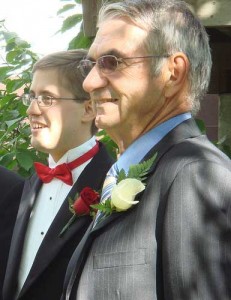
Prince, our eighty pound Dalmatian was the dog of my youth. (See Picture, upper right). He had the energy and strength of a horse and commanded quite a presence in our back yard as he laid down the law with squirrels and other possible intruders. He loved to go for car rides, and when we took him for a walk, it was really he who walked us, so powerful was his gait. He also ran five miles a day with my father.

A remarkable thing about Prince was that he could smile. When we would return home, he’d run to the door, furiously waging his tail and with the cheeks of his muzzle pulled back and his head shaking back and forth. People who saw it for the first time couldn’t believe it, he was actually smiling. It seems to be a unique gift of some Dalmatians and Collies.

Prince was also quite a dreamer. He’d lay on the floor near the sofa and doze off to sleep. Soon enough his legs started moving, and he’d start huffing and even barking as he dreamed. No doubt he was in a great chase.

In his last two years he began a decline and gave me my first close lesson of age and death. Gradually, the majestic dog grew crippled and struggled to walk. I learned to give him aspirin, and  that helped him for a while. But there came the days when his walking grew rare and then his kidneys failed. We knew we had to let him go.

My Father was a gifted poet (if I do say so myself), and some of his finest works were composed at the death of our dogs. It was his way of grieving their loss. Here is what he wrote of Prince as he recalled their long runs together and the sad moment when Prince had to be put down:

We were solitary, old friend, you and I.
In the sun and rain we tramped together
And walked and ran the miles;
A hundred phantoms caught you
In scent and sound;
You raced to ancient summonses
That led the pack across the wild
In joyful bound:
You tried to tell me.
I listened, but could only hear
Your barking in the wind,
And see the eager paws
Trace out your gladness in the ground.

When I returned from being gone,
You greeted me with the abandon of your kind,
In leaps and yelps and wags,
Telling me you loved me
And not knowing why,
Yet knowing that I loved you, too,

And had missed you,
Even as I do now
That death’s deep slumberings
Have had their toll,
Since I held you in my arms,
And you looked at me
And said goodbye
. (Charles Evans Pope, 1982)

Next came Missy, a stray who adopted us. She had been abused, and so had a timidity that was endearing even as it was troubling. She loved to look out the window of our house, and would loudly announce to any passing dogs that she worked here and that they should get on along. She too, loved car rides and to romp for hours in the yard or in the nearby field. She was a tender little dog who felt trauma when we left the house, and joy when we returned. She loved to snuggle close and really stole my parents hearts. Of her my father wrote at her death:

I thought that I saw you,
But you were gone, dear;
The yard was empty then,
The brown of your fur lost
on the green of May.
In memory’s shade
You snuggle next to me,
My little love, again. (Charles Evans Pope, 1998)

Finally there was Molly, a border collie and a dog who perfectly illustrated that happiness is an inside job. She seemed content with what ever happened. She even seemed happy when she went to the kennel to stay as my parents travelled. She was happy to go, and happy to come home. My father said that her motto was “Whatever happens, is just great for Molly.” She was just always happy, full of energy and never gave a day of trouble; the perfect dog for my parents in their old age. She outlived them both and died about a year after my father passed.

Even in death she was charmed. She had been diagnosed with liver cancer. But she never showed any pain. The day she died, she had romped about in the yard and came in to sleep in her own little bed. She died while she napped. Of her my Father wrote:

Molly Jingles,
Scamper pup,
You are down,
You are up;

Racing round
In jumps and traces
Hiding bones
In secret places,

You have really
Struck a nerve,
Chewing up
The house with verve,

You are clever
You’re a bounder,
But our very
Favorite hounder. (Charles Evans Pope, 2000)

Thank you Lord, for the gift of our pets, those special animals designated by you to be our close companions. Thank you for the gifts of Prince, and Missy and Molly. In recent years you’ve given me my cats too: Tupac, Gracie-Girl, Ellen Bayne, Jerry McGuire, Benedict, and now Jenny- June and Daniel. I don’t know if animals can love, Lord, but I sure do feel your love through them and I thank you and praise you for the quiet, simple lessons you have taught me through them. May you be praised O Lord.

The pictures in this post are my own.

Here’s a wonderful video of a very smart and helpful Jack Russell Terrier:

Elephant in a Mouse’s Swimsuit

It’s easier for an elephant to fit into a mouse’s swimsuit, a Benedictine abbot once explained, than it is for God to fit into our ideas about him. This is an intentionally funny observation, but it’s certainly true, especially in light of today’s gospel.

The people of Jerusalem thought that they has Jesus all figured out. They were convinced that he wasn’t the Christ, because they were sure they knew where he came from! But Jesus simply shook his head and told them otherwise.

Jesus sometimes has to do the same thing with us. We create idols- caricatures of Jesus- and he has to come along and smash them. Usually, like the mouse’s swimsuit, our image of Jesus is just too small. We tend to emphasize one aspect of his person and minimize the others. For instance, we might count upon his mercy, but forget about his justice. We focus on his power, but overlook his humility. We highlight his humanity, but neglect his divinity. And vice versa.

However, whenever we think we have him in a nutshell, the real Jesus eludes us, just as he slipped away from the angry Jerusalem mob. He knows that we’re always tempted to refashion him in our own image. Thankfully, he never stops trying to re-create us in his.

Readings for today’s Mass: http://www.usccb.org/nab/040811.shtml

Photo credit: Averain via Creative Commons

The Bible is Not Just a Book, It is a Library. And this is Key to Interpreting Scripture

Fr. Robert Barron is famous for the insight that the Bible is not a Book, it is a library of many books from different periods and using different genres. Christians sometimes get asked, “Do you read the Bible literally?” But this is like asking, “Do you read the Library literally?” Well, of course that would depend on what section I was in. If I were in the science section I might read rather literally and technically. But if I were in the poetry section I would read rather differently with an openness to allegory, hyperbole, and the like. Other interpretive modes would be operative in the history section, the computer and technical manual section, the science fiction section, philosophy, religion and so forth. When walking into a library we have enough sophistication to make distinctions as to the genre of a book, its historical period, its purpose and so forth.

In reading Scripture we need a similar sophistication. Some of the Bible is straight forward history. But other sections are poetry, saga, Biography or exhortation. Still other sections use literary techniques such as parables, analogy, simile, metaphor, hyperbole, and expressions of the day.

In order to understand and sort all this out, some knowledge of the period when the text was written is helpful. Knowing something of the people involved and their circumstances is also essential. This is the kind of sophistication we bring to any other ancient writing we might encounter.

But one of the problems many bring to scripture is the tendency to read it in a crudely literalistic and mechanistic manner that does not respect the genre and purpose of a particular part of the Bible. To be sure there are passages we do read and understand in a literalistic manner. For example, “this is my Body.” Further we accept that the Scriptures record the things that Jesus actually said and did. But where many get lost is by taking literally what are figures of speech. Now we use figures of speech all the time. For example, We might say “It’s raining cats and dogs.” or “The world is turned upside-down.” Now we know what these expressions mean and that we do not mean them in a literalistic way. And so, we need some sophistication when we read in scripture that we are to gouge our our eye, or cut off our hand. When we are told not to cast our pearls before swine, nor give what is holy to dogs. When we are told by Jesus that we must love him and hate our father and mother, son and daughter, even our very self. These were expressions of the day which have a true meaning but which require a little sophistication to properly understand.

Again, the Bible is a library, not a book and we need to take heed of what “section” we are in. That said, The Scriptures have within them an internal unity where all the many individual books announce God’s plan and sets forth the ultimate destiny of man which is caught up in God’s redeeming love.

The Catechism gives some rules when it comes to interpreting Scripture:

  1. Be especially attentive “to the content and unity of the whole Scripture”. Different as the books which compose it may be, Scripture is a unity by reason of the unity of God’s plan, of which Christ Jesus is the center and heart, open since his Passover. (CCC # 112) It is for this reason that we read the Old Testament in light of the New. For ultimately, everything there points to Christ, and to the life of Grace he would bring forth.
  2. Read the Scripture within “the living Tradition of the whole Church”. According to a saying of the Fathers, Sacred Scripture is written principally in the Church’s heart rather than in documents and records, for the Church carries in her Tradition the living memorial of God’s Word, and it is the Holy Spirit who gives her the spiritual interpretation of the Scripture. (CCC # 113). Scripture emerges from and is a part of the living Tradition of the Church. Hence it must be understood within that context.
  3. Be attentive to the analogy of faith. By “analogy of faith” we mean the coherence of the truths of faith among themselves and within the whole plan of Revelation. (CCC # 114). For the truths of faith must be held in a balance. When we allow one truth to eclipse others this is heresy. Further, one text of the Scripture does not the whole bible make. Texts have to be understood with the balance of the whole, and of the faith in general. There is a danger in “proof-texting” because it often removes a certain passage from the whole of Scripture which can help to balance and nuance it. Further, proof-texting may also take a text out of the wider context of the faith as a whole which may also help to balance and nuance it.
  4. According to an ancient tradition, one can distinguish between two senses of Scripture: the literal and the spiritual, the latter being subdivided into the allegorical, moral and anagogical senses. The profound concordance of the four senses guarantees all its richness to the living reading of Scripture in the Church. (CCC # 115)
  5. The literal sense is the meaning conveyed by the words of Scripture and discovered by exegesis, following the rules of sound interpretation: “All other senses of Sacred Scripture are based on the literal.” (CCC # 116) Be careful here, “literal does not mean “literalistic” but, rather, what is the literary meaning of a text. That is, “What is the text actually saying.”
  6. The spiritual sense. Thanks to the unity of God’s plan, not only the text of Scripture but also the realities and events about which it speaks can be signs. (CCC # 117) Scripture is always more than historical occurrences. It is also about you spiritual journey and mine. Scripture is not spectator sport. You and I are in the story. I am Peter, Mary, Pilate, Joseph and so forth. The events and words of scripture transcend time and have spiritual meaning now as well. The crossing of the Red Sea was more than an historical event. It is baptism, it is salvation. And so forth.
  7. The allegorical sense. We can acquire a more profound understanding of events by recognizing their significance in Christ; thus the crossing of the Red Sea is a sign or type of Christ’s victory and also of Christian Baptism. The word allegory comes from the Greek  allēgoría,  meaning to speak so as to imply something other. In other words, the events and deeds of the Bible point beyond themselves to something greater and other.
  8. The moral sense. The events reported in Scripture ought to lead us to act justly. As St. Paul says, they were written “for our instruction”.
  9. The anagogical sense (Greek: anagoge, “leading”). We can view realities and events in terms of their eternal significance, leading us toward our true homeland: thus the Church on earth is a sign of the heavenly Jerusalem. Another example might be that the journey of the Jewish people for forty years in the desert is a sign of our pilgrimage trough the desert of this life to the Promised Land of Heaven.
  10. A medieval couplet summarizes the significance of the four senses: The Letter speaks of deeds; Allegory to faith; The Moral how to act; Anagogy our destiny.

Here are a couple of very good videos that make rather plain the Catholic approach to Biblical interpretation. The first  video is from Fr. Robert Barron and details two key Catholic interpretive principles: the importance of Genre and that Jesus Christ is the interpretive key to to understanding the whole Bible.The second video is from John Martignoni and is a very brief description of the Literal vs. Literalist interpretation.

Walking in the Footsteps: God’s Fidelity

First Proclamation of the Nicene Creed

The Thursday after the Fourth Sunday of Lent brings us to San Martino ai Monti. Originally a house church, the original structure was built by Saint Sylvester (314-335) and was later dedicated to St. Martin of Tours (317-393) and Pope St. Sylvester. A preparatory meeting for the Council of Nicea in 325 was held here. Here Christians in Rome first proclaimed the Nicene Creed, a practice that continues to this day through the entire catholic world.

God’s Fidelity

Our reflection today is on the fidelity of God. The Lord made a promise to Israel, to build a house for it, to make it a great nation with descents beyond number. The Holy Catholic Church is the new Israel and the Lord’s promise extends to each of us.  We often think of making acts of faith in the Lord, but don’t as often think about His fidelity to us, His great love for us. Even when we fail to trust in Him, even when we fail to follow His word, He is still faithful to us. He will never turn back on his promise. He is always there for us, always available. Because of our sins, we have much to answer for. But because of God’s promise, He has more to answer for. God is faithful

Written By Fr. C. Gallagher

Photos by Fr. J. Huber

When We Just Don’t "Get It"

One evening, Stephanie my wife prayed for guidance as to whether or not she should return to work part time. The very next morning, an absolutely perfect job practically fell into her lap. To us, this was an obvious sign from God. Yet that night, as we adjusted our family budget to reflect Stephanie’s new income, we started to worry about money. God had just answered our prayer and shown us how much he cares for us. But still we didn’t “get it;” still we didn’t trust.

Sadly, that’s all too common, as reflected in today’s Scripture readings. In the first, God’s people rejected him for an idol, even after he had freed them from slavery in Egypt. And in the gospel, there were those who refused to believe in Jesus, even though they were surrounded by evidence that he was the one sent by the Father. In both cases, people just didn’t “get it.” God had done so many good things for them. But still they doubted him, rejected him, and forgot about him.

Sometimes we’re guilty of the same things. When times are hard, we can doubt God’s love and care for us. And when times are good, we can forget about God altogether, and replace him with the idols of success, beauty, security, and wealth. We do this even after God has done so many good things for us. Things that should make us “get it,” and call forth our obedience, our trust, and most of all, our love.

Readings for today’s Mass: http://www.usccb.org/nab/040711.shtml

Photo credit: spaceodissey via Creative Commons

And We Shall Behold Him, Then Face to Face – A Meditation on the Look of the Lord

I have a large Icon of Christ in my room (see photo at right). What icons from the Eastern tradition do best is to capture “the Look.” No matter where I move in the room Christ is looking right at me. His look is intense, though not severe. In the Eastern spirituality Icons are windows into heaven. Hence this icon is no mere portrait that reminds one of Christ, it is an image which mediates his presence. When I look upon him, I experience that he knows me. It is a knowing look and a comprehensive look.

The Book of Hebrews says of Jesus, No creature is concealed from him, but everything is naked and exposed to the eyes of him to whom we must render an account. (Heb 4:13).

But his look in the Icon is not fearsome, it is serene and confident. Hence the text from Hebrews goes on to say, Therefore, since we have a great high priest who has passed through the heavens, Jesus, the Son of God, let us hold fast to our confession. For we do not have a high priest who is unable to sympathize with our weaknesses, but one who has similarly been tested in every way, yet without sin. So let us confidently approach the throne of grace to receive mercy and to find grace for timely help. (Heb 4:14-16)

Particularly in Mark’s Gospel there is great emphasis on the eyes and the look of Jesus. A frequent expression in that Gospel is “And looking at them He said….” Such a phrase or version like it occurs over 25 times in Mark’s Gospel referring to Jesus.

Looking on Christ, and allowing him to look on you is a powerful moment of conversion. Jesus himself said, For my Father’s will is that everyone who looks to the Son and believes in him shall have eternal life, and I will raise him up at the last day.” (Jn 6:40) and the First Letter of John says, What we shall later be has not yet been revealed. We do know that when it is revealed we shall be like him, for we shall see him as he is (1 Jn 3:2).

There is just something in us that seeks the face of God and desires that look of love that alone can heal and perfect us. I often think of this verse from Scripture when I am at Eucharistic Adoration: Look! There he stands behind our wall, gazing through the windows, peering through the lattice. (Song 2:9). Yes, I long to see the Lord, and the Scripture also speaks of his longing to “see” us.

Here are some scriptures that remind us to seek the face of the Lord and to look to him:

  1. Seek the LORD and his strength; seek his presence continually! (1 Chron 16:11)
  2. If my people, who are called by my name, will humble themselves and pray and seek my face and turn from their wicked ways, then will I hear from heaven and will forgive their sin and will heal their land. (2 Chron 7:14)
  3. You have said, “Seek my face.” My heart says to you, “Your face, LORD, do I seek.” (Ps 27:8)
  4. Look to the LORD and his strength; seek his face always. (Ps 105:4)
  5. I [the Lord] will return again to my place, until they acknowledge their guilt and seek my face, and in their distress earnestly seek me. (Hosea 5:15)
  6. Everyone who looks to the Son and believes in him shall have eternal life, and I will raise him up at the last day. (John 6:40)
  7. He who loves me will be loved by my Father, and I too will love him and show myself to him. (John 14:21)
  8. Blessed are the pure in heart, for they will see God. (Matt 5:8)
  9. Now we see but a poor reflection as in a mirror; then we shall see face to face. (1 Cor 13:12)
  10. For God, who said, “Let light shine out of darkness,” made his light shine in our hearts to give us the light of the knowledge of the glory of God in the face of Christ. (2 Cor 4:6)

An old song says: We shall behold Him, Face to face in all of His glory….The angel will sound, the shout of His coming, And the sleeping shall rise, from their  slumbering place. And those remaining, shall be changed in a moment. And we shall behold him, then face to face.

Allow Christ to look on you.

This video is a wonderful collection of many of the looks of Jesus and the reaction of the people that follows that look. Pay special attention to it. The video also features a lot of “looks” that come from us. Notice how people look upon Jesus, and how they, as human beings react, as they look on Jesus. Look for the “looks” in this video. The final looks are especially moving.


*

* Image Credit: From Aquinasandmore.com
*

Walking in the Footsteps: In honor of Catechumens

The Patriarchal Basilica of Saint Paul Outside the Walls is the largest church in Rome after Saint Peter’s Basilica and is sometimes referred to as the “Ostian Basilica” because of its location along the Ostian Way. The Apostle Paul was brought to Rome as a prisoner and martyred between the years 64 and 67 during the persecution of Nero. Aquae Salviae, today’s Tre Fontana, about two miles from the basilica, is the traditional site of Paul’s martyrdom. Since he was a Roman citizen, his execution was probably by beheading rather than public torture. The body was claimed by the Roman matron Lucina, who buried it in her family tomb near a vineyard on the road to Ostia. An oratory was soon erected over it.

This basilica was the traditional site of the First Scrutiny of the Catechumenate. This is the reason why a major basilica was erected by Gregory the Great as a station church in mid-week. The tomb of the Apostles, called so specially by Christ, reminds one of the Lenten theme of conversion.

Today,  let us take some time to pray for the more than 1,100 men, women and children(catechumens and elect) coming into the church in the Archdiocese of Washington at Easter.

Adapted from the Pontifical North American College Guide to the Station Churches

Photos by Fr. Justin Huber

So Far, and Yet So Near

Certain husbands are quite comfortable calling their fathers-in-law “Dad.” Other husbands, however, find that to be awkward or inappropriate. The prospect makes them uneasy.

Sometimes we can be uneasy about calling God our “Father,” or even “Dad,” as Jesus always did. In fact, this so outraged our Lord’s critics in today’s gospel that they wanted to kill him! Calling God our “Father” hopefully doesn’t infuriate us like that, but it sure can make us feel uncomfortable.

We can be fine praying to “Almighty God,” as that title reflects God’s distance from us. But “Father” speaks of God’s nearness; it implies love, family, and intimacy. And that can scare us, because we worry about getting too close to God. After all, who knows what that might lead to? We wonder: “What will God ask of me? What demands could he make? How might my life have to change?” It can seem easier, and a whole lot safer, to keep God at arm’s length.

Jesus challenges us to move beyond our fears. As our brother, he wants us to know the Father, not only as one who dwells above us, but also as one who abides within us. The same life and love the Father gives to Jesus, is also offered to us. Our Father doesn’t want to be kept at arm’s length. Instead, he wants to hold us in his arms.

Readings for today’s Mass: http://www.usccb.org/nab/040611.shtml

Photo credit: Mike Babcock via Creative Commons