Personhood Amendment In Mississippi Runs Afoul of "In Vitro" Fertilization Enthusiasts. A Consideration of the Facts of IVF and of the Sinful Human Tendency to Want What We Want, No Matter Who Gets Hurt.

In Mississippi, Tuesday (November 8 ), citizens will be asked to vote on the Personhood Amendment, declaring the fertilized embryo a legal person. The amendment is intended to legally prevent abortions.  However a group called Resolve –  National Fertility Association has publicized concerns that the bill could render In Vitro Fertilization illegal or at least open to legal challenge. Personhood USA, a group supportive of the bill claims that In Vitro procedures will not be threatened. The video below features a discussion from both points of view.

The Personhood Amendment would be a wonderful step forward in walking back Roe v. Wade. It will surely face an uphill battle with legal challenges that will likely land it in the Supreme Court of the United States.  Nevertheless the initiative is bold and gives me great hope. Thus it is a great sadness to hear the latest protests that put passage of the Amendment at risk.

I am neither a political pundit nor a lawyer. But what I am is a concerned believer in God who deeply regrets the mess we have gotten ourselves into by our many attempts to play God.

We clearly play God by sentencing innocent life to death by abortion. This is life God has created (cf. Jer 1:4; Psalm 139 ) In effect we snatch the life from God’s creative hands and say, “This shall not be.”

But we also play God by insisting that infertile couples have a right to conceive and bear children, when nature and nature’s God have said no. With in vitro fertilization we go beyond assisting fertility and then depending on the marriage act. Rather we sideline the God given manner for conception and turn it into a technology in a petri dish. This too is a way of telling God “This shall not be” in reference to infertility and normal conception.

There are many problems with In Vitro fertilization that has caused the Catholic Church to forbid it.

  1. Life as Consumer Product – In IVF, a fertilizable ovum is removed from a woman’s ovary and put in a petri dish (the Latin for dish is vitrum) to which a few concentrated drops of sperm are added. This removes human conception from the marriage act, its sacred and proper place, where God acts to bestow life.  IVF puts it in the laboratory where man controls the process and conception is treated as a technology and consumer product, rather than as part of a mystery of fruitful love caught up in the marriage embrace and the love God.
  2. No person and no couple has a right to a child. A child is a person with rights; he or she is not merely an object, a possession, or a technological product.
  3. God is Wrong! From a faith perspective, IVF simply refuses God’s “failure” to act in accord with the wishes of the parents, and removes the decision from God. God may be teaching something to the couple due to their infertility. Perhaps he wants them to adopt, perhaps he has a special work or cause he wants them to be devoted to. But IVF suspends such discernment, and forces the solution.
  4. There is a strong bias today toward only caring about what is best for adults. This is widespread in our culture. Hence, if adults are unhappy they can divorce, not matter what this does to children, the children have no legal voice or say in the matter. Further, if a child comes at an unexpected or inopportune time, many just abort. Again, it is the adults who matter. In IVF there is also some of this thinking since what seems to matter most is that the adults want a baby. Never mind what IVF may do to how we think of life, as a technology to be exercised at our whim, rather than a sacred mystery. Never mind that imperfect embryos are discarded or frozen. Never mind that many IVF procedures selectively abort later. Never mind that IVF children are more often born prematurely, or suffer higher rates of birth defects. What matters is what adults want and demand.
  5. Discarding Embryos – As already stated, it is a usual practice that more eggs are fertilized than the woman will need. This is because not all embryos survive. Thus, more than one egg, usually several or numerous eggs, are fertilized. If “too many” embryos survive the rest are either discarded (i.e. killed), frozen or mined for stem cells (i.e. killed).
  6. For reasons such as these, the Church considers IVF to be gravely sinful.
  7. You can read more here: INSTRUCTION ON RESPECT FOR HUMAN LIFE IN ITS ORIGIN AND ON THE DIGNITY OF PROCREATION
  8. There are certain procedures allowable to Catholics which enhance fertility but do not remove or replace the marriage act. But IVF is far beyond what is approved for the reasons stated.

So here we are with another cultural show-down. Resolve –  National Fertility Association is not a pro-abortion group as far as I can tell. In fact I would imagine that many, if not most, of its members would describe themselves as pro-life. But IVF and abortion have this in common: Playing God and saying that I have a right over life, that I call the shots.

Further, while many of its members and “consumers” of IVF services may choose not to think so, discarding of embryos is killing, is aborting. Freezing them is a cruel delay and a further indignity. Imagine keeping children on ice until their arrival is more convenient. And what if they never become convenient? The big chill continues until they become stale (i.e. dead).

Disclaimer – Now, there are likely many well-intentioned couples who may never have thought through all this, or have been misguided, or are just so desperate for a child that they’ll do almost anything. But in the end, IVF is problematic and morally wrong for the reasons stated.

We live in times where too many think that they can just have what they want. Many think that, if we can do something, we should be free to do something. But there are other things at stake than just what people want. There is reverence for the sacred mystery of life, there is concern for the common good, there is what actually happens to imperfect or superfluous embryos.

And in Mississippi there is a good bill that is now threatened by IVF enthusiasts whose basic premise seems often to be that they should be able to have what they want, no matter side effects. And for Resolve –  National Fertility Association it is clear that IVF is more important to them even than working to end abortion. The threat to IVF procedures, even if legally remote, is so grave to them, that they are willing to see abortions continue by the millions, if only they can still have IVF. It would seem more of the same from our culture that wants what it wants no matter the cost.  What a mess.

Here’s the video of the Fox news debate. Sorry for the Ad if it pops up.
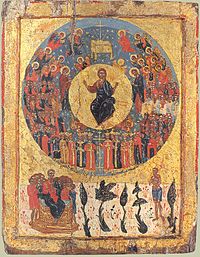
On the Story of the Tower of Babel and What it Says to Us Today

In our Parish Sunday School classes I have asked that we read basic Bible Stories and discuss them, along with the rest of the curriculum. There is nothing like an old Bible story to teach fundamental points. For my part I teach the parents while their children are in class. Today we discussed the story of the Tower of Babel (Gen 11). It is a story that has much to teach us, especially in this modern and proud world.

I’d like to ponder one particular aspect here on the blog, the issue of technology, and how it relates to modern times and the problem of pride.

Consider the opening lines form the story:

Now the whole world had one language and a common speech. As men moved eastward, they found a plain in Shinar and settled there. They said to each other, “Come, let’s make bricks and bake them thoroughly.” They used brick instead of stone, and tar for mortar. Then they said, “Come, let us build ourselves a city, with a tower that reaches to the heavens, so that we may make a name for ourselves….. (Gen 11:1-4)

Note in this story that there is a technological innovation: the making of fire hardened bricks that were both uniform and very hard. As such they could bear enormous weight. Further the uniform size of the bricks and the use of tar (asphalt) to bind them, meant that the weight was more uniformly distributed, and thus the walls could reach much higher than stone walls which bore weight so irregularly due to the varying shape and sizes of the stones.

So, we’re dealing with a technological breakthrough and now the men of that early time could build higher than ever before. The results were impressive and man, being in his fallen condition, took great pride in what he had done. He claimed now the capacity to make a name for himself and build a tower so high he could walk into heaven like he owned the joint.

And this is very much our stumbling block today, for we are very technological. The fact is, we have been through a period of wondrous invention, ingenuity and technology. We have been to the moon and back! We have seen the dawn and advancement of electricity, computers, televisions, medical science, physical sciences, and all the endless gadgets and devices that enhance and simply our life.

But technology has a way of fooling us, as we see in the story of the Tower of Babel. We start to think we are so great, that we can save ourselves, that we don’t need God or the wisdom of our ancestors. If Babel rose high, look at our Skyscrapers! It is very easy to be impressed with ourselves.

But it is an illusion. We really know so very little. What we know amounts to a period (.) at the end of a sentence, in one book in the Library of Congress. Our technology inebriates us, just like it did of old at Babel. And in our stupor we overestimate our strength and become braggadocios. Like teenagers we proclaim, “I know a few things!” To which God must have to laugh and say, “You are right, you do a few things….very few things.”

Pride is a very deadly thing, for by it we come to think of ourselves incorrectly and we take dangerous risks. We tend to think we are more powerful than we are. We think we can beat the consequences of our acts.  Through pride we act recklessly, and think we are no longer small, tiny and in need of God and one another for all we do. We forget we are contingent beings, fragile and vulnerable. So, through pride we go on sinning and think we will never have to face judgment, or even the simple physical consequences of what we do. Through pride we can feel so invincible. But this is very dangerous, because we are NOT invincible.

We forget that we are tiny specks, on a slightly larger speck (earth), sailing around a fiery speck (the sun), in an immense cloud of specks called the Milky Way. But even this seemingly large galaxy is but the size of a speck in the full range of space, for there are over 100 million galaxies.

It is a fascinating thing to consider that we, and all our large cities are not even visible from low earth orbit. Notice the photo of the greater New York Area, at upper right, taken from the Space Shuttle orbiting at about 330 miles above the earth. Where are the cites, and our tall buildings? There are over 12 million people living in the area photographed, and there is no evidence of them (us) at all!

Humor comes in the story of Babel, so that when the tower is built, the great tower, with its “top reaching to the heavens,” the truth is, it is actually so puny that God has to come down from heaven to see it. The text says,

And the LORD came down to see the city and the tower, which the children of man had built (Gen 11:5).

Now, of course, as omniscient, God clearly sees everything, and the humor in the text is not some primitive notion of God. Rather the humor is for our benefit. For, in effect, it says that our greatest, tallest, most prominent and glorious work that we saw as reaching heaven itself, is in fact so puny, that God has to stoop to even “see” it. He has to descend to get a glimpse of it.

God therefore must act. Pride is our mortal enemy. There is nothing so destructive in us, as individuals and as a race, as pride. Pride is the most deadly of all drives. It leads to every other sin, for we think ourselves wiser than God. It makes us forget of God, and our debt to others and to the resources of this world. Through pride we think too highly of ourselves and forget our fragility, we stop accepting necessary and healthy limits, and consider the wisdom of the past to be childish. We over rule God and our ancestors too. Pride is so foolish, but, being blind, it does not even recognize itself.

Thus the Lord must act and put an end to this foolishness before we did something really stupid:

The Lord said, “If as one people speaking the same language they have begun to do this, then nothing they plan to do will be restrained for them. Come, let us go down and confuse their language so they will not understand each other.” So the Lord scattered them from there over all the earth, and they stopped building the city. That is why it was called Babel—because there the Lord confused the language of the whole world. From there the Lord scattered them over the face of the whole earth. (Gen 11:1-9)

One might ask if God will act again and scatter our language or some other thing. Perhaps he will.

But I wonder if he has not already do so. Consider how hard it is (in this age of communication) to actually communicate. People have developed such different world views and work from such fundamentally different premises that it almost becomes impossible for us to have a conversation. We have dabbled in the language of relativism so long, we really have little left to say, and do not agree even on some of the most basic moral, let alone civic principles. And as developing any consensus becomes increasingly impossible we see a breakdown in the unity we desperately need to survive.  The West as we have known it is passing away. We are depopulating, our families are disintegrating, our economies are in ruined states and there seems to be no agreement on what to do about it. We know we should spend less, but no one is willing to do so, so deeply selfish have we become. Economic reform means some other slob has to take a hit, but don’t touch my precious program or benefit. Developing any moral or political consensus seems quite a remote hope.  Even as things get more and more critical we still can’t come to any agreement or even agree on the language of an agreement. (Babel anyone?)

Perhaps we are being scattered and our language has been confused. Perhaps this is increasingly why we can no longer agree or even hold intelligent conversations, let alone reach consensus. Hence our unity is scattered.  Perhaps God has taken the proud and now thoroughly secular West and made it less possible for us to “build our city.”

An old story, Babel is,  but ever fresh.

In this video, Fr. Barron makes an interesting point about our skyscrapers (Our modern towers of Babel?)

Be Prepared, and Be Not Afraid (Ordinary 32)

A few years back my family sat down and made a plan about what we would do should there be a natural disaster or a terrorist attack. We determined where we’ll meet, where we’ll go, who our out-of-town contact will be, how much food and water and other supplies we need to stockpile, and we decided to get one of those hand-crank radios and cell-phone rechargers. After having lived through 9/11, the anthrax scare, that hurricane that knocked out our power and water for days, and in light of all the talk about avian bird flu, we want to be prepared as best we can, should something ever happen again.

As citizens, our government tells us that we should all be prepared. As Christians, however, it’s even more important that we prepare for the second coming of our Lord. This is the central message of today’s gospel parable of the wise and foolish virgins. Because while a terrorist attack or a natural disaster may never affect us, we know for a fact that one day Jesus will indeed come again in power and glory, to judge the living and the dead, and to establish his kingdom in its fullness. We “know neither the day nor the hour,” as Jesus said. But his return is guaranteed, and we need to be prepared.

But are we prepared? Ask yourself this: If you knew that Jesus would be returning later today, what would you do? Would you rush to tell certain people that you love them, especially those you hadn’t told in a while? Would you go to church; pray your rosary; open your Bible; or make an act of contrition? Are there people to whom you would apologize? Is there a favorite charity to which you’d make a hasty donation? Would you start refining your excuses for when you met Jesus face-to-face? Would you weep with regret? Would you be afraid? Or would you be overcome with joy and go out to greet theLord, just as the wise virgins ran out to meet the bridegroom when they heard he was coming? How we answer this question is probably a good indication of whether we’re really prepared for Jesus’ return or not.

It’s been said before that we should live every day as if it’s the first day of the rest of our lives. And that’s not necessarily bad advice. But from a Christian perspective, maybe it’s better to say that we should live each day as if it’s the last day of our life. Because it might just be! And if it is, there might be some things we need to do in order to truly be prepared. For instance, is there a sin we need to confess? A wound we need to heal? A restitution to make? Priorities we need to shift? A habit we need to kick? A resentment to let go of? A good intention we need to act upon? A relationship to restore? If there are, we should never put off until tomorrow what we can do today. Because when it comes to preparing for the Lord’s return, there is no better time than the present.

Preparing for Jesus’ second coming will involve challenge, change, and some painful sacrifice on our part. However, Jesus’ return is not something we should anticipate with fear. Instead, we should look forward to it with joy and eager expectation. This is why the New Testament ends with the prayer: “Amen! Come, Lord Jesus!” This is also why, at every Mass, at the end of the Our Father, the priest offers a prayer that says “we wait in joyful hope for the coming of our Savior, Jesus Christ.” Today’s gospel parable spoke of Jesus’ return in terms of a bridegroom coming to begin a wonderful wedding banquet to which all of us have been invited. Surely, that is a celebration that we should want to begin sooner, and not later. As St. Augustine once wrote, “When (that day) puts an end to our exile, frees us from the bonds of the world, and restores us to paradise and to a kingdom, we should welcome it.”

Sometimes, however, people are afraid of the prospect of Jesus’ return. This may be because they know in their heart that they just aren’t prepared. Or maybe it’s because they imagine Jesus, not as a merciful, loving Lord, but as one who seeks only to destroy and condemn. Or it may be because they misunderstand the Bible. We saw this misunderstanding a great deal amongst some Christian groups as the year 2000 approached, as they preached a message of fear and coming calamity.

But do you remember what Pope John Paul II did before the year 2000? He encouraged everyone to prepare for the third Christian millennium with more fervent prayer, greater devotion to the Blessed Virgin Mary, a renewed love for the Mass, and greater acts of justice and charity for the poor. But he didn’t forecast doom or preach a message of fear. Instead, he told us all to “Be not afraid!” and he declared 2000 to be a “Jubilee Year” – a special year of celebration and grace. And when 2000 finally came, he led us in joyful prayer, and then he enjoyed the fireworks in Rome.

Pope John Paul’s approach to the coming of the new millennium is a model for how we should anticipate Jesus’ return. We do need to prepare, but with hope and joy, not worry and fear. Because if we’re really prepared, there’s really nothing to be afraid of. Consider St. Francis of Assisi. While he was working in a garden, someone asked what he would do if he knew that today was the last day of his life. He smiled and said, “I’d keep hoeing this row of beans!” He was so well prepared that the prospect of meeting his Lord didn’t change his plans one bit. May we be as well prepared, as together we say: “Come, Lord Jesus!”

Photo Credits: Wikipedia Commons, Wikipedia Commons, Wikipedia Commons

Oh Sinner, why don’t you answer. Somebody’s knocking at your door! A Meditation on the Gospel for the 32nd Week of the Year

The Gospel today presents a number of Practical Principles of Preparation. As always the Lord has a way of teaching us such practical things in a very memorable way. Most of us remember well the parable of the Wise and Foolish Virgins. Now it pertains to us to look with some care of some the principles it teaches us. Lets look at four of them. In the end we will find that the Lord turns the tables on us.

I. Procure your Provisions – The text says, The kingdom of heaven will be like ten virgins who took their lamps and went out to meet the bridegroom. Five of them were foolish and five were wise. The foolish ones, when taking their lamps, brought no oil with them, but the wise brought flasks of oil with their lamps.

In looking at this text we see that humanity is divided between the wise the foolish. We generally live in times that like to de-emphasize distinctions. It is a true fact that at times we have emphasized things that did not matter, or were unfair to focus on. But there are distinctions that DO matter and this is one of them. To be wise is to be richly rooted in God and in what God offers: His love, his wisdom, his grace and mercy, his truth, His vision and priorities, His very life.

To lack these things is not merely a matter of unfortunate poverty or bad luck, for these things are offered richly and freely by God and are widely known and available to all.

Thus to lack these things renders one a fool. Many proceed through this life and consider themselves very smart. And they may be smart in science, or finances, or business, or sports. But being smart is not the same as being wise. One can be very smart, and still be a fool. One can climb the ladder of success. But if it is leaning up against the wrong wall, they climb only to ruin. The wise, whether smart or simple, know God and are recipients of his gifts. The foolish deny him or his gifts, whether explicitly through conscious resistance, or implicitly through lukewarmness and lip service.

In the this parable, the wise virgins bring extra oil. They have procured their provsions.

But what is this oil? The Fathers of the Church had many answers. Some said it was love, others wisdom, or holy deeds. But we need not limit it to any one thing. The oil is the the love of God, the Wisdom of God. It is God Himself. It is all God’s treasures of Scripture, the Sacraments, prayer, the Church, the liturgy; it is joy, mercy, forgiveness, peace and the gift of holiness. The wise virgins have stocked up on God’s abundant and free gifts. They have richly availed themselves of God’s goodness a plentiful graces.

The foolish virgins are not wholly lacking in God’s gifts, for no human being made in the likeness of God is. But they have not sought to endow themselves sufficiently to see the night of this life through. They are careless and lazy. Perhaps carrying extra oil is too much trouble, just as going to Mass, praying, or reading Scripture is too much trouble for “the foolish” today.

What of you? Are you wise or foolish? Put another way, are you procuring your provisions? Are you availing yourself of the oil of God’s good gifts? Or, do you have other “more important” things to attend to?

The First Principle of Proper Preparation is: Procure your Provisions.

II. Personally Prepare – The text says, The foolish ones said to the wise, ‘Give us some of your oil, for our lamps are going out.’ But the wise ones replied, ‘No, for there may not be enough for us and you. Go instead to the merchants and buy some for yourselves.

At first glance the answer of the wise virgins surprises us. Shouldn’t they share? Isn’t this what we would expect Jesus to say?

But, the fact is, there are some things you can’t loan and there are some things you can’t borrow. You can’t borrow someone else’s relationship with God, you can’t borrow holiness, or mercy, or love, or wisdom. You can’t borrow someone else’s prayer life. You just have to have your own.

As a priest I get lots of requests, sometimes for money, perhaps to use the Church for a funeral etc. I often inquire, “Was the deceased a member here?” So often the answer is, “Well no, but his Grandmother was.” Or “His second cousin used to go here.” Now as for me, I’ll celebrate the funeral, no matter, but the frankly the answer is “No, he did not go here” and the fact that his Grandmother did or his second cousin has nothing to do with it. None of that will profit him before God and none of that adds even a drop of oil to his lamp. You can’t borrow you grandmother’s holiness. You have to have your own.

Hence we must personally prepare to meet God. We must come to know him and love him. We must personally be open to receiving the gifts he offers, be it prayer, scripture, the liturgy, sacraments, the moral life, a new mind and heart, and so forth.

What about us? Do we have our own oil, or are we just talking about what a great person granny was? An old gospel hymn says, Yes I know Jesus for myself. Do we? Another old Gospel hymn says, My mother taught me how to pray. So if I die and my soul be lost, it’s nobody’s fault but mine.

The Second Principle of of Proper Preparation is to Personally Prepare.

III. Persevere in Preparations – The Text says, At midnight, there was a cry, Behold the bridegroom! Come out to meet him!…and those who were ready went into the wedding feast with him. Then the door was locked.

Here too is an important reminder we must persevere in our walk to the end. The groom did not come till midnight and the foolish ones, though they had procured oil early on, could not hold out to the end.

I cannot tell you, how often people tell me, a priest,  things like, “I used to be an altar boy…..I used to go to “your” Church…..I went to St Cyprian’s School….I’m old St Cyprian’s….our family goes all the way back….My Grandfather helped build the place!” Of course I am supposed to be impressed. But instead I ask, “And where are you today?” Usually they aren’t anywhere, and so I say something like,  “You’re telling me you used to have your lamp trimmed and burning, but it sounds like you ran out of oil. Watch out, the Day is drawing nigh!”

But of course the point here is that only those who were ready with their lamps trimmed and burning WHEN THE GROOM ARRIVED, entered the wedding with him. Then the door was barred.  We must be faithful unto the end. Jesus says, He who perseveres to the end will be saved (Matt 24:13). Scripture also says, Call no man blessed till he die. For it is by his end that a man is known. (Sirach 11:28)

Persevere. I may be wonder that you read the whole Bible when you where in High School. But where are you today. And where will you be at midnight?

The Third Principle of Proper Preparation is to Persevere in Preparations.

IV. Procrastination is Perilous – The text says, While [the five foolish virgins] went off to buy [the oil], the bridegroom came…those who were ready went into the wedding feast with him. Then the door was locked. Afterwards the other virgins came and said, ‘Lord, Lord, open the door for us!’ But he said in reply, ‘Amen, I say to you, I do not know you.’ Therefore, stay awake, for you know neither the day nor the hour.

In the end, our Wisdom goes with us or our foolishness catches us. The foolish virgins scrambled at the end to get what they needed. But it was too late. The door was barred.

One physical explanation for this detail may be found in the fact that houses of the ancient world were often rather small, but backed out onto a closed courtyard. Hence, when all the guests had arrived, the doors of these small houses were close and the furniture moved up against the walls and the door to make room as the celebration began. To move everything to open the door was problematic, and it was rude to ask for this.

It was just too late for them. Procrastination is perilous.

And two things beckon for our special attention.

First there are the words of the Lord, “I do not know you.” The Greek word here is οἶδα (oida) which bespeaks a kind of intellectual knowing. And so it may surprise us to hear the omniscient Lord say he does not know someone. Perhaps here we can understand the word as meaning he does not “recognize” them as one of the guests. They are not of the wedding party, not on the guest list. Or, to use another metaphor, they are not among the sheep of his flock. Later, in this same chapter of  Matthew, Jesus will speak of dividing sheep from goats. Hence there is a judgment issued here: I do not recognize you as one of my flock, the door cannot be opened, it is too late.

But how did it get to be so late and what does it mean that the door is barred?

This leads us to the second point that demands our attention. It is said that the foolish virgins are knocking on the door, or at least calling out, asking entrance.

But this precisely backward. It is not we who knock, but the Lord who knocks. It is he who bids us open, and we who must answer. Jesus says, Here I am! I stand at the door and knock. If anyone hears my voice and opens the door, I will come in and eat with him, and he with me (Rev 3:20). It is the Lord who calls, It was I who chose you, he says (Jn 15:16).

Hence the way to heaven is not through some door “up there,” it is through the door down here, that we must open, the door of our heart. And the Lord is knocking now. Procrastination is peril, it is foolishness. It is now, and every day, that we must answer the knock. The choice is ours. Yes, the door to heaven is opened from the inside of our hearts. It is we who ultimately determine our destiny. The Lord merely ratifies it at the judgment.

The Lord wants to know us, want to recognize us as his own, that much is clear. That is why he knocks, and knocks. Will you answer?

Be careful, the fourth principle of proper preparation to realize that procrastination is perilous. There comes a day when the door is forever closed. But the door is your heart. Answer! Open!

This song says, Somebody’s knocking at your door. Oh Sinner, why don’t you answer? Somebody’s Knocking at Your Door.

Cardinal George Speaking Frankly on Abortion And Presidential Politics. And Older But Significant Video.

The video below, though an older video, is circulating of late on sites like Gloria.tv. Cardinal Francis George has some very frank things to say about abortion and the intersection with politics. He also addresses critics of the Bishops in these matters.

I have little doubt that there are some who will view this video who will not be satisfied with anything less than a public excommunication of all pro-abortion politicians, or at least a command that they refrain from Holy Communion. I further understand that some would like clear denunciations of anyone who voted for the current President. But the Cardinal stops short of these sorts of things.

However, what I would ask is that all of us listen carefully to His Eminence. He is not only the Archbishop of Chicago, but has led the Bishops as the head of the USCCB. As such he articulates the views of many bishops and we owe him, in justice, a careful listening.

The bishops themselves do not march in lock step when it comes to prudential decisions about how to handle the difficult intersection of abortion and politics. Hence, while some of who read here regularly will wish for more punitive and/or exclusionary measures, a careful assessment of the Cardinal George’s remarks may prove helpful in understanding a different point of view.

Cardinal George is no theological outlier. He is a solid theologian, and one who has been most helpful in matters such as the new translation of the Mass and other matters important to Church discipline and theological concerns.

Clearly the matters of which he speaks are “powder-keg” issues and they may elicit strong feelings, one way or the other. And, while you are most encouraged to comment here, I ask you to be careful. Bishops are our shepherds who deserve respect. And if you wish to express an wish that he or other bishops act or think differently, I ask that you do in the spirit of charity and the respect due to one of our appointed leaders. There is a reason you and I are not bishops, so a little humility is also helpful in such discussions.

With that in mind, here are the remarks of Cardinal George who is quite frank in his remarks and frames the issues quite well. Though the remarks given here were from 2009, they have received very few hits at YouTube. I had never seen them before, and perhaps you have not either. Remember too, his Eminence is speaking in the moment, not from a prepared text. This makes his comments engaging on the one hand, but also quick and to the point. Carefully prepared remarks may admit of more distinctions etc., but these are live, in the moment reflections, remember that context.

Sing the Dies Irae at My Funeral – A Meditation on a Lost Treasure

Yesterday, for All Souls Day, I was given the grace to celebrate a Funeral (Walter Gallie, R.I.P.) in the Traditional Latin Form of the Mass. Referred to as a Requiem Mass, (Requiem means “rest” in Latin), it features black vestments and prayers steeped in consistent yet confident pleas for God’s mercy on the departed.

Though many depict the Requiem Mass as a gloomy affair, I beg to differ. Black vestments, to be sure, speak a different language than the white usually worn today, (though black or purple are permitted). But death, after all is a rather formal affair. And the readings for the Requiem on the day of burial are quite hopeful. The Epistle is from 1 Thessalonians 4, and begins, Brethren we would not have you ignorant concerning them that sleep in the Lord lest you be sorrowful like those having no hope…… The Gospel is Jesus’ discourse with Martha in John 11: Your brother will rise…do you believe this? Jesus then assures her that he is the resurrection and the life. Hardly gloomy. And all the pleas for mercy in the Requiem are based on hope expressed in these readings.

At the heart of the Requiem Mass is the astonishing and magnificent masterpiece, the Sequence Hymn, Dies Irae. Yes, I am of the mind that one of the great treasures and masterpieces of the Church’s Gregorian Chant is indeed the sequence hymn of the Requiem Mass, Dies Irae. It is almost never done at funerals today, though it remains a fixture of the Extraordinary form Mass.

Some see it as a “heavy” with its sobering message, but it sure is glorious. The gorgeous chant was one of the more beautiful and soaring melodies of Gregorian Chant and many composers, such as Mozart and Verdi, set the text to stirring musical compositions. With November, the month of All souls perhaps this hymn deserves a look.

It’s syllables hammer away in trochaic dimeter: Dies irae dies illa solvet saeclum in favilla, teste David cum Sybila! (Day of wrath that day when the world dissolves to ashes, David bearing witness along with the Sibyl!) Perhaps at times the text is a bit heavy but at the same time no hymn more beautifully sets forth a basis for God’s mercy. The dark clouds of judgment part and give way to the bright beauty of the final line Pie Jesu Domine, dona eis requiem (Sweet Jesus Lord, give them [the dead] rest).

The hymn was not composed for funerals. Actually it was composed by Thomas of Celano in the 13th century as an Advent Hymn. Yes, that’s right an Advent hymn. Don’t forget that Advent isn’t just about getting ready for Christmas, it is about getting ready for the Second Coming of the Lord. And that is what this hymn is really about. At this time of year, as the the leaves fall and summer turns to winter, we are reminded of the passing of all things. The Gospels we read are those that remind us of death and the judgment to come.

Journey with me into the beauty and solemn majesty of this hymn. I will give you an inspiring English translation by W J Irons, one that preserves the meter and renders the Latin close enough. A few comments from me along the way but enjoy this largely lost masterpiece and mediation on the Last Judgment. (You can see the Latin Text along with English here: Dies Irae)

The hymn opens on the Day of Judgement, warning that the Day, spoken of in Scripture as “The Great and Terrible Day of the Lord,”  will reveal God’s wrath upon all injustice and unrepented sin. God’s “wrath” is his passion to set things right. And now it is time to put an end of wickedness and lies:

    • Day of wrath and doom impending,
    • Heaven and earth in ashes ending:
    • David’s words with Sibyl’s blending.

And all are struck with a holy fear! No one and no thing can treat of this moment lightly: all are summoned to holy fear. The bodies of the dead come forth from their tombs at the sound of the trumpet and will all of creation answer to Jesus, the Judge and Lord of all:

    • Oh what fear man’s bosom rendeth
    • When from heaven the judge descendeth
    • On whose sentence all dependeth!
    • Wondrous sound the trumpet flingeth,
    • Through earth’s sepulchers it ringeth,
    • All before the throne it bringeth.
    • Death is struck and nature quaking,
    • All creation is awaking,
    • To its judge an answer making.
    • Lo the book exactly worded,
    • Wherein all hath been recorded,
    • Thence shall judgement be awarded.
    • When the Judge his seat attaineth,
    • And each hidden deed arraigneth:
    • Nothing unavenged remaineth.

Judgment shall be according to our deeds, whatever is in the Book (Rev 20:12; Romans 2:6)! Ah but also in God’s Word is the hope for mercy and so our hymn turns to ponder the need for mercy and appeals to God for that mercy. It bases that hope on the grace and mercy of God, his incarnation, his seeking love, his passion and death, and his forgiveness shown to Mary Magdalene and the dying thief:

    • What shall I frail man be pleading?
    • Who for me be interceding?
    • When the just are mercy needing?
    • King of majesty tremendous,
    • Who does free salvation send us,
    • Font of pity then befriend us.
    • Think kind Jesus, my salvation,
    • Caused thy wondrous incarnation:
    • Leave me not to reprobation.
    • Faint and weary thou hast sought me:
    • On the cross of suffering bought me:
    • Shall such grace be vainly brought me?
    • Righteous judge for sin’s pollution,
    • Grant thy gift of absolution,
    • Before the day of retribution.
    • Guilty now I pour my moaning:
    • All my shame and anguish owning:
    • Spare, O God my suppliant groaning.

    • Through the sinful Mary shriven,
    • Through the dying thief forgiven,
    • Thou to me a hope has given.

Yes there is a basis for hope! God is rich in mercy and, pondering the Day of Judgment is salutary since for now we can call on that mercy. And, in the end it is only grace and mercy that can see us through that day. And so the hymn calls on the Lord who said, No one who calls on me will I ever reject (Jn 6:37):

    • Worthless are my tears and sighing:
    • Yet good Lord in grace complying,
    • Rescue me from fire undying.
    • With thy sheep a place provide me,
    • From the goats afar divide me,
    • To thy right hand do thou guide me.
    • When the wicked are confounded,
    • Doomed to flames of woe unbounded:
    • Call me with thy saints surrounded.
    • Lo I kneel with heart-submission,
    • See like ashes my contrition:
    • Help me in my last condition.

And now comes the great summation: That Day is surely coming! Grant me O lord your grace to be ready:

    • Lo, that day of tears and mourning,
    • from the dust of earth returning.
    • Man for judgement must prepare him,
    • Spare O God, in mercy spare him.
    • Sweet Jesus Lord most blest,
    • Grant the dead eternal rest.

A masterpiece of beauty and truth if you ask me.

Some years ago I memorized most of it. I sing it from time to time over in Church late at night, the hauntingly beautiful chant rings through the echoing arches of our Church.

When I die sing it at my funeral! For I go to the Lord, the Judge of all and only grace and mercy will see me through. Surely the plaintive calls of the choir below at my funeral will resonate to the very heavens as I am judged. And maybe the Lord will look at me and say,

    • I think they’re praying for you down there; asking mercy, they are.
    • “Yes, Lord, mercy.” (I reply)
    • They’re making a pretty good case.
    • Yes Lord, mercy.
    • Then mercy it shall be.

Amen.

Dies Irae from elena mannocci on Vimeo.

Not Just a Number

Have you ever felt like just another face in the crowd? A very small fish in a very big pond? Just a number?

If you have, you’re not alone. Many people have struggled with the feeling that they’re worthless or insignificant. As Mother Theresa once said, “The biggest disease today is not leprosy or tuberculosis, but the feeling of being unwanted, uncared for, and deserted by everybody.”

However, whenever we think this way, we can take heart from today’s gospel, because it tells us that everyone is important and significant to Jesus. Especially those who are lost. Especially those who feel lost.

Through his parables of the lost sheep and the lost coin, Jesus tells us what we’re worth to him. If we’re lost, he’s not going to shrug his shoulders. He’s going to find us and carry us back on his shoulders. And then there’s going to be a celebration!

In Jesus’ eyes, we aren’t just one of the crowd, we’re one of a kind, and he loves us in a way words can’t even begin to describe. As St. Augustine once wrote, “God loves each one of us as if there were only one of us to love.”

Readings for today’s Mass: http://www.usccb.org/bible/readings/110311.cfm

Photo Credit: Fif via Creative Commons


Why Did Paul Get Arrested at Philippi and What Should We Learn From It?

There is a story of St. Paul’s arrest, beating and imprisonment at Philippi that serves as a kind of paradigm for the radicality of true Christianity and why it so perturbs many in this world. For, of itself the Christian faith, its message and the transformation it can effect, is very unsettling for a world that quite literally and figuratively banks on sin. Lets consider this lesser known story of Paul and see what it ought to mean for us, if we take the Christian faith seriously and do not try to “tame” it.

Philippi was the first “European” city that Paul evangelized as he came across from Asia Minor. Arriving at the port the port of Philippi in Macedonia, Paul and Silas went right to work evangelizing. One of their first Converts was Lydia, a wealthy woman from Thyatira, a dealer in purple cloth. Other converts followed. And here is where we pick up the story.

Once when we were going to the place of prayer, we were met by a slave girl who had a spirit by which she predicted the future. She earned a great deal of money for her owners by fortune-telling. This girl followed Paul and the rest of us, shouting, “These men are servants of the Most High God, who are telling you the way to be saved.” She kept this up for many days. Finally Paul became so troubled that he turned around and said to the spirit, “In the name of Jesus Christ I command you to come out of her!” At that moment the spirit left her.

When the owners of the slave girl realized that their hope of making money was gone, they seized Paul and Silas and dragged them into the marketplace to face the authorities. They brought them before the magistrates and said, “These men are Jews, and are throwing our city into an uproar by advocating customs unlawful for us Romans to accept or practice.”

The crowd joined in the attack against Paul and Silas, and the magistrates ordered them to be stripped and beaten. After they had been severely flogged, they were thrown into prison, and the jailer was commanded to guard them carefully. Upon receiving such orders, he put them in the inner cell and fastened their feet in the stocks. (Acts 16:16-24).

Note, in this story, the heart of the problem. St. Paul, in setting the slave girl free of her demon has deprived her “owners” of the income they derived from her sad state. They were banking on her bad condition and trafficking on her trouble. In the name and Power of Jesus Christ, St. Paul sets her free. His action draws deep anger from the “owners.” He has rocked their world and touched their pocketbooks. They see the Christian message for it is: revolutionary, disconcerting, threatening, and deeply unsettling.

A threat not only to profit, but to power. In having Paul arrested they stir up the hatred and fear of others as well indicating that Paul was not merely preaching some “strange new religion” but were advocating customs forbidden to Romans. The word “customs” here in Greek is ἐθη (ethe) and refers to “religious rites or forms of worship.” Cicero in De Legibus, ii. 8,  says, “No person shall have any separate gods, or new ones; nor shall he privately worship any strange gods, unless they be publicly allowed.” While the Romans often overlooked the private worship of unapproved gods, to publicly proclaim new and unapproved deities was an occasion for dissension and controversy and forbidden.

And frankly, the charges against Paul and Silas are true enough. They have hindered profit in the healing they wrought. Further they were openly proclaiming that Jesus was Lord. To our ears we hear a religious phrase. But to Roman ears the phrase was provocative and revolutionary.  It was directly contrary to their proclamation that Caesar is Lord. Yes, Paul, Silas, Luke and the others were shaking the ground in Philippi. While they were not advocating the overthrow of any government, they were announcing a power greater than Caesar and a higher King demanding first loyalty: Jesus is Lord!

This is not the tame and domesticated proclamation of the faith so common today. This is not the faith that is trimmed to fit into worldly categories and to be tucked under political, philosophical and moral preferences. This is the faith that shakes the world and brings a revolutionary challenge to the world’s priorities. Yes, Paul and Silas are a serious threat.

And what of us today? We have gone through a long period where, in many ways we have thought the faith could be lived quietly and that it generally fit quite well into the world in which we lived. Harmony and getting along were highly prized. Particularly here in America, Catholics wanted to reassure the general populace that our faith in no way hindered us from being full participants in the American scene and that we could fit right in, be just like everyone else. With the election of the first Catholic President we could say we had finally made it and been fully accepted. Finally we fit in.

Of course the culture was not in such disrepair in those days and we still had a fairly wide moral consensus rooted in the Judeo-Christian vision. But having finally “made it” we assumed room temperature and the fire of our distinctively Catholic culture faded away. At the same time Western culture has also largely died. (Coincidence)?

And now we are coming full circle where we have got to rediscover how revolutionary our Catholic faith truly is to this world gone mad. And as we proclaim healing and an allegiance to something other than this world, we will become increasingly obnoxious to the world around us.

Consider both things for which Paul and Silas were beaten and imprisoned:

1. They ate away at profit Paul drove a terrible demon out of a slave girl, a demon that afflicted her, but profited her slaveholders. In this world today there is a lot of trafficking in sin and addiction. Terrible demons afflict many people regarding sexuality, drugs,  and alcohol. And there’s a lot of money to be made selling pornography to sex addicts, and others. Sex sells, Hollywood movie producers, contraceptionists, pimps, escort services, abortionists, and even traffickers in the sex slave industry also feed at the trough. Drugs and alcohol  are big money makers too. Not to mention the huge numbers of products that are sold using the demon of fear: You are not pretty enough, you are not healthy enough, you are getting old, you don’t drive the right car, you haven’t impressed your friends enough. You need to buy our product right away so you are not so pathetic. And thus the demon of fear and low self-esteem is exploited, along with the demon of greed.

But what would happen if the Church were to start effectively preaching unabridged Christianity which says, “You don’t need to be afraid of your health, your age, or what people think of you. You can also find serenity in Christ and so you won’t need all that extra alcohol and those drugs. And you can be set free from your enslavement to sex, take authority over your passions and discover the beauty of traditional marriage. What if we got back in the business of driving out demons?

Well, of course the answer would be that we like Paul would be and are, under attack. We are especially hated by the sex industry and the abortionists, since that is the most focused issue these days. To them we are public enemy number one. We threaten the vision, the addiction and the despair that fills their coffers. If we are too successful, and for now our successes are meager, their profits may go away. Yes, we must be dealt with.

But really, we will only be effective if we preach the unabridged faith. Not the faith that is trimmed and tucked under worldly priorities, the faith that insists on being “realistic” and makes endless apologies to the inevitable objections of the world no matter how much we water things down. The true faith is revolutionary in the freedom it offers from sin and the demons.

Paul and Silas didn’t end up in prison by preaching a watered down, tamed and domesticated moral vision. They unabashedly drove out a demon that was afflicting a girl, and in so doing they engaged in a revolutionary threat to a world that profits well on sin.

2. They threatened power Calling Jesus Lord was a revolutionary threat to the incumbent power which seeks and demands our first and full loyalty. And thus today, many strive to make Catholics fit into neat little political categories. Both Republicans and Democrats want the Church to fit into their narrow little categories and march in lockstep with a party system. Even Catholics in those categories want the Church to conform. Many Catholics in fact are more loyal to their party than their Church, and are more passionate about their political views than their faith. If there is a conflict between a Church teaching and the party line, guess which usually gives way.

But in the end the Church will not just fit into some neat political category. The true faith is too revolutionary to fit into some worldly box.

And thus there is a lot of hatred and anger directed at the Church. Republicans say we’re too liberal, Democrats say we’re too conservative. More and more we are being shown the door, kicked to the curb and our very right to religious liberty is threatened. Religious exemptions to increasingly pernicious laws are being slowly removed, and lawsuits against Catholic Institutions are increasing. It will surely get worse as secular systems demand increasing loyalty and Church must refuse that loyalty.

Because, Jesus is Lord, not the Federal, State or local government. Jesus is not Republican or Democrat, conservative or liberal. He is God, and the faith he announces cannot be defined down or compromised to fit into a friendship with the world.

But here too, no tame, domesticated Christianity, will threaten or change this world. When Paul preached the people rioted, but too much modern preaching incites only yawns and indifference.

What should we learn from St. Paul’s arrest at Philippi? That the true faith is revolutionary, and threatens the world right where it hurts: in the profit and power centers. As the world turns more secular the revolutionary aspect of the faith will become more evident.

Are you ready?

In this video Fr. Barron comments on the movie “The Matrix” which depicts an interesting Christian motif. The Matrix is a machine from which people need liberation. The solution can only happen when some one from outside the Matrix (Neo) enters in and announces liberty, dies rises and defeats the Matrix.