
|
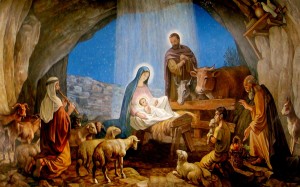
Seeing the Magnificat for the Bold and Edgy Prayer It Is
I pray you might indulge me a little speculation that cuts against the usual “visuals” surrounding the Magnificat. And, if what I say does not please your sensibilities I ask pardon now, and once again your indulgence.
In our western culture we tend to think of Mary in very soft focus, humbly praying, head bowed, quiet and almost shy in her demeanor. And this may all be true. But as I read Mary’s prayer, the Magnificat day after day, and as I read it today’s Gospel, I cannot help but be struck at how bold and charismatic it is. Many of its phrases are taken from ancient Israel and stitched together by Mary in a wondrous and creative way. But as a prayer, it is no gentle meditation. It is one that makes you want to jump to your feet.
My soul Magnifies the Lord! My Spirit REJOICES in God my Savior!
As I have prayed this prayer every day for the last 25 years I have come to experience that I cannot see Mary saying this prayer with hands folded and head bowed. I see, rather, a joyful, young woman, filled with exuberance, head raised in serene confidence and hands upraised in joyful, yes, even charismatic, gestures. African American Catholics often refer to this joyful disposition as “havin’ church,” and would say something like: “Mother Mary and Sister Elizabeth were havin’ some church up in there!”
Havin’ Church – The scene sets up with Mary traveling “in haste” to see Elizabeth. Mary arrives and greets Elizabeth and John the Baptist starts leaping for joy in her womb. You might say he gets things started. The text from Luke then says Elizabeth “cried out with a loud voice: Most blessed are you among women…!” Mary goes on to respond how her soul rejoices in God her savior. No sour-faced saints here, these women are radiant with joy and exuberantly expressing it. Their havin’ church alright, joy beyond all measure is theirs. This sort of exchange is not uncommon among some of the African American women in my parish. A not un-typical dialogue might go something like this:
A: Girl, you are looking radiant! B: Yes Lord! Your sister girl is blessed and highly favored! God’s been GOOD to me! A: Go on!…. God IS good! B: All the time!Yes, it seems, from any straightforward reading of the Lucan text, that the Magnificat was not recited, it was boldly and joyfully proclaimed in a moment celebrated by two women. One who had come in haste bearing our savior, and another, filled with the Holy Spirit and her infant dancing for joy in her womb. Two women filled with the joy of God, two women celebrating what God was doing in their lives. Mary proclaims, and she rejoices and says:
My soul proclaims the greatness of the Lord; My spirit rejoices in God my savior. For he has looked upon his handmaid’s lowliness; behold, from now on will all ages call me blessed. The Mighty One has done great things for me, and holy is his name.
And it is also a prayer that is also bold, even edgy in its critique of the social order:
He has cast down the mighty from their thrones. He has lifted up the lowly. He has filled the hungry with good things and the rich he has sent empty away.
Mary announces a great reversal that is come. Her Son Jesus echoed it: Many who are first will be last, and many who are last will be first (Matt 19:30). Some may which to spiritualize these words, and they surely do have a spiritual meaning. But their critique of the vainglory of this world cannot simply be seen as an abstraction or a generality. They have real meaning for the social order here and now. They surely mean we must learn to esteem the poor, the disabled, the weak. In this world they may need us, but as for the world that is to come, we will need them and their prayers to gain entry. And they, if they had faith, will have first places of honor. The reversal is coming, be careful what you call a blessing and what you call unfortunate. Be careful who and what you esteem and who and what you do not esteem. Yes, this is a bold and edgy prayer. It cuts right to the heart of the world’s vainglory.
So again, I beg your indulgence. I am aware that many have rather specific notions of what Mary is, or should be like. The portrait I have here presented is not the usual one in Western culture. But in the end, at least here, I see a portrait of a joyful, exuberant woman who is bold, even edgy in expressing what God is doing for her and for all Israel.
How do you see it?
Paradoxes of Christmas
In the ancient Church, and until rather recently, we genuflected at the two references to the incarnation in the Mass: at the Creed and at the Last Gospel (John 1). Why did we do this? It was explained to me that the mystery was so deep that one could only fall in silent reverence.
There are many paradoxes and seeming impossibilities in the incarnation. As mysteries they cannot be fully solved, so they claim our reverence. We genuflected in the past, and we bow today at the mention of the incarnation in the creed for it is a deep mystery.
As we approach Christmas I would like to list some of the paradoxes of Christmas. I want to say as little of them as possible, just enough to make the paradox clear. This paucity of words, not common with me, is in reverence to the mystery and also to invite your own reflection.
- The Infinite One becomes an infant.
- An antiphon for the Christmas season says, How can we find words to praise your dignity O Virgin Mary, for he whom the very heavens cannot contain, you carried in your womb.
- An old Latin Carol (in Dulci Jublio) says, Alpha et O, Matris in Gremio – (Alpha and Omega, sitting in mommy’s lap).
- He who looks down on all creation looks up to see his mother. The most high looks up from a cradle. Of this moment even the pagans wrote with longing and tenderness: Incipe, parve puer, risu cognoscere matrem….ipsa tibi blandos fundent cunabula flores, occidet et serpens, et fallax herba veneni occidet (Begin, little boy to recognize the face of your mother with a smile….For you, your own cradle will bear delightful flowers; the serpent will die, and the plant that hides its venom) – Virgil 4th Eclogue.
- He who indwells all creation is born in homelessness.
- He to whom all things in heaven and on earth belong, is born in poverty and neediness.
- He is the mighty Word through whom all things were made. He is the very utterance of God, the Voice which summons all creation into existence. Of this Word, this Utterance, this Voice, Scritpure says, The voice of the LORD is upon the waters; the God of glory thunders, the LORD, upon many waters. The voice of the LORD is powerful, the voice of the LORD is full of majesty….The voice of the LORD flashes forth flames of fire. The voice of the LORD shakes the wilderness …The voice of the LORD makes the oaks to whirl, and strips the forests bare; and in his temple all cry, “Glory!” (Ps. 29). Yet, this voice is now heard as the cooing and crying of an infant.
- His infant hand squeezes his mother’s finger, as infants do. From that same hand, the universe trumbled into existence. That same hand is steering the stars in their courses.
- He who holds all creation together in himself (Col 1:17) is now held by his mother.
- He who is the Bread of Life is born in Bethlehem (House of Bread) and lies in a feeding trough (manger).
- He who is our sustainer and our food, is now hungry and fed by his mother.
- Angels and Archangels may have gathered there, Cherubim and Seraphim thronged the air! But only his mother in her maiden bliss, could worship the beloved with a kiss. (Christina Rosetti “Ere the Bleak Mid Winter”).
Each of these is meant to be a meditation as Christmas approaches. Please add to this list!
Remember the word paradox means something that defies intuition or the common way of thinking. It unsettles or startles us to make us think more deeply. It comes from the Greek: para- + dokein. Para usually meaning “beside, off to the side,” sometimes “above,” and dokein meaning “to think or seem.” Hence a paradox is something off to the side of the usual way of seeing things or thinking about them. If you are going to relate to God you’re going to deal with a lot of paradox, for God’s ways and thinking often defy and confound human ways and thinking. God is not irrational but He often acts in ways that do not conform with worldly expectations.
This Christmas consider these paradoxes and learn from them. Remember too, mysteries are to be lived more than solved. Reverence is more proper to mystery than excessive curiosity. Here, more is learned in silence than by many words.
Advent 2011: Live Anew
Written by Br. Gabriel Torretta, OP
 The world tears us in a thousand different directions, and gives us a million different opinions about every subject, most of which contradict. Marketing, newspapers, blogs, and the like churn out a constant stream of facts and emotions that can be hard to make sense of, and even harder to sort by importance: Is Caribou Coffee better than Starbucks? Is global warming real? Is Facebook’s new look better than the old one? Is faith really opposed to reason? Does my mom want a Kindle or a Nook for Christmas? Should I marry my girlfriend? How can we answer any of these questions?
There is a solution to all this chaos in a surprising place: the sixth beatitude, “Blessed are the pure in heart, for they shall see God.” The pure of heart are those whose lives are totally integrated, who live with one goal in mind: God. The pure of heart see God in every person and in every deed, no matter how small; St. Therese of Lisieux spoke about how she wanted to praise God when she picked up a pin.
Advent is especially a time to pray for purity of heart, because in this season we prepare for the coming of Jesus, the Word of God, in whom God says everything there is to say about himself. Jesus is the Truth—not part of the truth, not one truth among many, but the Truth. The welter of the world’s questions finds its answer in the Truth, in Jesus Christ.
To the pure, the infinite good and bad questions of the world are only interesting insofar as they show us the face of God, in whatever surprising or familiar way. Sometimes the truth about a question is that it doesn’t matter much, even when it feels like it does; at other times, the issue might matter a lot, even when it feels trivial. Jesus’ invitation to purity of heart is the invitation to see the world around us with God’s eyes, and to trust him who is the Way, the Truth, and the Life.
Today’s meditation: Give God all your desires. Ask him to purify your mind, so that you might desire everything for his sake.
On the Longing that Even Christmas Does not End
Christmas is almost here and in the Church is also a great longing, and a thrill. Christ’s first coming is about to be made present again.
Yet our longing and thrill are also directed to his glorious second coming. And now Mother Church, the New Jerusalem, our Mother looks for her groom Jesus to come again all his glory:
I saw the Holy City, the new Jerusalem, coming down out of heaven from God, prepared as a bride beautifully dressed for her husband. And I heard a loud voice from the throne saying, “Now the dwelling of God is with men, and he will live with them. They will be his people, and God himself will be with them and be their God…I heard what sounded like the roar of a great multitude in heaven shouting: “Hallelujah! Salvation and glory and power belong to our God. Let us rejoice and be glad and give him glory! For the wedding of the Lamb has come, and his bride has made herself ready. Fine linen, bright and clean was given her to wear.” (Rev 21:2-3; 19:7-8)
And this longing remains until Mother Church, Christ’s beautiful bride, hears those words from him: Surge amica mea, speciosa mea et veni! (Arise, my beloved, my beautiful one and come!) (Song of Songs 2:10). Till then, her longing cannot be quenched, till he come again, in all his radiant beauty and majesty. Till then, she longs, she looks and she waits.
Though some of her children have attained to this glory, she waits and longs till the number of her elect children are complete and she, in her fullness, will go to be with her spouse for ever in beatific glory.
One of the great Advent hymns of the Protestant tradition picks up this bridal theme and “weds” it with advent longing. This particular translation is a masterpiece of English translation (from the German). It is both biblical and artistically beautiful:
Wake, Awake with tidings thrilling;
The Watchmen all the air are filling;
Arise, Jerusalem, Arise!
Midnight strikes, no more delaying;
“The hour has come,” we hear them saying;
Where are ye all ye virgins wise?
The bridegroom comes in sight
Raise high, your torches bright!
Alleluia!
The wedding songs swells loud and strong;
Go forth and join the festal throng.
Zion hears the watchman shouting;
Her heart leaps up with joy undoubting;
She stands and waits with eager eyes!
She her love from heaven descending;
Adorned with truth and grace unending;
Her light burns clear her star doth rise!
Now come our precious crown;
Lord Jesus, God’s own Son;
Hosanna!
Let us prepare to follow there
Where in thy supper we may share.
Photo Credit: Kelly Chandler Photography
On Bioethics and the Birth of Jesus – A Meditation on Certain Moral Questions in the Light of Christmas
In these past days, as Advent draws to a close and birth of Christ draws near, the readings at Daily Mass have recounted the divine initiative in the miraculous births of John the Baptist, and Samson. To this list we could add Isaac, Samuel and, of course Jesus. In these cases, women who were barren, or aged, or, in Mary’s case, a virgin, all conceive as the result of God’s special act.
For, although God most often acts to create us through the natural order of things, it remains true that God can overrule the usual course, such that a woman in her 90s (Sarah) can conceive, or that other women though aged or barren (Such as Elizabeth, Hannah, and the Mother of Samson) bring forth Children in very unlikely circumstances. Most miraculously of all is Jesus who is, in terms of his human nature, born of Mary, though clearly a virgin.
Stories like these highlight God’s involvement in the origin of human life. There are other texts as well that speak to the fact of God’s specific intention in creating us and of His role in bringing us forth.
Hence we are told in Jeremiah: Before I formed you in the womb I knew you, before you were born I set you apart; I appointed you as a prophet to the nations (Jer 1:5). And thus we are taught that God knows of us, and plans for us, long before we are conceived, and that it is He Himself who forms us in our mother’s womb.
We also read in Psalm 139: For you created my inmost being; you knit me together in my mother’s womb. I praise you because I am fearfully and wonderfully made (Ps 139:13-14). In these magnificent verses, it is clear that we are God’s personal handiwork, and thus we are wonderful, and that a holy fear should surround the existence of every human being.
As we approach Christmas we ought to ponder the magnificence of human conception, gestation, birth and life. Even as we extoll the birth of Jesus, we also do well to acknowledge the awesome and mysterious truth that every human person emerges not merely from a biological process, but from the very mind and heart of God, from his will and as an act of his love. None of us are here by accident.
Yet in modern times there are many ways that God’s sovereignty over human conception and life are usurped or ignored. Among these are:
1. In Vitro Fertilization (IVF) In IVF, a fertilizable ovum is removed from a woman’s ovary and put in a petri dish (the Latin for dish is vitrum) to which a few concentrated drops of sperm are added. This removes human conception from the marriage act, its sacred and proper place, where God acts to bestow life. IVF puts it in the laboratory where man controls the process and conception is treated as a technology and consumer product, rather than as part of a mystery of fruitful love caught up in the marriage embrace and the love God.
There is a sense on the part of many today that couples (even single people) have a right to have a child. Hence they proceed to do what they please to exercise their right. Never mind that “excess” embryos are frozen or destroyed, it’s all for a “good cause,” namely, to give the parent(s) what they want, and supposedly have a “right” to.
From a faith perspective, IVF simply rejects God’s “failure” to act in accord with the wishes of the parents, and removes the decision from God. God may be teaching something to the couple due to their infertility. Perhaps he wants them to adopt, perhaps he has a special work or cause he wants them to be devoted to. But IVF suspends such discernment, and forces the solution.
In this way the mystery and divine origin of human life is both compromised and undermined. When life is merely a technology to do with as we please, it is not long before we end up in some pretty dark places.
2. Irreverence for sexuality – Human sexual activity is sacred because it is tied to the ordinary ways in which God brings us into existence. But having set aside a deep appreciation for the sacredness and divine origin of human life, it is evident that human sexuality is both misunderstood and treated irreverently. It is ridiculed by comedians, treated casually by fornicators and degraded through the explosively high levels of pornography.
Through contraception we have sown in the wind, and are now reaping the whirlwind. For if sex is just about fun and pleasure and not linked to children, marriage or the dignity of life, then just about anything goes: teen sex, “gay” sex, premarital sex, extramarital sex, and ten thousand other aberations. Whatever feels good and gives the participants pleasure. Contraception severs the connection between sex, and life, and God. Thus endless confusions ensue, and grave darkness has come upon us as our families disintegrate, sexually transmitted diseases proliferate, teenage pregnancy and abortion escalate, and homosexuality ingratiates itself into a deeply confused populace.
But, for the Church, sex is sacred and linked to the dignity of human life and its creation by God. Conception is holy, an act of God, and those who would engage in the holy act of sex that points to conception, must do so from the sanctity of the marriage bed (for children deserve parents and a stable home), in an act open to and inviting of God, who alone is the author of sex, its meaning and the life that flows from it.
3. Abortion – We have spoken here at length of the tragedy and evil of abortion. Man usurps God’s role and claims for himself the right to kill that which God has clearly created, and is knitting together in the womb. Abortion snatches the knitting from God’s hands and says boldly to him “What are you doing?! ….This shall not be.” The mystery and dignity of every human person is undermined and endangered by this.
4. Rejection of the disabled and the imperfect – God permits, and allows that some among us have special needs. While we may wonder as to God’s ways, anyone who has worked with the disabled or had them as a member of the family know that, though hardships are surely present, the disabled bring many gifts and call forth great strength in those with whom they live and interact.
My own sister’s mental illness was a great trial for our family and yet I must declare she bestowed gifts and brought forth love in me I never knew I had. I will never forget her struggle that ended tragically, and the gift of her life and example are with me always.
But today, there are many who jettison these gifted people through abortion. A recent issue of the Ethics and Medics states the problem well:
Increasingly, the delivery of a healthy baby is perceived less as a blessing from God and more as an entitlement, a modern benefit associated with ever progressing medical technology. As a result, when there is a poor prenatal diagnosis, the medical focus shifts away from the baby’s condition to the pregnancy itself as a medical problem.
In a survey conducted by the American College of obstetricians and gynecologists, 90% of the doctors who responded considered abortion a justifiable treatment option for fatal fetal anomalies, and 63% considered it justifiable for nonfatal anomalies. [Monica Rafie & Tracie Windsor in Ethics and Medics Vol 36.10]
Tragically, just over 90% of unborn babies with a Down Syndrome prognosis are aborted. It is a horrifying rejection to behold. True enough, a poor prenatal diagnosis can be earth shaking, but human life is sacred and the disabled bring gifts. And even if those gifts seem to come in strange packages, God works his wonders still. Maybe they are the very way God will save us, and disarm our pride and self-reliance! Trust God, no one is an accident, no one is a mistake.
I am mindful of a quote that pertains to this last issue but also brings us back to where we started. It is from Isaiah:
Woe to him who contends with his Maker; a potsherd among potsherds of the earth! Dare the clay say to its modeler, “What are you doing?” or, “What you are making has no hands”? Woe to him who asks a father, “What are you begetting?” or a woman, “What are you giving birth to?” Thus says the Lord, the Holy One of Israel, his maker: You question me about my children, or prescribe the work of my hands for me?! It was I who made the earth and created mankind upon it; It was my hands that stretched out the heavens; I gave the order to all their host. It was I... (Isaiah 45:9-15)
At Christmas we celebrate the glory of conception, birth and the dignity of human life joined to divine life. God is the author of every human life. Not just the ones we we like, find acceptable, useful, pretty or perfect. All life comes from him and belongs to him. Jesus came to us miraculously from the Virgin Mary. And this is a solemn reminder that the initiative is always God’s. It is he who acts.
And though most all of us have been conceived in the more usual way, we too miraculously stir forth from the mind, the heart, the love of God. Human life is sacred. Sexuality is sacred, conception, gestation, and birth are all sacred. The great feast of the incarnation affirms all of this.
On the Poverty of the First Christmas and the Gift to Love the Poor
One of the great gifts to be sought at Christmas is to experience an increase in our love the poor. Poverty, it is true, remains a complicated and vexing problem, especially in modern market based economies. Linked to poverty are complicated social issues such as addiction, single motherhood and the unintended though real consequences of welfare programs, as currently structured.
But none of these complexities can exempt us of our summons to care for the poor and to grow in love for them, yes to actually love them, not only serve them. How we will ultimately and best serve the poor or solve all the complex issues related to poverty may not always be clear to us. But to love them is to receive the God-given gift that will energize our zeal and serve as the true foundation for the persistent and consistent action that is so essential to lasting solutions.
This Christmas why not ask the gift to love the poor more deeply, with an abiding and deep affection?
For poverty and neediness are an intrinsic aspect of the Infancy narratives. The first Christmas was anything but charming or sentimental. It is charged with homelessness, hardship, a lack of decent resources, disregard for human life (by Herod), and the flight of the Holy Family as refugees and aliens in a foreign land.
Joseph and Mary, with Jesus were not destitute. They were among what we might call the working the poor. But one thing about be among the working poor, you’re always on the edge of an abyss. Most the benefits that the working middle and upper classes in our culture have, were unknown to Joseph and Mary. And such benefits are also unknown to many of the working poor today, who, because of their part-time status, lack the benefits that cushion us from life’s vicissitudes. There was not security net for Joseph and Mary. There was no sick leave, vacation with pay, medical benefits and the like. If you were sick you missed work, and didn’t get paid. If there were a family crisis, you still had to work, or if you missed work, and again, so much for the pay.
Destitution for the working poor was always one or two paychecks away. Life was fragile and very dependent on the right combination of work and extended family ties. Any disturbance to this delicate balance could bring on real crisis. And in the Christmas story we see an ensuing crisis
Thus we see Joseph and Mary swept up in power move among the governing authorities to take a census. This was about power and taxes, and armies, it was about control. Scripture says, The poor man is devoured by the pride of the wicked: he is caught in the schemes that others have made (Ps 10:2. Grail).
Yes, Joseph and Mary are swept away from their resources, their family, extended family, and Joseph from his livelihood. They are swept downstream some 70 miles to the town of Bethlehem at a critical time for their family, the 9th month of Mary’s pregnancy. Could you walk 70 miles? And what if you were pregnant? Artists depict Mary on a donkey. I have my doubts. Donkeys were expensive and it is unlikely that the working poor would have such an expensive animal. It may be that Joseph himself pushed Mary in a cart. We are left to wonder. But this was no pleasure cruise. It was a grave hardship and a major social dislocation. Life is fragile for the poor. This young family is torn from its supports and resources and made to travel 70 miles on foot to a distant town, and just hope arrangements could be found. The poor are caught in schemes others have made.
Homelessness awaited them. We may be content to think that that lodging was scarce in that city, swelled by an unexpected census. But the reality was likely more complicated. Lodging could likely have been found for the right price. But when you’re among the working poor, such certainties that money can supply are usually lacking. Should it matter that Joseph’s wife is nine months pregnant and due any moment? Apparently not. Human sympathy is a wonderful thing, but it is not a dependable thing when you don’t have the money or resources to inspire it in others. The poor can seek sympathy, but they may or may not get it.
Off to the stinking stable, the dank cave. Poverty does stink, and leads to deep and dank places. We may sentimentalize the birth of Jesus among animals, but there was nothing cute about it. The Church speaks reverently of the mystery of this moment: O magnum mysterium et admirabile sacramentum, ut animalia viderunt Dominum natum jacentem in praesepio! (O great mystery and wondrous sacrament, that animals would see the newborn Lord lying in a feedbox).
Yes, the wondrous mystery is that God so esteems poverty. But the disgrace of this remains at our door. It is a foreshadowing of the mystery of the cross. Yes, Christ saves us through it, but shame, shame on us. Shame that our Messiah had to endure this birth in a smelly cave, shame that we would later scorn and crucify him who said “Blessed are the poor” (Lk 6:20).
So poverty is an overarching theme in the infancy narrative. But ultimately the deepest poverty is upon us who so neglect the poor. For in neglecting them, we neglect the Lord and bring judgment on ourselves (cf Matt 25:41ff). And in this moment of the nativity story, we neglect the Lord personally and historically as well well as mystically.
It is not long before we add the holy family to the list of refugees and resident aliens. For the fear of the powerful, in this case Herod, is such a powerful fear, that he fears even the poor.
The life of the Lord Jesus is despised and disrespected because his existence is inconvenient, threatening to Herod’s plans and his life as he knows it. Jesus must go. Somehow Herod is able to justify his infanticide. To him and those who support him, human life is not sacred, it is disposable, if it gets in the way of “more important goals” like power, plans, and personal advancement. Yes, Jesus must go, he is in the way.
In their flight from this infanticidal King they flee to Egypt. A terrible journey, made in haste without supplies. Perhaps they begged for food and shelter along the way? The stretch of desert from Gaza to Alexandria is a hellacious journey. Some friends recently road the bus from Bethlehem to Mt Sinai. Along the way the A/C on the bus broke. “It was terrible!” they said. Yes it was, but not so terrible as it was for Jesus, Mary and Joseph.
Refugees and Immigrants – Coming into this foreign land, perhaps they settled among fellow Jews, perhaps not. We do not Know. Was Joseph reduced to being a day laborer? How did he find work? What resources did the Holy family have? Were the Jews despised there? How stable were the conditions there, especially for the poor? The Scriptures are quiet.
But this much we know, they were strangers, aliens, immigrants, in a foreign land. They did not speak the king’s Egyptian, and likely lived from day to day. Herod died in 4 BC. If it is true that Jesus was born about 3 BC we can assume that they spent the better part of a year or two in Egypt, vulnerable and dislocated, refugees and immigrants, aliens, to use the legal term.
Do you Love Jesus, Mary and Joseph? Let me ask it another way: Do you love the poor, the homeless, the vulnerable, the despised, the refugee, the immigrant? Don’t turn Jesus, Mary or Joseph into an abstraction, for this is what they were in human terms at this crucial moment of their lives. Perhaps they knocked on doors and sought lodging or resources. Perhaps Joseph longed for, and sought work, perhaps Jesus needed clothes. Jesus’ life was threatened by infanticide just as today, poor infants, needy infants, physically deformed infants, are threatened with abortion.
Do you love the poor? Here is a gift to be sought at Christmas, that we can more deeply love the poor and be moved with compassion and zeal for their care.
Personal story – I am fifty years old, and for the last 27 of those fifty years I have attended Mass every day, read Scripture and prayed every day. And I must say, that as my communion with the Lord has deepened, so has my communion with all God’s people. I have seen love in me increase, not by my effort, but as the pure gift of God. I have seen an increase in compassion, my ability to for give, to be more generous, and to speak the truth in love.
And no one can go to Mass and read Scripture attentively every day for almost 30 years and not come away with an understanding that God loves the poor and is passionate about how we care for them. As important as our ritual duties to God are, and we should keep them, God goes so far as to say:
- Is this the kind of fast I have chosen, only a day for a man to humble himself? Is it only for bowing one’s head like a reed and for lying on sackcloth and ashes? Is that what you call a fast, a day acceptable to the LORD? “This the kind of fasting I have chosen: to loose the chains of injustice and untie the cords of the yoke, to set the oppressed free and break every yoke. To share your food with the hungry and to provide the poor wanderer with shelter–when you see the naked, to clothe him, and not to turn away from your own flesh and blood? (Isaiah 58:6).
- Learn to do right! Seek justice, encourage the oppressed. Defend the cause of the fatherless, plead the case of the widow. (Is 1:17)
- Rescue those being led away to death; hold back those staggering toward slaughter (Prov 24:11).
- And if you spend yourselves in behalf of the hungry and satisfy the needs of the oppressed, then your light will rise in the darkness, and your night will become like the noonday. (Is. 58:10)
- He who does not oppress anyone, but returns what he took in pledge for a loan. He does not commit robbery but gives his food to the hungry and provides clothing for the naked. He does not lend at usury or take excessive interest. He withholds his hand from doing wrong and judges fairly between man and man. He follows my decrees and faithfully keeps my laws. That man is righteous; he will surely live, declares the Sovereign Lord (Ezekiel 18:7-9)
- Rescue the weak and needy; deliver them! (Ps 82:4)
- This is what the LORD says: Do what is just and right. Rescue from the hand of his oppressor the one who has been robbed. Do no wrong or violence to the alien, the fatherless or the widow, and do not shed innocent blood in this place. (Jer 22:3)
- Therefore, O king, be pleased to accept my advice: Renounce your sins by doing what is right, and your wickedness by being kind to the oppressed. It may be that then your prosperity will continue.” (Daniel 4:27)
And there are literally a hundred other similar verses that speak of God’s passionate concern for the poor and how we treat them. I have read these verses over and over in the Liturgy and I must say, I have not come away from them unchanged.
It is very clear to me that it is not enough for me to go to church, say my prayers, live chastely and be nice to my friends. God is also passionate about how I treat the poor and the needy. And I have also personally come to discover that merely doing good to them or writing a check is not enough. The gift that God has given me is to love the poor, more and more.
There are many debates about how best to care for the poor. Is is the government’s duty? Is it the private sector’s duty? Is is families and churches? It is all of these.
But even more, it is your responsibility and mine. Otherwise the “charming” Christmas story of no room in the Inn comes “home” to roost in our own living room, and the injustice of that moment is ours, not some rude and insensitive inn keeper of 2,000 years ago.
God is passionate about the poor and how we care for them. There is simply no other possible conclusion in the face of overwhelming Scriptural evidence.
But how do it? How will we ever make the right choices and get the balance right? How will we ever address the complicated social conditions that give rise to poverty? How do we decide who is most deserving in the face of limited resources? A thousand questions come to mind. But it begins simply here: Love them. Ask for a deep affection and an abiding love for the poor. And not a pitying love, but a respectful love that understands the special esteem God has for them and the close self-identification Jesus makes with them (cf Matt 25:41ff). A love that understand that, though they may need us now, we will need them in the age to come at the judgment.
A final story. When I came to my current assignment, the parish finances were in some distress. And, thanks be to God, through Biblical tithing, we have once again attained financial stability. But together with the Parish Council and Financial Council we have also attained a consensus that we but do better for the poor. In a parish with a budget of 1.2 million dollars, only $10,000 had been set aside for the poor. We have been changing that over the last few years and are now close to $100,000. It became unthinkable to us that that we were spending almost a million dollars a year on ourselves, on altar cloths, and sanctuaries (important), etc., and yet many poor in our area were not properly clothed and were loosing the sanctuaries of their homes.
Once having set our social concerns budget at 10% of the whole budget we have only just begun, for additionally we must care for the poor and needy through second collections and the Lenten appeal. I do not say any of this as a boast, just as a testimony of what God put in our hearts and in our capacity to do.
Do you love the poor? Ask for this gift this Christmas. God could not be more pleased with such a gift request.
Some Statistics About Poverty in the US
Painting above: The Flight to Egypt by Henry Tanner.
Advent 2011: Live Anew
Written by Br. Gabriel Torretta, OP
 Mercy is a funny thing. We all expect other people to show us mercy, but only rarely do we think other people are right to expect us to show them mercy. If someone cuts me off in traffic, I’m likely to scream and curse; if I cut someone else off, I get angry at him for honking at me—he should have known I didn’t do it maliciously. We are generally convinced that our own good intentions are so obvious that everyone should be able to see them, but other people can’t be trusted with so much confidence.
The fifth beatitude teaches us how to escape the selfish trap of one-way mercy: “Blessed are the merciful, for they shall obtain mercy.” Jesus isn’t turning mercy into a spiritual brokerage deal—you give me thirty units of mercy and I give you thirty back. Rather, he’s pointing to the core meaning of mercy. Mercy means love for the other—not stinting, begrudging, or partial love, but love in good measure, pressed down, shaken together, and overflowing.
When we ask for mercy, we are asking to be treated according to what is most deeply true about us: that we are children of God. Mercy does not mean overlooking injustice or turning a blind eye to sin; it means loving the other enough to desire his highest good, to treat him as a son of God. This love is from God, drawing the other out of himself, and simultaneously drawing us out of ourselves. When we show mercy, we receive it because God loves through our love.
Advent is the season of mercy. Each of us is marred by sin, each of us has turned away from God’s love to his own selfish desires, each of us has tried to live by his own strength. Yet in his love God did not demand that we mend our ways before he saved us; he sent his Son to us because he loves us and wants to bring us back to himself. We look forward to the day when his Son will come again, bringing the sons and daughters of God to the kingdom of mercy in heaven.
Today’s meditation: Reflect on the mercy God shows us in the sacraments of Penance and the Eucharist. Ask him to increase your devotion to those sacraments.