God Always has his "Seven Thousand." A Meditation on hope from the Story of Elijah

In the first reading at Mass today (Wednesday of Week 10), we have recounted for us one of the great prophetic actions of all time. It takes place at Mt. Carmel on the beautiful slopes overlooking the Mediterranean Sea.

Elijah Calls the Question – Grieved and angry that his own people had largely abandoned the Lord God, and gone over to the worship of god Baal (the god of the cruel and oppressive Queen Jezebel), Elijah called the question:

How long will you straddle between two opinions? If the Lord is God, follow him; but if Baal is God, follow him! (1 Kings 18:21)

Then Elijah challenged the prophets of Baal, the Canaanite god, to a kind of prophetic duel. Both he and they would prepare sacrifices and see whose deity would respond. After many hours of calling on their god to no avail, and even being taunted by Elijah, the prophets of Baal were told to stand aside and watch a real God go to work. And Elijah prayed, and God sent fire from on high to consume the sacrifice:

When all the people saw this, they fell prostrate and cried, “The LORD–he is God! The LORD–he is God!” (1 Kings 18:39).

The passage ends darkly: Then Elijah said to them, “Seize the prophets of Baal; do not let one of them escape.” So they seized them; and Elijah brought them down to the brook Kishon, and slew them there. (1 Kings 18:40)

As you may have guessed, none of this pleased the wicked Queen Jezebel much, and she announced that Elijah must die. Elijah fled into the desert and there began to despair.

And here is where it may be of some benefit to stop a moment and ponder a possible inner struggle of Elijah, one that we all likely share from time to time. For it is too easy in times like these to fear that all are falling away, that all is lost, and that there is little hope for recovery. And even recalling the promise of the Lord that hell would not prevail over the Church (Matt. 16:18), yet still, many remembering the days of full churches and schools, seeing the increasing emptiness may wonder, “Whither the Church?”

Did Elijah struggle in this way? It would seem so. For, even as he boldly challenged the prophets of Baal he said,

I am the only surviving prophet of the LORD, and there are four hundred and fifty prophets of Baal. (1 Kings 18:22).

Whether this was literally true is dubious, as we shall see later. Yet it is Elijah’s sense that he is all but alone and that the whole of the people and even the religious leaders have all defected.

As he flees his despair deepens:

Elijah was afraid and ran for his life…. He went a day’s journey into the desert. He came to a broom tree, sat down under it and prayed that he might die. “I have had enough, Lord,” he said. “Take my life; I am no better than my ancestors.” Then he lay down under the tree and fell asleep…..All at once an angel touched him and said, “Get up and eat.” He looked around, and there by his head was a cake of bread baked over hot coals, and a jar of water. He ate and drank and then lay down again. The angel of the Lord came back a second time and touched him and said, “Get up and eat, for the journey is too much for you.”

So he got up and ate and drank. Strengthened by that food, he traveled forty days and forty nights until he reached Horeb, the mountain of God. There he went into a cave and spent the night…..

And the word of the Lord came to him: “What are you doing here, Elijah?” He replied, “I have been very zealous for the Lord God Almighty. The Israelites have rejected your covenant, broken down your altars, and put your prophets to death with the sword. I am the only one left, and now they are trying to kill me too.” (1 Kings 19:3-12 varia)

Thus we see Elijah’s despair and his sense of being all alone. And some among the faithful today struggle also with this to one degree or another.

But note how God answers Elijah.

Yet I have seven thousand in Israel—all whose knees have not bowed down to Baal and all whose mouths have not kissed him. (1 Kings 19:19)

In other words, you are far from alone Elijah. I have seven thousand like you though your despairing eyes see them not!

God then says,

“Go back the way you came, and go to the Desert of Damascus. When you get there, anoint Hazael king over Aram. Also, anoint Jehu son of Nimshi king over Israel, and anoint Elisha son of Shaphat from Abel Meholah to succeed you as prophet. Jehu will put to death any who escape the sword of Hazael, and Elisha will put to death any who escape the sword of Jehu..” (1 Kings 19:15-18

In other words, find these seven thousand and go rebuild my people, go rebuild my Church. Now is not a time for despair, now is a time for action. Gather them, appoint leaders and I will be with you to win this battle and reestablish the faith in glory.

In speaking this way to Elijah, the Lord also speaks to us. Though all seem in decline, and losses mount, Yet God still has “seven thousand” who have not bent the knee to Baal of this present evil age, who have not departed. And from this faithful remnant he expects us to draw hope and continue our work.

Most of you who read my blog regularly know that I have often chronicled the decline in numbers and, like most, insistent on the need to evangelize. There is indeed much to be sober about when glancing at the downward trend in Mass attendance, the closing of parishes and schools and the weak faith evidenced in our culture.

But to be sober is not to be in despair. For God has accomplished revivals before, and he can and will do so again. There are any number of famous figures who pronounced the end and doom of the Church. Yet where is Caesar now, where is Napoleon, where is the Soviet Socialist Republic? And when the latest neo-gnostic, rationalist, materialist, and atheist movements of the post Cartesian West have run their course, the Church will still remain, and still be speaking of Jesus. It is for us to stay the course and for God to win through to the end.

There have been times when the “practicing” Church got very small. On Good Friday all but five had fled: Mary of Magdala, Mary Clopas, Mary Solome, Mary, Mother of Jesus and John. And there they were with Jesus. They even added a sixth that day, the repentant thief. Small, and things looked pretty grim, but still the Church at worship, looking to Christ her head.

Yes, like Elijah we can sometimes think there is little hope, that we are all but alone. But it was not so for him, and it is not so for us. God always has his “seven thousand.”

Image Credit: McNichols Icons
Don’t miss the signs

Signs and symbols are key to Catholic spirituality and ritual.  Using John’s Gospel as a text, Archbishop Robert  LeGall, OSB, Archbishop of Toulouse, France spoke of how gestures within our liturgies and rituals open the believer up to a greater perspective, a reality that takes us beyond the gesture itself. Archbishop LeGall is one of a number of bishops who are serving as catechists at the Congress.

Symbols

Archbishop LeGall pointed out that in Greek, symbol means “to put together” and in John’s Gospel, particularly in chapters 1-12, Jesus is using gestures and signs to help people put together the concrete symbol with the deeper meaning. By way of example, he spoke of the parable of the multiplication of the loaves.  The miracle of providing enough food to feed the people gathered was not the main point. Jesus was preparing people to make the connection between he providing bread and he who would become bread. The Archbishop reminded us that indeed, Jesus later reprimanded the people for missing the point, they couldn’t get beyond the obvious and the concrete.  Jesus says “Amen, amen, I say to you, you are looking for me not because you saw signs but because you ate the loaves and were filled” (John 6:26).

To appreciate our sacraments, to grow in the spiritual life, we need to explore the signs and symbols of our faith–we need to go deeper and put together the “material and the mystical” so to speak! Another example in the talk was from John 19 in which we read “And bowing his head, he handed over the Spirit.” On first reading we understand that he died, reading this with the eyes of faith, we are invited to see in this gesture, that Jesus is also, in his death, transmitting his Spirit.

What helps us catch the signs? How do we begin to open ourselves up to a greater perspective? Not surprisingly, the Archbishop suggested full and active particpation in the liturgy and the practice of Lectio Divina which helps us to read Scripture prayerfully and to listen in a way in which we begin to see differently.

In the question and answer period that follwed, a young man asked if we also face a challenge in the reality that not only do believers need to explore the meaning of symbols,  we seem to face the same problem in secular culture as well. Some gestures and symbols go unrecognized for their deeper meaning.  Do you think this is true? How have you come to understand the symbols of our faith in a way they have brought a new perspective?

The Congress is unfolding in a really beautiful way. As we contemplate the Eucharist as the source and summit of the faith, we are doing that by focusing on its relationship to one of the other sacraments on each day. Monday was Baptism, Tuesday, through Marriage, today we celebrated Holy Orders. Thursday is Reconciliation and Friday, the Sacrament of the Sick.

(the photo is a shot of particpants enjoying lunch on the  Green and is courtesy of the Congress Press staff)

Behold the Prophet! No One Escapes! – A reflection on what prophets are really like.

Vernon JohnsWe often like to read from and quote the prophets. But if you’ve ever met a real prophet you know that being in the presence of a real prophet can be very disturbing. Prophets love God’s people, but they love them too much to gainsay the truth.

Prophets were famous for goring every one’s ox. No one left the presence of a prophet untouched.

So troubling were the prophets of old, including Jesus, that most of them were persecuted, jailed, stoned, exiled and killed. Most of the Biblical prophets were beyond controversial, they were way over the top. Prophets denounced sin and injustice in the strongest language, announcing doom to a nation that refused to repent. Many Israelites thus considered them unpatriotic and downright dangerous. They justified throwing them into prison for their lack of patriotism and for the way their words questioned and upset the status quo and the judgements of those who held power.

To many, these were dangerous men who had to be stopped.

Jesus, though essentially our savior, also adopted the role of a prophet. Listen to these words as he denounces the people of his day for their rejection of his prophetic message. In this they are just like their fore-bearers who rejected the prophets:

Woe to you, scribes and Pharisees, you hypocrites. You build the tombs of the prophets and adorn the memorials of the righteous, and you say, ‘If we had lived in the days of our ancestors, we would not have joined them in shedding the prophets’ blood.’ Thus you bear witness against yourselves that you are the children of those who murdered the prophets; now fill up what your ancestors measured out! You serpents, you brood of vipers, how can you avoid being sentenced to Hell?! (Matt 23:29ff)

Many of us today like to think that, had we lived in Jesus’ time we would surely be on his side. But, truth be told, prophets can be hard to endure and Jesus had “difficult” things to say for everyone.

Honestly, most of us struggle with the truth to some extent. And especially we moderns who prefer a more gentle discourse with large doses of honey, and very little vinegar. We probably would wince as we walked along with Jesus. Jesus was very disconcerting. Jesus was more “plain spoken” than we are usually comfortable with. If we are honest, when we read the prophets and Jesus, we will come away with much to repent of.

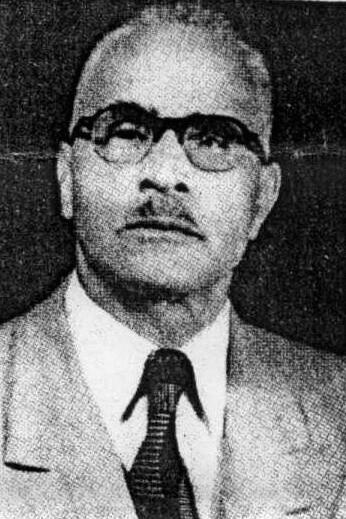
A picture is worth a thousand words. Consider this video clip. It is of a modern prophet named Vernon Johns (see photo – upper right). In the early 1950s he was Pastor of the Dexter Avenue Baptist Church, in Montgomery Alabama. The Black Congregation that hired him was a rather sleepy congregation. In the face of rather awful racial discrimination, they preferred to remain silent and therefore safe. Vernon Johns tried to wake them from their sleep, but to no avail. They were too afraid (yet) to take a prophetic stand. Eventually Vernon Johns was arrested as a trouble maker, and the Board of Deacons fired him.

But Johns had laid a foundation for the next Pastor of Dexter Baptist, Dr. Martin Luther King Jr. Within a few years Rosa Parks refused to give up her seat and the Bus Boycott was on. The rest is history.

This clip is of Vernon Johns’ final sermon where, in finest prophetic tradition he denounces racism. But NO ONE escapes his vivid denunciations, even his own congregation. Watch this clip and behold what it must have been like with the prophets of old, even Jesus.

Behold the prophet! No one escapes! In the end of the clip, his daughter who had stood against her Father’s zeal sings “Go Down Moses.” The choir director who had also opposed him likewise stands to sing. The seed is planted even as the prophet is led away by the police.

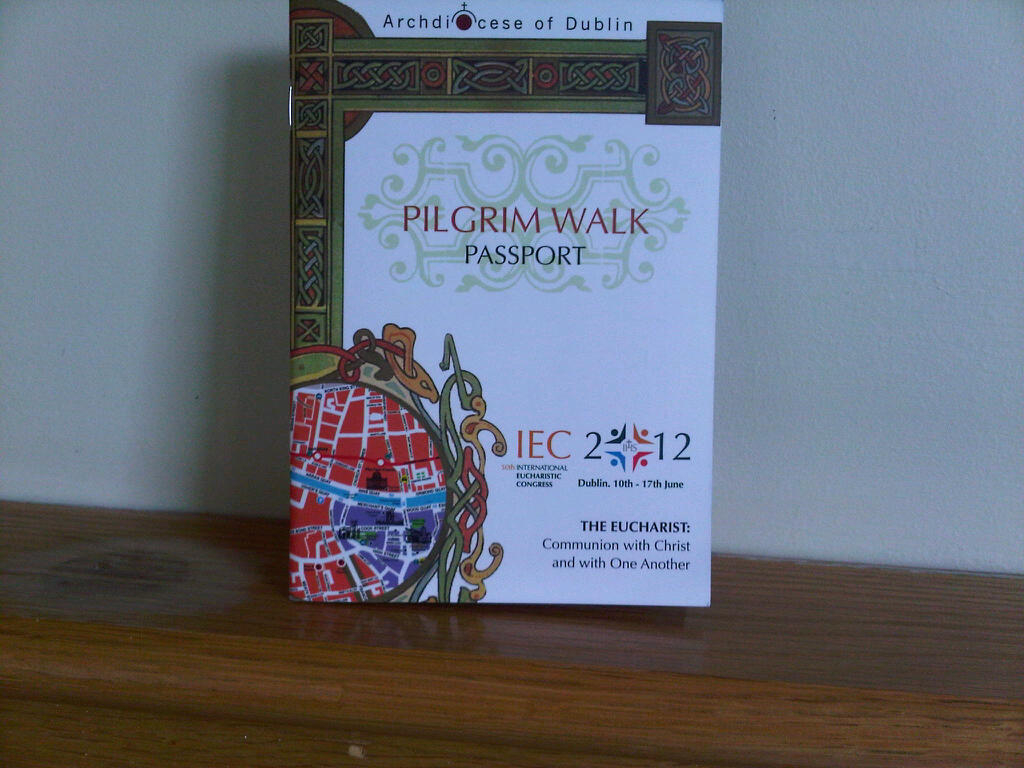
Dublin’s Pilgrim Walk

One of the unique events of this Eucharistic Congress in Dublin is the Pilgrim Walk. Noting the revival of people’sinterest in pilgrim walks, the Congress committee created the route around seven of the oldest churches in Dublin. Readers of this blog from the Archdiocese of Washington know of the annual Seven Churches Walk sponsored by our Young Adult Ministry and this Dublin walk is very similar.

I began my walk with Mass and the  Reconciliation at St. Mary Pro-Cathedral, the mother-church of the Archdiocese.  I wound my way through the city, stopping at St. Anne’s, founded in 1723 where Irish poet and writer, Oscar Wilde was baptized. At St. Anne, there is a bread shelf located by the choir. It was a tradition to stack the shelves with loaves of bread which the hungry and poor were welcomed to take.  From St. Anne’s, I headed for Our Lady of Mt. Carmel, home of the Carmelite Fathers and established in 1279. Here pilgrims had a chance to venerate the relics of Saint Valentine.

From St. Anne, on my way to St. John’s Lane Church I passed the house where Frank Duff founded the Legion of Mary in 1921. St. John was built by the Augustianians in 1280 and this year has been a special one for the parish as it celebrates the 150 Anniversary of the “Solemn Blessing and Laying of the Foundation Stone,” on Easter Monday in 1895. Not far from St. John’s and in the very neighborhood that is home to Guinness’s Beer world headquarters and plant is St. James church, St. James, founded in 1844, has a special link to the Camino de Santiago as many Irish pilgrims have their Camino passport stamped at St. James before starting out for Camino de Santiago de Compostela.

The sixth visit was to the Gothic style Church of St. Mary of the Angels, which started as a chapel site around 1689, following the Battle of the Boyne. This really beautiful church with a rich wood ceiling was established in 1868. I ended my pilgrimage at the parish of St. Michan, the oldest parish in Dublin. Historical records show the presence of a Christian Shrine dating back 1,000 years, though the present church was not constructed until 1730. The presence of a chapel for some 1000 years has some support in the fact that at the Episcopal Church also named St. Michan, in the same neighborhood, there are catacombs with graves that have been dated at 800 years.

This pilgrim walk was not just a history lesson, but a time for extended prayer in front of the Blessed Sacrament. A number of the Churches have extended hours of Exposition during the Congress and many added Masses so that pilgrims can take full advantage of this time of walking with Our Lord. In prayer, one is able to recall themes from the homilies and catechetical sessions that come alive in private prayer and to pray for God’s blessing that the fruits of the Congress will be carried to the home dioceses and parishes of the pilgrims. At each church, pilgrims end their time of private prayer with this prayer:

Lord Jesus, you were sent by the Father to gather together those who are scattered.

You came among us, doing good and bringing healing, announcing the Word of Salvation and giving the Bread which lasts forever. Be our companion on life’s pilgrim way.

May your Holy Spirit inflame our hearts, enliven our hope and open our minds,

So that together with our sisters and brothers in faith we may recognize you

in the Scriptures and in the breaking of the bread. May your Holy Spirit transform us into one body and lead us to walk humbly on earth, in justice and love, as witnesses of your resurrection.

In communion with Mary, whom you gave to us as our Mother at the foot of the cross, through you may all praise, honor and blessing be to the Father in the Holy Spirit and in the Church, now and forever. Amen

The Story of St. Barnabas and how one of its sadder chapters can speak to us.

He was central to some of the most crucial moments in early Church history. He smoothed the entry of Saul, (St. Paul), the recent persecutor, into the Christian community, and summoned him to his first ministry. He sallied forth with Paul on the first great missionary outreach to the Gentiles and gave critical testimony at the Council of Jerusalem that welcomed Gentile converts as Gentiles. And then, quite suddenly, and for a rather sad reason, he disappears and we hear all but nothing of him again.A rift in the Christian community takes him from our sight.

Who was St. Barnabas and what can we learn from his story and near disappearance?

St. Barnabas was a Jew, a native of Cyprus, and was of the tribe of Levi. As such he likely served in the Temple as a priest, depending on his age at his conversion to Christianity. His given name was Joseph, but the Apostles called him Barnabas, which means “Son of Encouragement” (cf Acts 4:36).

Likewise he was probably a wealthy man, for St. Luke presents him early in the book of Acts as a generous man who sold land to support the growing Church.

Most critically, it was he who vouched for the new convert Saul of Tarsus later known as Paul. For Paul  was viewed with suspicion by those in Jerusalem, including the Apostles, who only been recently targets of his persecutions (cf Acts 9:26).

Talk about one of the most pivotal introductions in history! Indeed it may be argued that this introduction changed the course of Western History and surely that of the Church. Barnabas smoothed the way for the Church’s most zealous missionary and her greatest Biblical Theologian, St. Paul. After Barnabas’ introduction, Paul was able to move freely about the disciples.

Some time after this, the apostles in Jerusalem sent Barnabas to Antioch which was now growing and thriving congregation of both Jews and Gentiles. It seems clear he was not considered yet to be of the rank of apostle or bishop, (for Acts 13:1 calls him a teacher), it appears he went more to observe and be of help. Under his leadership and the leadership of others, the Church there thrived and grew quite quickly.

So Barnabas sent for Paul to come and join him. They work together for the period of at least a year, and it was at Antioch the disciples were called Christians for the first time (Acts 11:26). In so doing he continues to advance and build up Paul’s ministry in the Church. Frankly this too is a stunning moment in Church history, given us by Barnabas. It is not wrong to call St. Paul the protege of Barnabas.

At a certain critical moment leaders at Antioch laid hands on Barnabas and Saul. And while it is debated by some, this is the clearest moment when we can now say they are ordained, and given the rank of Bishop and the title “Apostle.”

Missionaries – Having done this, the Church leaders at Antioch, directed by the Holy Spirit, send them forth on missionary work. This journey is what is now come to be known as Paul’s first missionary journey. It is interesting to note, that early in the missionary journey, Barnabas is always listed first, and then Paul. But rather quickly, in Acts 13:43, the order changes, and Paul is always listed first. This suggests a change in leadership.

They took with them on this first journey the cousin of Barnabas, John, who was called Mark. Somewhat early on this missionary journey, Mark decides he can no longer go on and turns away from the missionary trip. This will prove significant later on.

The last major role for Barnabas was in Acts, in the 15th chapter, at the Council of Jerusalem which was called to decide whether Gentile converts could become full members of the church without converting to Judaism. Barnabas, along with Paul, provided important evidence as to the zeal and conversion of the Gentiles.

A Sad moment – After the Council in Jerusalem Paul and Barnabas returned to Antioch in triumph, their ministry vindicated. They planned another missionary journey together. But here comes the critical and sad moment, that sets forth our teaching:

Some time later Paul said to Barnabas, “Let us go back and visit the believers in all the towns where we preached the word of the Lord and see how they are doing.” Barnabas wanted to take John, also called Mark, with them, but Paul did not think it wise to take him, because he had deserted them in Pamphylia and had not continued with them in the work. They had such a sharp disagreement that they parted company. Barnabas took Mark and sailed for Cyprus, but Paul chose Silas and left….(Acts 15:36-40)

A sad moment, but illustrating the human situation. Here are two men who have been like brothers. Paul owes his inclusion in leadership largely to Barnabas,  and together they had taught together, and journeyed hundreds of miles by ship and then by foot into the northern mountains making converts in effective ministry together. And, more recently they have just returned from Jerusalem, their vision and ministry approved and vindicated against nay-sayers among the brethren. And yet, at this magnificent moment Paul and Barnabas argue and part company over Mark, the cousin of Barnabas.

One of the things I admire most about the Biblical text is that it does not “clean up” stuff like this. Our heroes are not perfect men, they are flawed, and emblematic of the human condition: gifted and strong, but struggling too with the same issues and demons that haunt us all.

The lesson? God uses us even in our weakness. Who was right and who was wrong here? It is difficult to say. Two gifted men unable to overcome an impasse, alas, the fallen human condition. But God will continue to work. He can make a way out of no way and write straight with crooked lines.

Even more sad, this is the last we hear of Barnabas in any substantial way. He who had been so instrumental in the life of his protege Paul, and in the early Church, now exits the stage in the heat of an argument. The text says he and Mark sailed for Cyprus, then silence……

There is mention of him in Galatians but, given the vague timeline it is difficult to assume it takes place after the disagreement. It likely took place earlier and may illustrate that there were already tensions between Paul and Barnabas before the “Mark incident.” For it would seem that Barnabas was following Peter’s weak example of not eating with Gentiles, and this clearly upset Paul (cf Gal 2:13).

Healing? Yet, It would also seem that Barnabas continued to labor as a missionary for Paul makes mention of him to the Corinthians (cf 1 Cor 9:6). And although his reference is passing, it is not unrespectful. This suggests some healing of the rift, even if it does not mean they labored together again.

More healing? And even for John, called Mark (likely the same Mark who became secretary to Peter and authored the Gospel of Mark), it would seem Paul and he overcame their difficulties. For St Paul wrote to Timothy,  likely about the same Mark: Get Mark and bring him with you, because he is helpful to me in my ministry (2 Tim 4:11). Something of a redemption here for Mark and a healing for Paul.  The “useless” deserter Mark, now one who is helpful to Paul.

So, there is some sadness in the Story of Barnabas, Paul and Mark. Yet, God’s work continues. And, it would seem, healing came later. Yes, even in our weakness God can use us and heal us. And for those who despair of sin in the Church, and sin among the clergy, factions an infighting, always remember that, though sinful it is, God can make a way out of no way. Even in our weakness, (and often only because our weakness keeps us humble), God can do great things.

Maybe Barnabas (“Son of Encouragement”) can encourage us too. For if even saints struggled, were still used by God, and overcame, perhaps for us too. Be encouraged.

On Finding a Holistic Expression of the Church’s Moral Tradition

I just finished reading Ross Douthat’s (pronounced DOW-that) book, Bad Religion: How We Became a Nation of Heretics. As I have told you before, I highly recommend this to your reading attention. The book is an excellent summary of what has happened to the Christian faith in the last sixty years, especially in this country.

Mr Douthat especially emphasizes how the careful balance of classical Christian orthodoxy tipped and an unbalanced, pick and choose, heresy took its place for most Americans. Hence where things tipped left we got things like liberation theology, the “god-within movements and the syncretizing of Oprah, new age and other odd blends. Where things tipped right we got things like the prosperity gospel, and an odd blend of country worship generally termed, Americanism.

The level of detail and keen theological insight make the book an important resource for anyone who seeks answers, and a strategy out of the current difficulties.

The answer of course is orthodoxy, and orthodoxy seeks to hold the tension of somewhat competing biblical and theological teachings in balance, rather than to choose some and discard others.

In the final chapter Mr. Douthat offers some thoughts on what a recovered Christianity might include. I want to reflect on one of those thoughts in this post, namely that Christianity should be both moralistic and holistic (respecting of the whole). In other words, we must courageously proclaim the moral vision of the New Testament, but we must also be careful to proclaim the “whole counsel of God” (cf Acts 20:27). For it sometimes happens that we emphasize certain moral teachings which agree with our view, and neglect to preach others which challenge our view.

Orthodoxy must present the balanced and complete moral vision. Otherwise it too easily looks co-opted by other lesser agendas such as politics, economics, social science etc.

Let me have Mr. Douthat speak for himself. He begins by asserting the need to courageously proclaim our moral vision:

No aspect of Christian faith is less appealing to contemporary sensibilities in the faith’s long list of “thou shalt nots,” and no prohibition attracts more exasperation and contempt than the Christian view of chastity and sex. But, recurring efforts to downplay the faith’s moralistic side, to make his Commandments general rather than particular, to recontextualize Bible passages that offend contemporary sensibilities, to make the faith seem more hospitable to America’s many millions of divorced people, cohabiting couples, and (especially) gays and lesbians, have usually ended up redefining Christianity entirely. The traditional Christian view of sexuality is more essential to the faith as a whole than many modern believers want to acknowledge….[And] it doesn’t just rest on a literal reading of a few passages in the Scriptures which can easily be revised to reinterpreted. Rather, it’s the fruit of centuries worth of meditation and argument on the whole biblical narrative, from the creation of Adam and Eve, to Jesus’ prohibition on divorce
It seems easy enough to snip a single thread out of this pattern, but often the whole thing swiftly unravels once you do.

Yet many conservative Christians often make a similar mistake; they have emphasize the most hot-button (and easily politicized) moral issues, while losing sight of the tapestry as a whole. There are seven deadly sins not just one, and Christianity’s understanding of marriage and chastity is intimately bound to its views on gluttony and avarice and pride.

….It is rare to hear a rip roaring Sunday’s sermon about the temptations of the five course meal, and the all you can eat buffet, or to hear a high-profile pastor who addresses to sin of greed in the frank manner of, say, St. Basil the Great in the fourth century A.D.:

The extra bread you possess belongs to the hungry. The clothes that you store in boxes, belong to the naked. The shoes rotting by you, belong to the barefoot. The money that you hide belongs to anyone in need. You wrong as many people that you could help. (Basil, Homily on Avarice)

Note that Basil isn’t arguing for a slightly higher marginal tax rate to fund modest improvements in public services. He’s passing judgment on individual sins and calling for individual repentance. There are conservative Christians today who seemed terrified of even remotely criticizing Wall Street tycoons and high finance buccaneers, lest such criticism be interpreted as an endorsement of the Democratic Party’s political agenda.

Douthat goes on to warn that our partial outrage over certain things weakens our overall credibility before a skeptical world, since it seems that something, other than true and sincere Christian adherence to biblical norms, drives the concerns we express. And, since the world is particularly skeptical of the Church teaching on sexuality and beginning and end of life issues, our seeming silence on other biblical norms undermines our credibility. For indeed, considerable ink is spilled in the Biblical texts on issues related to greed, envy, jealously, anger, hatred, and God’s passion about how we care for the poor, as well as on sexual matters and concerns for the family and human life.

And even within the questions of sexual morality we need to be careful not simply to single out homosexuals and ignore many egregious examples of heterosexual misbehavior. Douthat writes:

…The Christian case for fidelity and chastity will inevitable seem partial and hypocritical if it trains most of its attention on the minority of cases – on homosexual wedlock and the slippery slope to polygamy beyond. It is the heterosexual divorce rate, the heterosexual retreat from marriage, the heterosexual out-of-wedlock birthrate that should command the most attention from Christian moralists……asking gays alone to conform their lives to a hard teaching will inevitably seem like a form of bigotry. [Kindle edition Loc 5771-90]

I have long held this same view and will almost never address the sin of homosexual acts without also cataloging and warning against heterosexual sins such as fornication, adultery, pornography, contraception, abortion, divorce and so forth. Frankly, it would seem the case can be made that, the emergence of more widespread homosexual tendencies,  and homosexual demands, has come in the aftermath of over sixty years of widespread heterosexual misbehavior and our own redefinition of marriage.

We have insisted on easy divorce (biblically prohibited), and turned procreation and raising of children into an option (via contraception), and a way of accessorizing marriage, rather than one of its most central tasks (again, completely unbiblical). In effect, for most heterosexuals, marriage has little more meaning than two adults being happy.

We cannot prophetically stand against gay “marriage” with such a vague and unbiblical notion operative in the lives of most Christians. Only the true and orthodox stance that the Scriptures proclaim, can withstand the charge of duplicity by an increasing number of Americans. Namely, that marriage is a stable and lasting union intrinsically oriented to the procreation and rearing of children.

And, to disagree with Mr. Douthat a bit, I do not think that most Catholic priests would be found guilty of of preaching “rip-roaring” sermons on sex or even focusing much on it. Frankly, and I think most Catholics would agree, Catholic pulpits have been too silent on sexual matters, and to be honest, on most moral topics. Too many Catholic sermons of the past sixty years are a collection of generalities and abstractions. Not only would most Catholics not hear a sermon about sex, but they would not likely hear all that much about what Basil says either.

Our outrage at homosexual acts (which I fully think we should have) can seem very hollow when, for some sixty years we have tended to ignore heterosexual promiscuity on a wide and huge scale, and worked with, and largely facilitated, the divorce culture. And then, when the homosexual community steps forth with their sinful demands, we should not be surprised that our claims to oppose to them is only about protecting the sacredness of the family, falls on deaf ears. We have sown in the wind and now we are reaping the whirlwind.

To be fair, some of this is changing and, especially younger clergy, are more likely to address specific moral topics. And if that be the case, then we clergy ought to be willing to address a wide sampling of the Christian moral vision in a non-political bu clear way, as Douthat admonishes and exemplifies by quoting St. Basil.

And thus we are brought back to St. Paul’s insistence to the Church at Ephesus that he preached to them “the whole counsel of God” Acts 20:27. For the true and orthodox moral vision of the Church is wide, and embraces all issues and all people. And it is not so much a faith that prohibits, as it is one that points to freedom by Grace:

  • Freedom to be able to experience and show mercy, forgiveness,
  • Freedom and have authority over our anger and hatred,
  • Freedom over our greed and the capacity to be generous and caring of the poor,
  • Freedom and authority to love our spouse, and children and be faithful to the commitments we have made, even in tough times,
  • Freedom and authority over our sexuality and the capacity to live chastely and joyfully,
  • Freedom and the capacity to welcome immigrants, and be free of the fears related to bigotry, ignorance and prejudice.
  • Yes, freedom, grace, power and authority over every sinful drive
  • And the joyful openness to greater love, mercy, kindness, chastity, generosity, joy, serenity, justice, piety and  growing love for God and neighbor.

This is orthodoxy: holistic (respecting the whole), wide reaching, comprehensive and transcending of political categories and boxes.

The whole counsel of God.

If you can tolerate looking at Bill Maher, Ross Douthat handles him pretty well:

50th International Eucharistic Congress.

Today, On the Feast of Corpus Christi, the Church of Ireland opens its doors to the world as it hosts the 50th International Eucharistic Congress. As with the first 49 congresses, Popes have called congresses for three main reasons:

  • promote an awareness of the central place of the Eucharist in the life and mission of the Catholic Church
  • help improve our understanding and celebration of the liturgy
  • draw attention to the social dimension of the Eucharist.

I participated in my first Eucharistic Congress in 1979 when the Archdiocese of Philadelphia hosted the congress and I served as an usher at the closing Mass. This year, I have the privilege of going as a speaker but more on that later.

The Archdiocese of Washington will be represented by myself and three other staff people who are at the Congress for different reasons and who have all agreed to blog so that you can follow the highlights through the eyes of our blogging team.

Sr. Revelacion Castaneda, who is traveling with a group of young people from all over the U.S.

Mary O’Meara, Executive Director of the Department for Ministry for the Deaf and those with Disabilities who is coordinating the program for an international delegation of deaf Catholics

Sr. Mary Dolora Keating, Director of the Office for Consecrated Life who is representing her religious community.

While the celebration of the Eucharist is the central event of each day, the place of the Eucharist in our lives is explored in catechetical workshops, personal testimonies and cultural events. We will try to give you a taste of each part of the congress.

We look forward to sharing our week with you.

Unless! A Homily on the Solemnity of Corpus Christi

This Sunday in many places features the (moved) Solemnity of the Most Holy Body and Blood of Christ, Our Lord.

While you may puzzle over my title, allow me to explain it later. On a Solemn feast like this many things occur that might be preached and taught. Allow three areas for reflection: The Reality of the Eucharist, The Requirement of the Eucharist, the Remembrance of the Eucharist. We will look at each in order.

I. The Reality of the Eucharist – On this solemn feast we are called above all to faith in the fact, as revealed by the Lord himself, that the Eucharist, the Holy Communion we partake of, is in fact, a reception of the very Body, Blood, Soul and Divinity of Jesus Christ, whole and entire, in his glorified state. We do not partake of a symbol, the Eucharist is not a metaphor, it is truly the Lord. Neither is it a “piece” of his flesh, but is Christ, whole and entire. Scripture attests to this in many places:

A. Luke 22:19-20 And he took bread, and when he had given thanks he broke it and gave it to them, saying, “This is my body which is given for you. Do this in remembrance of me.” And likewise the cup after supper, saying, “This cup which is poured out for you is the new covenant in my blood.

B. 1 Cor 10:16 The cup of blessing which we bless, is it not a partaking in the blood of Christ? The bread which we break, is it not a partaking in the body of Christ?

C. Luke 24:35 They recognized him in the breaking of the bread.

D. 1 Cor 11:29 For anyone who eats and drinks without recognizing the body of the Lord eats and drinks judgment on himself.

E. John 6:51 I am the living bread which came down from heaven; if any one eats of this bread, he will live for ever; and the bread which I shall give for the life of the world is my flesh.”

This last quote is from our Gospel for today’s feast. The passage is a profound theology of the Eucharist from Jesus himself and he makes it clear that we are not permitted to think of the Eucharist in symbolic or metaphor.

As he speaks the words, the bread is my flesh, the Jewish people hearing him grumbled in protest. Jesus did not seek to reassure them or insist that we was speaking only symbolically when he said they must eat his flesh. Rather he becomes even more adamant by shifting his vocabulary from the polite form of eating, φάγητε (phagete – meaning simply “to eat”) to the impolite form, τρώγων (trogon – meaning to “munch, gnaw or chew”).

So insistent was he that they grasp this that he permitted the fact that most left him that day and would no longer follow in his company due to this teaching (cf Jn 6:66). Yes the Lord paid quite a price for his graphic and “hard” teaching (Jn 6:60).

Today, he asks us, Do you also want to leave me? (Jn 6:67). We must supply our answer each time we approach the altar and hear the word, The Body of Christ. It is here that we answer the Lord, Amen as if to say, Lord, to whom shall we go, you have the word of eternal life! (Jn 6:68).

Would that people grasped that the Lord himself was truly present in our Churches! Were that so, one could never empty our parishes of those seeking to pray with the Lord. As it is, only 27% come to Mass regularly. This is more evidence of the narrow road and how few there are who find it. As Jesus experienced that most left him, so too many continue to leave him or stand far away, either through indifference or false notions.

What father would not be severely alarmed if one of his children stopped eating. Consider too God’s alarm that many of us have stopped eating. This leads us to the next point.

II. The Requirement of the Eucharist – And here is where the title “Unless!” comes in. When I was a kid I just thought of Church and Communion as something my mom made me do, it was just rituals and stuff. I never thought of it as essential for my survival. But Jesus teaches something very profound in John’s Gospel today when he was teaching about Holy Communion (the Eucharist). In effect he says that without Holy Communion we will starve and die spiritually.

Here is what Jesus says, Unless you eat the flesh of the Son of Man and drink his blood, you have no life in you. (John 6:53)

As a kid and even a young adult I never thought of Holy Communion as essential for my life, as something that, if I didn’t receive it regularly, I would die spiritually. But it makes sense doesn’t it? If we don’t eat food in our physical lives we grow weak and eventually die. It is the same with Holy Communion.

Remember in the Book of Exodus: the people were without food in the desert and they feared for their lives. So God gave them bread from heaven called “manna” that they collected each morning. Without eating that bread from heaven they would never have made it to the Promised Land, they would have died in the desert.

It is the same with us. Without receiving Jesus, our Living Manna from heaven in Holy Communion we will not make it to our Promised Land of Heaven! I guess it’s not just merely a ritual after all. It is essential for our survival.

Don’t miss Holy Communion! Jesus urges you to eat.

A mother and father in my parish recently noticed their daughter wasn’t eating. Within a very short time they took her to the doctor who discovered the problem and now the young girl is able to eat again. Those parents would have moved heaven and earth to make sure their daughter was able to eat.

It is the same with God. Jesus urges us to eat, to receive the Holy Communion every Sunday without fail. Jesus urges us with this word: “Unless!” Holy Communion is our required food.

III. The Remembrance of the Eucharist. The word remembrance comes up a lot in reference to Holy Communion and today’s readings. Consider the following

A. Remember how for forty years now the LORD, your God, has directed all your journeying in the desert…and then fed you with manna (Deut 8).

B. Do not forget the LORD, your God, who brought you out of the land of Egypt (Deut 8:24)

C. Do this in remembrance of me….(1 Cor 11:24 inter al).

What is remembrance and why is it important? In effect, to “remember” is to have present in your mind what God has done for you so that you’re grateful, to have it so present to you, so that you are different. God has saved us, made us his children, and opened heaven for us. Yet, our minds are very weak and we too easily let this slip from our conscious thoughts. Thus, the summons to an ἀνάμνησιν (anamnesin) or “remembrance” that is so common in the Eucharistic liturgy, is a summons to our minds to be open to, and powerfully aware of what the Lord has done for us, “Don’t just stand or kneel there, forgetting, let this be present to you as a living and conscious reality, that changes you!”

Are you a mouse or a man? Back in seminary days we were all given the example of a mouse who runs across the altar and takes a consecrated host and runs off and eats it. And we were asked, “Does he eat the body of Christ?” Yes! For the Eucharist has a reality unto itself. “But does he receive a sacrament?” No! A mouse has no mind. It eats the very Body of Christ but to no avail for it has no conscious awareness or appreciation of of what (whom) it eats. And so here comes the question – Are you a mouse or a man?

How do you receive Holy Communion? Do you go up mindlessly, shuffling along in the Communion line in a mechanistic way? Or do you go up powerfully aware of He, whom you are bout to receive? Do you remember, do you have vividly present to your mind what the Lord has done for you? Are you grateful and amazed at what he has done and what he offers? Or are you just like a mouse having something mindlessly put into your mouth?

Some people put more faith in Tylenol than they do the Eucharist. Why? Because when they take Tylenol they actually expect something to happen, for the pain to go away, and for there to be relief and healing. But when it comes to Holy Communion, they expect next to nothing. To them, it’s just a ritual, time to go up and get the wafer, (pardon the expression).

Really?! Nothing? How can this be? Poor catechesis? Sure. Little faith? Sure. Boredom? Yes indeed. At some level it can be no better than a mouse eating a host. We are receiving the Lord of all creation, yet most expect little.

To this the Church says, “Remember!” “Have present to your mind all that the Lord has done for you and what he is about to do. Let this reality of the Lord’s presence be alive in your mind so that it changes you and makes you profoundly grateful and joyful. Become the One you receive!”

Jesus is more powerful than Tylenol and we are men (and women) not mice.

On this Solemnity of the Body of Christ we are summoned to deepen our faith in the Lord, present in the Eucharist, and acting through his Sacraments. Routine may have dulling effects, but it cannot be so that we receive the Lord of glory each Sunday in any way that would be called mindless.

Ask the Lord to anoint your mind so that you remember and never forget.