Why Do Some of the Psalms Seem Boastful?

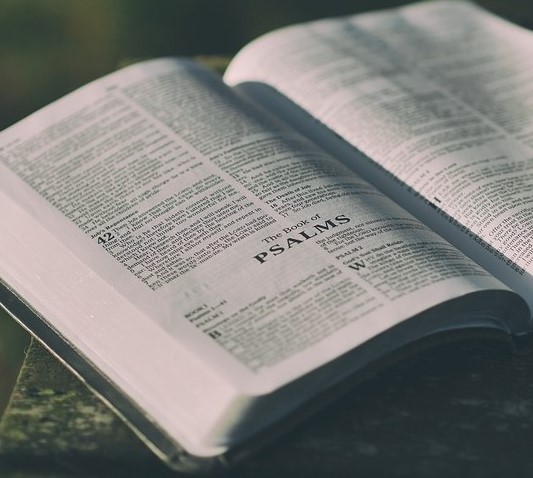
To anyone who regularly reads the Liturgy of the Hours, some of the psalms seem downright boastful. They sound too much like the Pharisee who went to pray and said, God, I thank you that I am not like other people — robbers, evildoers, adulterers — or even like this tax collector. I fast twice a week and give a tenth of all I get (Luke 18:11-12). In the very next verse, Jesus recommends a briefer prayer for us: God, have mercy on me, a sinner (Luke 18:13).

How, then, are we to understand some of the psalms that seem to take up a rather boastful and presumptuous tone? Consider these three passages:

  • The Lord has dealt with me according to my righteousness; according to the cleanness of my hands he has rewarded me. For I have kept the ways of the Lord; I am not guilty of turning from my God. All his laws are before me; I have not turned away from his decrees. I have been blameless before him and have kept myself from sin. The Lord has rewarded me according to my righteousness, according to the cleanness of my hands in his sight (Psalm 18:21-24).
  • My heart is not proud, Lord, my eyes are not haughty; I do not concern myself with great matters or things too wonderful for me. But I have calmed and quieted myself, I am like a weaned child with its mother; like a weaned child I am content. (Psalm 131:1-4).
  • I have kept my feet from every evil path so that I might obey your word. I have not departed from your laws, for you yourself have taught me … therefore I hate every wrong path (Psalm 119:100-102).

For us who would pray these, the spiritual approach is twofold.

These psalms are prayed in hope. While we are not worthy to say such words without a lot of qualifications, by God’s grace they will one day be true for us. God is drawing us to perfection. While total perfection will not come until we attain Heaven, if we are faithful we should be progressing toward this lofty reality even now.

Hope is the confident expectation of God’s help in attaining holiness and salvation. One day in Heaven we will be able to say, “I do not sin; I am blameless before God. I am not proud and never depart from your decrees, O Lord.” Hope is the vigorous expectation that these words will one day apply to us fully; for now, we recite them in that fervent hope.

In effect, we are memorizing our lines for a future moment, when by God’s grace we will actually be able to recite them truthfully. Praying psalms like these is like a dress rehearsal for Heaven. These psalms amount to prolepses of a sort, whereby we proclaim a future reality as if it were already present. Our confidence to speak proleptically is in Christ alone.

These psalms are on the lips of Christ. When the Church prays, Head and members pray together; it is the whole Body of Christ that proclaims these psalms.

Christ never wavered, never drew back from God’s Law. He never sinned; His hands were clean from defilement and He was rewarded for His righteousness. Christ alone prays these psalms without any qualification.

In the Old Testament, these psalms pointed forward to the Christ, to the anointed Messiah. Today, they still point to Christ and He alone utters them authentically. None of us can really pray them apart from Christ, as members of His Body.

Even the perfected in Heaven cannot pray them without reference to Christ, for it is He who accomplished in them the perfection that makes such psalms a reality for them.

It is Christ who prays these psalms, and we—through Him, with Him and in Him—head and members—are praying them to the Father.

Without Christ, such psalms amount to haughty boasts and presumptuous declarations, but with Christ our Head, they are true; we can rightly pray them in the hope of our own perfection, one day, by His grace. We can also pray them in the joy that some of our brothers and sisters in Heaven have already attained to the perfection described therein. This is because the grace of Christ has had in them its full effect.

Was There an Eclipse on Good Friday?

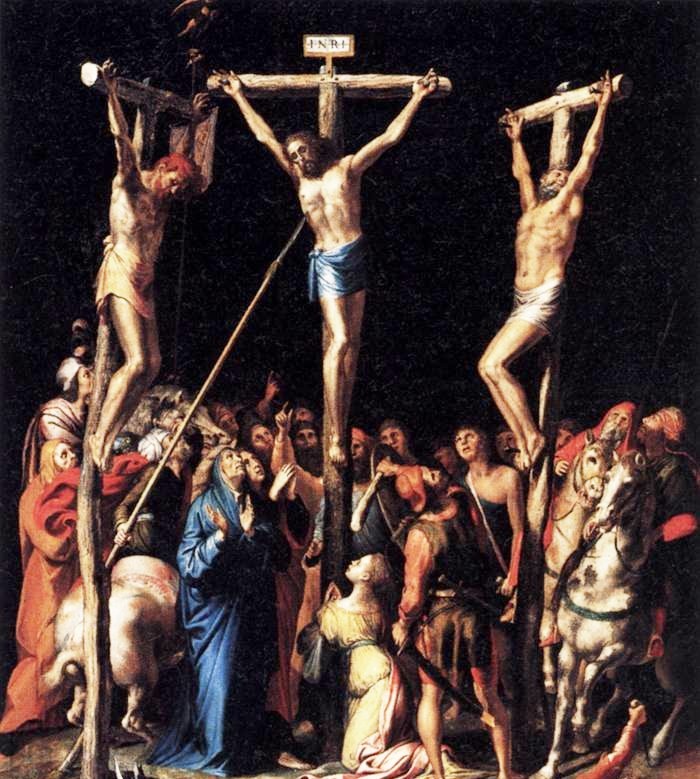
With the solar eclipse that occurred Monday, it occurred to me to consider the darkening of the sun that occurred when Jesus was on the Cross. Though some wish to explain it scientifically (as an eclipse), there may have been more at work than mere astronomy.

In Luke 23:44, we read, It was now about the sixth hour, and there was darkness over the whole land until the ninth hour (i.e., from noon until 3:00 PM).

Although this seems to describe a solar eclipse, it isn’t appropriate to insist that it was an eclipse (at least as we define the term today). Matthew, Mark, and Luke all speak to the darkness of that day using the Greek term σκότος (skotos), meaning simply “darkness.” Only Luke went on to state the reason for the darkness: the sun was darkened (Luke 23:45). He even used the Greek word ἐκλιπόντος (eklipontos), from which the word “eclipse” was derived. In Greek, however, the word eklipontos simply means “darkened,” whereas our word “eclipse” refers to a darkening as a result of the moon blocking the light of the sun. But that is not necessarily, or even likely, what Luke meant here.

As a general rule, we should avoid applying a scientific meaning to a text that is more specific than the author intends. That there was darkness over the land from noon until three is certainly attested to in the sacred texts, but the cause of that darkness is not definitively stated to be an eclipse, at least not as we use the term today. Perhaps God made use of other natural causes, such as very heavy clouds, to cause the light of the sun to dim. It is also possible that the darkness was of purely supernatural origin and was experienced only by some of those present.

Trying to explain the darkness simply in terms of the laws of science risks doing a disservice to the text by missing its deeper meaning: that the darkness of sin had reached its zenith. Whatever the physical mechanism of the darkness, its deepest cause was sin and evil.

Jesus said elsewhere, “This is the judgment: Light has come into the world, but men loved darkness instead of light because their deeds were evil” (Jn 3:19). Referring to His passion, He also said, “Night is coming, when no one can work” (Jn 9:4). And when Judas left the Last Supper to betray Jesus, John observed simply and profoundly, “And it was night” (Jn 13:30). Yes, deep darkness had come upon the world.

Some also question whether the occurrence of darkness on that day has any “basis in fact” or whether the biblical accounts are mere theologizing. Although a few modern scholars consider the reference to be a mere literary device, there seems little reason to doubt that it actually occurred. While some refer to a purported Letter of Pontius Pilate to Tiberius verifying it, the letter’s historical veracity is highly disputed.

Yet it is recorded in three of the gospels (Matthew, Mark, and Luke) and most of the Fathers of the Church treated the darkness as historical.

That said, how many people experienced the darkness and how deep it was, is not clearly specified. We should balance accepting its historical accuracy with an appreciation that the biblical texts are restrained in terms of precise details and were written with a theological purpose more so than to provide a detailed description.

Follow this link to see “Solar Eclipse 2017 Explained

Iceland Is Not Alone in “Freezing Out” the Disabled

Most of you have probably heard or read the reports trumpeting the “eradication” of Down syndrome in Iceland). The problem is that what is being termed “eradicating” the “problem” actually means that those with Down syndrome are being put to death. The celebratory language is all too similar to the way we once spoke of wiping out malaria by killing infected mosquitoes. But of course children in the womb are not mosquitoes; they are human beings, love and willed by God. Imagine saying that we had eradicated malaria by killing every person who had it!

A low point in the article linked above comes at the end, when a proponent of aborting babies who likely have Down syndrome is quoted as saying,

“We don’t look at abortion as a murder. We look at it as a thing that we ended. We ended a possible life that may have had a huge complication … preventing suffering for the child and for the family. And I think that is more right than seeing it as a murder—that’s so black and white. Life is gray.”

Well, pardon me for considering murder to be so black and white! One minute a heart is beating heart, the next minute it’s not. The “thing” that you ended is a human life. Calling such a child a “possible life” is scientifically dishonest. A beating heart does not exist in something that is possibly alive; he or she is alive. No linguistic gymnastics can legitimately describe the situation otherwise.

Further, “preventing suffering” by killing the patient is an illustration of the twisted logic of the culture of death. Death is the increasing being proposed as the solution to today’s problems. If you—or more perniciously, “we”—decide that your life is not worth living, we will kill you and call ourselves compassionate for doing so.

The greatest tragedy in all of this is that we veto the gift of God. Some of God’s gifts come in paradoxical packages; those with disabilities and special needs have much to teach us and many ways to bless us. Without them we may never reach our full humanity, which is meant to include compassion, humility, reverence, and respect. Not one of us is perfect. All of us have difficulties that require support from others. When we forget or reject this we lose an important aspect of our humanity: interdependence.

Iceland is not alone in this; much of the rest of the world has also refused to accept the disabled into our communities.

Here in the United States, this is perhaps most sadly evidenced by the fact that more than 90% of unborn children with poor prenatal diagnoses are aborted. Perhaps the parents are informed that their child will have Down syndrome or a birth defect that will lead to a lifetime of challenges and an early death.

The pressure placed on such families to abort is often enormous. They are told, “It’s the right thing to do,” or, “You shouldn’t make your child suffer.” Some are even made to feel that they are doing something unethical by bringing forth such children. In addition, parents are often pressured to make a decision quickly; doctors may want the decision to terminate made within a matter of days.

Is there such a thing as a life not worth living? Many in our culture seem to believe that there is. A “therapy” increasingly proposed in today’s culture of death is killing the patient in order to solve the “problem.” People, it would seem, do not have problems, they are the problem, and thus their elimination makes the problem go away. Never mind that a human person of inestimable value is actually killed … Problem solved! Thus has arisen idea that an appropriate “treatment” for disabled unborn children is to kill them. Of course death is neither a treatment nor a therapy; it cannot be considered an acceptable solution for the one who loses his or her life. Yet this is often the advice given to parents faced with this situation.

All of this “advice” and pressure goes a long way toward explaining the dismal abortion rates of the potentially disabled unborn. We in the Church cannot remain silent in the face of this; we must reach out compassionately to families experiencing such a crisis. Many of them are devastated by the news that their baby may have serious disabilities. Often they descend into shock and are overwhelmed by fear, conflicting emotions, and even anger toward God or others. Sometimes the greatest gifts we can give them are time, information, and the framework of faith. Simply considering some of the following may help:

  1. Despite what parents are told, there is no rush. Serious, life-changing decisions should never have to be made within a short period of time. Pressure should not be applied to families (by medical personnel or others) in order to force a quick decision; doing so is a grave injustice.
  2. Prenatal screenings are not always accurate. We often think of medicine as an exact science; it is not. Data can be misinterpreted and predictions can be wrong. Further, there is a difference between the result of a screening and an actual diagnosis. A screening can point to a potential problem and assess its probability, but it is not a definitive diagnosis. Further study is always called for if a screening indicates a possible issue. Sometimes, further testing reveals that in fact there isn’t a problem at all.
  3. As Pope Francis has pointed out, disabilities are not always as terrible as we, in our insistence on perfection, might imagine. Many people with disabilities live very full lives and are tremendous gifts to their families, the Church, and the world. Providing families with more information about disabilities and connecting them with other families who have experience is essential in helping them to avoid the doomsday mentality that can easily set in.
  4. It is vital to connect the faithful with the most basic truths of our Christian faith. To the world, the cross is an absurdity, but to those of the Christian faith it brings life and blessings in spite of the pain. Were it not for our crosses, most of us could never be saved. Raising a disabled child is not easy, but God never fails. He can make a way out of no way; He can do anything except fail. My own sister, Mary Anne, was mentally ill and carried a cross. We, her family, had a share in that cross. But Mary Anne brought blessings to us as well. In fact, I don’t know if I’d be a priest today if it had not been for her. I’m sure that I wouldn’t be as compassionate and I doubt that I could be saved were it not for the important lessons Mary Anne taught me. I know that she brought out strength and mercy, not to mention humility, from all of us in the family. Her cross and ours brought grace, strength, and many personal gifts to all of us. The cross is painful, but it brings life as well. Easter Sunday is not possible without Good Friday. Yes, to the world the cross is an absurdity. To us who believe, it is salvation, life, and our only real hope; it is our truest glory to carry it as Christ did.
  5. Disability is not an all-or-nothing proposition; it exists on a continuum. All of us are disabled in some way. Some have serious weight problems; others are diabetic, have high blood pressure, or experience heart problems. Some are intellectually challenged. Others struggle with anxiety, depression, addiction, or compulsion. Some experience a loss of mobility as a result of an accident or just due to the aging process. The fact is, all of us have abilities and disabilities. Some disabilities are more visible than others; some are more serious than others. In most cases, though, we are able to adjust and still live reasonably full lives. We may not be able to do all that we would like, but life still has blessings for us. And even our weaknesses and disabilities can, and do, bring us blessings by helping to keep us humble. How much disability is too much? Can we really be the judge of that? Can we really decide for someone else that his or her life is not worth living?
  6. Life is often not what it seems. In this world, we value things like wealth, ability, strength, and power, but God is not all that impressed by these sorts of things. He has a special place for the poor and the humble. The Lord has said that many who are last in this life will be first in the next (cf Mat 19:30). There is a great reversal coming, wherein the mighty will be cast down and the lowly raised up. We may look upon those who suffer disability with a misplaced sense of pity, but they are going to be the exalted ones in the kingdom of Heaven. As we accept the disabled and the needy in our midst, we are accepting those who will be royalty in Heaven. We ought to learn to look up to them, to beg their prayers, and to hope that hanging on their coattails may help us to attain some of the glory they will enjoy. The world may refuse to see their dignity, but we who believe cannot fail to remember that the last shall be first. Yes, life is not always what it seems.

What about those who aborted their babies? We as a Church cannot avoid our responsibility to declare the dignity and worth of the disabled. More than ever, our world needs the Church’s testimony, for this 90% statistic is a startling one. But even as we witness to the dignity of the disabled and to the wrongness of abortion, we must also embrace those who chose abortion and now struggle with having made that decision. We are called to reconcile and to bring healing to all who have faced this crisis and fallen. Many were pressured and felt alone and afraid. We offer this embrace through confession and through healing ministries like Project Rachel, which offers counseling, spiritual direction, support groups, and prayer services. Even as the Church speaks out against abortion, she must also reconcile those who have fallen under the weight of these heavy issues.

Tomorrow I will write a little bit more on this topic and present a parable of sorts.

Here are some resources for more information:

National Catholic Partnership on Disability
Project Rachel (Post-abortion healing)
Be Not Afraid (Outreach to parents who have received a difficult prenatal diagnosis)
Parental Partners for Life (Support information and encouragement for carrying to term after receiving an adverse prenatal diagnosis as well as support for raising a child with special needs)

While on Others Thou Art Calling, Do Not Pass Me By – A Homily for the 20th Sunday of the Year

The Gospel this Sunday teaches us to pray always and not to lose heart. It is about being tenacious in prayer, continuing to beseech the Lord even when the results are discouraging. It is also about the Lord’s will to extend the Gospel to all the nations and to make the Church truly catholic.

Let’s look at this Gospel in five stages.

TRAVELS – The text says, At that time, Jesus withdrew to the region of Tyre and Sidon. Jesus goes north of Israel into the territory we know today as Lebanon.

Matthew is not just giving us a quick travelogue here. We are not interested merely in Jesus’ physical location but in what it signifies. Jesus has gone up north to pagan territory. Other things being equal, this is a rather odd destination for a Jewish preacher, but remember that Jesus is preparing the Church for a mission to all the nations. Thus it makes sense that He pushes the boundaries of the Jewish world. Jesus interacted with Gentiles and Samaritans as if to say, “The racism of a Jewish-only world must now end. The Gospel must break the boundaries of nations and races and be truly universal, truly catholic.”

This vision of the Gentiles being drawn to the Lord was actually well attested to in the Old Testament, but just as is the case today, there were some texts that were well known and others that were conveniently “forgotten” or had little effect. Consider these passages that announced the entry of the Gentiles into the Holy People of God:

  1. The foreigners who join themselves to the LORD, ministering to him, loving the name of the LORD, and becoming his servants–all who keep the sabbath free from profanation and hold to my covenant, them I will bring to my holy mountain and make joyful in my house of prayer; their burnt offerings and sacrifices will be acceptable on my altar, for my house shall be called a house of prayer for all peoples (Is 56:6-9).
  2. I will give you as a light to the nations, that my salvation may reach to the end of the earth (Is 49:6).
  3. Babylon and Egypt I will count among those who know me, Philistia, Tyre and Ethiopia, these will be her children and Zion shall be called “mother” for all shall be her children (Psalm 87:4-5).
  4. I come to gather nation of every language; they shall come and see my glory. Some of these I will take as priests and Levites says the Lord … All mankind shall come to worship before me says the Lord (Is 66:18; 23).

Hence we can see that the Jewish people’s own Scriptures spoke of a day when Jews and Gentiles together would worship the Lord and be His people.

This introductory note about Jesus’ location is essential to understanding the rest of the Gospel passage. We must grasp Jesus’ will to reach out to the Gentiles. We do this in order to appreciate that some of the harsh tone Jesus exhibits later can likely be understood as a rhetorical means of questioning racial and national divisions rather than affirming them. In effect, He is tweaking His disciples and the Church, giving voice to their fears and hostilities. In so doing, He also calls out the Canaanite woman in order to show forth one who is willing to set aside these racist notions for a greater good.

Let’s watch it unfold.

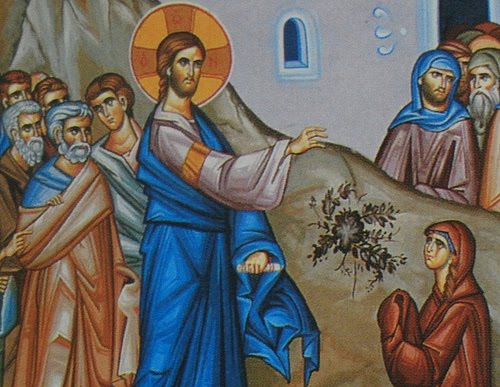
TORMENT – The text says, And behold, a Canaanite woman of that district came and called out, “Have pity on me, Lord, Son of David! My daughter is tormented by a demon.”

Canaanites were despised by Jews and Jews were despised by Canaanites. What is it that would make a Canaanite woman reach out to a Jewish Messiah? In a word, desperation. She no longer cares who helps her daughter as long as someone helps her!

She has likely heard of Jesus’ power to save and heal. She looks past her racial hatred and, risking terrible rebuke, calls on Jesus. Her torment enables her to cross boundaries. The only enemy she cares about is the demon afflicting her daughter.

It is sad but true that a common enemy can often unite disparate factions. It should not be necessary, but the Lord will take whatever He can get in order to unite us.

TEST – The text says, But Jesus did not say a word in answer to her. Jesus’ disciples came and asked him, “Send her away, for she keeps calling out after us.” He said in reply, “I was sent only to the lost sheep of the house of Israel.” … “It is not right to take the food of the children and throw it to the dogs.”

Jesus does a shocking and daring thing here. He takes up the voice of sin, oppression, racism, and nationalism. It is a very strange to hear such a thing from the mouth of the Lord, who has already journeyed among the Samaritans and Gentiles, healing them and often praising their faith (e.g., Lk 8:26; Mt 8:10; Lk 7:9; Matt 8:11 inter al).

The usual explanation is that Jesus is calling out the woman’s faith and through her is summoning His disciples to repentance. The disciples want the Lord to order her away. In effect, He takes up their voices and the voice of all oppression and utters the hateful sayings of the world, even going so far as to liken her to a dog.

Yes, Jesus is testing her, trying to awaken something within her. He is also giving voice to the ugly thoughts of His disciples and likely others, both Gentile and Jew, who were watching with disdain the interaction between a Gentile—a Gentile woman—and a Jew.

There is a saying, “Things do, by opposition grow.” Through this test, Jesus increases the woman’s faith and possibly that of the bystanders. Just as an athlete improves by facing tougher opponents and a musician improves by playing more difficult pieces, so does this woman grow in faith by being tested.

Remember, God tested Abraham, Jacob, Joseph, Job, Esther, Susannah, Judith, Gideon, and countless others. The Canaanite woman, too, is being tested. Like those of old, she, too, will grow by the test.

We are tested as well. At times, God seems to be strangely silent; we may feel as if we are no child of God at all. Indeed, we may even conclude that dogs live better than we do.

Will we give way during the test or hold out until our change comes? Will our faith grow or wither? Will our love grow stronger or will it change to resentment?

TENACITY – The text says, But the woman came and did Jesus homage, saying, “Lord, help me.” She said, “Please, Lord, for even the dogs eat the scraps that fall from the table of their masters.”

Note here that the woman is not put off. Whatever anger, grief, or discouragement she may feel, she perseveres.

She is even bold and creative. In a sense, she will not take no for an answer.

  1. She is like Mother Mary at Cana, who did not pause for a moment when Jesus seemed dubious of her request (Jn 2:5).
  2. She is like the widow who never stopped pestering the judge for a favorable ruling (Lk 18:1-8).
  3. She is like the blind man at the side of the road who kept calling for Jesus despite the rebuke of the crowds (Lk 18:39).
  4. She is like the parents who brought their infants to Jesus for a blessing, who withstood rebuke from the disciples and won through to the blessing (Mk 10:13-16).
  5. She is like Zacchaeus, who overcame his short stature by climbing a tree to see Jesus (Lk 19:1ff).
  6. She is like the widow with the hemorrhage, who, though weak and ritually unclean, pressed through the crowd and grabbed the hem of Jesus’ garments (Mk 5:28).
  7. She is like the lepers, who, though forbidden by law to enter the town, sought the Lord at the Gates and fell down before Him (Luke 17).

Yes, she is tenacious. She will hold out until the change (the healing she desires for her daughter) is accomplished. She will not give up or let go of Jesus no matter how unwilling He seems, no matter how politically incorrect her request appears, no matter how much hostility she encounters from the disciples, the crowds, or even Jesus Himself. She will hold out.

Here is a woman with tenacity! How about you?

TRIUMPH – The text says, Then Jesus said to her in reply, “O woman, great is your faith! Let it be done for you as you wish.” And the woman’s daughter was healed from that hour.

Here is the victory. She has gone from torment to triumph by a tenacious and tested faith. Jesus now takes away the veil of His role and shows His true self—the merciful, wonder-working Messiah and Lord.

Jesus says to her, “Great is your faith.” But how has it become so? In the crucible of testing, that’s how. We may wonder at God’s delays, at His seeming disinterest or even anger, but in the end it is our faith that is most important to Him.

Our faith is more important to God than our finances, our comfort, or our desired cures, for it is by faith that we are saved. We are not saved by our health, by creature comforts, by money, or by good fortune. God is willing to delay. He is willing to test us and try us, if only for the sake of our stronger faith, by which He will save us. God saves us, but He does it through our faith.

Why all this delay? Why the suffering? Why the trials? Stronger faith, that’s why! God may not come when you want Him, but He’s always right on time, for His true goal is not to give us what we want, but rather what we need: stronger faith.

Having done this, the Lord gives her the triumph. We, too, must accept that God’s truest blessing for us is not better health or improved finances; it is stronger faith.

Consider well the lesson of this Gospel. Though God often seems uninterested—even cruel—He is working His purposes out and seeking to increase our faith. Hard, you say? What parent among you has not had to do the same for your child? For children, untested and untried, who get their every wish, who never have to wait, become spoiled, self-centered, and headed for ultimate ruin. God knows exactly what He is doing. Most of us are hard cases and God must often work mightily to get our attention and strengthen our faith. Do not give up on God; He is up to something good, very good.

I have it on the best of authority that as this woman saw Jesus coming up the road she sang this song:

Pass me not O gentle savior
hear my humble cry
while on others thou art calling
do not pass me by

Savior, savior,
hear my humble cry
while on others thou art calling
do not pass me by

Let me at a throne of mercy
find a sweet relief
kneeling there in deep contrition
help my unbelief.

On the Sin of Rash Judgment, as Seen in a Commercial

judgement-susannah-sin

judgement-susannah-sin

One of the most commonly committed—yet least often confessed—sins, is that of rash judgment. The commercial below humorously depicts the sin and how wrong we can sometimes be.

In reality, the sin is not often humorous and can lead us to some very dark places. On account of rash judgments, we may harbor grudges, resentments, fears, and unjust anger. We may allow it to foster pride, feeling ourselves superior to others. We may even seek revenge based on misinformation or as a result of misinterpretation of others’ actions. And gossip is usually the daughter (or son) of rash judgment.

St. Thomas speaks of rash judgment in this way: When the human intellect lacks certainty, as when a person, without any solid motive, forms a negative judgment on some doubtful or hidden matter, it is called judgment by suspicion or rash judgment (Summa Theologica, Quest. 60, art 2).

Fr. John Hardon defines it in this way: Rash judgment is unquestioning conviction about another person’s bad conduct without adequate grounds for the judgment. The sinfulness of rash judgment lies in the hasty imprudence with which the critical appraisal is made, and in the loss of reputation that a person suffers in the eyes of the one who judges adversely (Modern Catholic Dictionary, John A. Hardon, S.J.).

The Catechism places rash judgment in the context of our obligation to preserve the good reputation of others:

Respect for the reputation of persons forbids every attitude and word likely to cause them unjust injury. He becomes guilty

of rash judgment who, even tacitly, assumes as true, without sufficient foundation, the moral fault of a neighbor;

of detraction who, without objectively valid reason, discloses another’s faults and failings to persons who did not know them;

of calumny who, by remarks contrary to the truth, harms the reputation of others and gives occasion for false judgments concerning them.

To avoid rash judgment, everyone should be careful to interpret insofar as possible his neighbor’s thoughts, words, and deeds in a favorable way (CCC 2477-2478).

All this said, rash judgment is often committed out of weakness. Our minds are weak and we often lack the patience or determination to carefully discern the whole truth. Sometimes we commit this sin because of past hurts or the general climate of cynicism that permeates our culture.

On account of these roots in weakness, the necessary antidote is humility and an understanding that in most cases we do not have all the facts at our disposal immediately. In fact, there are many situations in which we may never have all the facts. In humility, we should presume benign intent in uncertain matters unless and until the facts indicate otherwise.

In today’s world of 24×7 information at our fingertips, we are encouraged to make quick judgments. News outlets often rush to provide “analysis” before many of the facts are known. When “experts” speak from the anchor’s desk, their statements can seem quite credible when, in fact, they are often little more than rash judgments.

Be very careful. Rash judgment, especially when shared with others, can do a lot of damage. It is not a sin to be taken lightly, even if it is often committed in weakness.

Perhaps, then, a little humor will make the point. In this commercial, a man with all the best of intentions appears to be guilty of the worst intentions. Enjoy.

Why and How Does Satan Roam the Earth?

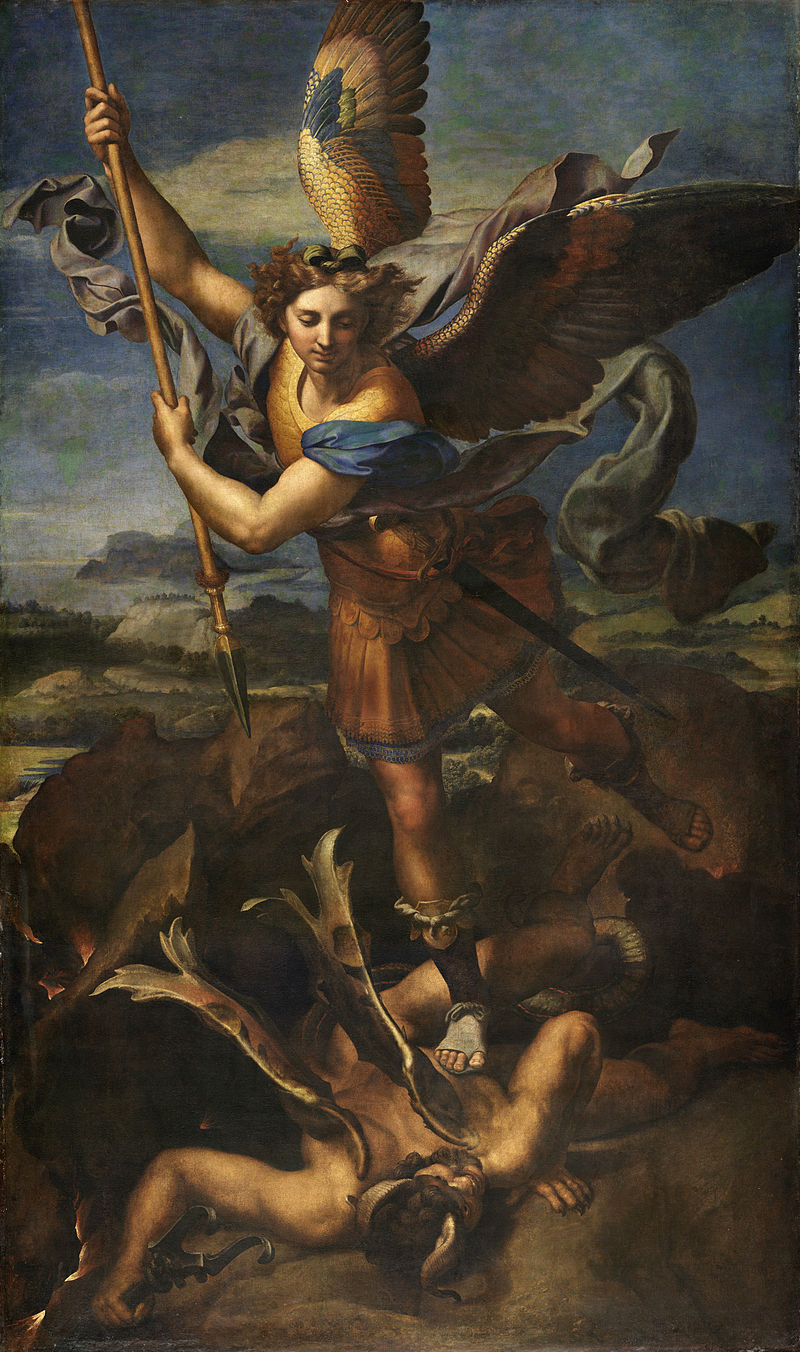
One of the more puzzling aspects of demonology is the freedom that Satan and demons appear to have in roaming the earth, causing trouble. If the condemned are consigned to Hell for all eternity, why is Satan allowed to wander about outside of Hell? Isn’t he supposed to be suffering in Hell along with his minions and the other condemned? Further, it doesn’t seem that he is suffering one bit, but rather having a grand time wreaking havoc on the earth. How do we answer such questions?

Some texts in Scripture do speak of Satan and the fallen angels as being cast into Hell:

  • God did not spare angels when they sinned, but sent them to hell, putting them in chains of darkness to be held for judgment (2 Peter 2:4).
  • And the angels who did not keep their positions of authority but abandoned their proper dwelling—these he has kept in darkness, bound with everlasting chains for judgment on the great Day (Jude 1:6).
  • Then I saw an angel coming down from heaven, holding in his hand the key to the bottomless pit and a great chain. And he seized the dragon, that ancient serpent, who is the devil and Satan, and bound him for a thousand years, [likely a reference to the age of the Church and the going forth of the Gospel to all the nations] and threw him into the pit, and shut it and sealed it over him, so that he might not deceive the nations any longer, until the thousand years were ended. (Rev 20:1-3).

Yet other texts speak of the fallen angels (demons) as being cast down to the earth:

  • But the dragon was not strong enough, and no longer was any place found in heaven for him and his angels. And the great dragon was hurled down—the ancient serpent called the devil and Satan, the deceiver of the whole world. He was hurled to the earth, and his angels with him (Rev 12:8-9).
  • The LORD said to Satan, “Where have you come from?” Satan answered the LORD, “From roaming throughout the earth, going back and forth on it” (Job 1:7).

Thus, though consigned to Hell, it would seem that some or all of the demons have the ability to roam the earth as well. Demons, however, do not have bodies and thus do not “roam the earth” the way we do. Their “roaming” is more an indication of their capacity to influence than their ability to move from one place to another. Further, Satan and demons are described as being “chained,” “in prison,” or “in darkness.” This is likely a way of indicating that their power to influence or “roam” is limited in some way. This does not say that they do not wield considerable power, just that it is not unbounded. If you think it is bad now, just imagine what it will be like when their power is unchained!

Near the end of the world, Scripture says that Satan will be wholly loosed and will come forth to deceive the nations for a while; after this brief period, he and the other fallen angels will be definitively cast into the lake of fire and their influence forever ended.

And when the thousand years are ended, Satan will be released from his prison and will come out to deceive the nations that are at the four corners of the earth, … their number is like the sand of the sea. And they marched up over the broad plain of the earth and surrounded the camp of the saints and the beloved city, but fire came down from heaven and consumed them, and the devil who had deceived them was thrown into the lake of fire and sulfur where the beast and the false prophet were, and they will be tormented day and night forever and ever (Rev 20:7-10).

So for now, demons do have influence, but it is limited. At the end, their full fury will be unleashed, but this is only to bring about their final, complete defeat, after which they will be forever sequestered in the lake of fire.

Why God permits some demons the freedom to wander about the earth is mysterious. We know that God permits evil as a “necessary” condition of freedom for the rational creatures He has created. Angels and humans have free, rational souls; if our freedom is to mean anything, God must allow that some abuse it, even becoming sources of evil and temptation to others.

For us, this life amounts to a kind of test: God permits some degree of evil to flourish yet at the same time offers us the grace to overcome it. Further, there is the tradition implied in Scripture that for every angel that fell there were two who did not (Rev 12:4). Thus, we live not merely under the influence of demons, but also under the influence and care of angels.

On account of temptations and trials, our “yes” to God has greater dignity and merit than it would if we lived in a sin-free paradise.

As to Satan having “a good time” wreaking havoc, it would be too strong say that demons and Satan do not suffer at all. Demons, like human beings, suffer both victories and defeats; there are outcomes that delight them and those that disappoint and anger them.

Anyone who has ever attended an exorcism can attest that demons do suffer great deal, especially when the faithful pray and make pious use of sacraments and sacramentals (e.g., holy water, relics, blessed medals, rosaries). Faith and love are deeply disturbing to demons.

We all do well in the current dispensation to remember St. John Vianney’s teaching that Satan is like a chained dog: He may bark loudly and froth menacingly, but he can only bite us if we get too close. Keep your distance!

While these videos are light-hearted, their message is serious:

A Short Reflection on Beauty

It is common to link the good, the true, and the beautiful; this is proper because truth is beautiful and a very high good. But as with most insights, some distinctions are necessary, because while truth is always beautiful, not everyone or everything that appears to be beautiful is thereby true.

St. Augustine comments on this, saying,

Beauty is indeed a good gift of God; but that the good may not think it a great good, God dispenses beauty even to the wicked (The City of God, XV, 22).

Essentially, St. Augustine is distinguishing physical beauty from spiritual beauty, teaching us that we can become too focused on lesser beauty and thereby neglect higher beauty and goods.

Physical beauty, though defined somewhat differently by different people, does exist and is a gift of God to behold. It is possible, however, to esteem it too much, failing to realize that spiritual beauty — truth, goodness, holiness, and God Himself — is a far greater gift. God signals the limits of physical beauty by sometimes bestowing it on those who seem undeserving, in order to teach us that it is a limited and often transitory good.

Scripture cautions, Charm is deceptive and beauty is fleeting, but a woman who fears the Lord is praised (Proverbs 31:30). Both men and women are cautioned that charm and physical beauty, while pleasant, can easily deceive us into concluding too much. In our highly visual and noisy culture we are too easily influenced by the views of movie stars, singers, sports figures, and others among the cultural elite. Swayed by the fact that they are attractive, or sing beautifully, or act well, we too easily ascribe intellectual and moral authority to them which they have not merited.

St. Augustine continues,

And thus beauty, which is indeed God’s handiwork, but only a temporal, carnal, and lower kind of good, is not fitly loved in preference to God, the eternal, spiritual, and unchangeable good.

The problem is not with beauty but with us.

So, Augustine adds,

When the miser prefers gold to justice, it is through no fault of the gold, but of the man; and so with every created thing.

Enjoy the good things of God, but never in preference to the very God who made them. In our fallen condition, we are easily deceived by beauty. As St. Augustine notes, the problem is not in the beauty; the problem is in us. Stay sober, my friends!

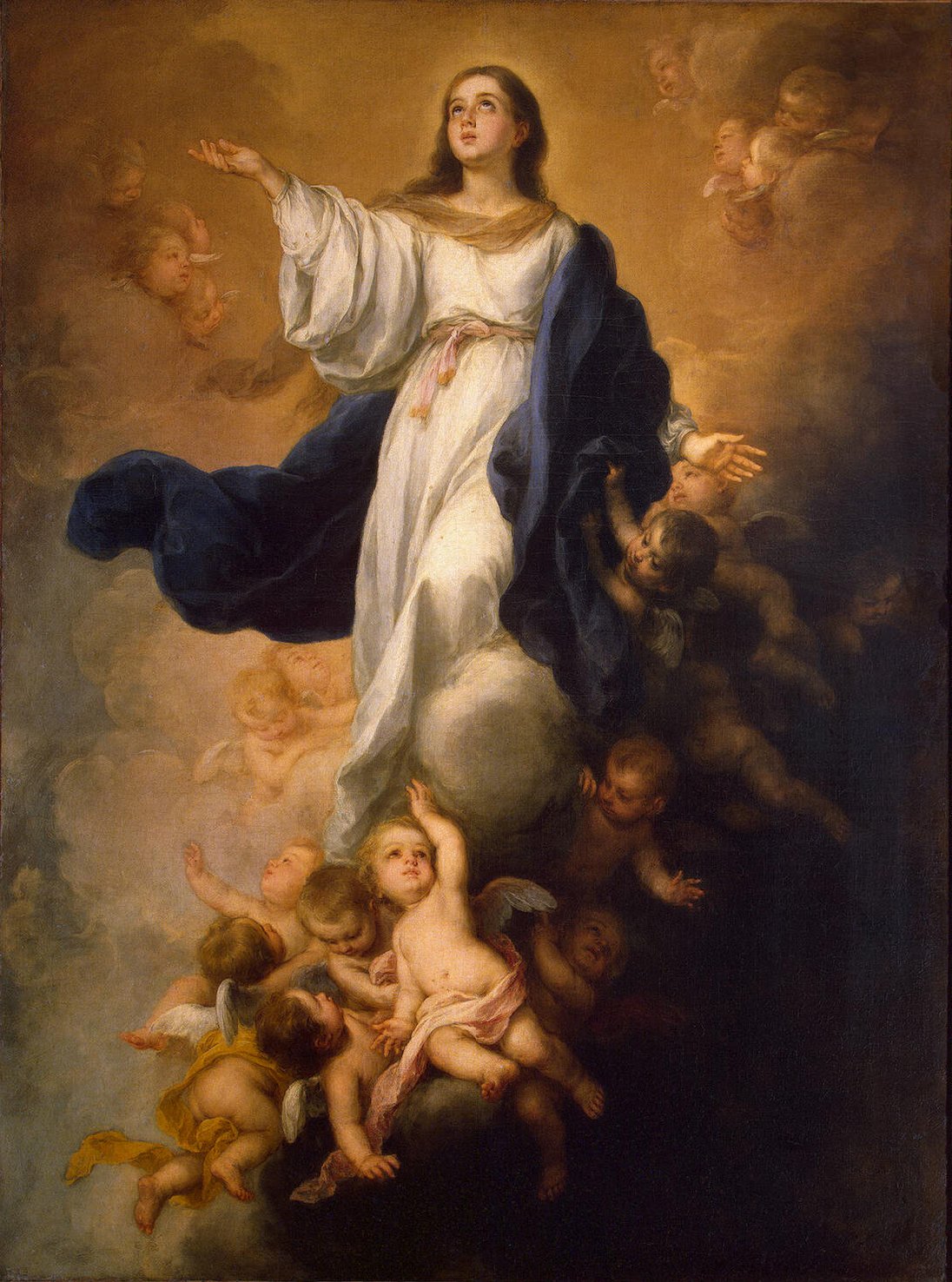
The Biblical Roots of the Assumption of Mary

While the actual event of the Assumption of Mary into Heaven is not recorded in the Scriptures, there is a biblical basis for the teaching that, considered as a whole, confirms Catholic teaching as both fitting and in keeping with biblical principles. Let’s ponder this feast in stages:

The Assumption Explained To be “assumed” means to be taken up by God bodily into Heaven. As far back as the Church can remember we have celebrated the fact that Mary was taken up into Heaven. We do not just acknowledge that her soul was taken to Heaven, as is the case with the rest of the faithful who are taken there (likely after purgation); rather, Mary was taken up, soul and body, after her sojourn on this earth was complete. There is no earthly tomb containing her body, neither are there relics of her body to be found among the Christian faithful. This is our ancient memory and what we celebrate today, Mary was taken up, body and soul, into Heaven.

The Assumption Exemplified – While Mary’s Assumption is not described in Scripture, several other “assumptions” are; thus the concept itself has a biblical basis. The actual event of the Assumption is not described in Scripture. However, there are “assumptions” recorded in the Scriptures and thus the concept is biblical.

EnochEnoch walked with God; then he was no more, because God took him away (Gen. 5:24). By faith Enoch was taken up so that he should not see death; and he was not found, because God had taken him. Now before he was taken he was attested as having pleased God (Hebrews 11:5).

ElijahAnd as they still went on and talked, behold, a chariot of fire and horses of fire separated the two of them. And Elijah went up by a whirlwind into heaven … And he was seen no more (2 Kings 2:11).

Moses – Some say that because the location of Moses’ grave is not known, he too was taken up into Heaven. We read in Monday’s first reading at daily Mass: He was buried in Moab, in the valley opposite Beth Peor, but to this day no one knows where his grave is (Dt. 34:6). The text of course does not say that his body was taken up, and if it was, it occurred after death and burial. The Book of Jude hints at this: But even the archangel Michael, when he was disputing with the devil about the body of Moses … (Jude 1:9). Some further credibility is lent to the view of Moses being assumed by the fact that he appears with Elijah in the account of the Transfiguration. Some of the Church Fathers also held this opinion. Further, there is a Jewish work from the 6th century A.D. entitled The Assumption of Moses. In the end, though, the assumption of Moses is not officially held by the Church.

The Assumption Evidenced (John Sees Mary in Heaven) There is one other scriptural account that may provide evidence of Mary’s whereabouts. Today’s second reading, a passage from the Book of Revelation, features John’s description of his sighting of the ark of God:

Then God’s temple in heaven was opened, and within his temple was seen the ark of his covenant. And there came flashes of lightning, rumblings, peals of thunder, an earthquake and a great hailstorm. A great and wondrous sign appeared in heaven: a woman clothed with the sun, with the moon under her feet and a crown of twelve stars on her head. She was pregnant and cried out in pain as she was about to give birth. Then another sign appeared in heaven: an enormous red dragon with seven heads and ten horns and seven crowns on his heads …. The dragon stood in front of the woman who was about to give birth, so that he might devour her child the moment it was born. She gave birth to a son, a male child, who will rule all the nations with an iron scepter (Rev 11:19 – 12:5).

The woman in the passage is clearly Mary, since the child is obviously Jesus (although she also likely represents Israel and Mother Zion). And where is Mary seen? In Heaven. Some argue that this does not necessarily indicate that her body is in Heaven; they say that it might be referring only to her soul. However, the physical description of her seems rather strong to support such a view.

Others believe that because John mentions the ark and then continues on to describe Mary (the woman clothed with the son), that he is in fact still describing the ark. (I have written on this elsewhere: Mary: The Ark of the New Covenant.) If Mary is the ark described, then she is clearly in Heaven.

So, the Bible, while not specifically recording Mary’s Assumption, does present other assumptions, thus showing it to be a biblical concept. Further, Mary’s physical presence in Heaven seems at least hinted at, if not directly described, in the Book of Revelation.

The Church does not rely solely on Scripture. In this case, what we celebrate is most fundamentally taught to us by Sacred Tradition; the memory of Mary’s Assumption goes back as far as we can remember.

The Assumption Extended to Us The Feast of the Assumption is of theological interest and provides matter for biblical reflection, but eventually these questions are bound to arise: So what? How does what happened to Mary affect my life? What does it mean for me? The answers are bound up in nearly every Marian doctrine. Simply put, what happened to Mary will also happen to us in the end. As Mary bore Christ into the world, we bear Him in the Holy Communion we receive and in the witness of His indwelling presence in our life. As Mary is (and always was) sinless (immaculate), so too will we one day be sinless with God in Heaven. As Mary cared for Christ in His need, so do we care for Him in the poor, suffering, needy, and afflicted. Finally, as Mary was assumed, body and soul, into Heaven, so too will we be there one day, body and soul.

After our death and subsequent purification, our soul goes to Heaven; our body, though, lies in an earthly tomb. But one day, when the trumpet shall sound, our body will rise and be joined to our soul.

For we will all be changed—in a flash, in the twinkling of an eye, at the last trumpet. For the trumpet will sound, the dead will be raised imperishable, and we will be changed. For the perishable must clothe itself with the imperishable, and the mortal with immortality. When the perishable has been clothed with the imperishable, and the mortal with immortality, then the saying that is written will come true: “Death has been swallowed up in victory. Where, O death, is your victory? Where, O death, is your sting?” … Thanks be to God. He gives us the victory through our Lord Jesus Christ (1 Cor 15:51-57).

So our bodies shall rise; they shall be assumed and joined to our soul.

Improved model! An older woman once said to me, upon hearing that her body would rise, “Father if this old body has to rise, I’m hoping for an improved model!” Yes, indeed; me too! I want a full head of hair, a slim build, and knees that work! I want an upgrade from this old, general issue model to a luxury edition. In fact, God will do that. Scripture says,

  • He will take these lowly bodies of ours and transform them to be like his own glorified body (Phil 3:21).
  • But someone may ask, “How are the dead raised? With what kind of body will they come?” How foolish! What you sow does not come to life unless it dies. When you sow, you do not plant the body that will be, but just a seed, perhaps of wheat or of something else. But God gives it a body as he has determined, and to each kind of seed he gives its own body …. So will it be with the resurrection of the dead. The body that is sown is perishable, it is raised imperishable; it is sown in dishonor, it is raised in glory; it is sown in weakness, it is raised in power …. And just as we have borne the likeness of the earthly man, so shall we bear the likeness of the man from heaven (1 Cor 15:35-49).
  • I know that my Redeemer lives, and that in the end he will stand upon the earth. And after my skin has been destroyed, yet in my flesh I will see God; I myself will see him with my own eyes—I, and not another’s (Job 19:25-27).

The assumption of our bodies, prefigured by Christ in His own power and also in Mary by the gift of God, will one day be our gift too.

The following song is an African-American spiritual and describes that “great gettin’ up morning” when our bodies will rise. If we have been faithful, our bodies will rise to glory!

I’m gonna tell you about the coming of the judgement (Fare you well) There’s a better day a coming …. In that great gettin’ up morning fare you well! Oh preacher fold your Bible, For the last soul’s converted …. Blow your trumpet Gabriel …. Lord, how loud shall I blow it? Blow it right calm and easy Do not alarm all my people …. Tell them to come to the judgement …. In that great gettin’ up morning fare you well. Do you see them coffins bursting? Do you see them folks is rising? Do you see the world on fire? Do you see the stars a falling? Do you see that smoke and lightning? Do you hear the rumbling thunder? Oh Fare you well poor sinner. In that great gettin’ up morning fare you well.