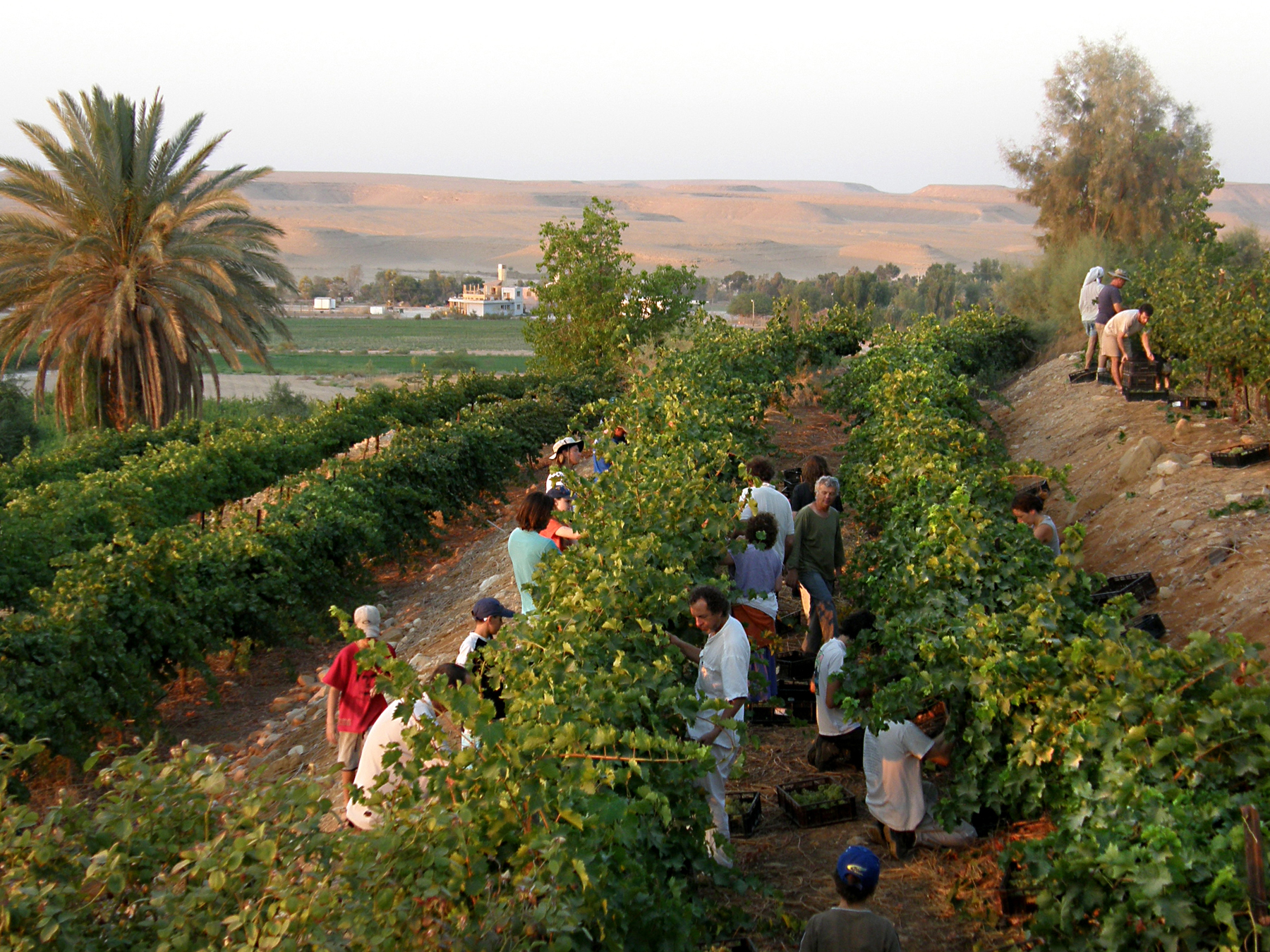
Dimensions of Discipleship – A Homily for the 25th Sunday of the Year

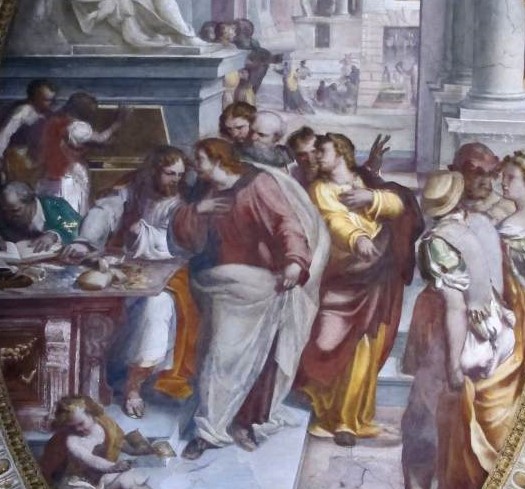
credit: זלדה10, wikimedia

What Jesus teaches in this Sunday’s Gospel is one of those parables that rock our world and challenge our worldly way of thinking. Frankly, that is one of its purposes. We are tempted to side with the laborers who worked the longest, thinking that their being paid the same amount as those who worked only for an hour is unfair.

Think very carefully before asking God to be “fair.” What we really should ask of God is that He be merciful, for if He were fair, we’d all be in Hell right now. We have no innate capacity to stand before God in pure justice; we simply cannot measure up. It is only grace and mercy that will win the day for us. So be very careful about challenging God’s fairness. In fact, when we see Him being merciful to someone else, we ought to rejoice, for it means that we might stand a chance.

There are other aspects of this Gospel that are important to learn from, in particular, the various dispositions of discipleship. As the parable unfolds, we can see five teachings. Let’s consider each in turn.

I.  The AVAILABILITY of Discipleship – The text says, A landowner went at dawn to hire laborers to work in his field … He went later and found others standing idle … “Why do you stand here all day idle?”

What are described here are “day workers” or “day laborers.” These were men who stood in public places hoping to be hired for the day. It was and still is a tough life. If you worked, you ate; if you didn’t, you might have little or nothing to eat. They were hired on a day-to-day basis, only when needed. This is a particularly burdensome form of poverty for its uncertainty and instability. Men like these were and are the poorest of the poor.

Notice, however, that their poverty, their hunger, makes them available. Each morning they show up and are ready, available to be hired. Their poverty also motivates them to seek out the landowner and indicate that they are ready and willing to work. The well-fed and the otherwise employed do not show up; they are not available. There’s something about poverty that makes these men available. Because their cup is empty, it is able to be filled.

We are these men. We are the poor who depend upon God for everything. Sometimes we don’t want to admit it, but we are. Every now and then it is made plain to us how poor, vulnerable, and needy we really are; this tends to make us seek God. In our emptiness, poverty, and powerlessness, suddenly there is room for God. Suddenly our glass, too often filled with the world, is empty enough for God to find room. In our pain we stand ready for God to usher us into the vineyard of His Kingdom. An old gospel song says, “Lord, I’m available to you; my storage is empty and I’m available to you.” It is our troubles that make us get up and go out with the poor to seek the Lord and be available to Him. When things are going too well, heaven knows where we are to be found! Another gospel song says, “Lord don’t move my mountain but give me the strength to climb it. Don’t take away my stumbling blocks but lead me all around, ’cause Lord when my life gets a little too easy, you know I tend to stray from thee.

Yes, we might wish for a trouble-free life, but then where would we be? Would we seek the Lord? Would we make ourselves available to God? Would we ever call on Him?

II.  The AUTHORITY of Discipleship – The text says, The LandOWNER said, “Go into my vineyard” … HE sent them into HIS vineyard.

Notice that it is the landowner who calls the shots. Too many who call themselves the Lord’s disciples rush into His vineyard with great ideas and grand projects that they have never really asked God about. This passage teaches us that entrance into the vineyard requires the owner’s permission. If we expect to see fruits (payment for the work) at the end of the day, we have to be on the list of “approved workers.”

Fruitful discipleship is based on a call from the Lord. Scripture says, Unless the Lord builds the House, they that labor to build it labor in vain (Ps 127:1). Too many people run off and get married, take new jobs, accept promotions, start projects, and so forth without ever asking God.

True discipleship requires the Lord’s to call us first: “Go into my vineyard.” Got a bright idea? Ask God first. Discern His call with the Church and a good spiritual director, guide, or pastor.

III.  The ALLOTMENT of Discipleship – The text says, The vineyard owner came at dawn, 9:00 AM, Noon, 3:00 PM, and 5:00 PM.

We may wonder why God calls some early and others late; it’s none of our business. He does call at different times. Even those whom He calls early are not always asked to do everything right now. There is a timing to discipleship.

Moses thought he was ready at age 40, and in his haste murdered a man. God said, “Not now!” and made him wait until he was 80.

Sometimes we’ve got something we want to do but the Lord says, “Not yet.” We think, “But Lord, this is a great project and many will benefit!” But the Lord says, “Not yet.” We say, “But Lord, I’m ready to do it now!” And the Lord says, “Not yet.”

Sometimes we think we’re ready, but we’re really not. An old gospel song says, “God is preparing me. He’s preparing me for something I cannot handle right now. He’s making me ready, just because he cares. He’s providing me with what I’ll need to carry out the next matter in my life. God is preparing me. Just because he cares for me. He’s maturing me, arranging me, realigning my attitude. He’s training me, teaching me, tuning me, purging me, pruning me. He’s preparing me.”

IV.  The ABIDING of Discipleship – The text says, When it was evening the owner of the vineyard said to the foreman, “… summon the laborers and give them their pay, beginning with the last and ending with the first.”

Notice that the wages are paid in the evening and in the order determined by the landowner. The lesson is simple: we’ve got to stay in the vineyard. Some people start things but do not finish them. If you’re not there at the end of the day, there’s no pay.

Scripture says that we must persevere. Here are three passages carrying this message: But he who perseveres to the end will be saved (Mat 24:13). To those who by persistence in doing good seek glory, honor, and immortality, he will give eternal life (Rom 2:7). You need to persevere so that when you have done the will of God, you will receive what he has promised (Heb 10:36).

Yes, we must work until evening comes. Saying that we had faith and received all our sacraments when we were young will not suffice. We have to work until evening. An old spiritual says, “Some go to Church for to sing and shout, before six months they’s all turned out.” How about you?

V.  The ASSESSMENT of Discipleship – The text says, Those hired first grumbled … “We bore the heat of the day and burdens thereof.”

The workers hired early think of their entrance into the vineyard and its labors as a “burden.” The vineyard, of course, is really the Kingdom of God. Many lukewarm “cradle Catholics” consider the faith to be a burden; they think that sinners “have all the fun.” Never mind that such thinking is completely perverse; it is held by many anyway, whether consciously or unconsciously.

Consider the laborers hired last. Were they having a picnic? Not exactly. Most were resigning themselves to the fact that they and their families would have little or nothing to eat that night. Similarly, most sinners are not “living the life of Riley.” Repeated, lifelong sin brings much grief: disease, dissipation of wealth, regret, loss of family, and addiction. No matter what they tell you, sinners do not have all the fun.

Further, being a Christian is not a burden. If we accept it, we receive a whole new life from Christ: a life of freedom, purity, simplicity, victory over sin, joy, serenity, vision, and destiny.

How do you view the Christian life? Is it a gift, a treasure beyond compare no matter its difficulties? Or is it a burden, a bearing of labor in the heat of the day? Scripture says, For by grace you have been saved through faith; and this is not your own doing, it is the gift of God. The passage goes on to describe our “works” not as burdens but as something God enables us to do: For we are his workmanship, created in Christ Jesus for good works, which God prepared beforehand, that we should walk in them (Eph 2:8-10).

So these are five dispositions of discipleship, as taught by the Lord in this parable.

Note well what the Lord teaches, for too often we want to decide what it means to be a disciple. Beware, for the worst kind of disciple is the one who gets out ahead of the Lord and tries to define his or her own role. Jesus is Lord; let Him lead. Here are some final questions for you: Are you a disciple who is glad at being called, the earlier the better? Or are you like the disciples who grumbled at having to do all the work in the heat of the day? Is discipleship delightful or dreary for you?

The song in the video below says, “I’m available to you.” It reminds us that the owner still seeks souls to enter His vineyard. He wants to use your voice to say to someone, “You, too, go into my vineyard!”


Demonstrating Nature in Airport Design

credit: Mike, flickr

In our culture, many battles are fought on the question of nature. The word “nature” comes from the Latin natus, which means “birth.” Thus, nature is what we are intrinsically born with, what we are born to be. Church teaching and traditional philosophy insist that things have a nature. That is, they are endowed with certain fundamental traits that make them what they are.

As such, nature is something to discover and study. We go out to reality, study it, and obey its demands. Things (including people) have a nature, a purpose; we do well to respect that nature or we will suffer the consequences. God may forgive, but nature does not.

Yet in increasing ways, many people today deny that things have a nature. They argue that most of what has traditionally been called the nature of things is simply a human construct. And if we have constructed something, then we can tear it down; we can “deconstruct” it. As we all know, there is a lot of tearing down going on regarding the meaning of sexuality, gender, marriage, family, and so forth.

In terms of our human nature, there are some legitimate questions as to its interaction with roles. Traditionally, men assumed roles that were dangerous or physically strenuous. For example, many considered it unbecoming for a woman to be a firefighter, soldier, or iron worker. More recently, there has been greater acceptance of women undertaking such roles. These are roles, however, not nature per se. Masculinity and femininity provide a natural delineation. While roles can vary, we are not free to wholly cast aside the fact that there are two sexes, male and female. These are not mere constructs, they are inscribed in our nature, in our very bodies.

As most of you know, I like to keep my Saturday posts light, often featuring a video. In that spirit, I do not intend to go into a deep discourse about the deconstructionism of our times. Instead, I will simply offer an interesting video on airport construction! You may wonder what this has to do with nature, human or otherwise. To answer simply, it shows that those who design airports study human nature very carefully.

We humans behave in certain predictable ways because we share a common nature. Airports are designed to bank on our predictable behaviors. This underscores that nature is not a merely human construct that can change on a whim, but a stable and consistent reality that is common even across individual human variations. The fact is, we behave within a predictable range; those who have a financial interest in how we behave study human nature extensively. They cannot “afford” to entertain deconstructionist theories, which hold that our nature is a mere human construct. No indeed. To those involved in the marketplace, reality is very important; the deconstructionist view doesn’t help the bottom line.

Watch the entire video if you have the time. If not, even the first few minutes should get the point across.

When Honor Eclipses Truth

Every year at about this time we read St. Augustine’s sermon “On Pastors” in the Office of Readings of the Liturgy of the Hours. As you know, priests are required to read the Divine Office daily; St. Augustine’s sermon extends over the better part of two weeks. It amounts to a stern warning for priests who too easily live off the sheep instead of shepherding them rightly.

There are tender moments in the sermon as well. At one point, commenting on a passage from Ezekiel rebuking bad shepherds (You have consumed the milk of the sheep and clothed yourself in their wool (Ez 34:3)), Augustine turns to the lay people present and says,

Clothing can well be taken to mean honor, since it covers nakedness. For every man without exception is weak. And who is any man placed over you except someone just like yourself? Your pastor is in the flesh; he eats, sleeps, and awakens; he was born and is going to die. In himself he is, when you think of it, simply a man. But it is true that you make him something more by giving him honor; it is as if you were covering what is weak.

Consider the nature of clothing that the Apostle Paul received from God’s good people. He said, “You have received me like an angel of God ….” Indeed, great honor was shown to him.

St. Augustine then turns back to the priests with an admonition.

But did [Paul] then spare sinners because of that honor, perhaps out of fear that it would be refused and that he would receive less praise when he gave blame? Had he done so, he would be among those shepherds who feed themselves and not the sheep. He would then say to himself: “What has this to do with me? Let everyone do what he will; my sustenance is safe, and my honor too. I have enough milk and wool, so let each one do as he likes.” … In recalling how they treated him, the Apostle does not want to appear forgetful of the honor they did him. Therefore, he gives testimony that they received him like an angel of God … Yet he still comes to the sheep that is ill, to the one that is diseased, to cut the wound and not to spare the diseased part. He says: “Have I then become your enemy by preaching the truth?” He took from the milk of the sheep, as I mentioned a short time ago, and he was clothed with their wool, but he did not neglect his sheep. He did not seek what was his but what was Christ’s.

Pray for priests. We live in times when many priests have been trained or led to think that the goal of our ministry is to affirm people and make them feel welcome. There is a place for affirmation and welcoming, but the goal of our ministry is the salvation of souls. At times, this requires that we say and do difficult things, things that anger people and cause us to be ridiculed and denounced by many in the surrounding culture. As St. Augustine says, though, the treatment of wounds requires not just the oil that soothes, but also the wine that stings as it debrides and decontaminates.

What would one think of a doctor who spent most of his time making sure that his waiting room was pleasant and the examination rooms cheerful, but expended little effort studying disease and doing what was necessary to bring his patients back to good health? Proper medical care often requires strong medicines and painful surgeries. Further, doctors must often share difficult information with patients and/or give strong admonitions that lifestyle changes must be made. Pleasant examination rooms and a good bedside manner are all well and good, but providing medical care is the primary objective. A doctor who does not speak the truth to his patients because he wants to keep them happy is guilty of malpractice; he has maximized the minimum and minimized the maximum.

It is no less the case with priests who avoid conflict or difficulty in order to preserve their honor. They have allowed a lesser thing to eclipse a greater thing. Pleasantries and affirmation too easily overshadow the truth, which is what sets us free even if it is sometimes strong medicine.

As St. Augustine mercifully reminds, priests are human. No one likes conflict; all other things being equal, avoiding unnecessary conflict is a good thing. Avoiding conflict at the expense of the truth, though, is a false peace, a temporary peace. The darkness, baseness, and ferocity of our times testifies against the idea of “going along to get along.” A false peace cannot endure. Our silence and the false tolerance of relativism is, in the end, tyranny.

The concern about silent pulpits on the key moral issues of our day is too widespread to be discredited as a minority view. Despite our human weakness, we who are priests must summon the courage to speak and teach more clearly and consistently than is currently evident. True shepherds can do no less.

I am reminded of a text by St. Basil, which I believe serves as a fitting postscript to my own poorer reflections on this topic:

Men in authority are afraid to speak, for those who have reached power by human interest are the slaves of those to whom they owe their advancement. And now the very vindication of orthodoxy is looked upon in some quarters as an opportunity for mutual attack; and men conceal their private ill-will and pretend that their hostility is all for the sake of the truth. All the while unbelievers laugh; men of weak faith are shaken; faith is uncertain; souls are drenched in ignorance, because adulterators of the Word imitate the truth.

The better ones of the laity shun the churches as schools of impiety and lift their hands in the deserts with sighs and tears to their Lord in heaven. The faith of the Fathers we have received; that faith we know is stamped with the marks of the Apostles; to that faith we assent, as well as to all that in the past was canonically and lawfully promulgated (Saint Basil in Ep. 92, 2).

On Jesus’ Merciful Call of St. Matthew, a Great Sinner

On this Feast Day of St. Matthew, we must acknowledge a great mercy in Jesus’ call. As a tax collector, Matthew was considered a great sinner. In fact, the term “tax collector” was a biblical euphemism for great sinner. Yet despite this, Jesus called him to be an Apostle.

In our times, many set mercy and the fact that we are sinners in opposition to each other, but the Lord Jesus unites these realities together. For the Lord, mercy is necessary because there is sin, not because sin is “no big deal.” It is because sin is a big deal that mercy is needed and is glorious.

Bishop Robert Barron aptly states, Many receive the message of divine mercy as tantamount to a denial of the reality of sin, as though sin no longer matters. But just the contrary is the case. To speak of mercy is to be intensely aware of sin and its peculiar form of destructiveness (Vibrant Paradoxes: The Both/And of Catholicism, p. 1).

Mercy does not deny sin; it acknowledges it and supplies an often-challenging remedy. Jesus shows mercy by calling us from our sin and healing us from its effects.

This understanding is evident in the Gospel for the Feast of St. Matthew:

As Jesus passed by,
he saw a man named Matthew sitting at the customs post.
He said to him, “Follow me.”
And he got up and followed him.
While he was at table in his house,
many tax collectors and sinners came
and sat with Jesus and his disciples.
The Pharisees saw this and said to his disciples,
“Why does your teacher eat with tax collectors and sinners?”
He heard this and said,
“Those who are well do not need a physician, but the sick do.
Go and learn the meaning of the words,
I desire mercy, not sacrifice.
I did not come to call the righteous but sinners
” (Matt. 9:9-13).

Notice three things from this Gospel about the relationship between mercy and sin:

I.  In His mercy, Jesus reckons us as sinners and regards us as sick. Jesus states plainly, “I have come to call sinners” (this means us). He also says that those who are well do not need a doctor, but the sick (this means us) do.

Many people today have been deceived. Some even call their sin good and something of which to be proud. They say, “God made me this way,” or “God likes me just the way I am.” No! To those such as these the Lord Jesus says, “You are sick. You are a sinner.” An antiphon in the Breviary says, God sees all men as sinners, that he might show them his mercy.

So in His mercy Jesus does not overlook sin or call it something good; he calls it what it is: sin and sickness.

II.  In His mercy, Jesus summons us to change. In this Gospel, Jesus calls Matthew away from his tax post, saying, “Follow me.” In other words, stop what you are doing; come away from it and follow me out of here. To the woman caught in adultery He says, “Do not sin again.” Jesus began His ministry by saying, “Repent and believe the Gospel.” To repent (metanoiete) means to change, to come to a new and different mind.

The changes Jesus insists upon are too numerous to list in their entirety, but among them are that we become free of lust, vengeful anger, greed, and unforgiveness, and that we become more generous, loving, serene, faithful, and trusting.

Thus in His mercy Jesus does not confirm us in our sin; He summons us away from it. He calls us to change and equips us to do so. His merciful call is this: “Come away from here. Enough of this; follow me.”

III.  In His mercy, Jesus heals sinners of their sin. Jesus uses the image of a doctor and states plainly that sick people (sinners) need a doctor. Jesus is that doctor. A doctor does not look at a sick patient and say, “You’re fine the way you are” or “I affirm you.” That would be malpractice. Jesus sees sin for what it is. He calls it such and prescribes the necessary medicines. He will also likely speak to a person’s lifestyle and recommend needed changes. This is how a doctor heals.

Jesus invokes the image of a doctor with what He does. He diagnoses and says, “This is bad. This is sickness. This is sin.” He then applies healing remedies such as the sacraments, the Holy Liturgy, His Word, the carrying of the cross, active and passive purifications, punishments due to sin, solid moral teaching, and holy fellowship. Like a doctor, Jesus summons us from a bad and unhealthy life to a good and healthy one.

Thus, in His mercy, Jesus heals our sins. He does not ignore them or approve of them—and He certainly does not call them good or something to celebrate. In His mercy, He heals them. He ends them.

So mercy is not a bland kindness. It is not mere flattery that pretends that sin does not exist or that it doesn’t matter. Beware of fake, flattering mercy. True mercy says, “Sin is awful. Let’s get out of here and go to a far better place.”

Matthew got up and followed Jesus. How about us?

A Meditation on the Delay and Silence of God

I don’t know if you’ve noticed or not, but God doesn’t seem to be in a big hurry about most things. This has been a hard lesson for me to learn.

We live in a loud, fast-paced world, one of constantly “breaking news,” in which crisis and urgency are the predominant mode. Instant communication and quick responses are expected, even demanded.

At the national level, there is hardly any reporting at all by the media before there is a rush to analyze, comment, and demand a reaction and plan of action from public officials.

At the personal level, someone will often express irritation at not hearing back from me within the day, or even within minutes. “I sent you a text! Did you get it?” If I do not answer a text quickly enough I may get another one that simply says “Father …?” An email may begin with a subject like this: “** Second Attempt **” if the previous email went unanswered for even a day.

In many companies, voice mail has been discontinued because it’s “too slow.” Many younger people seldom answer their phones let alone initiate phone calls. Communication is more commonly accomplished through instant messages, texts, and tweets. This results in a clipped quality to conversations that limits thoughtful discussion.

Yes, we are in a big hurry. But back to my question: Have you noticed that God doesn’t seem to be in a big hurry? God could easily solve everything instantly with a mere snap of His fingers; one word and it would be fixed. He does not do this, however, and He has His reasons. Perhaps it is important for us to live some of our questions in order to appreciate their depths. Perhaps the problems we want solved are themselves part of a deeper solution that God is working to make us humbler, wiser, and /or stronger.

Beyond puzzling, God’s slow pace can also be dismaying. Why does God allow the wicked to inflict so much damage for so long? Why does He allow error and heresy to go unchecked? Why does He permit sinners to remain unpunished and uncorrected?

The Church too is often rather slow to respond or act. We will go on for decades, even centuries, pondering and reflecting while the world rushes forward at light speed into error, darkness, and confusion. We often want the Church to have quick answers and effective responses to all of this; we want the Church to turn on a dime but that’s like trying to turn an aircraft carrier around.

Though at times imponderable, God’s delay is sinless. The Church’s delay, however, may be admixed with sin, sloth, and resistance. This does not mean that all the delay of the Church is sinful. Especially in today’s world of quick, often rash reaction, there is still the need for careful, thoughtful, prayerful deliberation. Our faith doesn’t reduce easily to sound bites. The Gospel does not fit on a bumper sticker. The Church should not be reduced to a fire department, but she should keep her identity as a careful medical practice. The urgent should not eclipse the important.

Yes, all of this has been a hard lesson for me to learn. I am impatient by nature; I tap my foot incessantly in meetings, thinking, let’s get to work already! I am a bit like the impatient field hand in the Gospel (Mat 13:24ff), who wanted to tear out the weeds from amongst the wheat. The Lord cautioned against doing so might because it might harm the wheat. He said that they should be allowed to grow together until the harvest; the day of judgement will come, but not yet.

Indeed, rash actions can cause harm, even if unintentionally. Quick or draconian measures to eliminate error and sin may harm the saints and ration the Spirit. Conflicts have their place. They can call the question and sharpen the distinction between the good and the wicked; darkness can allow the light shine even more gloriously.

But Father, but Father! What about the many souls who are lost and confused in the silence while the Church delays, reflecting and pondering? I know, I know; I have no simple answer, except to point back to God. While the Church’s delay may be prudent or imprudent, in these hurried times of instant communication and demanded answers, God’s sinless delay and lengthy silences still shine before us and challenge our often-rash instincts.

God takes His time. The Jewish people were 400 years in slavery and 40 years in the desert. From then it was 1800 years to the Christ, who spent thirty of His thirty-three years in seclusion and silence.

Yes, for reasons of His own, God is not in a big hurry. For my part, I must learn this hard lesson and be careful to enter into the silence of God through prayer. Having prayed in that silence I must emerge to patiently, teaching and preaching the faith that God has revealed. I can do no more, but I can do no less.

Cardinal Robert Sarah’s words are a fitting conclusion to this hard lesson for us modern compulsives:

Silence is of capital importance because it enables the Church to walk in the footsteps of Jesus, imitating his thirty silent years of Nazareth….and his intimate dialogue with the Father in the solitude and silence of the desert….

Light makes no noise. If we want to approach this luminous source, we must assume an attitude of contemplation and silence….The true nature of the Church is not found in what she does but in what she testifies. Christ asked us to be light. He ordered us not to conquer the world, but to show men the way, the truth and the life.

I know well that God’s silence constantly runs into man’s impatience…[but] nowadays man fosters a kind of compulsive relationship with time. One day we will understand everything. Until then it is necessary to seek without making noise.  

Who can understand God?…As with all questions connected with God, there is a stage when the search can go no farther. The only thing to do is to raise our eyes, to stretch out our hands toward God, and to pray in silence while awaiting the dawn…. [Robert Cardinal Sarah, The Power of Silence, pp. 219-221]

Can We Influence How the Lord will Judge Us?

The readings from Mass for the 24th Sunday of the Year were a continuation from the previous Sunday, when our Lord taught us of the requirement that we correct one another. Yesterday’s readings remind us that our correction must be done with mercy and humility. Failing to correct an erring or sinning brother is not mercy at all, but correcting in a harsh or mean-spirited way falls short as well.

As an extended meditation on yesterday’s Gospel let’s consider a kind of “mathematics” of the Kingdom of God. In effect, it says, “Pay attention! You will be judged by the same standard by which you judge others. So do the math and realize that you are storing up for yourselves a kind of standard by which I will judge you.”

The key teaching from the Lord in this regard is this: the measure with which you measure will in return be measured out to you (Luke 6:38). This statement comes at the end of a long discourse in which the Lord summons us to be generous, forgiving, merciful, patient, and reluctant to condemn others severely.

In effect, the Lord says, “Do the math. Realize that if you are merciful, you will be judged with mercy, but if you are harsh and critical, you will be judged by a harsh and critical standard. If you refuse to forgive, you will not be forgiven.

Like it or not, this is the mathematics of the Kingdom of God. It does not mean that we earn salvation, but it does mean that we have a lot of influence over the standard by which we will be judged.

So, if you are going to need mercy and grace on that day (and we all are), it is good to do the math of the Kingdom and store up mercy and grace for that day.

We will all, one day, answer to God. That day, as Scripture repeatedly teaches, is a day about which we should be sober. Sadly, there are many who give little thought to this truth and some who outright scoff at it.

Remarkably, we can influence the manner in which God will judge us, the standard he will use. Here we speak of the manner of God’s judgment. That is, whether He will be strict or merciful. We do not refer to the content. It is an obvious and axiomatic truth that God will judge our deeds. Hence, we should avoid wickedness and grave sins, and repent quickly when we commit such sins.

On the one hand, it would seem that we could have no influence at all on the manner in which we will be judged, for it would seem that God is no respecter of persons, and judges with perfect justice.

Yet, there are passages in Scripture that do speak of ways that we can influence the standard God will use, the manner of His judgment. Let’s look at four areas in which we can have influence and consider a few biblical passages.

I.  Whether we show mercy to others

Jesus says, Blessed are the merciful, for they shall obtain mercy (Matthew 5:7). James says something similar and develops it a bit when he says, Always speak and act as those were going to be judged under the law of freedom, because judgment without mercy will be shown to anyone who has not been merciful. So mercy triumphs over judgment (James 2:12-13). Thus we are taught that by observing mercy and patience in our relations with one another, we will influence the manner in which we are judged.

Sometimes in life, particularly if we are leaders or parents, we will need to punish and/or assign consequences to those who transgress moral laws or legal limits. Texts like these do not mean that we should never accompany correction with punitive measures. Such a way of living would be unwise and could confirm people in bad behavior. Even when punitive measures are needed, though, it makes sense to be lenient when possible and to attempt less measures before firmer ones are employed.

It is also clear from these biblical texts that it is highly foolish to go through life with severity toward others, with a lack of compassion or a harsh, unyielding attitude. We are all going to need a lot of grace and mercy at our judgment. Therefore, how misguided, how foolish it would be for us to be harsh and unmerciful toward others! For indeed, these text tell us that the merciful will be blessed and the unmerciful will be shown no mercy. Can you or I really expect that we will make it on the day of judgment without boatloads of mercy?

Now, therefore, is the time for us to seek to invoke the promise of the Lord, Blessed are the merciful for they shall obtain mercy.

II.  Whether we are strict or lenient with others

In a related text, the Lord Jesus says, The measure that you measure to others, will be measured back to you (Mark 4:24). If we hope for and need a merciful judgment, if we want a merciful measure or standard to be used, then we must do the same for others. The Lord makes it clear that He will use the measure or standard that we have used for others when He judges us. Have we been strict? If so, then He will be strict. Have we been merciful? If so, then He will be merciful. Be very careful before demanding that sinners and others who transgress receive the strongest penalties. There may be a time for such penalties, but it is not necessary that the most severe punishments always be used.

In John 8, the Pharisees wanted to exact the most severe penalty (stoning) on a woman caught in adultery. Jesus reasons with them, telling them that before they demand that He “throw the book at her,” they might want to recall that there are a few things about them that are also written in the book. One by one they drift away, seemingly after considering the foolishness of their demands for the most severe penalty. They finally realize that the measure they want to measure out to her will in turn be measured back to them.

III.  Whether we are generous to the poor

Luke relates the following text more specifically to our generosity: Give and it will be given to you; good measure, pressed down, shaken together, and running over, will be poured into your lap. For the measure that you measure to others will be measured back to you (Luke 6:38). This leads us to a second area in which the Scriptures teach us that we can influence the day of our judgment.

Jesus, after rebuking the Scribes Pharisees for their severity and extreme legalism, says to them (who were obsessing about cleaning the outside of the dish), You fools, did not the one who made the outside of the cup make the inside also? But if you give what is inside the cup as alms to the poor, everything will be made clean for you (Luke 11:40-41). It is a daring text, in the light of the theology of grace, and almost implies that we can somehow “purchase” forgiveness. But of course it is the Lord Himself who says it, and He does not say we can somehow purchase forgiveness. Surely, though, He does teach that generosity to the poor will in fact influence the day of our judgment.

Later in Luke’s Gospel, Jesus develops the thought, saying, I tell you, use your worldly wealth to gain friends for yourselves, so that when it is gone, you will be welcomed into eternal dwellings (Lk 16:9). It is a complicated text, but Jesus seems to be saying that our generosity to the poor will surely gain advantages for us at the day of our judgment. Indeed, blessing the poor gives us powerful intercessors, for the Lord hears the cries of the poor. The picture painted here is of those poor welcoming us into our eternal dwellings.

Scripture elsewhere warns, If a man shuts his ears to the cry of the poor, he too will cry out and not be heard (Proverbs 21:13). Once again, it would seem that we can have some influence over the manner, measure, or standard that will be used by God at our judgment. To the merciful, mercy will be shown. The generous will experience that their cries are heard, for they heard the cries of the poor. The Lord more than implies that those who have been generous to the poor will have powerful advocates praying and interceding for them on the day of judgment. Indeed, a number of the Fathers of the Church remind us that in this life the poor need us, but in the life to come we will need them.

IV.  Whether we forgive others

A final area to explore in terms of how we might have influence over the manner of our judgment is in the matter of forgiveness. Just after giving us the Our Father, the Lord Jesus says, For if you forgive others when they sin against you, your heavenly Father will also forgive you. But if you do not forgive others their sins, your Father will not forgive your sins (Matthew 6:14 – 15).

Later in Matthew’s Gospel, Jesus tells the terrifying parable of a man who had huge debt that was forgiven him by his master. When the man then refused to forgive his brother a much smaller debt, the master grew angry and threw him into debtors’ prison. Jesus concludes the parable by saying, This is how my heavenly Father will treat each of you, unless you forgive your brother from your heart (Matthew 18:35).

So yes, it would seem that we can have some influence over the manner in which God will judge us, the standard He will use. While it is true that God will judge us by our deeds (cf Romans 2:6), the manner in which He judges us, whether with strictness or leniency, does seem to be a matter over which we have influence.

We are all going to need a lot of grace and mercy, for if God judges with strict justice and strict standards, who can stand? We will all have much to answer for. All the more reason for us to follow the teachings of the Lord in His Scripture, so that we can be sure that on the day of our judgment, mercy and the grace of leniency will prevail in abundance. Do we want mercy? Then we must show mercy. Do we want a gentle standard? Then we must measure out gentleness. Do we want forgiveness? Then we must offer forgiveness. Recruit some intercessors for the day of judgment by giving to the poor. They will be the most powerful intercessors for us as we leave this life and go to our judgment.

Indeed, God has shown us how we can store up a treasure of mercy, waiting for us in Heaven at the judgment seat of Christ. There are some good lessons here to heed.

Perhaps you might like to add, via the Comments section, some other ways that we can influence the standard that God will use to judge us.

Here’s an amusing video illustrating that the measure we measure out to others will be measured back to us:

Finding Forgiveness Through the Magnificence of Mercy – A Homily for the 24th Sunday of the Year

The Gospel this Sunday draws us into a remarkably sensitive area of the faith, that of forgiving others who may have harmed us. There are many who been authentically hurt and others who in offering forgiveness will become vulnerable to further harm. Forgiveness is something we experience as a very personal call; in some cases, it may be the most challenging thing we are ever asked to do.

I have titled this Homily carefully; if we read the parable closely we will come to understand that mercy and forgiveness are not something we do out of our own flesh. Rather, they are capacities we must find within ourselves. As the remarkable reality of God’s incredible mercy for us dawns upon us, our hearts are moved. Suddenly we don’t hate anyone and forgiveness flows from our broken, humbled hearts. This is a gift that the Lord offers us.

Let’s look at this Gospel in four movements.

I.  THE PRESENTATION OF THE PROBLEM – The text says, Peter approached Jesus and asked him, “Lord, if my brother sins against me, how often must I forgive? As many as seven times?” Jesus answered, “I say to you, not seven times but seventy-seven times.”

Peter’s question seems to presuppose that there needs to be a limit to forgiveness, that it is unrealistic to expect human beings to forgive without limit. Many would likely agree with Peter and might not even propose to be as generous as forgiving seven times. Jesus answers by speaking in a Jewish way, telling Peter that we cannot set limits on mercy or forgiveness, but must forgive without limit.

This of course raises many questions. Some people like to use extreme examples to illustrate that they think such a principle absurd or impractical: Do you mean to say that a wife should welcome back her physically abusive husband as long as he says he’s sorry? Should a business welcome back an embezzler and put him in charge of the cash register as long as he says he’s sorry? Should I let my alcoholic uncle stay with us and disturb my children as long as he says he’s sorry and swears he won’t do it again?

On some level these questions imply that forgiveness is to be fully equated with pretending that something never happened, or that it obligates me to maintain an unchanged relationship and let “bygones be bygones.” We are not always able to live in peace and have relaxed boundaries with people who have shown themselves to be untrustworthy in a consistent or fundamental way. Forgiveness does not obligate us to put ourselves or others at unreasonable risk or to set the sinner up for another fall.

But even though we may have to erect necessary and proper boundaries with those who have sinned against us, we are still summoned to forgive them. What does forgiveness mean in situations like this?

In effect, forgiveness is letting go of the need to change the past. Forgiving does not necessarily mean simply returning to the status quo ante, but it does mean letting go of resentments, bitterness, hatefulness, desires for revenge, and the need to lash out at someone for what he did or did not do. Forgiving means setting down ball and chain of hatred and anger we so often carry about. It means learning to love those who have harmed us and understanding the struggles that may have contributed to their harmful behavior. Forgiving can even mean being happy for the health and welfare of those who have hurt us and praying for their continued well being. Ultimately, forgiveness is freeing; a crushing weight is removed when we receive this gift from God.

How are we to receive this gift? The Lord gives an important insight for us to grasp in the verses ahead.

II.  THE POVERTY THAT IS PROFOUND – The text says, That is why the kingdom of heaven may be likened to a king who decided to settle accounts with his servants. When he began the accounting, a debtor was brought before him who owed him a huge amount. Since he had no way of paying it back, his master ordered him to be sold, along with his wife, his children, and all his property, in payment of the debt. At that, the servant fell down, did him homage, and said, ‘Be patient with me, and I will pay you back in full.’

The Lord’s parable begins by describing a man who owes a huge amount. The Greek text says he owed ten thousand talents (μυρίων ταλάντων). Scripture scholars love to debate exactly how much this would be in modern currency, but for our purposes, it is a Jewish way of saying that this fellow owes a great deal of money and it’s going to take more than working a little overtime or taking on a part-time job. This is a debt that is completely beyond his ability to pay. The situation is hopeless; the man is so profoundly poor that he is completely incapable of ever making a dent in what he owes.

This man is each one of us; this is our state before God. We have a debt of sin so high and so heavy that we can never hope to be rid of it on our own. I don’t care how many spiritual pushups we do, how many novenas, chaplets, and rosaries we say, how often we go to Mass, how many pilgrimages we undertake, or how much we give to the poor. We can’t even make a noticeable dent what we owe.

People like to make light of sin today, saying such inane things as, “I’m basically a good person” or “At least I’m not as bad as that prostitute over there.” So you’ve got $500 in your pocket and she’s only got $50. Big deal; the debt owed is three trillion dollars. None of us can even come close to paying it off. Without Christ paying the difference, we’re finished; off to jail; off to Hell. We have all committed the infinite offense of saying no to a God who is infinitely holy. You and I just don’t have the resources to turn back the debt.

You may think I’m belaboring the point, but we really have to get this through our thick skulls. We are in real trouble without Christ. The more we can grasp our profound poverty and understand that without Jesus Hell is our destination, the more we can appreciate the gift of what He has done for us. Let this sink in: We are in big trouble; our situation is grave. An old song says, “In times like these, you need a savior.”

III.  THE PITY THAT IS PERSONAL – The text says, Moved with compassion the master of that servant let him go and forgave him the loan.

Look at that! Don’t miss this! The whole debt is paid. Complete and dramatic mercy! Notice how personal the mercy is. The text uses intensifiers: the master of that servant let him go and forgave him the loan. This man is you. God has done this for you—you.

If we miss this point, nothing else makes sense. We have got to let it get through to us what God has done for us. If we do, it will equip us to show mercy.

One day it will finally dawn on us that the Son of God died for us. When it does, our stone hearts will break and love will pour in. With broken, humbled hearts, we will find it hard to hate anyone. In our gratitude we will gladly forgive those who have hurt us, even those who still hate us. With the new heart that the Lord can give us, we will forgive gladly, joyfully, and consistently out of gratitude and humility.

But we have to understand this. We have to know our poverty and recognize our inability to save ourselves. Then we have to know and experience that Jesus paid it all, that He saved us wholly and freely. If this will break through for us, we will forgive and love others.

If we do not understand this and we refuse to let the Holy Spirit to minister this gift to us, some pretty awful things will happen.

IV.  THE PITILESSNESS THAT IS PERILOUS – The text then relates a tragic story: When that servant had left, he found one of his fellow servants who owed him a much smaller amount. He seized one of his fellow servants and started to choke him, demanding, ‘Pay back what you owe.’ Falling to his knees, his fellow servant begged him, ‘Be patient with me, and I will pay you back.’ But he refused. Instead, he had the fellow servant put in prison until he paid back the debt. Now when his fellow servants saw what had happened, they were deeply disturbed, and went to their master and reported the whole affair. His master summoned him and said to him, ‘You wicked servant! I forgave you your entire debt because you begged me to. Should you not have had pity on your fellow servant, as I had pity on you?’ Then in anger his master handed him over to the torturers until he should pay back the whole debt. So will my heavenly Father do to you, unless each of you forgives your brother from your heart.

Apparently this wicked servant never got in touch with his true poverty and refused to experience the gift that he himself had received. As a result, his heart remained unbroken; it remained hard; it was stone. Having experienced no mercy (though mercy had been extended to him) he was willfully ill-equipped to show mercy to others. Callously unaware of the unbelievable gift he had been given, he remained unchanged. In so doing and being, he was unfit for the Kingdom of God, which can only be entered by gladly receiving mercy.

Yet many Christians are like this. They go through their life unaware and unappreciative of either their need for mercy or even the fact that incredible mercy has been extended to them. Unaware, they are ungrateful. Ungrateful, their hearts are unbroken; no light or love has been able to enter. Hurt by others they respond by hurting back, holding grudges, or growing arrogant and unkind. They lack compassion for or understanding of others and consider themselves superior to those whom they view as worse sinners than they are. They think that forgiveness is either a sign of weakness or something that only foolish people offer. They don’t get angry; they get even.

It all begins with a person who doesn’t understand the gravity of his condition or the depth of his poverty. You say, ‘I am rich; I have acquired wealth and do not need a thing.’ But you do not realize that you are wretched, pitiful, poor, blind and naked (Rev 3:17). Refusing to see their poverty they do not appreciate their gift; so the terrible cycle ensues.

Scripture warns in many places of our need to experience and show mercy:

  1. For if you forgive men when they sin against you, your heavenly Father will also forgive you. But if you do not forgive men their sins, your Father will not forgive your sins (Matt 6:14).
  2. Blessed are the merciful, for they will be shown mercy (Matt 5:7).
  3. For in the same way you judge others, you will be judged, and with the measure you use, it will be measured to you (Matt 7:2).
  4. Do not condemn, and you will not be condemned. Forgive, and you will be forgiven. (Luke 6:37).
  5. This is how my heavenly Father will treat each of you unless you forgive your brother from your heart (Matt 18:35).
  6. For judgment without mercy will be shown to anyone who has not been merciful. But mercy triumphs over judgment! (James 2:13)
  7. The vengeful will suffer the Lord’s vengeance, for He remembers their sin in detail. Forgive your neighbor’s injustice, then when you pray, your own sins will be forgiven. Can anyone nourish anger against another and expect healing from the Lord? Can anyone refuse mercy to another like himself and then seek pardon for his own sins? Remember your last days, set enmity aside. Remember death and cease from sin. Think of the Commandments, hate not your neighbor, remember the Most High’s covenant, and overlook faults (Sirach 27:30).

I don’t know about you, but I’m going to need a lot of mercy on the day of judgement. In texts like these, he Lord teaches that we can have an influence on the standard of judgment He will use. Do you want to find mercy? Then receive it now from Him and show it to others. Otherwise you will be judged with strict justice. I promise you; you don’t want that! If strict justice is the measure, we will surely go to Hell. We just owe too much to think we can make it without mercy.

This is a tough Gospel, but a freeing one. Certainly some of us find it hard to forgive. Some have been deeply hurt. In the end, forgiveness is a gift that we must receive from God. It is a work of God in us. We should, we must ask for it. Even if we feel hurt, we must seek the gift; it will bless us and prepare us to receive more mercy. Listen carefully to the warnings. If we cling to our anger and refuse the freeing gift of forgiveness, we become unfit for the kingdom of Heaven. No matter how deep our hurts we cannot justify our anger and refusal to forgive. God has just been too good to us. If that will dawn on us, our hearts will break with joy and be filled with love; and forgiveness will surely come with a new heart.

This song says, “Your grace and mercy brought me through, I’m living this moment because of you. I want to thank you, and praise you too, your grace and mercy brought me through.”

Power Gone Wrong – As Seen in an Animated Short

We tend to demonize the word “power” in our culture. Of itself, though, power is simply the capacity to act, a kind of energy to accomplish what must be done. In this sense, power can lead to magnificent and creative solutions to difficulties, wonderful breakthroughs and great progress.

God gives us all a certain degree of power to act. We all have capacities, abilities, talents, and charisms. These powers interact with our will and our freedom. It is here that power can bring about great good or go terribly wrong.

Power gone wrong leads us to dominate and impose our will on others in a self-serving way. Used in this way, power can lead to unimaginable human suffering and misery; the wars, conflicts, genocides, and high death tolls of the last century demonstrate this. As many as 100 million people were put to death during the bloody 20th century in the name of many secular ideologies, in the name of ushering in secular “utopias,” and in quests for raw and dominating power.

In the video below we see power gone wrong. A man comes to apply for the job of “superhero” and is put through various tests to discern whether he has the temperament to handle power and use it for good.

The first few tests seem to go well. But suddenly, though, his power goes to his head and he gratuitously kills someone whom he was supposed to protect. From that point on, things go off the rails; the result is utter destruction.

How did this happen? He forgot that he has power for others, not for himself.

It frequently happens that those who stage revolutions “for the good of the people” or to end injustice, then rise to power and proceed to usher in their own reign of terror. While claiming to be revolting on behalf of “the people,” the leaders of the last century, with their secular utopian notions, often created worse oppression and dictatorships than they claimed to replace. Iron curtains fell and a loss of freedom ensued, as killing on a mass scale was ushered in—all “for the sake of the people.” Hitler killed millions, as did Stalin, Mao, Pol Pot, and others.

There is a subtlety to the video as to how the power goes to his head. On the face of it, his turn to darkness is quite sudden, but I would suggest that we could have seen it coming.

How? In the fact that our would-be superhero uses deadly violence to solve every problem with which he is presented during the testing. It is not enough for him to rescue the victim; he must destroy the threat. Finally, a threat sees the prepared response and retreats. He has won without destroying! However, by now he has a lust to kill. He must get the kill! He has been robbed of the kill by the retreat. Overcome by his lust for power, for the kill, he turns on the very person whom he was supposed to protect. From there it is all downhill. No one will limit his power, tell him what to do, or keep his blood lust in check! Power has corrupted him. He is addicted to it and must use it.

This is power gone wrong in miniature, in a video that illustrates the dark side of power well. Power is not wrong in and of itself, but it can go wrong when it interacts with our sinful nature and is no longer used in a measured fashion or when its objective is no longer helping others but merely serving the self.