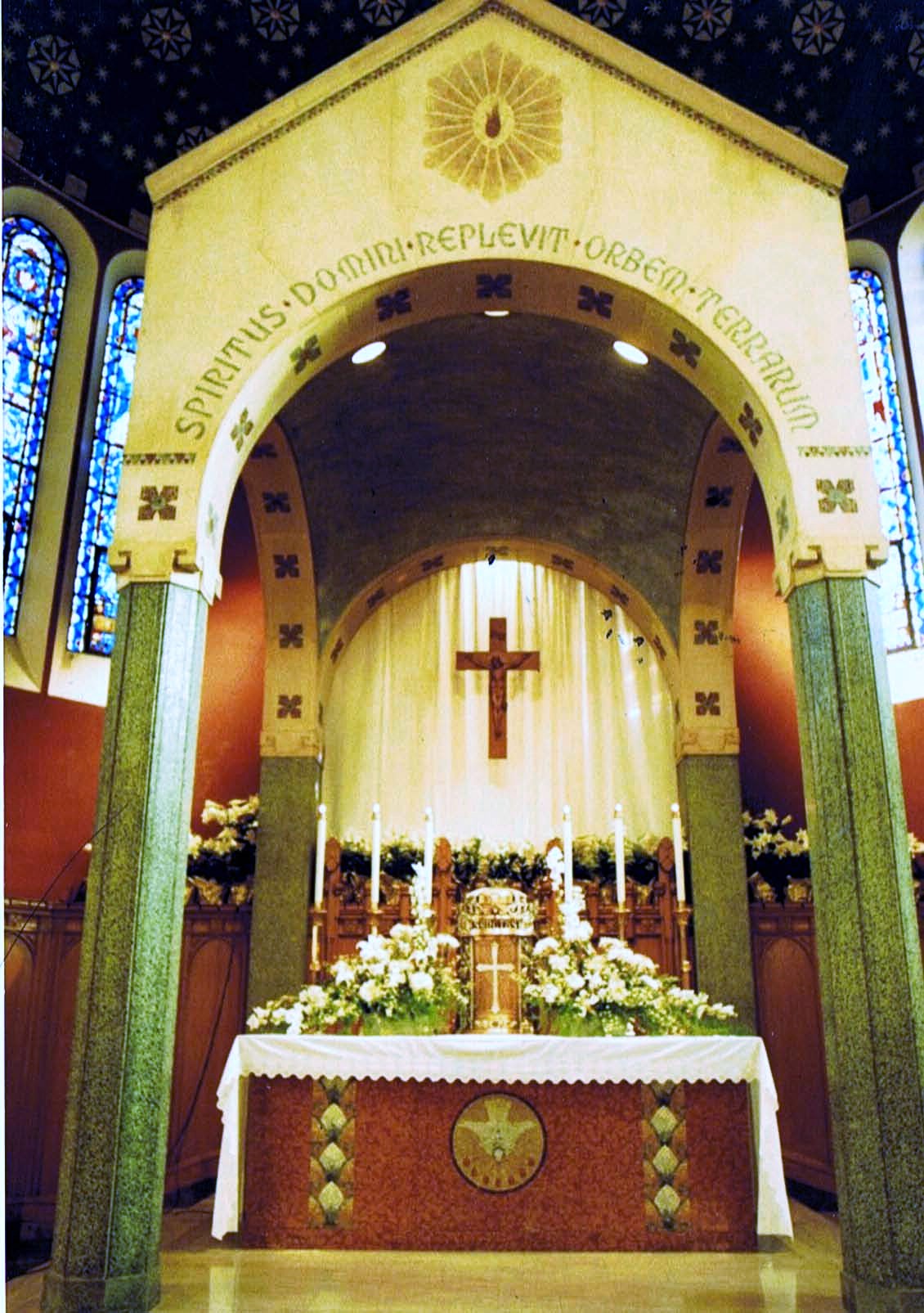

Are You Ready For When the Lord Shall Come?

In the Gospel for Tuesday of the 29th Week, Jesus reminds us to be ready, but what does that mean? Let’s consider four ways that the Lord describes.

READY to WORK – Jesus says, gird your loins,which is the ancient equivalent of saying, “roll up your sleeves.” The Lord has a work for us and wants us to get to it. He’s not thinking of a worldly career, but rather things such as raising children in godly fear, pursuing justice, and growing in holiness. The Lord wants us to work in His Kingdom.

We must commit to prayer, Sunday worship, reception of the sacraments, obedience, and holiness. The Lord has a particular work for each of us based on the gifts He has given us. Some can teach, others work well with senior citizens, still others have a good head for business and can provide employment at a just wage. Some are called to priesthood or the religious life. Some are called to suffering and to offer that suffering for the salvation of souls. Some serve in strength, others in weakness. In some way, all are called to serve, to work. So, work with what the Lord gave you to advance His Kingdom. Part of being ready means doing our work.

READ the WORD – The Lord says, light your lamps.” Taken from a literal standpoint, this refers to getting ready as described in the Parable of the Wise and Foolish Virgins (Matthew 25:1-13). In another sense a lamp is a symbol for Scripture. For example, Your Word, O Lord, is a lamp unto my feet and a light unto my path (Ps 119:105), We possess the prophetic message that is altogether reliable. You will do well to be attentive to it, as to a lamp shining in a dark place, until day dawns and the morning star rises in your hearts (2 Peter 1:19).

So, from today’s Gospel we can also understand that an essential part of being ready is being rooted and immersed in Scripture and in the teachings of the Church. In this increasingly secular world, so hostile to the faith, our minds are bound to be sullied unless we read Scripture every day. How can our minds be sober and clear if we are inebriated by the world? Being ready means reading Scripture each day and basing our life on it.

REMAIN WATCHFUL – The Lord says, “and be like servants who await their master’s return from a wedding, ready to open immediately when he comes and knocks. … Be sure of this: if the master of the house had known the hour when the thief was coming, he would not have let his house be broken into. You also must be prepared, for at an hour you do not expect, the Son of Man will come.”

There are different ways to watch and wait. There is the passive watching and waiting such as one might do when waiting for a bus to come, but there are other more active ways such as a waiter might exhibit as he hovers in the background anticipating the needs of the diners. It is this watchful and waiting spirit that the Lord has in mind here. If we have invited guests to our home, we prepare our house and make sure everything is in order as we await their arrival. In a less literal sense, to set our house in order is to sweep clean our soul of sin and all unrighteousness, by God’s grace, and to remove the clutter of worldliness. Regular confession and daily repentance sweep clean the house of our soul; simplifying our life and minimizing worldly attachments de-clutters the house of our soul.

Have you prepared the house of your soul for the Lord’s arrival? If you haven’t, the Lord says that you may experience him as a thief; He is not really a thief, though, because everything belongs to Him. If we have not renounced our worldliness and greed, if we have not de-cluttered our lives worldly attachments, the Lord will come to take back what is His; He will seem a thief to us because we think it is ours. It’s never a good idea to call God, the Lord and owner of all, a thief!

REFLECT on your reWARD – The Lord says, Blessed are those servants whom the master finds vigilant on his arrival. Amen, I say to you, he will gird himself, have them recline at table, and proceed to wait on them. And should he come in the second or third watch and find them prepared in this way, blessed are those servants.

The Lord is clear that He has a reward for those who are found ready. It is prefigured in the banquet of the Eucharist, wherein the Lord prepares a meal and feeds us. The Lord says, Behold, I stand at the door and knock. If anyone hears my voice and opens the door, I will come in to him and eat with him, and he with me (Rev 3:20). And I confer a kingdom on you, just as my Father has conferred one on me, that you may eat and drink at my table in my kingdom (Luke 22:30).

For most of us in the Western world today, food is easy to come by and not given a great deal of thought. In the ancient world this was not so, and one of the pleasures people looked forward to most was a hearty meal in the company of friends and family. The Lord offers us the magnificent blessing of Heaven, where we will be with Him and those whom we love forever in unspeakable joy and peace.

Do you meditate often on Heaven and long for its rewards? It seems strange to me that we speak so little about Heaven. Because it is not a place any one of us has been, it’s hard to fully understand what it will be like, but we should be reflecting often on the joy awaiting us there. Part of being ready to go home to Lord is longing for that day. When we want to do something we eagerly prepare for it; we are motivated and make sacrifices to do it.

Last year a group from my parish traveled to the Holy Land. Many of them saved money for two years through a payment plan to be able to go. In preparation, we gathered together periodically, studying maps and reading Bible stories. On the day of departure many in the group arose early and arrived at the airport hours ahead of time. Eagerly reflecting on Heaven and the joy awaiting us there should be similar. If we desire Heaven we will more naturally get ready and lay aside whatever is necessary to make the passage there.

So, here are four ingredients constituting a recipe for readiness. You’d better set your house in order ’cause he may be comin’ soon!
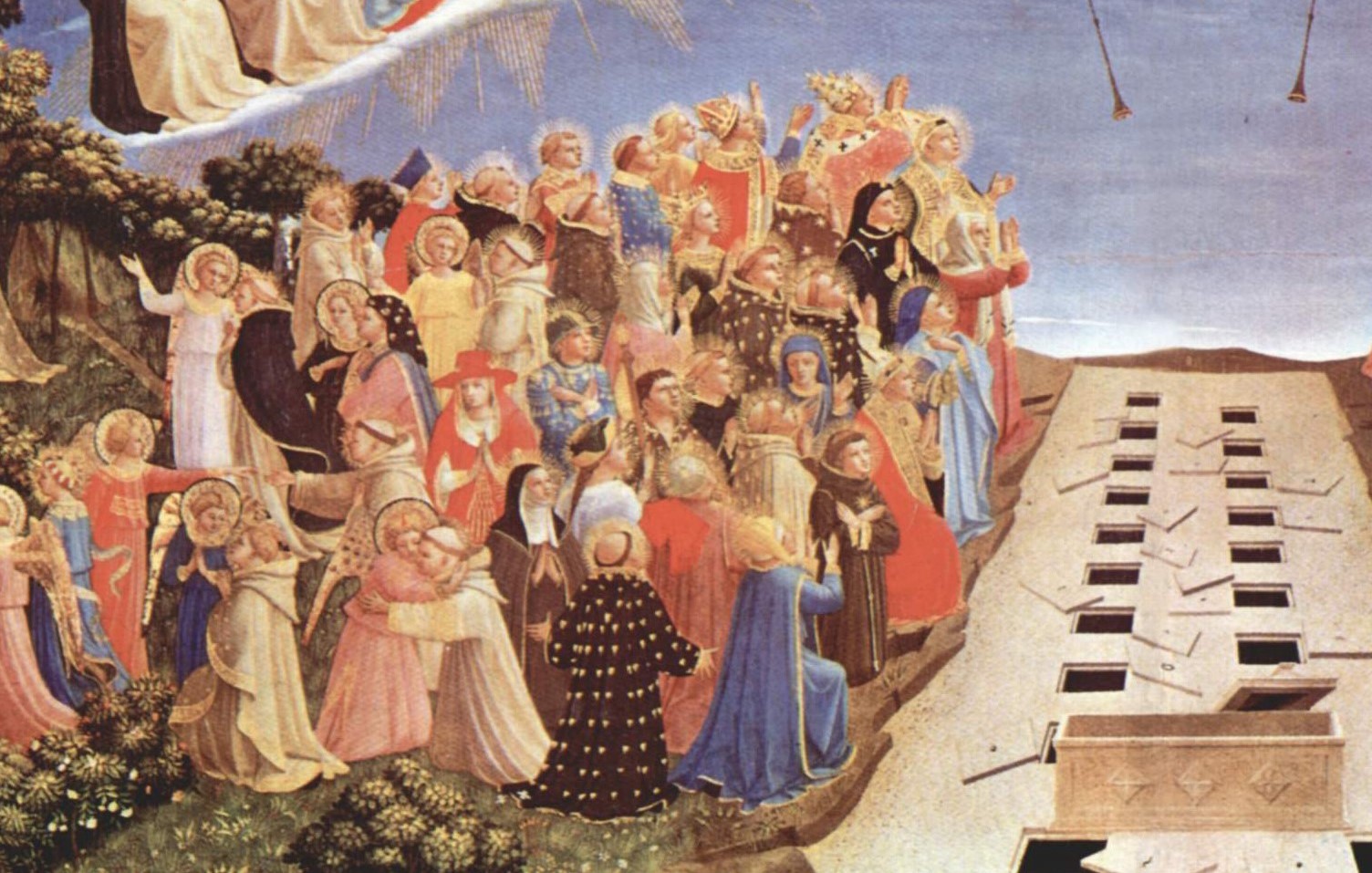
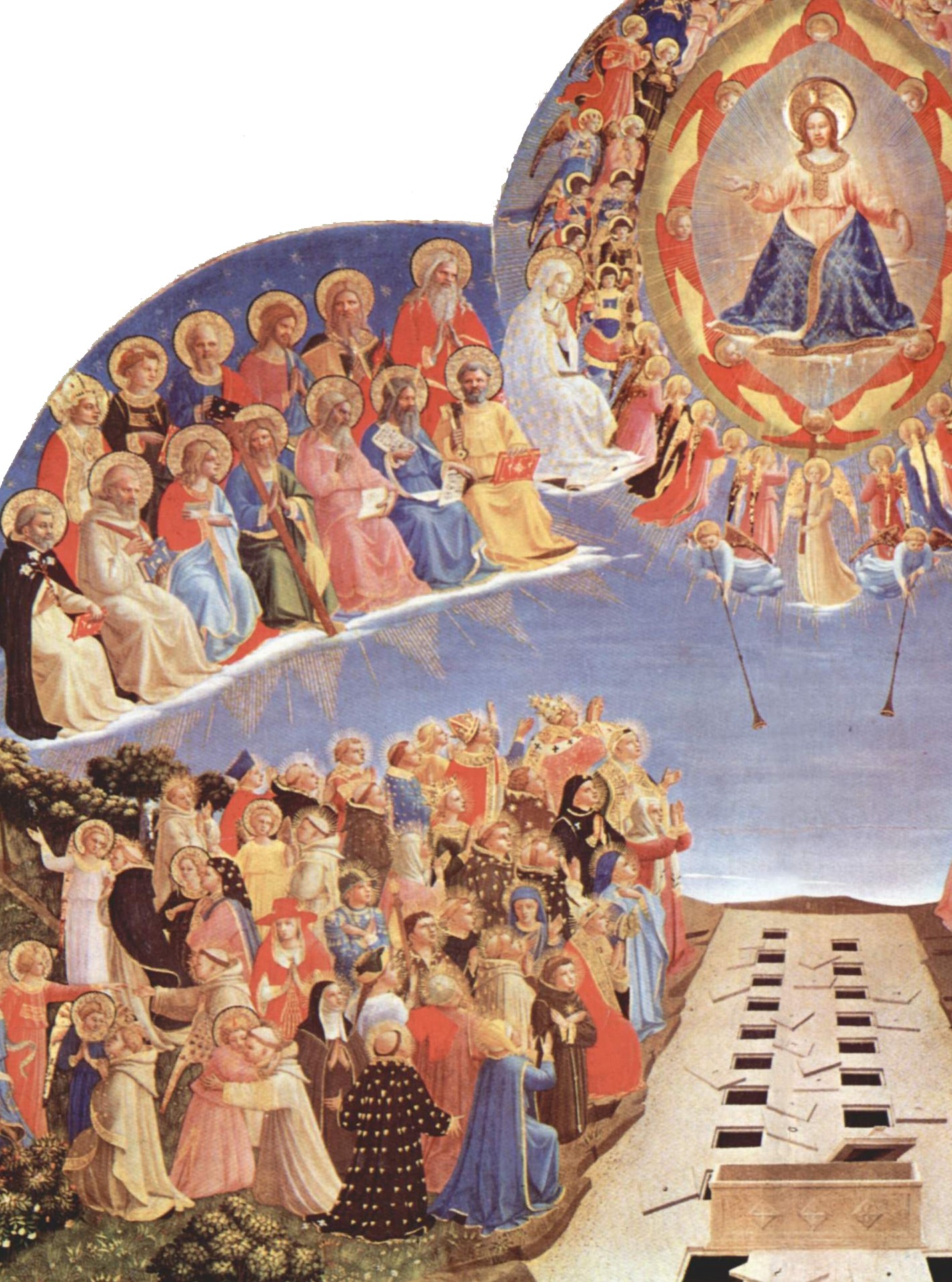
What Happened to Us When We Were Baptized into Christ Jesus?

The first reading for Monday’s daily Mass, from the Letter to the Ephesians (Eph 2:1-10), gives a concise account of our salvation by Christ Jesus. It begins by describing our absolute need for salvation and then speaks to the gifts that come with it. Let’s take a look.

Dead in our Sins – The text says, You were dead in your transgressions and sins in which you once lived following the age of this world, following the ruler of the power of the air, the spirit that is now at work in the disobedient. All of us once lived among them in the desires of our flesh, following the wishes of the flesh and the impulses.

There is nothing more helpless than a corpse. It cannot do anything but lie there and decompose. This was our condition before baptism. No amount of good works, repentance, or spiritual pushups could accomplish a thing. We were dead, helpless, powerless. We had a debt we could not repay.

We were decomposing by following the prince of this world, the Devil. We had the rigor mortis of stubbornness and the stench of disobedience. Dead in our sins, the desires and pride of our flesh won the day. We indulged our passions and impulses. Even keeping of the law was a matter of pride. We thought that we could be righteous by following certain narrowly understood laws. These were just the illusions of a dying man. Isaiah said of us,

All of us have become like one who is unclean, even our righteous acts are like a polluted garment; we all wither like a leaf, and our iniquities carry us away like the wind (Is 64:6).

Death was all around us and within us.

Destined for Wrath – The text says, And we were by nature children of wrath, like the rest.

Wrath is our experience of the total incompatibility of our sinful state before the holiness of God. It is like fire and water—they cannot coexist; there is a conflict between them that is heard in the hissing of water when it falls onto a fire.

God is a holy fire and we cannot endure the heat and light of His glory in our sinful state. By grace, we must be brought up to the temperature of glory by the Holy Spirit and must become accustomed to the glorious light of God’s truth. Without these gifts we cannot endure the presence of God.

Yes, this is wrath. It is not that God is angry; it is that we cannot endure Him as He is. It is like being exposed to the light after being used to the darkness. We say that the light is harsh, but the problem is that we’ve become too accustomed to the dark.

Before the grace of Christ, we were children of wrath. Only by the light of His grace and the warmth of His love can we hope to draw close to Him who is the light of truth and blazing charity.

Delivered in Christ – The text says, But God, who is rich in mercy, because of the great love he had for us, even when we were dead in our transgressions, brought us to life with Christ (by grace you have been saved), raised us up with him, …

On account of His mercy, God the Father sent us Christ Jesus as a glorious gift. Jesus comes to restore us to life, to bring us to the light in stages and bring us up to the temperature of glory!

In His Spirit, who descends like tongues of fire on us, we are set on fire. Through His proclaimed truth, He who is the light of the world accustoms us to the bright light of God’s truth. Yes, we are brought out of the dark, cold dungeon of the tomb and raised up with Christ!

Designated in Honor – The text continues, … and [the Father] seated us with him in the heavens in Christ Jesus, that in the ages to come he might show the immeasurable riches of his grace in his kindness to us in Christ Jesus.

In Christ, we are already seated in the heavens—mystically but truly. As Christ has ascended into the heavens, we ascend with Him as members of His body.

One may wonder how it is that he is “up there” while we are “down here.” When I ride the elevator to the tenth floor, although my head arrives before my feet, I get there. In Christ our head, we are already seated at the Father’s right hand. Where the head of the body goes, the members will follow.

Brethren, this is our future and our dignity if we are faithful: seated with Christ at the Father’s right hand in Heaven!

Diligent in Fruitful Faith – The text says, For by grace you have been saved through faith, and this is not from you; it is the gift of God; it is not from works, so no one may boast. For we are his handiwork, created in Christ Jesus for good works that God has prepared in advance, that we should live in them.

Meanwhile, we walk in fruitful faith. Our faith bears fruit in works. Yet even our works are God’s grace. The text says that God prepared them for us in advance so that we should walk in them. All is grace! St. Augustine says that God’s love extends to this, that His graces should be our merits. Thus, our works are our faith working through love (cf Gal 5:6).

Such is our state in Christ and God’s gift: we who were dead in our sins have been brought to life in Him. Destined for glory, we journey upward in fruitful faith and love.

Thank you, Father, for Jesus and your Spirit, who breathes new life in us. We could nothing to accomplish this; we were dead. By your grace we now live and are destined to be with you. Keep us faithful unto death, lest we lose this precious gift and die in the hardness of our heart. Yes, keep us faithful unto death.

No Cross, No Crown – A Homily for the the 29th Sunday of the Year

In the Sunday Gospel, the Lord Jesus speaks of crosses and crowns. The apostles have only crowns in mind, but Jesus knows the price of the crown. So, He must teach them and us that crowns—the things we value most—come only through the cross.

It may help to review the context of this Gospel. Jesus is making His final journey to Jerusalem. He is on his way to the cross and has already announced this to His disciples on two occasions. Throughout Jesus’ final journey, the apostles prove unwilling and/or incapable of grasping what He is trying to teach them.

This Sunday’s Gospel is a perfect illustration of a common biblical theme that I refer to as the inept response. It is a common situation in the Gospels wherein Jesus presents a profound teaching, yet within a matter of verses or sometimes even just a few words, the apostles demonstrate that they have absolutely no understanding of what He has just told them.

You may recall that in the Gospel readings for the previous two Sundays, the Lord gave critically important teachings. Two weeks ago, he stood a young child in their midst and spoke of the child as being truly great. He also warned that we must be able to receive the Kingdom of God like a little child. Last week, He warned of the pernicious effects of wealth and spoke about how hard it is for the rich to enter the Kingdom of Heaven.

Despite these recent teachings, this Sunday’s Gospel opens with James and John (and later all the apostles) wishing honors upon themselves. They want seats at the head of the table, high offices in the Kingdom, which they still conceive of in worldly terms. Never mind that Jesus has taught them that the place of honor is not at the head or even the foot of the table; the honor is upon those who serve those at the table.

The apostles (and we) just don’t understand, no matter how clear Jesus is or how often He repeats Himself.

Let’s look at today’s Gospel in three stages.

Misplaced Priorities – The Gospel begins in this way: James and John, the sons of Zebedee, came to Jesus and said to him, “Teacher, we want you to do for us whatever we ask of you.” He replied, “What do you wish me to do for you?” They answered him, “Grant that in your glory we may sit one at your right and the other at your left.”

James and John ask an inept question and even demand to sit in places of honor. This is a misplaced priority. Their understanding of the place of honor is worldly. Further, they want to move to the head of the table. They want the Lord to grant them this honor. Even in a worldly way of thinking, places of honor must usually be earned. Although some people are born into royalty, most attain leadership and honors only after years of effort. Thus, even from a worldly point of view, James and John are being overly bold, exhibiting little understanding that prior to honors comes labor, comes the earning of those honors. They want the crown without the cross.

Major Price – The Lord Jesus replies to them, “You do not know what you are asking! Can you drink the cup that I drink or be baptized with the baptism with which I am baptized?”

Was Jesus astonished, amused, or saddened? It is not easy to say, but clearly James and John had absolutely no idea what they were asking—and neither do we. Too often we want blessings, honors, or seats in high places, but give little thought to the crosses that are necessary to get there and to stay there.

Those who finally attain leadership often understand what a cross it is. It can be lonely. There are many pressures and long hours of toil. True leadership has its benefits, but it is hard. Most leaders know also the sting of criticism.

There is an old joke among bishops that goes something like this: “When a man becomes a bishop, two things are certain: he will never again have a bad meal, and he will never again hear the truth.” Leaders in many other walks of life can relate to this.

The Lord Jesus wonders whether James and John have any idea what they are really asking. His question is also poignant, for He has been trying to teach them of the passion, the pain, the crucifixion that awaits Him, and which even He, the Lord of glory, must endure before entering into His glory. No, they do not know what they are asking; they just don’t get it.

This must make the Lord very sad. Sometimes we underestimate the suffering Jesus endured long before the garden of Gethsemane that fateful night, when His passion began in earnest. Prior to that evening, the Lord endured a kind of death by a thousand cuts: enemies trying to trap Him, crowds wanting medical miracles but no true healing, strident and judgmental religious leaders, and disciples who walked away from Him as he taught about the Eucharist. Even the Twelve, to whom He looked for friendship, seemed completely disconnected from what He was trying to teach them. He also knew that one of them would betray Him, another would deny Him, and all but one would abandon Him, never making it to the foot of the cross. Oh, the grief that they gave the Lord!

Oh, the grief that we continue to offer up! How we continue to offend His external glory and be difficult cases for Him! How easy it is for us to be hardheaded and stubborn, to have necks of iron and foreheads of brass! No, we should not be so quick to scorn the apostles because we do the same things.

The Lord can only remind them and us of the monumental price, the true cost. No cross, no crown! Ultimately, Heaven costs everything, for we must leave this world behind to reach it. The Easter Sunday of glory, whether in this world or in the world to come, is accessed only by a journey through Good Friday.

It is a major price, but it is one that James and John seem to dismiss. They simply state, categorically, that they are able to drink the cup that the Lord drinks and to be baptized into His death. They have no idea what they’re talking about, however, and neither do most of us.

Medicinal Prescription – The text continues, They said to him, “We can.” Jesus said to them, “The cup that I drink, you will drink, and with the baptism with which I am baptized, you will be baptized; but to sit at my right or at my left is not mine to give but is for those for whom it has been prepared.” When the ten heard this, they became indignant at James and John. Jesus summoned them and said to them, “You know that those who are recognized as rulers over the Gentiles lord it over them, and their great ones make their authority over them felt. But it shall not be so among you. Rather, whoever wishes to be great among you will be your servant; whoever wishes to be first among you will be the slave of all. For the Son of Man did not come to be served but to serve and to give his life as a ransom for many.”

Thus, the other apostles join in the inept response by becoming indignant that James and John are trying to get special dibs on the seats of honor. Their indignity simply shows that they also have no idea what the Lord is talking about.

The Lord tries to bring the big picture of the cross down to earth. He tries to make it plain, saying that the greatest in the kingdom is the servant of all, indeed the slave of all. It is not those who sit at the head of the table, the foot of the table, or any place at the table at all who are the greatest; the greatest are those who serve at the table.

Do they understand? Probably not, but neither do we. It takes most of us a lifetime before we finally get it through our thick skulls that the point in life is not to have the corner office with the view. We have everything upside down, backwards. We are not rich in what matters to God. We think of bank accounts, prestigious addresses, the square footage of our houses, high salaries, and impressive titles—not service.

We may be on our death beds before we finally realize that the greatest people in our lives are those with the ministry of care, those who feed us, those who change our bandages and give us basic care.

Like the apostles, we can be so foolish. At our final judgment, God will not care about the square footage of our house, our titles, or our worldly honors. What will capture His attention is the times when we served, when we gave a cup of cold water to the thirsty or food to the hungry, when we instructed the ignorant, when we prayed for the dying, when we cared for the needs of the poor. He will look for the calluses and the wounds of our service. He will listen for our proclamation of His Kingdom. He will tell us that what we did for the least of our brothers, we did for Him.

Don’t miss the point: there is no crown without the cross. In the Kingdom, honors and crowns are reserved for those who serve, who take up the cross of washing the feet of others, of going to the lowest of places.

In the Gospel this Sunday, the Lord speaks of crosses and crowns—in that specific order. We will not, we cannot, gain any crown in His Kingdom without being baptized into His death, into His cross, into the humble servitude of dying for others in loving service.

The Danger of a World Without Walls

God’s commandments can be likened to defensive walls. Every ancient city had such walls to protect its citizens. Even though the walls limited movement, within them people could come and go safely. Outside those walls, all bets were off; things could be dangerous despite the open vistas.

Scripture says,

Pray for the peace of Jerusalem: “May those who love you prosper. May there be peace within your walls, and prosperity inside your fortresses.” For the sake of my brothers and friends, I will say, “Peace be within you” (Psalm 122:7-8).

Today, many relish in tearing down walls, not so much physical ones as moral ones, particularly moral laws that set boundaries and help to determine where one person’s space ends and another’s begins. The #MeToo movement has rightfully protested the fact that many people have transgressed proper boundaries. When that happens, the world is less safe, and abuse becomes commonplace.

Maybe God’s laws, which are like walls or boundaries, aren’t so bad after all. Perhaps we should not have been so joyful in tearing down the walls of God’s commandments through the sexual revolution. Maybe, just maybe, some walls are good.

This video clip presents a humorous picture of our iconoclastic times.

Working for the Kingdom Despite Human Failures

My father had an expression: “Charlie, people disappoint.” It was his way of saying that even people we think irreproachable, godly, and saintly can let us down, either with sin or simply by being unable to help us in key moments. Something of that comes through in the words of St. Paul from today’s first reading:

Demas, enamored of the present world, deserted me and went to Thessalonica, Crescens to Galatia, and Titus to Dalmatia. Luke is the only one with me. … At my first defense no one appeared on my behalf, but everyone deserted me. May it not be held against them! (2 Timothy 4:10-16)

Here were people that St. Paul had thought friends and champions of the gospel, but now some have left him, some have failed to defend him, and still others are just unavailable.

We should all think about how much faith we put in human persons. While we sometimes need to depend on others to help us, there will be times when they cannot do so and times when not only do they not help us, they are against us; perhaps they are too frightened to stand with us or maybe they are just occupied with other things. Yes, people disappoint.

Paul goes on to say,

But the Lord stood by me and gave me strength, so that through me the proclamation might be completed, and all the Gentiles might hear it (2 Timothy 4:17).

This passage reminds us that though we should work with our fellow human beings, we should trust in God. For indeed, He wills us to work with imperfect, limited, and even fickle people, but to trust that He can supply our needs when others fall short; He can stand in the gap when others do not, for whatever reason.

Scripture says, Cursed is the one who trusts in man, who draws strength from mere flesh and whose heart turns away from the LORD (Jer 17:5).

The fact that human beings are imperfect and can disappoint us should not turn us into isolated cynics. Rather, it should remind us to depend ultimately on the Lord’s strength and permit Him to fill the gaps left by others. We should work to develop good relationships with our fellow human beings because in many situations they can help, but they can never be our ultimate savior.

Yes, God can work to bless us, even through people who disappoint or fall short. No matter the struggles of human agents, with God as a partner we can succeed. All things work together for good, to those who trust in God and are called according to his purpose (Rom 8:23).

St Paul did not stop preaching because others let him down; neither should we stop working for the Kingdom merely because others disappoint.

Five Biblical Lists of Mortal Sins

The first reading for Wednesday of the 27th Week of the Year, from Galatians, spoke to sins that exclude one from the Kingdom of Heaven. If one dies unrepentant from committing any of these sins, one cannot go to Heaven but rather must be excluded in Hell. It is an important reminder to pay heed to the toll that sin takes on our heart, our character, and ultimately our destiny.

One of the great deceptions of our time is that serious sin is only a remote possibility for most people and that such sins are only committed by truly wicked people. Too many people assess their moral standing with unhelpful platitudes such as these: “I’m basically a good person,” or “Well, I haven’t murdered anybody.”

We must be more serious and mature in our discernment. Of course, God does not leave us in such a fog of uncertainty. His Word is quite clear in specifying some of the more serious sins so that we can humbly recognize our tendency to do these very things. Note that stating that a particular sin excludes one from the Kingdom of Heaven is the biblical way of saying that it is a mortal sin.

Simply listing mortal sins is not sufficient because there are important factors affecting culpability. For example, some of the sins listed below (e.g., lying) can admit of lighter matter (one might tell a lie to avoid hurting someone’s feeling). Lies can also be devastating, robbing people of their good name or depriving people of necessary information. Some of the sins listed can result from a compulsions or addictions that erode the freedom necessary to be guilty of mortal sin. Hence, a sin that is of itself serious in nature might be venial if the person were acting under some compulsion. This does not mean that it is not a sin at all, just that it may not be fully mortal in its effects.

Nevertheless, the Lord, in love, wants to warn us urgently of the sins that exclude us from Heaven. In reading from the lists that follow, avoid adopting a legalistic mentality. Take them to heart and allow them to become part of your daily moral reflection. The Lord warns us in love that sin is a serious matter. Even smaller sins, unattended to, begin to grow like a cancer and can ultimately kill us spiritually.

Rather than continue with a lot of commentary, I’d like to post five biblical lists of the more serious sins that exclude one from the Kingdom of God.

Be serious about them. Do not buy into the deception that sin is a trivial matter. God loves us, and because He loves us He warns us that unrepentant sin is serious and can rob our hearts of the desire for Him, for Heaven, and for the good things awaiting us there.

Here, then, are five lists. They are not exhaustive and there are other passages in the Bible that include sins not mentioned below (e.g., refusal to forgive, cf Matt 6:15).

  • Or do you not know that wrongdoers will not inherit the kingdom of God? Do not be deceived: Neither the sexually immoral nor idolaters nor adulterers nor homosexual offenders, nor thieves nor the greedy nor drunkards nor slanderers nor swindlers will inherit the kingdom of God. And that is what some of you were (1 Cor 6:9-10).
  • The acts of the flesh are obvious: sexual immorality, impurity and debauchery; idolatry and witchcraft; hatred, discord, jealousy, fits of rage, selfish ambition, dissensions, factions and envy; drunkenness, orgies, and the like. I warn you, as I did before, that those who live like this will not inherit the kingdom of God (Gal 5:19-21).
  • But among you there must not be even a hint of sexual immorality, or of any kind of impurity, or of greed, because these are improper for God’s holy people. Nor should there be obscenity, foolish talk or coarse joking, which are out of place, but rather thanksgiving. For of this you can be sure: No sexually immoral, impure or greedy person—such a person is an idolater—has any inheritance in the kingdom of Christ and of God. Let no one deceive you with empty words, for because of such things God’s wrath comes on those who are disobedient. Therefore, do not be partners with them (Eph 5:3-6).
  • “Look, I am coming soon! My reward is with me, and I will give to each person according to what they have done. I am the Alpha and the Omega, the First and the Last, the Beginning and the End.” Blessed are those who wash their robes, that they may have the right to the tree of life and may go through the gates into the city. Outside are the dogs, those who practice magic arts, the sexually immoral, the murderers, the idolaters and everyone who loves and practices falsehood. “I, Jesus, have sent my angel to give you this testimony for the churches. I am the Root and the Offspring of David, and the bright Morning Star” (Rev. 22:12-16).
  • Then he will say to those on his left, ‘Depart from me, you who are cursed, into the eternal fire prepared for the devil and his angels. For I was hungry and you gave me nothing to eat, I was thirsty and you gave me nothing to drink, I was a stranger and you did not invite me in, I needed clothes and you did not clothe me, I was sick and in prison and you did not look after me.’ They also will answer, ‘Lord, when did we see you hungry or thirsty or a stranger or needing clothes or sick or in prison, and did not help you?’ He will reply, ‘Truly I tell you, whatever you did not do for one of the least of these, you did not do for me.’ Then they will go away to eternal punishment, but the righteous to eternal life (Matt 25:41-46).

Finally, here is a general warning from the Lord:

Do not be amazed at this, for a time is coming when all who are in their graves will hear his voice and come out—those who have done what is good will rise to live, and those who have done what is evil will rise to be condemned. By myself I can do nothing; I judge only as I hear, and my judgment is just, for I seek not to please myself but him who sent me (John 5:28-29).

Here is a performance of Gregorio Allegri’s “Miserere Mei” (Psalm 51). “Have mercy on me, O God, according to thy great kindness.”

On the Adolescent Fixation of the Modern West

Recently at the Synod on Youth, Archbishop Charles Chaput made the following observation:

Unfortunately, many “developed” countries today are actually “underdeveloped in their humanity. They’re frozen in a kind of moral adolescence; an adolescence which they’ve chosen for themselves and now seek to impose upon others.

I have written on this topic as well. What follows is largely taken from an article I first published on this blog in 2010. In it I wrote about the kind of teenage fixation that is evident in our culture.

Psychologists define fixation in the following way:

Fixation refers to a persistent focus of pleasure-seeking energies on an earlier stage of psychosexual development. A fixation occurs when an issue or conflict in a psychosexual stage remains unresolved, leaving the individual focused on this stage and unable to move onto the next.

I would like to argue that our modern culture seems to manifest many fixations that are typical of the teenage years. In fact, one way to describe our modern culture is to see it as developmentally like that of a teenager. Such a situation presents rather serious problems in terms of facing life with the necessary sobriety, seriousness, and maturity; it also means that there are many people in our culture who never grow up.

Here are some examples of what I see as a teenage mentality and a fixation on teenage issues.

Wanting all the rights but none of the responsibilities – As children begin to approach adulthood, it is not uncommon for them to declare to their parents that once they are 18 they are adults and therefore should be able to do as they please.

Adulthood does not magically happen at the age of 18. Rather, it happens as children move out, get a job, and pay their own bills. In other words, adulthood is about accepting and exercising responsibility for oneself. The teenage mentality claims the rights of adulthood (e.g., autonomy) without wanting to accept the concomitant responsibilities.

This is very often the case in our culture today. Strident claims are made regarding rights, but little is said of duties. Accepting responsibility for our actions is often cast aside by excuses that blame others: I’m not responsible because my mother dropped me on my head when I was two, or because grew up poor, or because I have ADHD. There can be legitimate explanations, but we seem to have made an art of it. Our culture has a hard time insisting that people take responsibility for their actions. Those who do suggest such things are often labeled insensitive and harsh.

Not only do many make excuses for their bad behavior but they often try to shift to focus to others, pointing out that they are worse: “Well what about him?”

Further, people increasingly expect others to provide for them what they ought to provide for themselves. Surely there are some basic needs that government and industry can and should provide, and there are those among us who truly cannot care for themselves, but the list of entitlements grows ever longer, and money seems to be no object.

All these behaviors tend to overemphasize rights while minimizing personal responsibility. I argue that this bespeaks a teenage mentality. An adult attitude recognizes the need to take responsibility for our own life, asking for help when we need, but not asking others to do for us what we can and should do for ourselves. An adult attitude also takes responsibility for the consequences of our decisions and actions, not trying to blame others.

Sexual immaturity – Teenagers experience a powerful sexual awakening and their bodies flood with hormones.

At first, they manifest a general silliness about sexuality; there is a lot of giggling and the relating of off-color jokes. Everything is thought of in terms of sex and many ordinary words and phrases are used that have secondary sexually related meanings. In short, there is a kind of obsession with sex.

Some teenagers begin to dress provocatively, “strutting their stuff.” Sadly, teenagers struggle with sexual misbehavior and some exhibit poor judgment about sexual matters. This is all the more prevalent today because we do not chaperone or oversee youth in the way we should. Neither do we teach them well about sexuality and modesty.

Today’s Western culture too often exhibits a teenage immaturity about sexuality. There is the incessant chatter about and exhibition of sex in movies, television, music, and books. There are off-color jokes. Many comedians devote much of their material to sex, speaking of it in demeaning and unedifying ways; sex seems to be one big joke.

There is great irresponsibility and poor judgment today among adults in the area sexual behavior: premarital sex, bearing children out of wedlock, abortion, adultery, and homosexual acts to name a few.

Further, many celebrate lewdness and sexual irresponsibility, often applying moral thinking more reminiscent of a college fraternity party than a truly thoughtful and responsible perspective.

A mature attitude accepts that sex is a beautiful and personal gift given to the married. It is holy and good and is an important part of life, but it is not the only thing there is. The obsession, the silliness, and the out-of-control quality exhibited in our culture bespeaks an immaturity that reminds one of untutored and uncorrected teenagers.

Aversion to Authority – As children grow into the teenage years they naturally begin to push the boundaries with parents and other authority figures.

Teenagers test limits and ask tough questions; this is not entirely bad. They are not little children any longer and increasing autonomy is often incrementally appropriate. However, teenagers also can go too far and be both disrespectful and disobedient. At times they engage in inappropriate power struggles with their parents and other elders, asserting that no one should tell them what to do. Some even go through periods of intense dislike of and contempt for their parents and any who would try to direct them.

So, too, our culture today struggles with the issue of authority. One of the geniuses of the American system of government is the balance of power. There is also the notion that elected officials should be held accountable. So, there is such a thing as healthy and vigorous debate and a proper limiting of the power of authority. However, some of the negative attitudes toward legitimate authority—not just government officials, but police, supervisors at work, and community leaders—seem a bit immature. Whispering behind their backs, dragging of feet, making ugly comments, and outright disrespecting authority figures all seem to be a bit teenage.

One might argue that it has always been this way, but there seems to have been a major uptick in this sort of behavior starting in the 1960s. Rock music helped to usher in overly negative attitudes about authority and that thinking has become widespread in our culture today.

An adult attitude respects the place of authority and the need for it. It does not fear authority but rather speaks sincerely, truthfully, and respectfully to those who have it.

The “It’s not fair!” Mentality – One of the most common cries of children and teenagers is that something isn’t fair; it is usually plaintive and self-serving.

When someone claims that something isn’t fair, it usually means he didn’t get what he wanted while someone else did. Basically, this cry show that it’s all about me.

Truth be told, life is not fair. Both my brothers were smarter than I was. Neither of them seemed to have to study much and they still got A’s while I had to struggle mightily just to pull down B’s and C’s—not fair! However, I had other gifts they did not. The bottom line is that each of us is dealt a set of cards and those are the ones we have to play. No one has the same cards.

In our culture today, this plaintive cry about a lack of fairness goes up frequently. The most troublesome version of it comes in relation to moral and doctrinal issues. The Church is often excoriated for her positions in ways like this: “Are you saying gays can’t get married? That’s not fair!” “Are you saying women can’t be ordained? That’s not fair!” “Are you saying that people who are dying can’t end their lives by euthanasia/physician-assisted suicide but rather must accept suffering? That’s not fair!” “Are you saying a woman has to carry her child to term and can’t abort? That’s not fair, especially considering that the man can usually just walk away.”

Again, notice that most of these claims of unfairness are rather egocentric: Something isn’t fair because I can’t do what I want.

An adult attitude accepts that life is not always fair. An adult attitude does fight against true injustice; not all of life’s inequities should be tolerated. However, a mature attitude distinguishes between matter of true justice and merely getting what one wants. The battle for true justice usually involves the needs of others not just personal or egocentric concerns.

So, I offer you this analysis. I do not say that everyone is equally afflicted with this mentality, but the big picture looks fairly adolescent to me. Recognizing it is the first step to correcting the tendency.

… until we all reach unity in the faith and in the knowledge of the Son of God and become mature, attaining to the whole measure of the fullness of Christ. Then we will no longer be infants, tossed back and forth by the waves, and blown here and there by every wind of teaching and by the cunning and craftiness of men in their deceitful scheming. Instead, speaking the truth in love, we will in all things grow up into him who is the Head, that is, Christ. From him the whole body, joined and held together by every supporting ligament, grows and builds itself up in love, as each part does its work (Eph 4:13-16).

This brief video shows the usual sitcom scenario: parents (especially fathers) are stupid and kids are smart and that it’s OK for them to be sassy, and disrespectful. After all it’s a teenage world.

What Our Church Buildings Say About Us

The week in the Office of Readings from the Liturgy of the Hours we are reading from the books of Haggai and Zechariah. Both these prophets wrote at the time of the return of the Jews from the Babylonian exile, which had begun in 587 B.C. The Jewish people were permitted to return to the Promised Land beginning in about 538 B.C. Haggai wrote his book in the summer of 520 B.C. and in it he scolds the people for concentrating on their “paneled houses” while the Temple is in a ruinous state. He ties their weak piety to the failure of crops, their inability to enjoy what they have, and other calamities.

Zechariah, who wrote in the autumn of 520 B.C., also expresses concern for the poor state of the Temple and ties its rebuilding to future blessings, including the coming of the Messiah. Later in the week, we will examine Zechariah’s writing.

In today’s post we look at a passage from the Book of Haggai and ponder what it means for us:

This is what the LORD of Hosts says: “These people say, ‘The time has not yet come to rebuild the house of the LORD.’” Then the word of the LORD came through Haggai the prophet, saying: “Is it a time for you yourselves to live in your paneled houses, while this house lies in ruins?” Now this is what the LORD of Hosts says: “Think carefully about your ways. You have planted much but harvested little. You eat but never have enough. You drink but never have your fill. You put on clothes but never get warm. You earn wages to put into a bag pierced through.” You expected much, but behold, it amounted to little. And what you brought home, I blew away. Why? declares the LORD of Hosts. Because My house still lies in ruins, while each of you is busy with his own house (Haggai, 1:2ff).

God does not need a fancy temple, but we do. The building of beautiful churches says a lot about our priorities and where our heart lies. Churches express our love for God and our desire to honor and thank Him. They need not be extravagant, but they should be adorned with a beauty and form that stands out as sacred and memorable, as an expression that we love God and take Him seriously, that He is a priority in our lives. In the Middle Ages, the town church was usually centrally located and was the tallest and most prominent building. By the 16th century, palaces and government buildings began to take that place. Today, the skyscrapers of our cities are named for investment banks and insurance companies. Yes, our buildings say something about our priorities!

Churches are also meant to remind us of Heaven. Until recent decades, they were built along lines that spoke to the heavenly realities both Moses and John saw as they were shown the heavenly worship and vision. Churches have high jeweled (stained glass) walls because Heaven does. Churches have glorious throne-like altars with the tabernacle at the center amidst tall candles because in Heaven there is a throne-like altar with the Lamb upon it and Jesus stands among the lampstands. Paintings and statues of saints and angels, incense, priestly robes, standing/kneeling appropriately, and singing of hymns all remind us of the communion of saints and angels in the heavenly worship. All of this is revealed in the heavenly visions contained in the Bible. (I have written more on this topic here and here.)

Haggai’s opening vision also says a lot about our inability to enjoy even the good things we have without God at the center. We all have a God-sized hole in our heart and only He can ultimately fill it. Trying to get created things to fill that gap is both frustrating and futile. The good things we do have point to God, the giver, and should inspire in us a gratitude and longing for Him. If we remove or marginalize God, our disorder affections gnaw away at us; no matter how much we get we remain dissatisfied.

God says through Haggai that fixing the ruined Temple is the way to fix their hearts. It is less about the building than about hearts. It is interesting that some of the most glorious and beautiful churches in this country were built by poor immigrant communities. We now live in times of comparative affluence, especially in America, but although incomes and home sizes have grown our churches seem to be built on the cheap, lacking both the nobility and glory that belong to God and which poorer generations produced in the churches of their time.

The problem has both theological and liturgical roots. A flawed notion of the liturgy claimed that churches should look more like living rooms or dining rooms than Heaven. (N.B. Some more recently built churches are returning to more traditional forms, but the reform has been slow).

Another problem was/is the “poverty of Judas.” This is the idea that money spent on buildings would be better used by being given to the poor. There may be a little truth to that, but the poor also want and need beautiful churches that remind them of Heaven and give due honor to God. A church is a space of beauty that all can share.

Yet another reason is that we just don’t value or prioritize the Lord and the liturgy as highly anymore. If we give less to the church perhaps we can buy a nicer car, a boat, or a vacation home. How is that ephemeral stuff working out for us? Are we happier? Haggai says no: You eat but never have enough. You drink but never have your fill. Exactly! All our blessing point to God and should instill gratitude and a longing for the true completion of an eternal relationship with Him.

Enough said for now. The point is not so much a building itself but what the building says about our hearts. God says today through Haggai, in effect, “Your paneled houses and the ruined Temple are a testimony to the condition of your hearts and your flawed priorities.”

Indeed, God should get the first fruits of our harvest, our best and highest effort. This is not because he needs them but because we do.