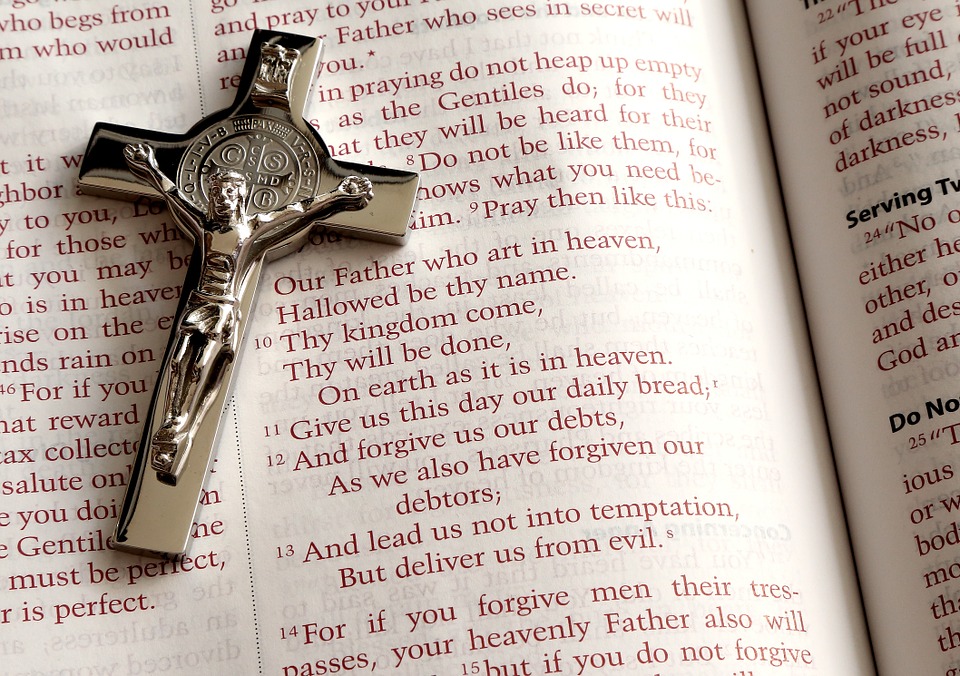
Three Teachings from the Lord on Prayer

Last week’s Gospel featured the Lord insisting that prayer was “the one thing necessary.” This week, we see the disciples’ request that the Lord teach them on prayer. In answer, the Lord gives three basic teachings or prescriptions for prayer.

I. Pattern of Prayer The Gospel opens in this way: Jesus was praying in a certain place, and when he had finished, one of his disciples said to him, “Lord, teach us to pray just as John taught his disciples.” He said to them, “When you pray, say: Father, hallowed be your name, your kingdom come. Give us each day our daily bread and forgive us our sins for we ourselves forgive everyone in debt to us, and do not subject us to the final test.”

We must be careful to understand that in giving us the “Our Father,” the Lord Jesus is not simply providing us with words to say. He is giving us a pattern for prayer; He is “teaching us to pray.” The disciples did not ask to be given words to say but to be taught how to pray.

Thus, while the words of the Our Father are precious, it is also important to look at the underlying structure implicit in the prayer so as to learn “how to pray.” Through these words, Jesus is illustrating what should be going on in our mind and heart as we pray.

There are five basic disciplines taught in the Our Father, and they form a kind of pattern or structure for prayer. I use here the Matthean version of the prayer only because it is more familiar to most people, but all the basic elements are the same.

1. RELATE Our Father who art in Heaven – Here begins true spirituality. Relate to the Father! Relate to Him with familial intimacy, affection, reverence, and love. We are not merely praying to “the deity” or “the Godhead.” We are praying to our Father, who loves us and provides for us, and who sent His only Son to die for us and save us. When Jesus lives His life in us and His Spirit dwells in us, we begin to experience God as our Abba, our Father.

As developed in other New Testament texts, the deeper Christian word Abba underlies the prayer. Abba is the familiar form of the more formal “Father.” When my own father was alive, I called him “Dad” not “Father.” The word Abba indicates family ties, intimacy, close bonds. Why Abba is not used in the Our Father is uncertain. St. Paul develops the theme: For you did not receive the spirit of slavery to fall back into fear, but you have received the spirit of sonship. When we cry, “Abba! Father!” (Rom 8:15) And because you are sons, God has sent the Spirit of his Son into our hearts, crying, “Abba! Father!” (Gal 4:6)

Ask God for the gift to experience Him as Abba. At the heart of our worship and prayer is a deep and personal experience of God’s love and fatherly care for us. The first discipline or practice of the spiritual life is to relate to God as to a father who loves us, and to experience Him as Abba.

2. REJOICE hallowed by thy name Praise of God is an essential discipline and element of our spiritual life. He is the giver of every good and perfect gift and to Him our praise is due. Praise and thanksgiving make us people of hope and joy. It is for this that we were made. God created us, so that we … might live for his praise and glory (Eph 1:12).

Our prayer life should feature much joyful praise. Take a psalm of praise and pray it joyfully. Take the Gloria of the Mass and pray it with gusto! Rejoice in God; praise His name. Give glory to Him who rides above the clouds.

There may be times when we do not feel like praising God. Praise Him anyway! Scripture says, I will bless the LORD at all times; his praise shall continually be in my mouth (Psalm 34:1). Praise is to be a regular discipline of prayer, rooted even more in the will than in feelings. God is worthy our praise.

Ultimately, praise is a refreshing way to pray because we were made to praise God, and when we do what we were made to do, we experience a kind of satisfaction and a sense of fulfillment.

3. RECEIVE thy kingdom come, thy will be done on earth as it is in heaven – At the heart of this petition is an openness to God’s will, His instruction, and His plan for us and this world. When Jesus lives in us, we hunger for God’s Word; we strive to know His will and make it operative in our life.

A basic component and discipline of prayer and the spiritual life is receiving the Word and instruction of God so that His will is manifest to us and we can obey. We ought to pray the Scriptures (lectio divina) and study the faith through the Catechism or other means. These are ways that we become open to God’s will, that His Kingdom might be manifest in our lives.

4. REQUEST Give us today our daily bread – Intercessory prayer is at the heart of the Christian life. Allow “bread” to be a symbol of all our needs. Our greatest need, of course, is to be fed by God, and thus bread also points to the faithful reception of the Eucharist.

Through intercessory prayer, we ask for God’s help in every need. Take every opportunity to pray for others. When watching or reading the news, pray. Pray for victims of crime, natural disaster, or war. Pray for the unemployed, the homeless, the afflicted. Pray for those locked in sin, bad behavior, corruption, confusion, misplaced priorities. Many are away from the sacraments and no longer seek their Eucharistic bread, who is Christ. Pray, pray, pray.

There are also good things we hear and read about, and we should be grateful, asking that solutions be lasting. Intercessory prayer flows from our love for and solidarity with others. We see the world with the compassion of Christ and pray, for others as well as ourselves.

5. REPENT and forgive us our trespasses, as we forgive those who trespass against us, and lead us not into temptation but deliver us from evil – Sin is understood on two levels here: (1) sin (lowercase) refers to our personal sins (referred to here as “trespasses”), and (2) Sin (upper case) refers to the whole climate of sin, the structures of sin (referred to here as “evil”) that reinforce and underlie our own personal sins.

An essential element of our spiritual life is recognizing our sins and the deep drives of sin in our life so that we can beg for mercy as well as for deliverance from them.

We live in a sin-soaked world, a world in which the powers and principalities of evil have great influence. We must recognize this and pray that this power will be curbed.

We must also pray for the grace to show mercy to others, for it often happens that sin escalates through resentment and the desire for retribution rooted in an unforgiving attitude. We must pray to be delivered from these in order to break the cycle of violence and revenge that keeps sin multiplying.

We must pray for the Lord’s grace and mercy to end evil in our own life and in the whole world.

This, then, is a structure for our prayer life and our spiritual life, contained in the Our Father. Jesus teaches us to pray and gives us a basic pattern. Some may use it as an actual structure for daily prayer. For example, if praying for twenty-five minutes, one might spend about five minutes on each aspect. Others may use it as an overall pattern for their spiritual life in general, trying to reflect these aspects and disciplines well.

II. The Persistence of Prayer Jesus goes on to say, Suppose one of you has a friend to whom he goes at midnight and says, “Friend, lend me three loaves of bread, for a friend of mine has arrived at my house from a journey and I have nothing to offer him,” and he says in reply from within, “Do not bother me; the door has already been locked and my children and I are already in bed. I cannot get up to give you anything.” I tell you, if he does not get up to give the visitor the loaves because of their friendship, he will get up to give him whatever he needs because of his persistence. And I tell you, ask and you will receive; seek and you will find; knock and the door will be opened to you. For everyone who asks, receives; and the one who seeks, finds; and to the one who knocks, the door will be opened.

The teaching that we persist in prayer is something of a mystery. God is not deaf, or forgetful or stubborn, yet He teaches in many places that we are to persevere, even to the point of pestering, in our prayer.

Some may wonder why our prayers are not always effective. Here are some of the usual explanations from Scripture:

    • Our faith is not strong enough. Jesus said, “If you believe, you will receive whatever you ask for in prayer” (Matthew 21:22). The Book of James says, But when he asks, he must believe and not doubt, because he who doubts is like a wave of the sea, blown and tossed by the wind. That man should not think he will receive anything from the Lord (James 1:6-7). There is also the sad case of Nazareth, where the Lord could work few miracles so much did their lack of faith disturb him (Matt 13:58).
    • We ask for improper things or we ask with wrong motives. The Book of James says, When you ask, you do not receive, because you ask with wrong motives, that you may spend what you get on your pleasures (James 4:3).
    • Unrepented sin sets up a barrier between us and God so that our prayer is blocked. Surely the arm of the Lord is not too short to save, nor His ear too dull to hear. But your iniquities (sins) have separated you from God; your sins have hidden his face from you so that He will not hear (Isaiah 59:1-2).
    • We have not been generous with the requests and needs of others. If a man shuts his ears to the cry of the poor, he too will cry out and not be answered (Proverbs 21:13).
    • God cannot trust us with blessings because we are not conformed to His word or have proved untrustworthy with lesser things. If you remain in me and my word remains in you, ask whatever you wish, and it will be given to you (John 15:7). So if you have not been trustworthy in handling worldly wealth, who will trust you with true riches? And if you have not been trustworthy with someone else’s property, who will give you property of your own? (Lk 16:11-12)

There is nothing wrong with any of these explanations, but even if not a single one of them applies to us, God often delays anyway.

There’s an old joke that goes something like this:

One day a man prayed to God and asked, “How long is a million years to you?” The Lord replied, “About a minute.” The man then asked, “How much is a million dollars to you?” God answered, “About a penny.” Seeing an opportunity, the man then asked, “Well, then, may I have a penny?” And God said, “In a minute.”

God’s “delay” and our need to persist and persevere in prayer are mysterious aspects of God’s providence, but they are taught; there is no doubt about that.

Pray, Pray, Pray! Persistence is taught to us all, not just to the sinful and the weak in faith. Realize that this is part of what is required of the Christian. Prayer is about more than “calling and hauling” or “naming and claiming.” It is also about persevering, persisting. St. Monica prayed for thirty years, it would seem, for her son Augustine to accept the Faith. Some of us have prayed even longer for loved ones. In the end, God seems to require persistence for some things, and we dare not give up or become discouraged. We just have to keep praying.

III. The Point of Prayer Jesus then concludes, What father among you would hand his son a snake when he asks for a fish? Or hand him a scorpion when he asks for an egg? If you then, who are wicked, know how to give good gifts to your children, how much more will the Father in heaven give the Holy Spirit to those who ask him?

The rhythm of the Lord’s analogy seems a bit odd here. If an earthly father knows how to “give good gifts” to his son, then we would expect Jesus to say that the Heavenly Father also knows how to give “good gifts” to those who ask. But Jesus does not say this. Rather, He says that the Father gives “the Holy Spirit.”

Why is this? Because it is the highest gift and contains all others. To receive the Holy Spirit is to receive the love of God, the glory of God, the life of God, and the wisdom of God. It is to receive God Himself, who comes to live in us as in a temple. And with this gift comes every other gift and consolation, for by the Holy Spirit we begin to think and see more as God does. We attain to His priorities and desire what He desires. We see sins and worldly attachments begin to go away; the world loses its hold on us and can no longer vex us.

Jesus says elsewhere, Seek first his kingdom and his righteousness, and all these things will be given to you as well (Matt 6:33). Yes, to receive the gift of God the Holy Spirit is to receive all other things as well, for nothing more can disturb us. One day, St. Thomas Aquinas sensed that the Lord was asking him what he would like. St. Thomas replied, Nil nisi te, Domine (Nothing except you, O Lord). For those who love God and have progressed in prayer, that really is all that is wanted. God can give cars, jobs, and financial blessings—and for some people such things are needed—but why not aim for the highest and best gift as well? Ask for the Gift of the Holy Spirit: Nil nisi te Domine!

Ultimately, the point of all prayer is deep communion with the Lord. This is our high calling: to be in communion with the Lord here in this world and one day fully in the glory of Heaven. Don’t miss the ultimate point of prayer.

Sweet hour of prayer! sweet hour of prayer!
Thy wings shall my petition bear
To Him whose truth and faithfulness
Engage the waiting soul to bless.
And since He bids me seek His face,
Believe His Word and trust His grace,
I’ll cast on Him my every care,
And wait for thee, sweet hour of prayer!

Cross-posted at the Catholic Standard: Three Teachings from the Lord on Prayer

Mercy Triumphs! (As Seen in a Commercial)

Below is an older Mercedes Benz commercial. In it, Satan promises a young man the pleasures of the world if he will just sign on the dotted line. Not only will he get a free Mercedes Benz but all the things supposedly go with it: beautiful women, fame, money, popularity, and excitement.

The man weighs paying the price of the Mercedes against entering into a partnership with the Devil and chooses the former. Do not miss the meaning of the names “Mercedes” (mercy) and “Benz” (brave). Mercy is worth more than anything else, no matter how fleetingly pleasurable; for the mercy of the Lord endures forever while the trinkets of the Devil are but for a time. In financial terms, you might say that mercy has positive leverage while the Devil’s payouts have diminishing returns. If the Devil gives you a payout, you’ll watch it diminish with each passing day, but God’s grace and mercy grow to yield an abundant harvest. There may be the cross and the deferral of pleasure, but just wait until you see the harvest! One must bravely (“benz”) reach out for mercy (“mercedes”).

In the commercial the man considers all of Satan’s trinkets compared to the glories of mercy and chooses mercy. He knows the cost but considers it acceptable if he can but have mercy for himself without the Devil as partner. How about you?

There is a final detail worth noting in the commercial: At the bottom of Satan’s proffered contract are a backward Chi Rho (the Greek abbreviation for “Christ”) and the Latin inscription Sigilla posuere magister diabolus et daemones (master seal of the devil and demons). The backward letters recall an image of the anti-Christ, and the Latin text more literally means “A seal to set the devil and demons (as) master.”

In the end, that is the choice. You will have the master you choose, and the Lord reminds us that we can choose only one:

No one can serve two masters. Either he will hate the one and love the other, or he will be devoted to the one and despise the other. You cannot serve both God and money. (Matt 6:24).

Whose coins are in your pocket? Whose seal is on them? The choice is yours. You are free to choose, but you are not free not to choose. You can have it all now, or bravely store it up for later:

Do not store up for yourselves treasures on earth, where moth and rust destroy, and where thieves break in and steal. But store up for yourselves treasures in heaven, where moth and rust do not destroy, and where thieves do not break in and steal. For where your treasure is, there your heart will be also (Matt 6:19-21).

Why not be Benz (brave) and choose Mercedes (mercy)?

In the end, Scripture is fulfilled for the young man: Resist the Devil and he will flee (James 4:2).

Cross-posted at the Catholic Standard: Mercy Triumphs! (As Seen in a Commercial)

“And in the Morning Watch, the Lord … Cast a Glance”—A Meditation on the Look of the Lord

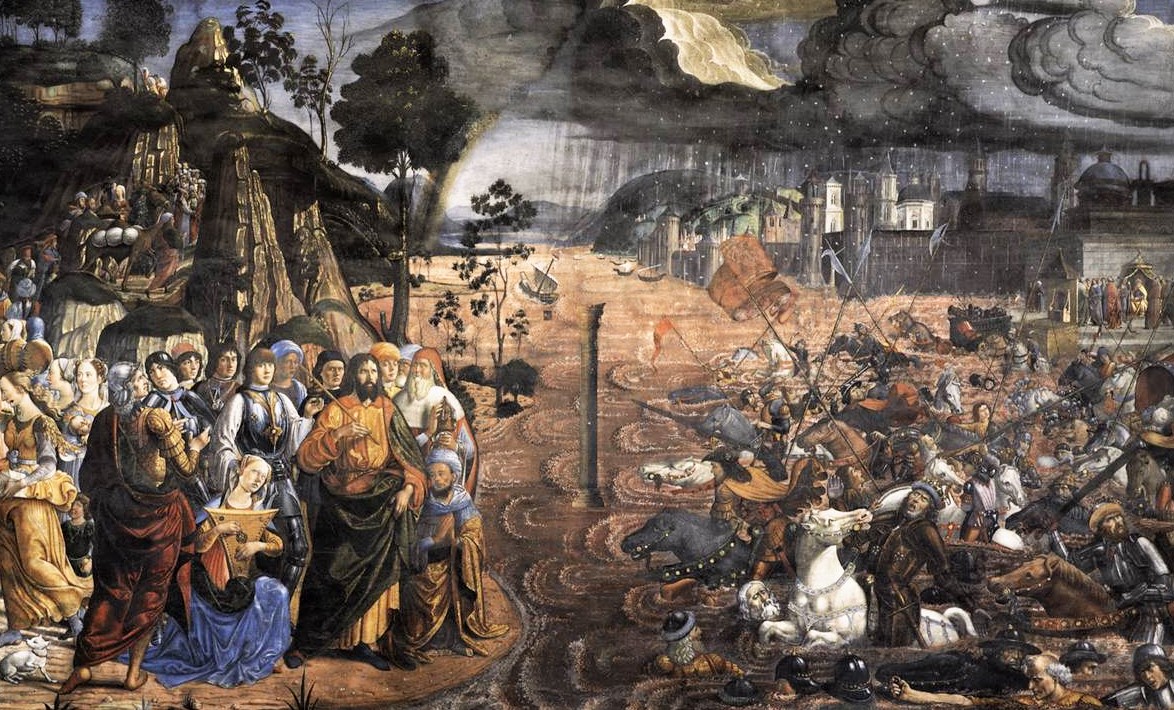
There is an astonishing verse in the Exodus account, which we read this week at daily Mass. The Lord had parted the waters of the Red Sea with a strong easterly wind and the Israelites had just made the crossing with the Egyptians in hot pursuit.

And in the morning watch, the Lord in the pillar of fire and of cloud, cast a glace on the Egyptian forces and threw the Egyptian forces into a panic (Ex 14:24).

Just one look … that’s all it took! One can imagine many other ways that God could have stopped them: lightning, angelic forces, etc. Instead, He merely “cast a glance.”

Was it an angry glance? The text does not say. I would speculate that it was a look of love, for if God is love, how could it have been anything else?

Why, then, the panic among the Egyptian forces? Perhaps it was like the reaction of those accustomed to the darkness, who wince in pain when beautiful light shines. Love confronts and drives out hate the way light drives out darkness. Love is what it is; it cannot be something else. To those held bound by hatred, though, love is like kryptonite. Thus, the Egyptian army falls at the glance of God, panics at the weakness it experiences. Yes, love can be like kryptonite to those who choose the darkness of hatred and exploitation. To those who hate the truth, it seems hateful, but God’s truth is an aspect of His love for us, and only truth will set us free.

I propose that despite the panicked reaction of the Egyptians, God’s glance was one of love. God does not change. Even when we speak of His wrath or anger, we are speaking more of our experience than of what is in God. God is love and so He looks with love. That we experience something other than love is a problem in us, not in God.

Indeed, sometimes we see the look but miss the love. In the Gospel of Mark is told the story of a rich young man who sought perfection but somewhat on his own terms. Jesus looked at him with love and said to him, “You lack one thing: go, sell all that you have and give to the poor, and you will have treasure in heaven; and come, follow me” (Mk 10:21). The young man saw the look and heard the words, but missed the love. As a result, he went away saddened.

And lest we reduce God’s look of love to one of mere sentimentality, we ought to recall that God’s look of love can also convict us and move us to repentance. Peter’s denial of the Lord is recounted in all four of the Gospels. Simon Peter was in the courtyard of the high priest warming himself by the fire; he had just denied knowing the Lord for the third time when the cock crowed. The Gospel of Luke recounts, The Lord turned and looked at Peter. And Peter remembered the word of the Lord, how He had told him, “Before a rooster crows today, you will deny Me three times.” And he went out and wept bitterly (Lk 22:61-62). Here was a look of love that caused pain, but it was a healing pain that led to repentance.

Those of us with deeper faith learn to count on the look, the glance of God, to save us. An old hymn says, “Though billows roll, He keeps my soul. My heav’nly Father watches over me.” Another says, “His eye is on the sparrow and I know He watches me.”

Yes, the glance of God may make us feel sad, or mad, or glad; but it is the look of love, always seeking to console us or to set us right and bring about healing.

Particularly in Mark’s Gospel, there is great emphasis on the eyes and the look of Jesus. The following expression, or one like it, appears more than 25 times in the Gospel of Mark: And looking at them He said, …

Looking on Christ and allowing Him to look on you is a powerful moment of conversion. Jesus Himself said, For my Father’s will is that everyone who looks to the Son and believes in him shall have eternal life, and I will raise him up at the last day (Jn 6:40). And in the First Letter of John we read, What we shall later be has not yet been revealed. We do know that when it is revealed we shall be like him, for we shall see him as he is (1 Jn 3:2).

Keep looking to the Lord through the art that most moves you and especially in the Most Blessed Sacrament. Look at Him and let Him look at you. Be not dismayed as were the Egyptians of old. God is love and therefore His look is always one of love, no matter how we experience it.

The Lord is casting a glance at you right now. What do you see?

This video is a collection of clips from the movie The Passion of the Christ, set to music. It shows many of the looks of Jesus as well as some that come from us. Look for the “looks.”

Cross-posted at the Catholic Standard: “And in the Morning Watch, the Lord … Cast a Glance”—A Meditation on the Look of the Lord

The Liturgy is More Than a Text

One of the greatest liturgical shifts in the last sixty years has been in the area of language and the spoken word. Although the almost complete disappearance of Latin is lamentable, the use of the vernacular has arguably had some positive effects. To my mind, the augmentation of the Scriptures used has been notable and helpful. In addition, greater emphasis has been placed on preaching and preparing the clergy to be able to preach well.

The most recent debates concern a thirty-year struggle in English-speaking areas to get authentic translations of the Latin texts promulgated. The emphasis on and debate about the texts of the liturgy is necessary and has had good effects.

However, this focus on the texts has tended to reduce the liturgy to its texts alone, as if the intelligibility of the vernacular text ensures that the Mass is understood. Supposedly, people can now “understand” what is going on and what is being said. Other areas such as architectural and aesthetic beauty, music, the ars celebrandi (the manner in which the clergy and ministers conduct themselves during the liturgy), and deeper theological understanding and appreciation of the liturgy have all suffered as a result. It does matter whether the church building is awe-inspiring or ugly, whether the music is inspiring and teaches sound doctrine or is mundane and devoid of doctrine (or even contains faulty doctrine). There is more to focus on that just making sure that liturgical texts are intelligible and the Homily “meaningful.” God is worthy of our best and His people respond to more than just words.

Perhaps a quote from Rev. Uwe Michael Lang would be helpful:

The sacred liturgy speaks through a variety of “languages” other than language in the strict sense. [These are] non-verbal symbols which are capable of creating a structure of meanings in which individuals can relate one to another. … It is my conviction that these non-linguistic or symbolic expressions of the liturgy are, in fact, more important than language itself.

This would seem especially pertinent in today’s world where images are omnipresent: on TV, video and computer screens …. We live in a culture of images …. Today the image tends to make a more lasting impression on people’s minds than the spoken word.

The power of image has long been known in the Church’s liturgical tradition, which has used sacred art and architecture as a medium of expression and communication.

But, in more recent times [there is] observed a tendency to see liturgy only as text. And to limit participation to speaking roles …. It certainly applies to a broad stream of liturgical scholarship that has largely focused on liturgical texts that are contained in written sources from late antiquity and the early Middle Ages. … This approach is legitimate, at least to a large extent, because the Church’s public worship is ordered to the official texts she uses for it.

However, … it is sometimes forgotten that the liturgy is not simply a series of texts to be read, but rather a series of sacred actions to be done … words, music, and movement, together with other visual, even olfactory elements (Sacred Liturgy: The Proceedings of the International Conference on the Sacred Liturgy 2013, Ignatius Press, pp. 187-189).

Rev. Lang does not assert that the sacred texts are to be neglected but that things have gotten a bit out of balance and it is time to put more focus on other aspects of the liturgy for a while. Even a text translated authentically and well-delivered can fall flat in an atmosphere of sloppy liturgy, ugly and uninspiring architecture, and insipid music. Thus, we do well to spend some time now on visual and other non-verbal aspects.

However, we must be careful not to go too far and reduce the liturgy to merely an aesthetically pleasing action rather than an act of worship.

For example, almost no one asks at the end of a Mass, “Was God worshiped?” Instead, many other questions and concerns occur to clergy. Were the lectors good? Did the Homily go well? Were the servers well-trained? The laity will often rate the liturgy on such things as the perceived quality of the Homily, the use of their favorite songs, the style of worship, and the hospitality level. But almost no one asks the key question: Was God fittingly worshiped? (or more personally, “Did I worship God?”)

Sometimes the honest answer is no. People largely went through motions and focused more on themselves and what they were doing, or on others and what they were doing, or on whether they “liked it” or not. God was barely considered at all. He may have been spoken to and referenced, but he was not really worshiped.

Yes, the liturgy is more than a text. Those texts are to be cherished and proclaimed accurately, but other sacred actions and dispositions are important as well. Beauty, reverence, and a manifest joy and humility before God are also to be cultivated. Above all else we must be able to say that we worshiped God fittingly.

Cross-posted at the Catholic Standard: The Liturgy is More Than a Text

The Red Sea Crossing and What It Says to Us in Times Like These

As we are reading about the crossing of the Red Sea in daily Mass this week (16th week of the Year), we do well to ponder this writing by St. Ambrose, which reminds us of the victory that is ours:

You observe that in this crossing [of the Red Sea] by the Hebrews there was already a symbol of holy Baptism. The Egyptian perished; the Hebrew escaped. What else is the daily lesson of this sacrament than that guilt is drowned and error destroyed, while goodness and innocence pass over unharmed? (from St. Ambrose’s Treatise on the Mysteries, 12)

In times like these, we need such a reminder of this ultimate victory. The word “ultimate” is important because prior to their victory the Hebrews endured centuries of injustice. They also experienced the terror of having a vengeful army coming at them from behind while an impassible sea lay before them. It took faith to walk through those waters that rose thirty feet on either side of them like walls. Would the walls of water hold? Trusting in God and His servant Moses, they went forth.

By this faith and through this baptism into Moses (cf 1 Cor 10:2) they had the victory. How much more so do we, who are baptized into Christ Jesus.

We need the reminder of this victory in these times of moral darkness, when the murder of unborn children is called a constitutional right and celebrated with cheers, when the scientific fact that at the moment of conception a unique human being is created is denied, when medical evidence that unborn children feel pain is scoffed at by pro-choice “science deniers.”

    • These are times when many glory in their shame (Phil 3:19; Rom 1:32) by celebrating sexual disorder and confusion.
    • These are times when many, through the lie of transgenderism, fulfill Scripture passages such as these:
        • You [O mere man] have turned things upside down, as if the potter were regarded as clay. Shall what is formed say to him who formed it, “He did not make me”? Can the pottery say of the potter, “He has no understanding”? (Isaiah 29:16)
        • But who are you, a human being, to talk back to God? Shall what is formed say to the one who formed it, “Why did you make me like this?” (Rom 9:20)
    • These are times when too many priests and bishops—who should be leading the battle—are silent, or sounding an uncertain trumpet, or even speaking error and spreading confusion themselves.
    • These are times when, with a humanitarian crisis on our border, neither political party will budge an inch to bring reason to a system that is broken.

In times like these we need to remember that God has already won; whatever sin or foolishness emerges is temporary and destined to be drowned in the sea. We all sometimes feel that there is an army of sin at our back and an impassible sea of pride in front of us—but God can make a way out of no way; He can do anything but fail.

Where is Pharaoh now? Where is Caesar? Where is Napoleon? Where is the USSR? In the lifetime of the Church, empires have risen and fallen, nations have come and gone, and errors and heresies have temporarily had their day. Enemies have scoffed at God’s Church and threatened her ruin, boldly stating that they would bury us and our foolish, “outdated” ways. We have read the funeral rites over every one of them. When the present foolishness has passed, we will still be here, preaching the same gospel, while every error and lie is buried at the bottom of the sea.

Do not be discouraged. The battle is real and must be fought, but the victory is already assured. At times it may not seem to be so, but it is. To return to the words of St. Ambrose:

What else is the daily lesson of this sacrament than that guilt is drowned and error destroyed, while goodness and innocence pass over unharmed?

Fight on, fellow soldiers, knowing that the victory is ours after many days.

Cross-posted at the Catholic Standard: The Red Sea Crossing and What It Says to Us in Times Like These

Tolerance: A Brief Consideration of a Widely Misunderstood Virtue

Tolerance is often bandied about today with a meaning far removed from its original definition. It has come to mean agreeing with or supporting what someone else is saying or doing; one is deemed tolerant to the degree that he goes along with another’s words or behavior.

However, if one supports another’s position or actions, one doesn’t need to “tolerate” it. We don’t tolerate what we love; we tolerate what we hate; we tolerate people with whom we disagree, not our kindred spirits.

The Stanford Encyclopedia of Philosophy defines toleration as follows:

Toleration—from the Latin tolerare: to put up with, countenance, or suffer—generally refers to the conditional acceptance of or non-interference with beliefs, actions, or practices that one considers to be wrong but still “tolerable,” such that they should not be prohibited or constrained [1].

It goes on to make a distinction that is often lost today.

[I]t is essential for the concept of toleration that the tolerated beliefs or practices are considered to be objectionable and in an important sense wrong or bad. If this objection component (cf. King 1976, 44-54) is missing, we do not speak of “toleration” but of “indifference” or “affirmation” [2].

In other words, by definition, tolerance involves putting up something with considered wrong or displeasing but not so wrong or displeasing that it must be forbidden in each and every instance. Tolerance does not imply that we approve of the tolerated thing as something that is good. This essential point is glossed over by those who insist that disapproval is a sign of intolerance.

Tolerance, properly defined, is good and necessary, but like most good things, it has its limits. Tolerance is essential in an imperfect world. Without it, nations might go to war over simple human imperfections. We all have friends and family members whom we like but who have traits that annoy us (as do all human beings). Without tolerance we would be locked in a fruitless attempt to remake each person so as to be “perfect” to us. We tolerate people’s less desirable characteristics for loftier purposes such as harmony, friendship, respect, mercy, and kindness.

However, there must be limits to tolerance. Some things in human relationships that are “deal breakers.” There are things that cannot be tolerated. For example, serious and persistent lies breach the trust necessary for relationships. Behavior that endangers one or both parties (either physically or spiritually) can make it necessary to end relationships or at least to establish firm boundaries within them.

In wider society, tolerance has necessary limits as well. For example, we appreciate the freedom to come and go as we please, and it is good to tolerate the comings and goings of others even if we disapprove of where they go. Without this general tolerance of movement, things would grind to a halt. In order to be able to come and go freely we put up with some of its less desirable aspects. However, we don’t permit people to drive on sidewalks or run red lights. Neither do we permit breaking and entering or the violation of legitimate property rights. We also restrict unaccompanied minors from entering certain establishments. In effect, every just law encodes some limit on tolerance. Conservatives and liberals debate what limits the law should impose, but both want some limits to be enacted. Even libertarians, while wanting less governmental interference in general, see a role for some laws and limits; they are not anarchists.

Thus, the modern struggle with the issue of tolerance seems to be twofold:

    • The definition of tolerance – Many people today equate tolerance with approval, losing an essential part of its definition: that tolerance involves “putting up with” people or things with which we disagree.
    • The limits of tolerance – In our modern world we are being asked to tolerate increasingly troublesome behavior. Much of it involves sexual matters. Proponents of sexual promiscuity demand increasing tolerance for it despite the fact that such behavior leads to disease, abortion, teenage pregnancy, single-parent families, divorce, and all the ills that accompany a declining family structure. Supporters of abortion demand tolerance of what they advocate despite the fact that abortion results in the death of an innocent human being. Many people of faith think that the limits of tolerance have been exceeded such matters.

Rapprochement? The debate about tolerance and its limits is not a new one, but it seems more intense today when there appears to be so little shared moral vision. One way forward might be to return to a proper definition of tolerance. Perhaps if we stop (incorrectly) equating tolerance with approval, an atmosphere of greater respect can be achieved in these debates. To ask for tolerance is not always wrong, but to demand approval is.

Consider the debate over homosexual activity. Many people of faith, at least those who hold to the biblical view, believe homosexual behavior to be morally wrong. The same is true for heterosexual relations outside the bond of (one man/one woman) marriage, such as fornication, adultery, polygamy, and incest. Because we disapprove of homosexual activity, we are often labeled intolerant (and many other things as well such as homophobic, bigoted, and hateful).

Tolerance is really not the issue, however. Most Christians are willing to tolerate that people “do things in their bedrooms” of which we disapprove. As long as we are not directly confronted with this behavior and told we must approve of it, we are generally willing to stay out of people’s private lives. What has happened in modern times, though, is that approval is demanded for behavior we consider immoral, and when we refuse to approve, we are called intolerant. This is a misuse of the term.

Our objections do not arise from bigotry or hatred (as some claim) but rather from a principled, biblical stance. Our disapproval does not, ipso facto, make us bigots or haters. Neither does it mean we are intolerant or that we seek to force an end to behavior we do not consider good. Very few Christians I have ever heard from are asking for police to enter bedrooms and make arrests.

We are not intolerant; we simply do not approve of homosexual activity. According to the proper definition of tolerance, it is the very fact of our disapproval that permits us to show tolerance in this area.

Finally, I offer a thought on who really “owns” tolerance. Opponents of traditional Christianity often claim the high ground of tolerance for themselves, but the paradoxical result of this holier-than-thou attitude is increasing intolerance of Christian faith by the self-proclaimed tolerant ones. Legal restrictions on the proclamation of the Christian faith in the public square have been growing. The exclusion of Catholic charitable organizations from receiving public funding if they insist upon adhering to the principles of the faith is becoming more common as well. In other parts of the world where free speech is less enshrined, Catholic priests and bishops have been sued and even arrested for “hate speech” because they preach traditional biblical morality. None of this sounds very tolerant to me!

Our opponents need not approve of our beliefs, but they ought to exhibit greater tolerance of us—at least the same tolerance they ask from us.

Cross-posted at the Catholic Standard: Tolerance: A Brief Consideration of a Widely Misunderstood Virtue

The Priority of Personal Prayer

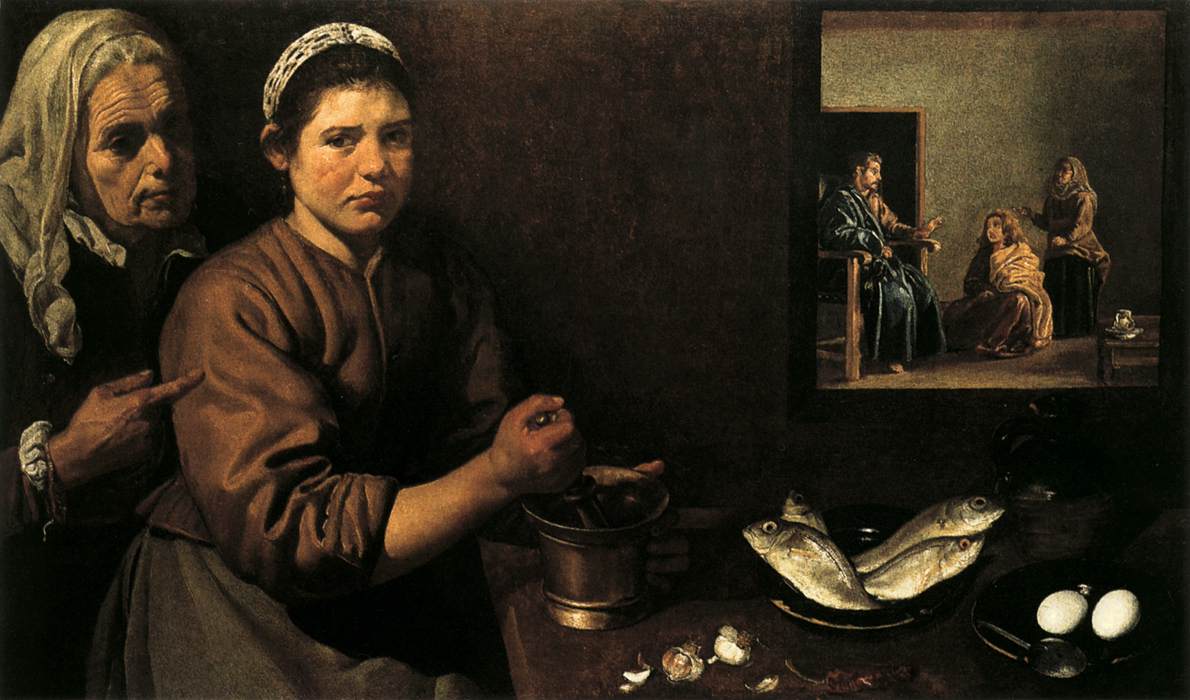
This Sunday’s Gospel is the very familiar story of Martha and Mary. Martha is the anxious worker seeking to please the Lord with a good meal and hospitality; Mary sits quietly at His feet and listens. One has come to be the image of work, the other of prayer.

Misinterpreted? In my lifetime I have heard many a sermon that interpreted this passage as a call for a proper balance between work and prayer. Some have gone on to state that we all need a little of Martha and Mary in us and that the Church needs both Marthas and Marys.

Such a conclusion seems to miss the central point of this Gospel passage. Jesus does not conclude by saying, “Martha, now go do your thing, and let Mary do hers.” Rather, He describes Mary not only as choosing the better part but also doing the “one thing necessary.” This does not amount to a call for “proper balance” but rather underscores the priority and primacy of prayer. This, it would seem, is the proper interpretation of what is being taught. Many other passages of the Scripture do set forth the need to be rich in works of charity, but this is not one of them.

With that in mind let’s take a look at the details of the Lord’s teaching today on the priority of personal prayer.

I. PROMISING PRELUDE Jesus entered a village where a woman whose name was Martha welcomed him. In the beginning of the story Martha is shown in a very favorable light. She opens her door (her life, if you will) and welcomes Jesus. This is at the heart of faith: a welcoming of Jesus into the home of our heart and our life. Surely, Revelation 3:20 comes to mind: Behold I stand at the door and knock. If anyone hears my voice and opens the door I will come in and eat with him and he with me.

While we acknowledge this promising prelude, we ought not to miss the fact that it is Jesus who initiates the interaction. The text says that Jesus entered a village. In the call of faith, the initiative is always with God. It was not you who chose me; it was I who chose you (Jn 15:16). Hence, while we must welcome Him, God leads. Martha hears the Lord’s call and responds. So far, so good.

What happens next isn’t exactly clear, but the impression given is that Martha goes right to work. There is no evidence that Jesus asked her to prepare a meal for Him. The text from Revelation quoted above does suggest that the Lord seeks to dine with us, but it implies that it is He who will provide the meal. Surely, the Eucharistic context of our faith emphasizes that it is the Lord who feeds us with His Word and with His Body and Blood.

At any rate, Martha seems to have told the Lord to make Himself comfortable and has gone off to prepare the meal. That she later experiences it to be such a burden is evidence that her idea emerged more from her flesh than from the Spirit.

II. PORTRAIT of PRAYER She had a sister named Mary who sat beside the Lord at his feet listening to him speak. Now here is a beautiful portrait of prayer: Mary, sitting at the Lord’s feet, listening.

Many people think of prayer as something that is recited or said, but it is better understood as a conversation—and conversations include both speaking and listening. Vocal prayer, intercessory prayer, and the like are all noble and important, but the prayer of listening is too often neglected.

Prayer is not just telling God what we want; it is discovering what He wills. We have to sit humbly and listen. We must learn to listen, and we must listen in order to learn. We listen by slowly and devoutly considering Scripture (lectio divina) and by pondering how God is speaking in the events and people in our life, how God is whispering in our conscience and soul.

As we shall see, Jesus calls this kind of prayer “the one thing necessary.” What Mary models and Martha forgets is that we must first come (to Jesus) and then go (and do what He says), that we must first receive before we can achieve, that we must first be blessed before we can do our best, that we must first listen before we leap into action.

III. PERTURBED and PRESUMPTUOUS Martha, burdened with much serving, came to him and said, “Lord, do you not care that my sister has left me by myself to do the serving? Tell her to help me.” Martha, who is laboring in the flesh but not likely in the Spirit and in accord with the Lord’s wishes, is now experiencing the whole thing as a burden. She blames her sister, but the Lord’s response will make it clear that this is not Mary’s issue.

One sign that we are not doing God’s will is experiencing what we are doing as a burden. We are all human and thus limited; we will naturally feel ordinary fatigue. However, it is one thing to be weary in the work but another to be weary of the work.

A lot of people run off to do something they think is a good idea—and maybe it is a fine thing in itself—but often, they haven’t ever asked God about it. God might have said, “Fine,” but He also might have said, “Not now, later.” Or He might have said, “Not you, but someone else.” Or He might just have said, “No.” Instead of asking, however, they often just go off and do it, and then when things don’t work out will blame God, saying, “Why don’t you help me more?”

Martha feels burdened. First, she blames her sister. Then she presumes that the Lord does not care about what is (to her) an obvious injustice. Then she takes presumption one step further and presumes to tell the Lord what to do: “Tell her to help me.”

This is what happens when we try to serve the Lord in the flesh. Instead of being true servants who listen to the Lord’s wishes and carry them out by His grace, we end up angry and mildly (or more) dictatorial. So, here is Martha, with her one hand on her hip and her index finger in the air . Jesus will be kind to her, but firm.

IV. PRESCRIBED PRIORITY Martha, Martha, you are anxious and worried about many things. There is need of only one thing. Mary has chosen the better part and it will not be taken from her. Don’t let the Lord have to call you by your name twice! It is clear that He wants Martha’s attention and that she has made a fatal mistake (one we all can easily make): she leapt before she listened.

The Lord observes her and remarks that she is anxious about many things. Anxiety about many things comes from neglect of the one thing necessary: sitting at the feet of the Lord and listening to Him.

The Lord will surely have things for us to do in our life, but they need to come from Him. This is why prayer is the “one thing necessary” and the better part: because work flows from it and is subordinate to it.

Discernment is not easy, but it is necessary. An awful lot of very noble ideas have floundered in the field of the flesh because they were never really brought before God and therefore were not works of grace.

Jesus does not mean that all we are to do is to pray. There are too many other Gospels that summon us to labor in the vineyard to make such a conclusion. What Jesus is very clear to say is that prayer and discernment have absolute priority. Otherwise, expect to be anxious about many things and have little to show for it.

Scripture makes it clear that God must be the author and initiator of our works: For by grace you have been saved through faith, and this is not from you; it is the gift of God; it is not from works, so no one may boast. For we are his handiwork, created in Christ Jesus for the good works that God has prepared in advance, that we should walk in them (Eph 2:8-10).

An old prayer from the Roman Ritual also makes this plain:

Actiones nostras, quaesumus Domine, aspirando praeveni et adiuvando prosequere: ut cuncta nostra oratio et operatio a te semper incipiat, et per te coepta finiatur. Per Christum Dominum nostrum.

(Direct we beseech Thee, O Lord, our prayers and our actions by Thy holy inspirations and carry them on by Thy gracious assistance, so that every work of ours may always begin with Thee, and through Thee be ended.)

This song reminds us that when we really are working in the Lord’s will, as the fruit of prayer we love what we do and do so with joy. This song says, “I keep so busy working for the Kingdom I ain’t got time to die!”

Cross-posted at the Catholic Standard: The Priority of Personal Prayer

Sin on Sale – 50 Percent Off – But Beware of the Side Effects

I usually like to keep things light on Friday evening when I post. And the video at the bottom of the page is something of a spoof on drug commercials, treating sin like a drug. Wait till you hear the side-effects disclaimer at the end. 🙂

I also thought today of doing a little post on the sins that cry to heaven for vengeance since I was talking to a parishioner today, who is suffering because his employer has not paid him for three weeks. The employer, a government agency says this is due to “administrative difficulties” in the bureaucracy where he works. He was angry (rightfully so) and getting desperate. I reminded him that withholding wages was a sin that cried to heaven and that God was angry with him. The rest of our conversation I’ll keep private.

With that painful situation in mind and how the negligent sin of one affects another, it occurs to me offer a few lists of sins, that may prove as helpful reminders to all of us in our struggle against it. Sometimes it helps to see sin in categories and to be able to “name the demons,” as a help to combat them. These are just a few helpful lists. There are others and I invite you to add to them. For the sake of brevity, I do not fully develop them all.

In keeping with the video below, consider these lists a kind of “Sin on Sale” a clearance sale if you will. The lists below can be purchased separately or together in packages. But do beware of the potential and likely side-effects!

The sins that cry to heaven for vengeance: (CCC 1867)

  1. Murder (Gn 4:10),
  2. Sodomy (Gn 17:20-21),
  3. Oppression of the poor (Ex 2:23),
  4. Defrauding workers of their just wages (Jas 5:4).

Seven Deadly Sins

  1. Pride
  2. Greed
  3. Lust
  4. Anger
  5. Gluttony
  6. Envy
  7. Sloth

Sins against the Holy Spirit:

  1. Despair,
  2. Presumption,
  3. Envy,
  4. Obstinacy in sin,
  5. Final impenitence,
  6. Deliberate resistance to the known truth.

Sins against faith: (CCC 2088-2089)

  1. Hesitating doubt – delaying the overcoming of doubts, difficulties, or objections due to indifference or laziness
  2. Voluntary doubt – disregarding of the truth or on-going resistance to overcoming doubt.
  3. Incredulity – willful refusal to assent to revealed truths of the faith.
  4. Heresy – the choosing and over-emphasizing of certain truths of the faith to the exclusion of others.
  5. Schism – Refusal of submission to the Pope or Catholic communion.
  6. Apostasy – Total repudiation of the Christian faith.

Sins against God’s love: (CCC 2094)

  1. Indifference
  2. Ingratitude
  3. Lukewarmness
  4. Sloth – sorrow or aversion at the good things offers to the soul
  5. Hatred of God – usually rooted in prideful notion that refuses to be second to God.

Sins against the Honor that is Due to God – (CCC 2111-2117)

  1. Superstition – the elevation of certain practices such that they are regarded as more important or powerful than prayer or trust in God.
  2. Idolatry – divinizing what is not God, false worship, holding creatures more precious than the one Creator who is God.
  3. Divination – undertaking practices meant to disclose the future, e.g. horoscopes, astrology, palm reading, recourse to mediums etc.
  4. Magic and spiritism – attempts to tame occult powers and place them at our service, or to have power over others in this way.

Sins of Irreligion: (CCC 2118-2128)

  1. Tempting God – Putting God to the test
  2. Sacrilege – stealing sacred things, profaning sacraments or liturgical actions, desecration or speaking irreverently of sacred persons, places or things that are blessed or consecrated to God.
  3. Simony – Buying or selling spiritual things, seeking to profit on them merely because they are blessed.
  4. Atheism – Denying the existence of God, to include the practical atheism of materialism and utopian notions that man can save himself.
  5. Agnosticism – an indifference toward God that refrains form formally denying his existence.

Sins against the name of God: (CCC 2142-2155)

  1. Promises – infidelity to promises or oaths made with God’s name
  2. Profanity – using God’s name in vain ways that do not respect its sacred character, (e.g. empty expressions like “Oh my God!”
  3. Blasphemy – to speak ill of God, trivialize, curse or ridicule him. By extension, to ridicule sacred things or the Saints.
  4. Swearing – calling God to witness in matters that are trivial. Also swearing a false oath, committing perjury when under oath.
  5. Cursing – using God’s name to curse or call down evil on others.

Sins against the Lord’s Day: (CCC 2185)

  1. Refusing the worship owed God
  2. Refusing the joy proper to the Lord’s day
  3. Refusing the relaxation of mind and body commanded on the Lord’s day.
  4. Refusing reasonable works of mercy proper to the Lord’s day.

Sins Against life: (CCC 2268-2283)

  1. Intentional homicide – all unjust killing
  2. Abortion
  3. Euthanasia
  4. Suicide
  5. Acting with reckless disregard for the safety and life of our self or others

Sins against Chastity: (CCC 2351-2357)

  1. Lust – willfully entertaining inordinate or disordered desires for sexual pleasure
  2. Masturbation
  3. Fornication
  4. Adultery
  5. Pornography
  6. Prostitution
  7. Rape
  8. Homosexual Activity

Sins of Injustice and theft: (CCC 2409ff)

  1. Theft
  2. Deliberately keeping lent things
  3. Damaging the goods of others without restitution
  4. Fraud
  5. Paying unjust wages
  6. Forcing up prices
  7. Refusing to pay debts
  8. Work poorly done
  9. Tax evasion
  10. Forgery
  11. Excessive and wasteful practices
  12. Hoarding
  13. Excessive and unnecessary exploitation of natural resources
  14. Refusing our legitimate obligations to the community
  15. Refusing our legitimate obligations to the poor

Just a few helpful lists drawn from the Catechism with reference also to the Catholic Source Book and other places.

So there it is a clearance sale on sin. Now here’s a word from our sponsor!


Cross-posted at the Catholic Standard: Sin on Sale – 50 Percent Off – But Beware of the Side Effects